Campofelice
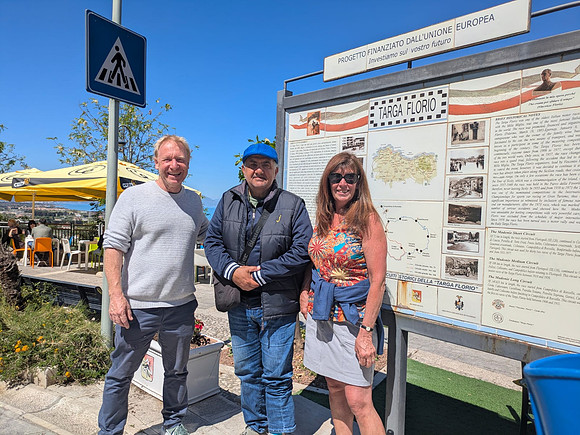
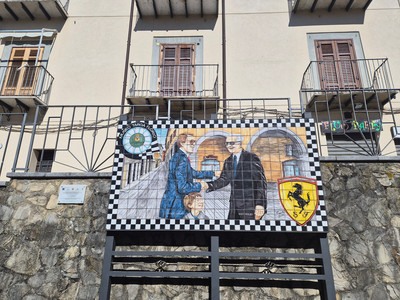
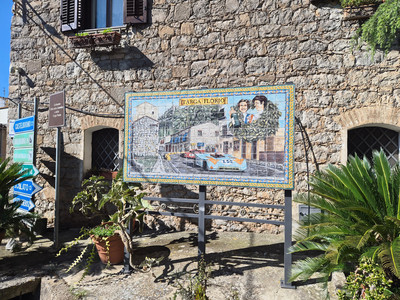
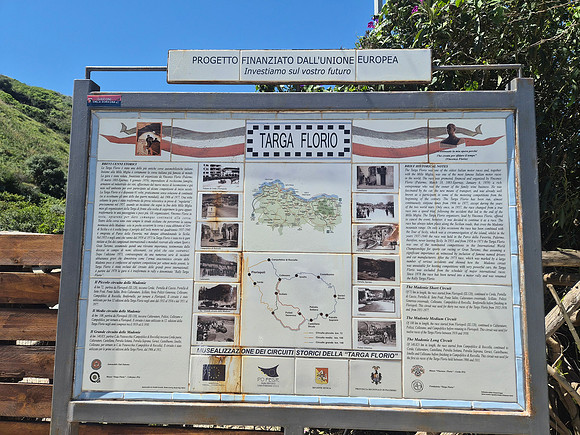
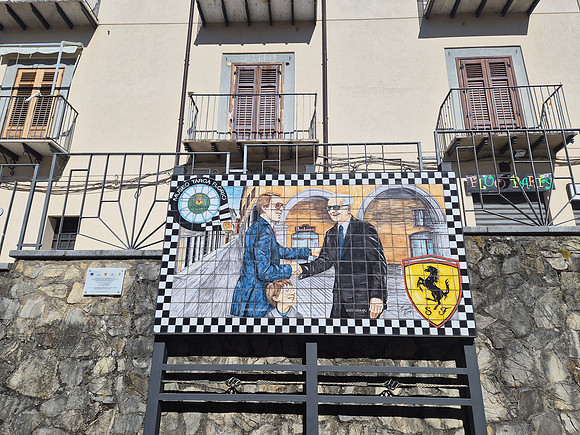
“Look—there’s an information board on the Targa Florio! How did we miss that?”
“We were right here last night—I didn’t see it,” said Wendy, genuinely puzzled, as if it had appeared overnight.
From behind us, a man rolled up in a wheelchair.
“Ciao… Targa Florio here,” he said, gesturing towards the street corner.
“Right here?” I asked, stunned.
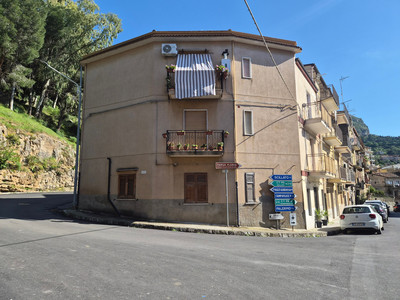
Slowly, he stood, steadying himself with a walking stick, and made his way over to the board. He pointed to a photograph—a prototype Ferrari, a building behind it—then turned and pointed to that same building, still standing today.
His words came slowly, but the meaning was clear. The race had thundered through this very street, and as a boy, he had watched it happen.
I explained, as best I could, that I knew a little about the race—that I had driven the entire course the day before. Communication wasn’t easy, so I ran back to the car and returned with my Motoring Man leaflet.
His reaction was priceless.
He recognised it.
Not only that—he purchased items from me. He had read my writing.
What followed felt wonderfully improbable. By the next day, we were picking up our new friend and heading to a private museum in Cerda.
He told us, briefly, about a brain injury—perhaps a stroke—that had affected his speech and movement. But it didn’t matter. Antonio was sharp, warm, and full of stories. He just needed time—and that, we had plenty of.
Driving the Course
Through lines of parked cars and coaches, and stuck in a massive traffic jam trying to get into Cerda—where the race famously started—I leaned out of the window and asked a traffic controller, “Why so busy?”
“Artichoke!” he shouted.
“Sorry… artichoke?”
“Forty years!” he smiled.
Bad translation, I guessed.
One hour in, on the outskirts of town, I arrived at a roadblock and explained I needed to carry on up the mountain on the Targa Florio course. Surprised that I wasn’t staying—but granting access—I asked again, “Why is the town so busy?”
“Artichoke Festival—40 years! Very important day!” she replied.
We set off up the road, wondering if we had missed out on some prime vegetable action!
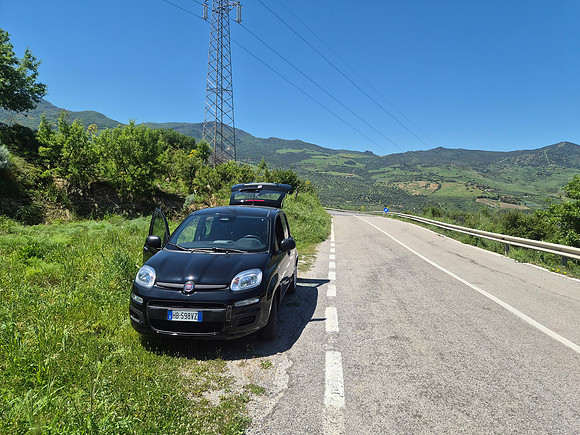
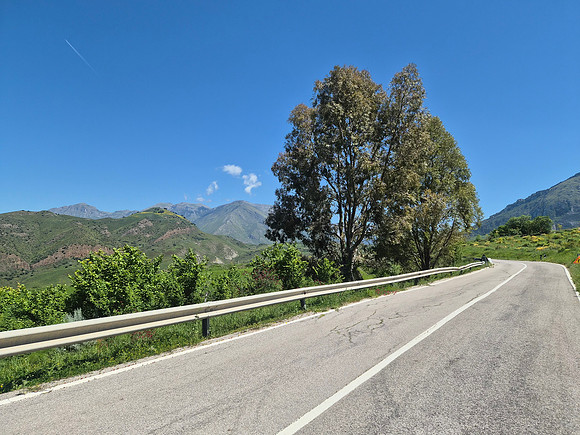
We left the crowds behind and climbed into the mountains, following the Targa Florio route. The roads were astonishing—tight, broken, and unforgiving. It’s almost impossible to imagine sports prototype cars racing along them at speed. And yet, they did.
Beautifully ludicrous.
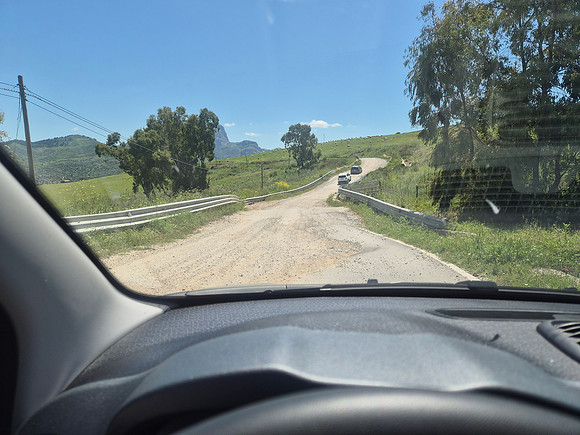
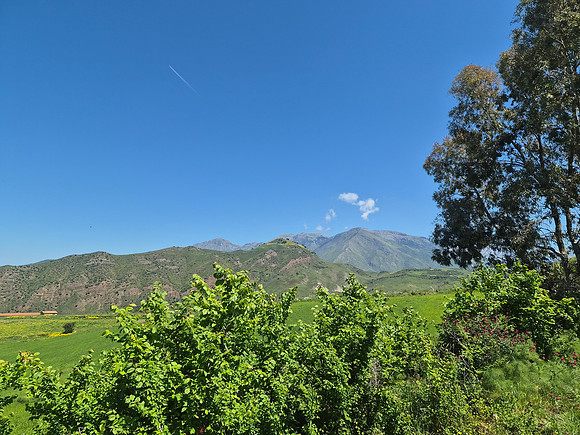
In places, the tarmac simply gave up, crumbling away at the edges into the valley below. Driving demanded a lot of concentration, but the reward was extraordinary—rolling green landscapes, rugged peaks, and scenery that, unexpectedly, echoed the Lake District.
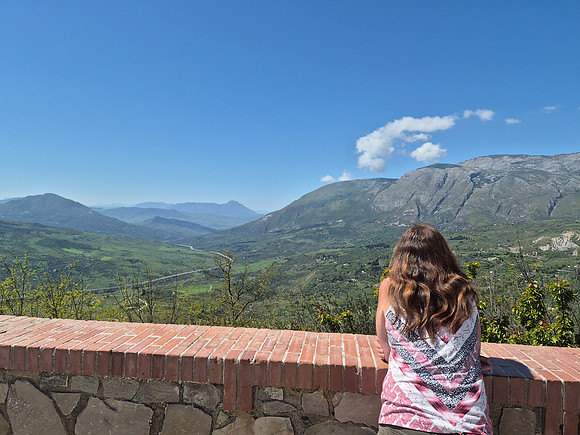
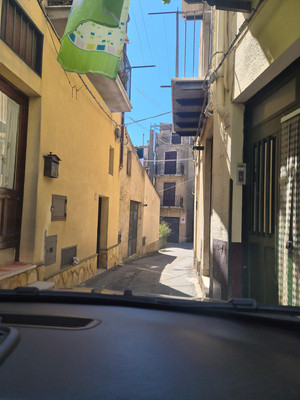
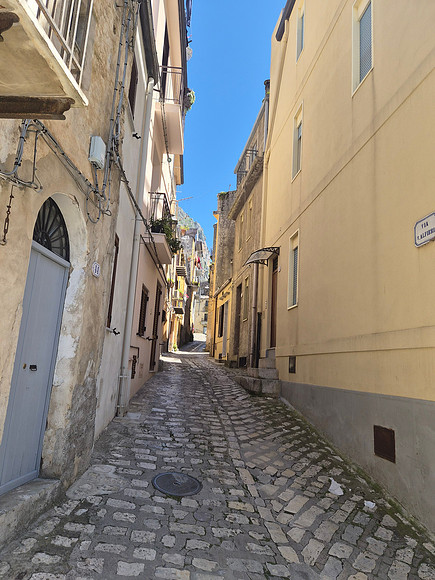
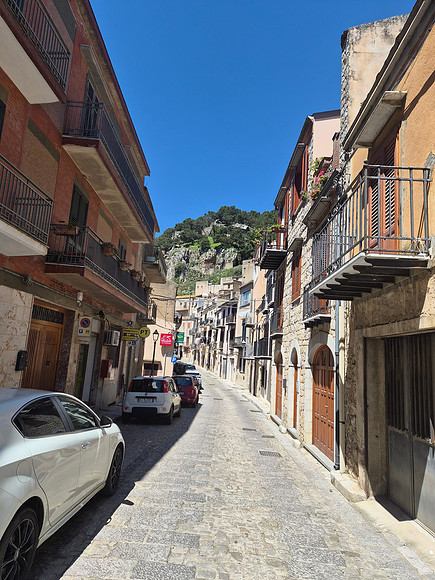
The villages near the summit were postcard-perfect but eerily quiet. Some streets were so narrow that our Fiat Panda barely squeezed through, mirrors millimetres from the walls.
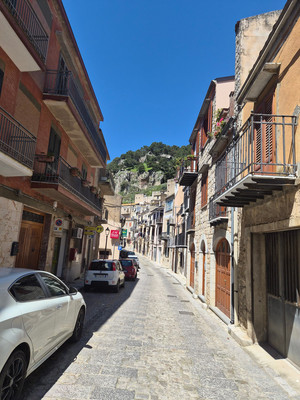
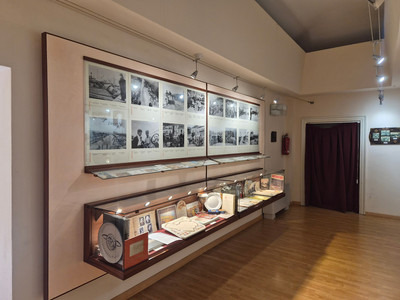
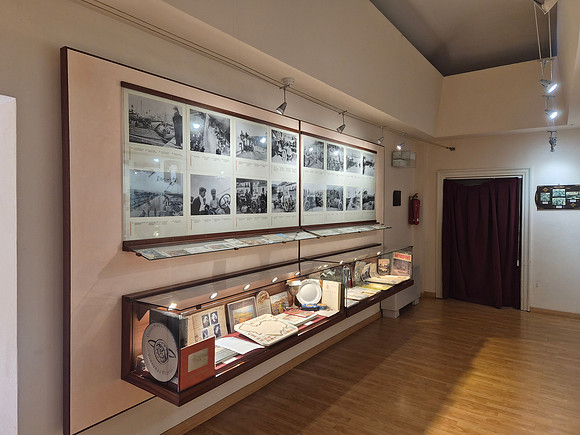
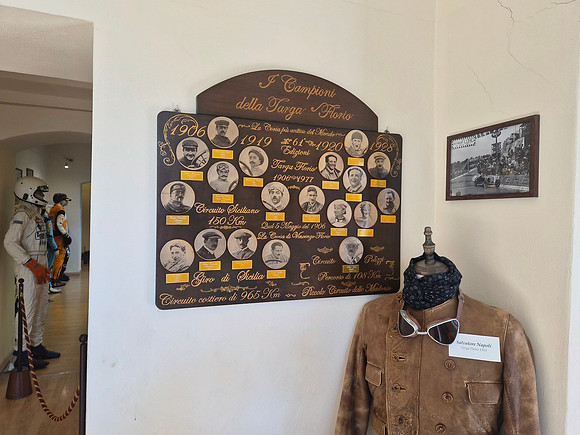
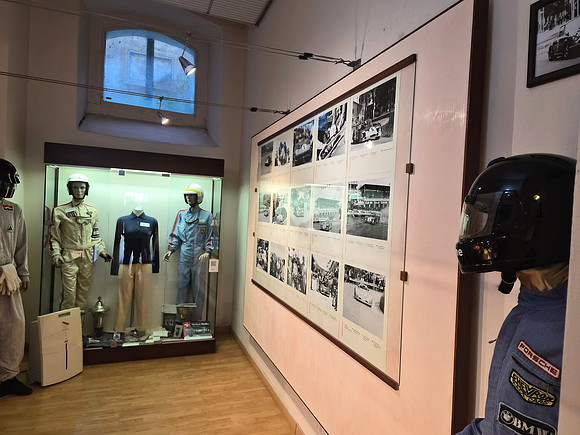
At the town of Collesano, we parked up and found the small Targa Florio museum tucked into an almost deserted high street. Not expecting it to be open, we were pleasantly surprised to find a young girl at the desk.
Entry: €2.50.
Or—on account of age—€1.50 each. Bargain.
Forty minutes later, we left richer in knowledge. The exhibits were modest but meaningful, with plenty of English translation and a wonderfully nostalgic short film of the 1973 race to round things off.
We loved the little place.
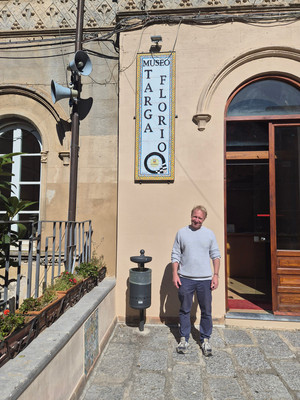
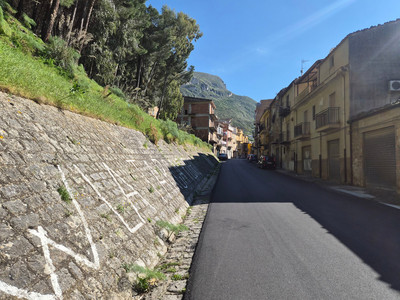
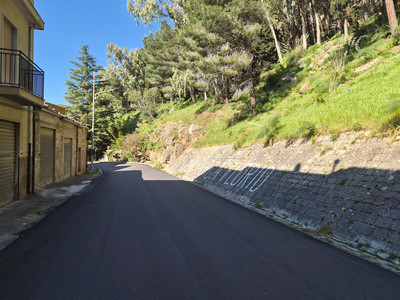
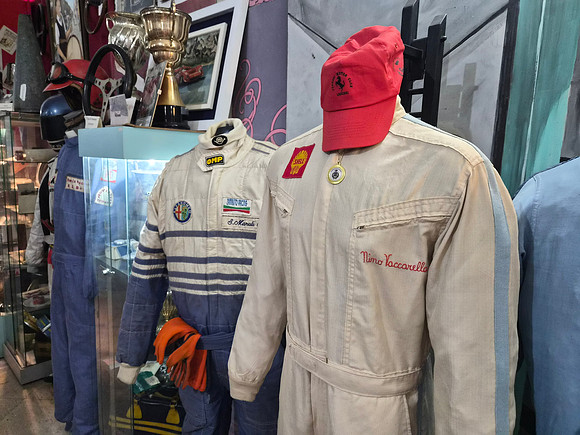
Collesano features in many magazine and book reports and somewhere I recognised easily. At the end of town is a hairpin around a stone walled building still graffitied with the name "Nino". The memory of Nini Vacarella the three time winner of the race and local hero from Sicily! This place oozed history and legend!
I was just like a big kid!
Campofelice
By the time we reached Campofelice, we realised we had come to the end of the mountain section. From here, the course drops down and stretches into a long coastal straight.
We found a bar perched at a perfect viewpoint above the sea and stopped. Cold beer, warm air, endless horizon.
“I’m knackered,” I admitted. “Can we stay here?”
Wendy didn’t hesitate. “No problem—plenty of places around.”
Within minutes, we had booked a room at a charming B&B—Rainbow—just a short walk away. Soon enough, we were back at the bar, watching the sun drop into the Mediterranean.
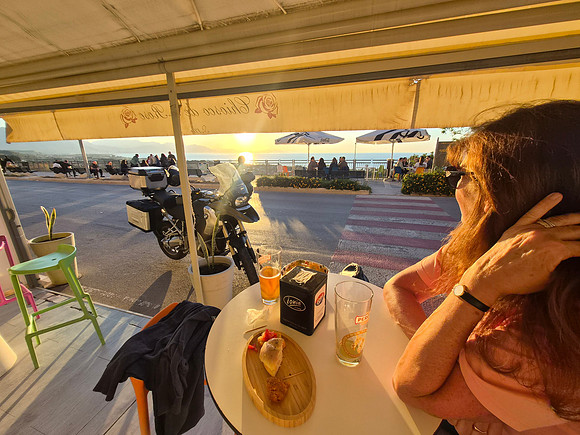
Dinner was simple, perfect pizza. Then bed.
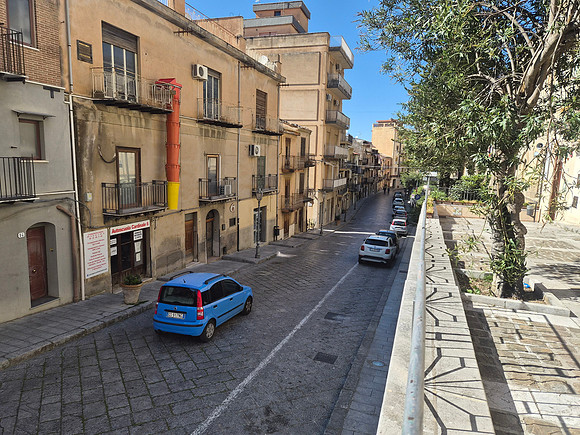
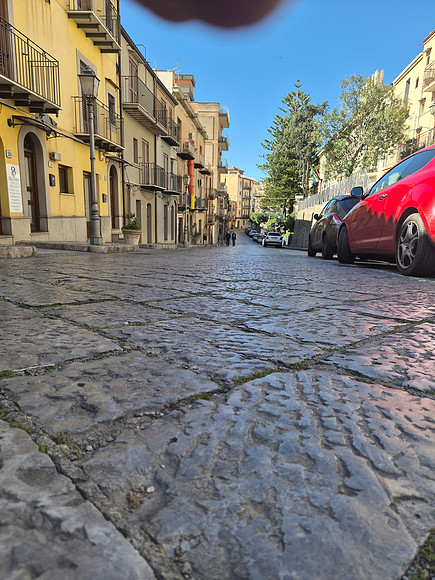
Only later did we realise we were staying right on the old race route—the very straight where the cars once roared through town.
And so, the next morning, having tea and coffee while looking out over the sea again, before leaving town, we met Antonino Pusateri.
Cerda — Antonio’s Museum
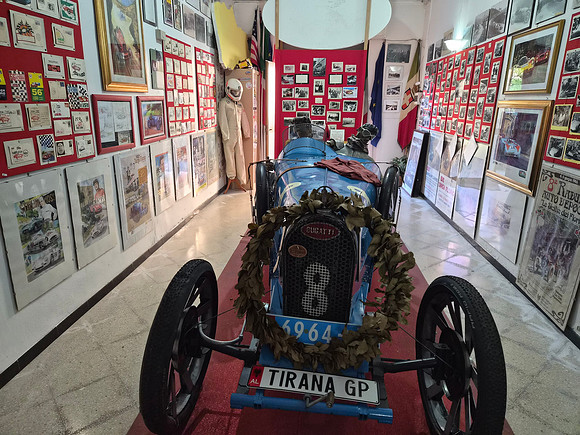
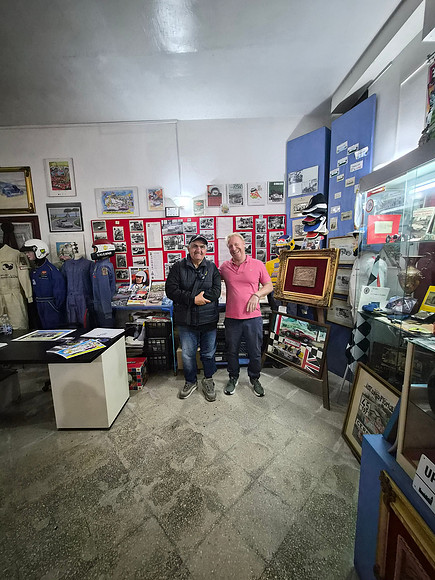
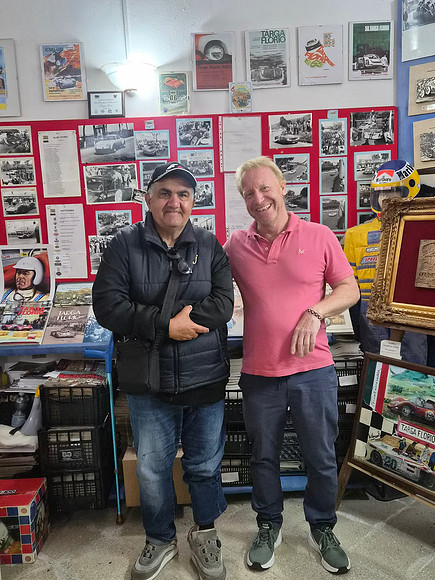
Two days later, in Cerda, Antonio Contazaro greeted us with a firm handshake and a wide smile. He unlocked an unassuming metal door and ushered us inside.
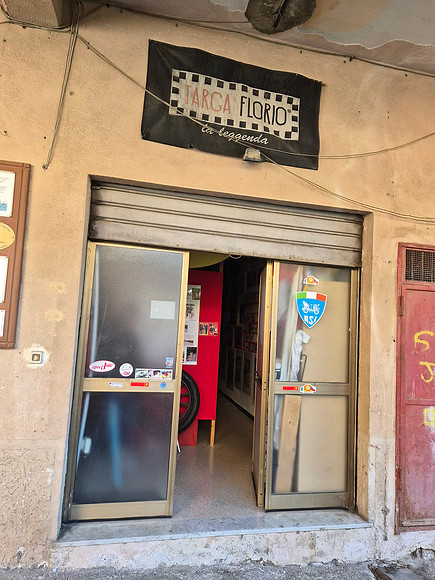
What lay beyond was extraordinary.
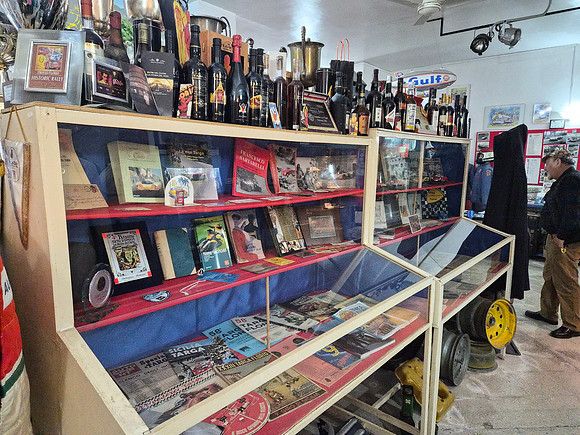
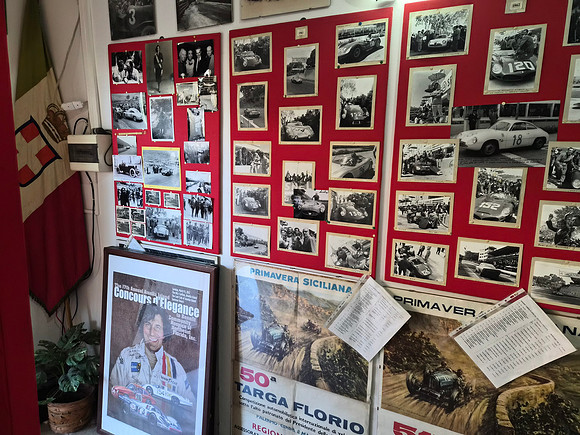
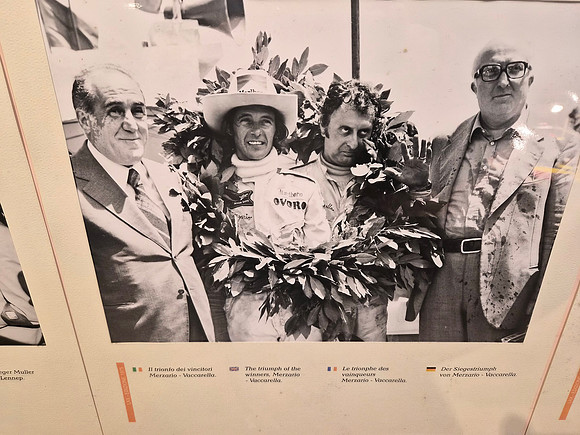
An Aladdin’s cave of Targa Florio history—rare artefacts, photographs, memorabilia, each piece with a story. Antonio moved through it all with infectious enthusiasm:
“Bugatti—winner… starting flag… signed poster—Vic Elford, Brian Redman…”
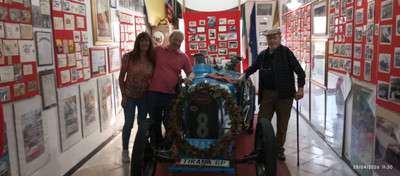
This wasn’t just a collection—it was a lifetime of passion.
To be welcomed into such a private space, in the very heart of Targa Florio country, felt incredibly special.
And that’s the thing about this journey. It wasn’t just the roads, or the history, or even the cars.
It was the feeling.
I feel privileged to have met Antonio.
Privileged to have shared time with Antonino.
And privileged—truly—to have touched, however briefly, the living legacy of the Targa Florio.
EXPLORE THE MOTORING-MAN PHOTOGRAPHIC ARCHIVE
Interested in historic motor racing? Explore our photographic archive covering more than 70 years of Le Mans, Formula 1, Group C, Sports Cars, Touring Cars and Ralling.
VIEW THE PHOTOGRAPHIC ARCHIVE →
Photographs From The Trip:
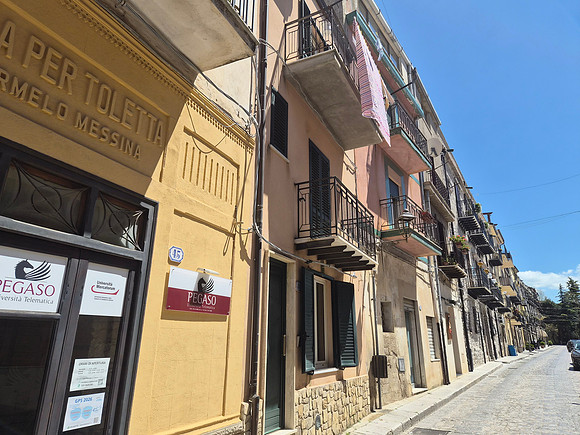
]]>
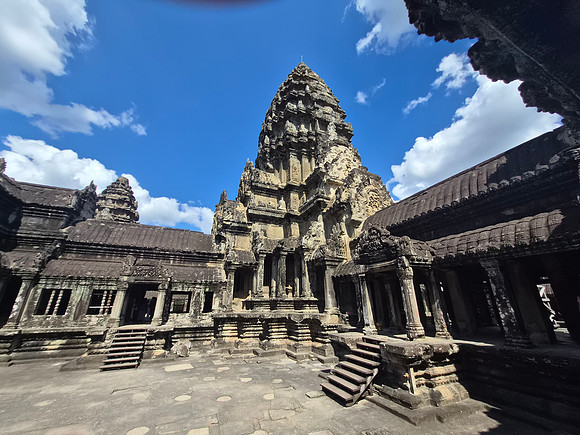
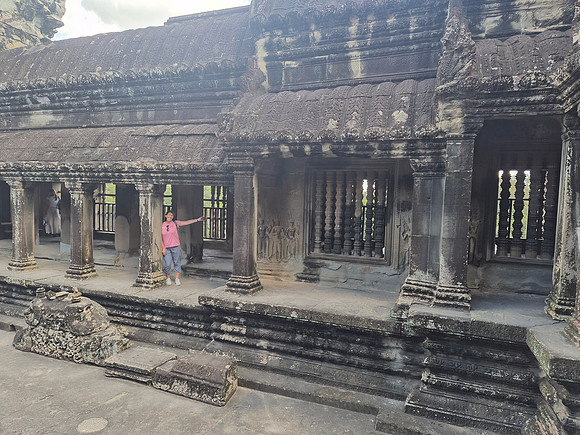
I messaged my daughter at home and took a picture.
“Do you remember this?”
“Oh wow, that is the place in Tomb Raider where we stayed up all night trying to get to the next level.”
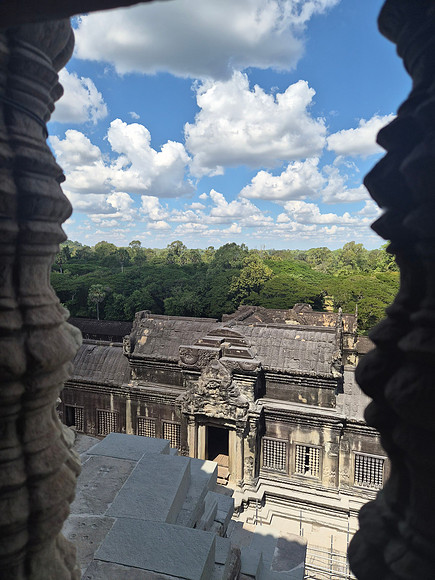
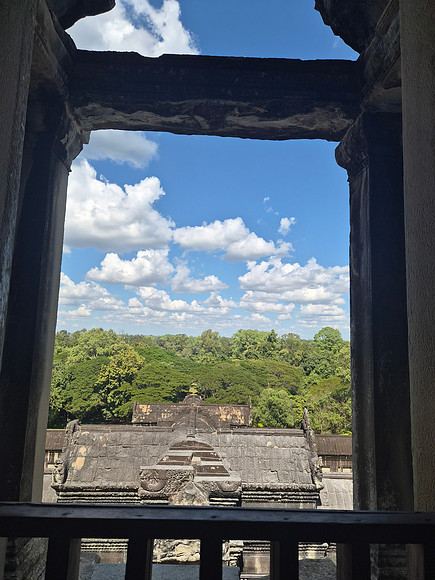
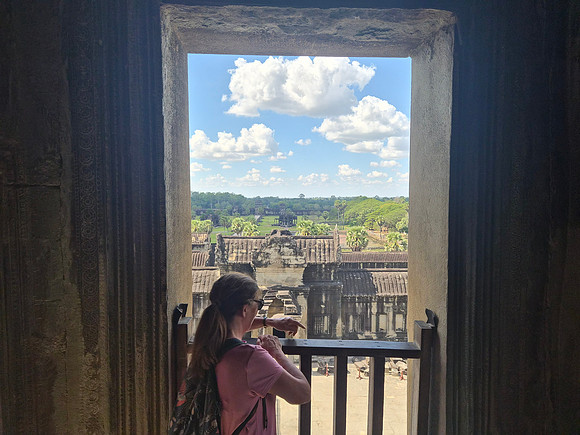
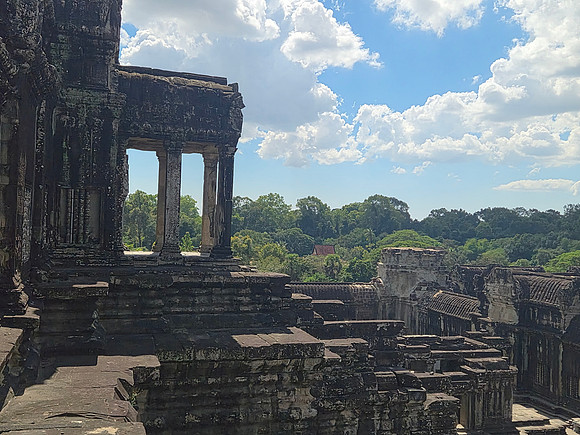
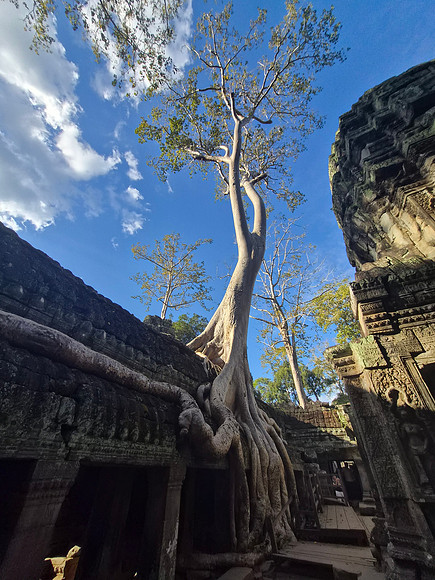
In front of me is a courtyard with multiple ledges and windows, and the moment I saw it I recognised it from the only computer game I have ever really played. In the game, we were both stuck in this part of the temple, and it took me until the early hours of the morning to get Lara Croft up along a ledge and through the window! I hadn’t even thought about it until I stood in the scene.
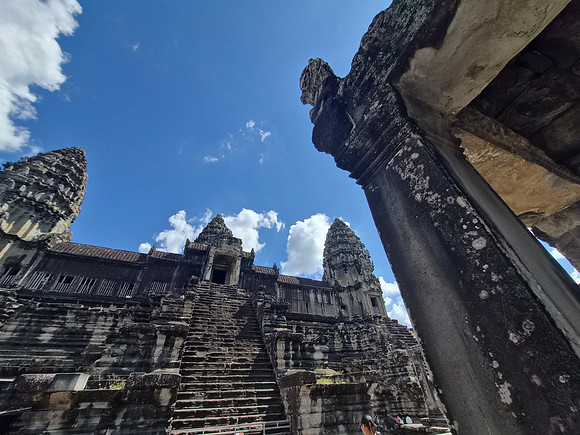
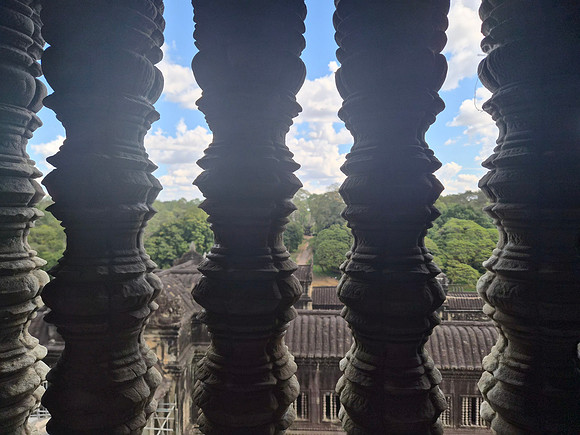
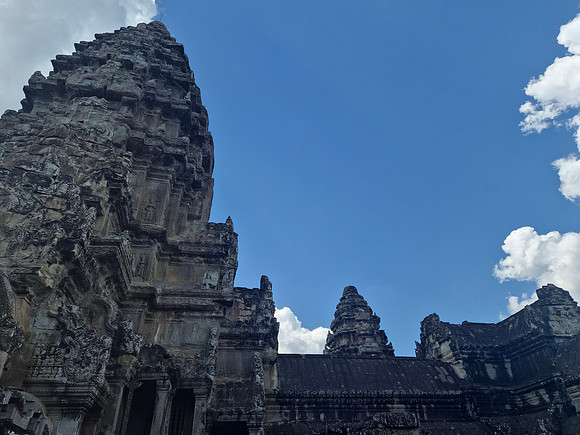
There is no doubt about it: the main temple here at Angkor Wat is quite extraordinary and on a scale I could not imagine. It is so hard to comprehend that only about 800 years ago this was part of a massive city, and until the French rediscovered it, it was all but lost to the jungle. I will always remember the three hours exploring it with our amazing guide and would recommend anyone to visit—but the main temple was not the highlight for me!
The Angkor Wat complex is massive—and I mean massive. There are literally hundreds of square miles of smaller temples and buildings, all at the mercy of the encroaching jungle. We were lucky enough to visit three other temples, but the second one was the highlight of the day.
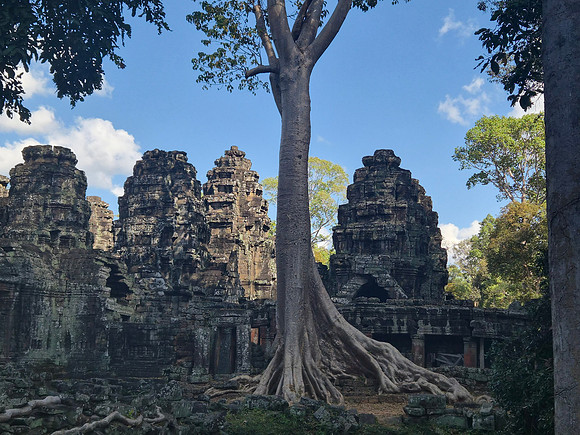
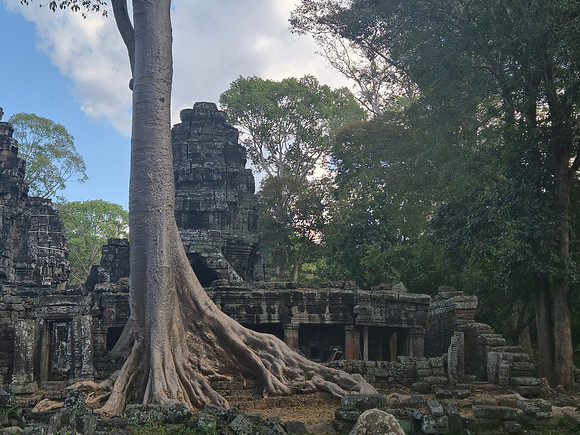
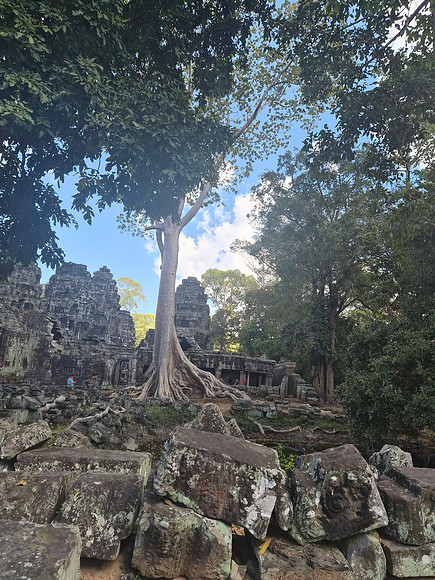
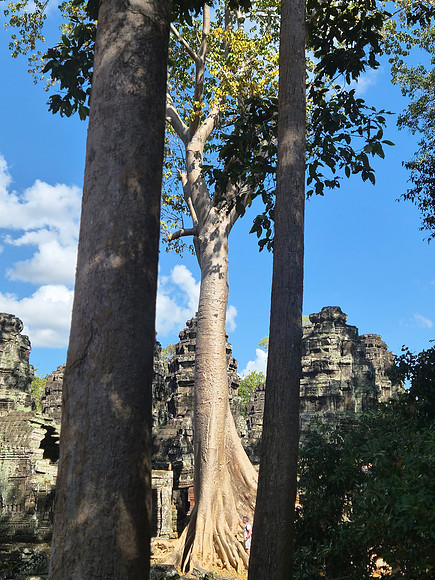
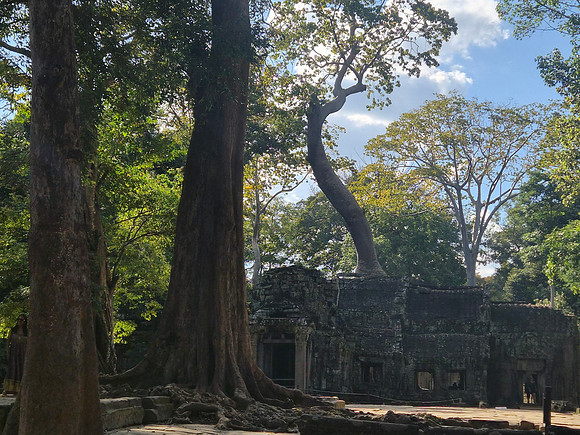
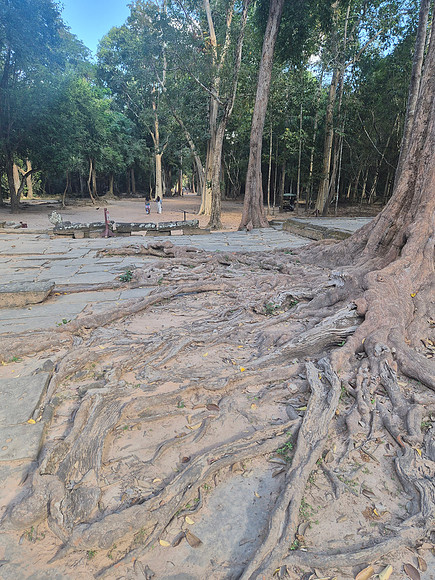
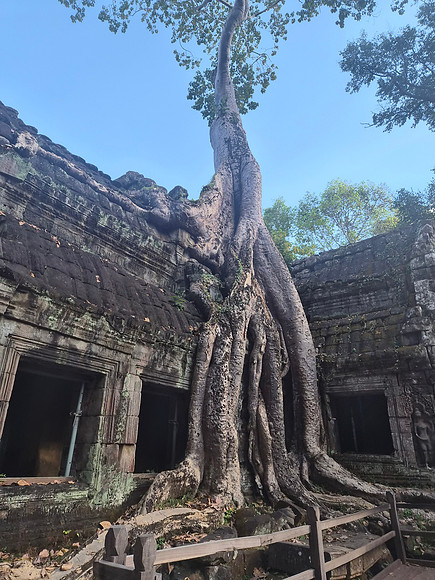
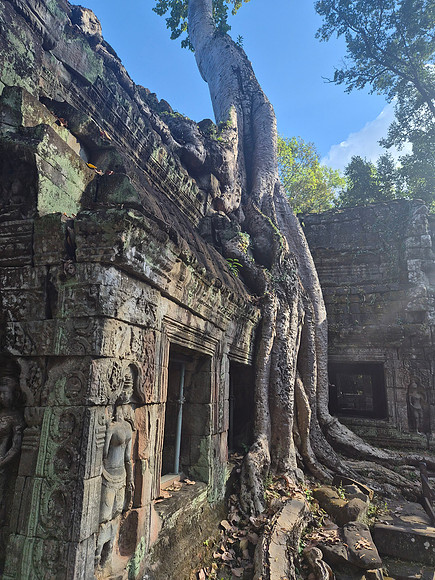
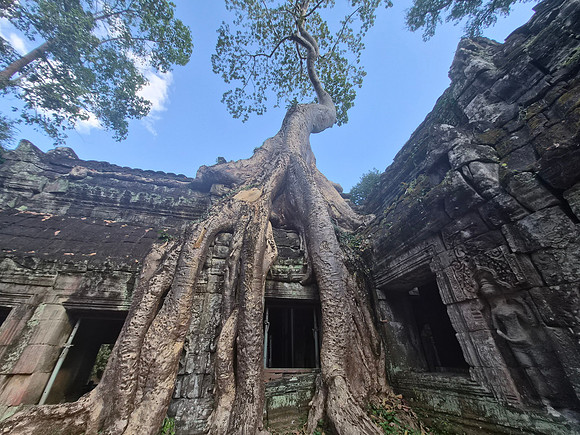
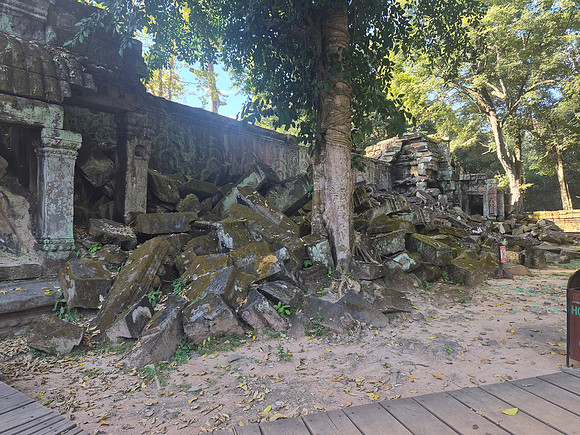
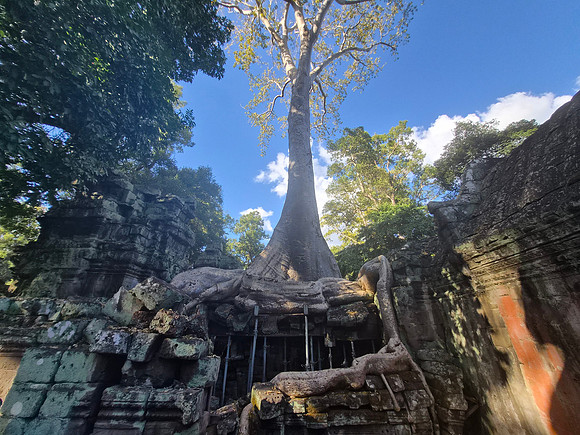
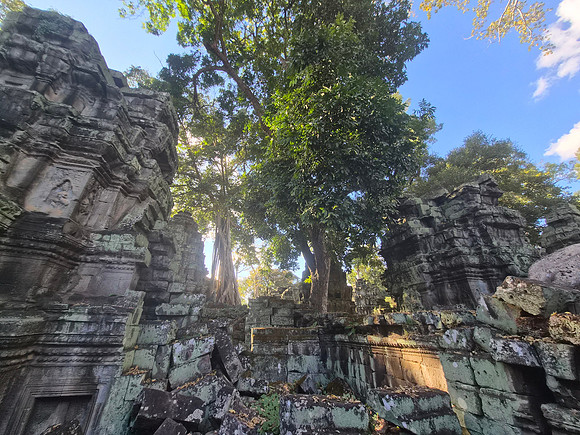
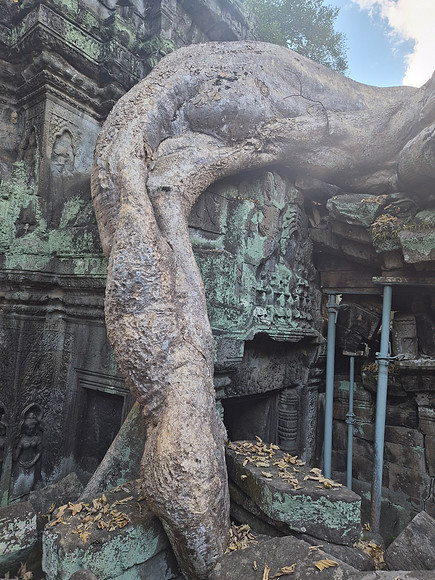
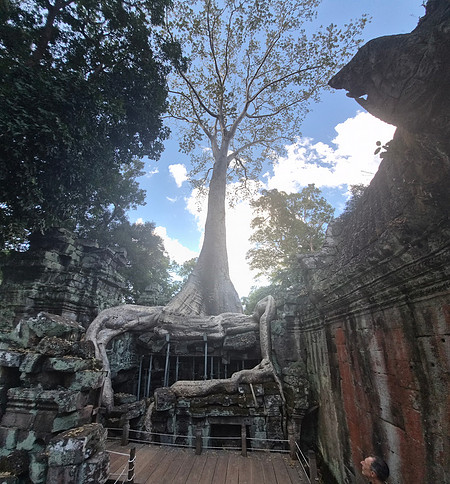
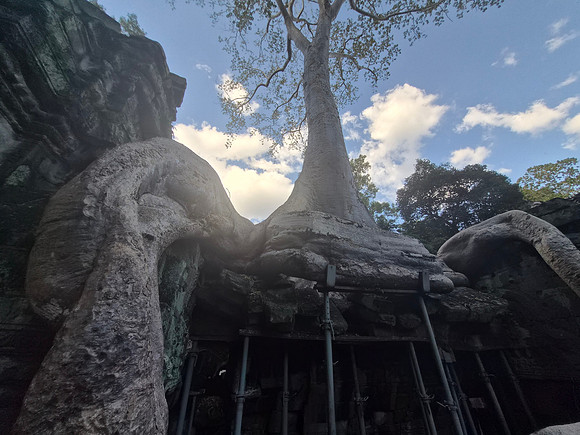
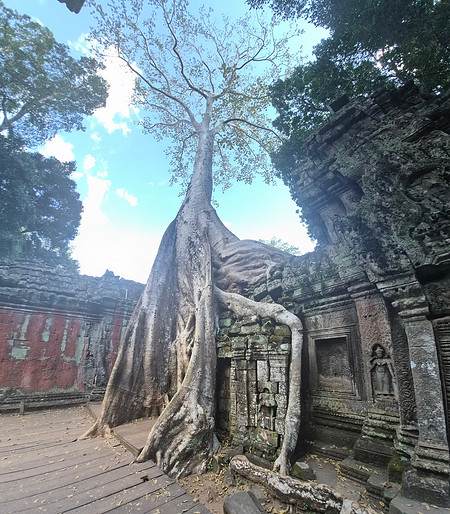
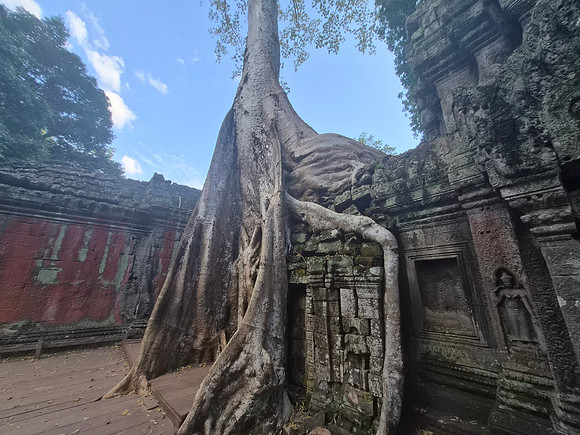
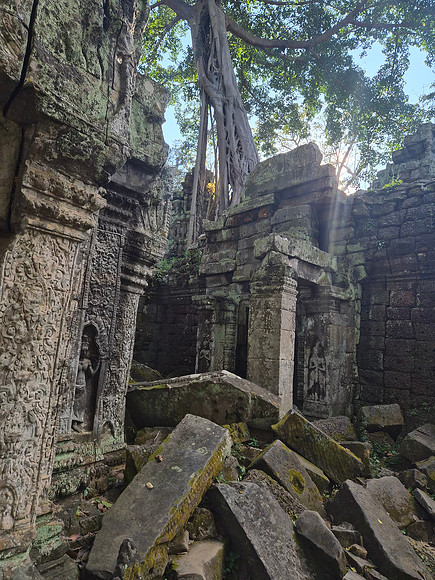
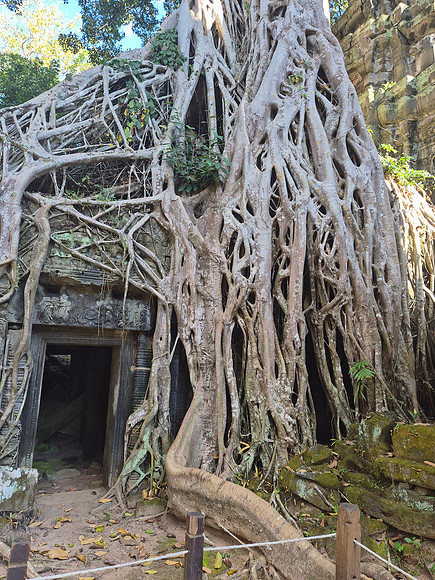
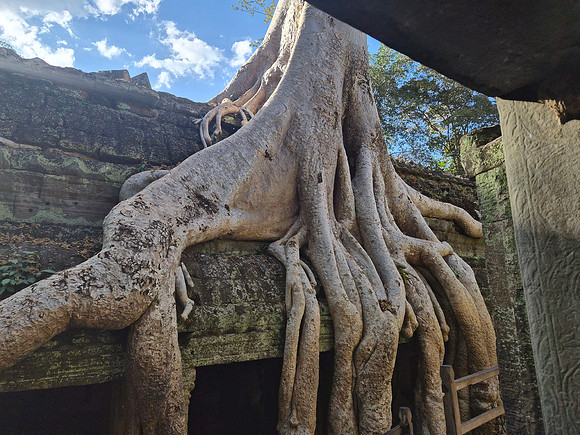
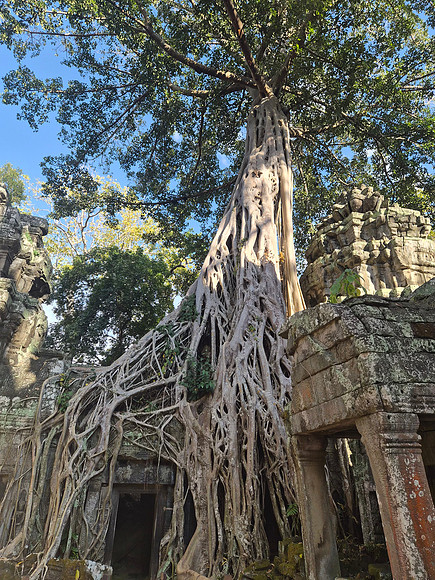
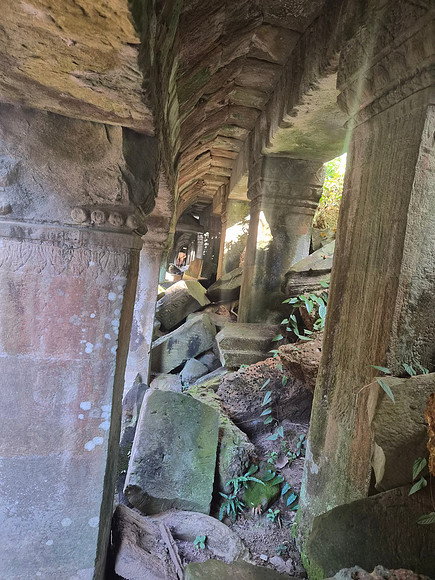
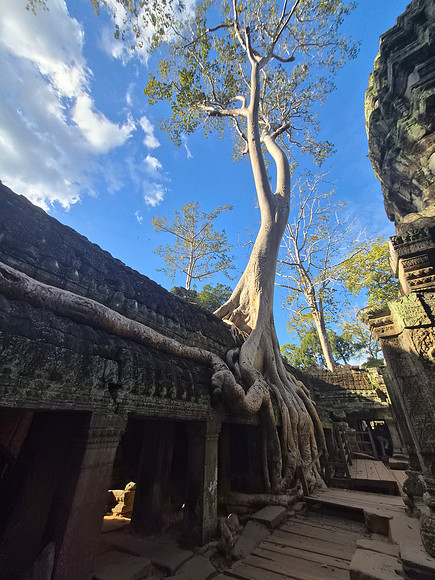
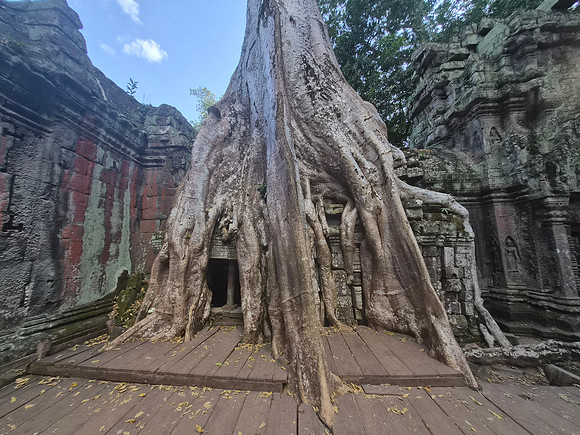
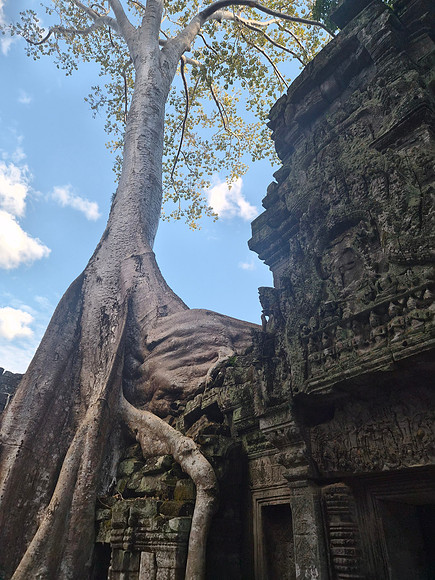
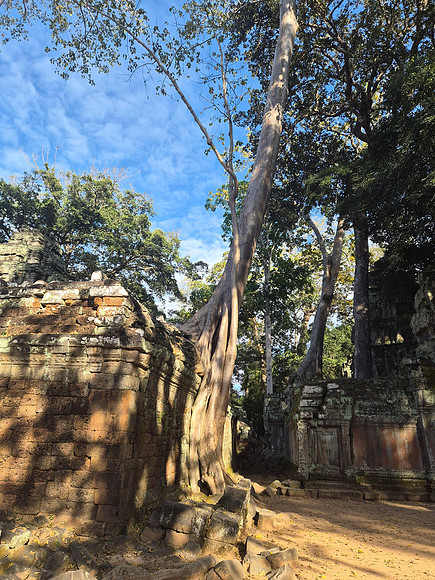
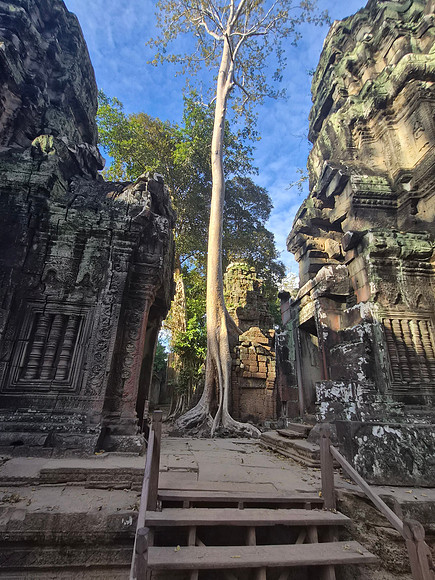
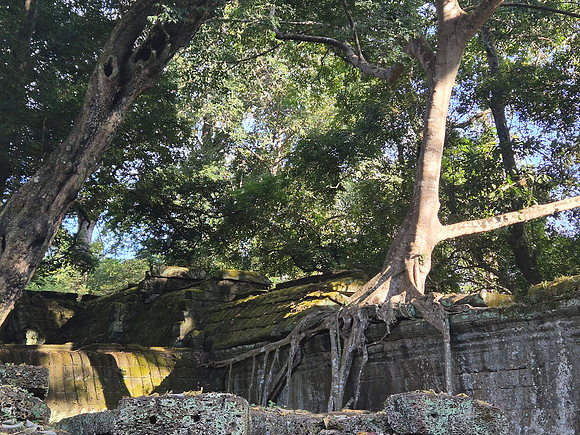
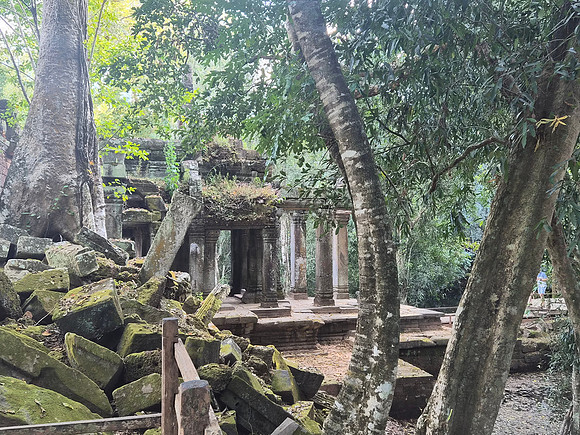
Giant stones, ripped apart by the power of roots from plants and trees, have produced an almost alien landscape. Massive tree roots are intertwined under heavy stone pavements that now lie like uneven, mossy green giant chequerboards. Thick silver and green roots, often a metre thick, creep ever forward, branching out into doorways and through crumbling rooms. On top of roofs and walls stand mighty trees, hundreds of feet high, with huge tentacle-like roots wrapped around every crevice, securing them firmly in place.
With most of the light stolen by the canopy, the crumbling, castle-like ruins have a coating of green algae or moss. There is also the cacophony of noise unique to every jungle, as insects and birds compete to be heard.
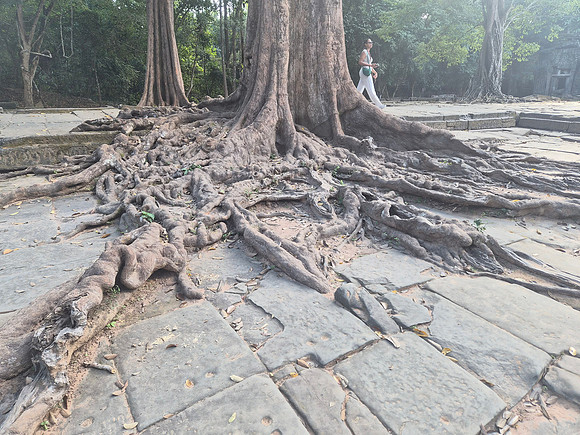
With no restrictions on where you can go, it is easy to get lost in the higgledy-piggledy alleys, corridors and courtyards. Like a child, you are driven to explore in constant wonder of what will be around the next corner or stairwell. As with nearly everything at Angkor Wat, it is vast. Yes, I am not just saying it—you really can get lost in any number of buildings, and that makes it just brilliant.
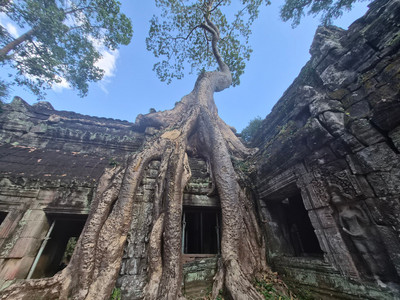
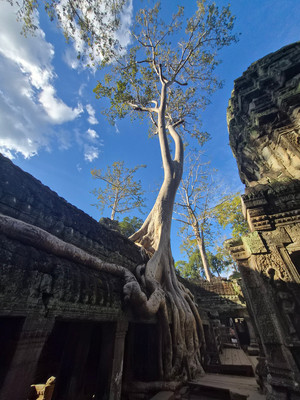
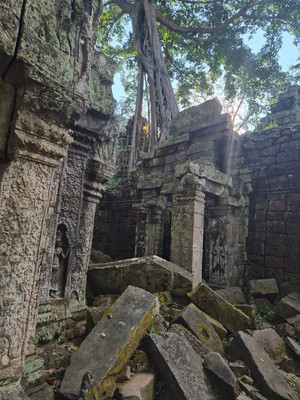
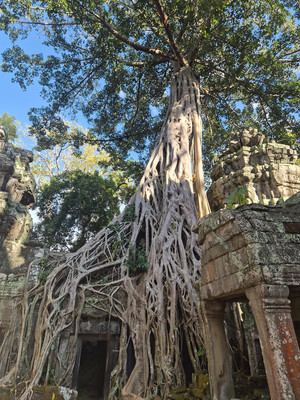
So basically, come to Angkor Wat and admire the achievements of a civilisation from a different age; but if you are like me, come and admire the power of nature as it tears it apart with slow, remarkable force—and run around exploring like a kid again. Lara Croft has got nothing on me.
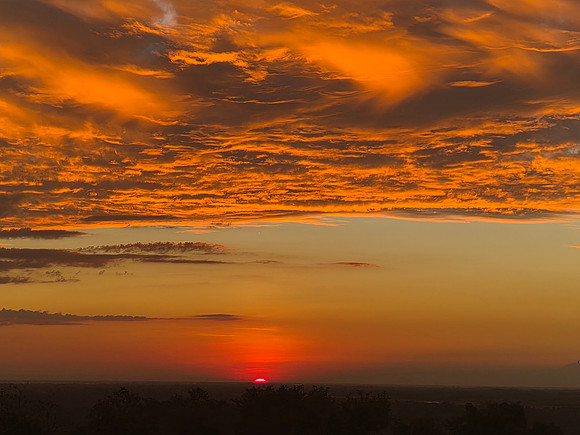
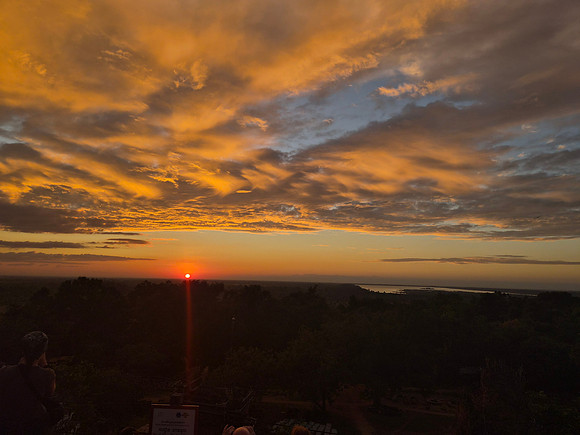
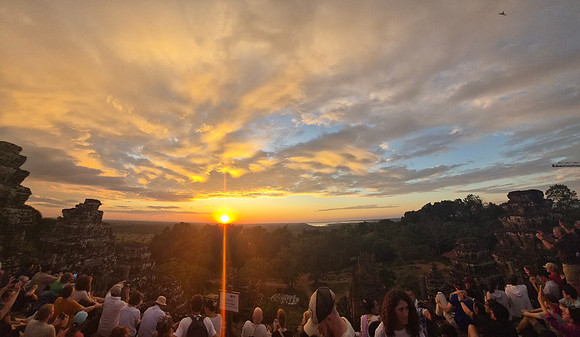
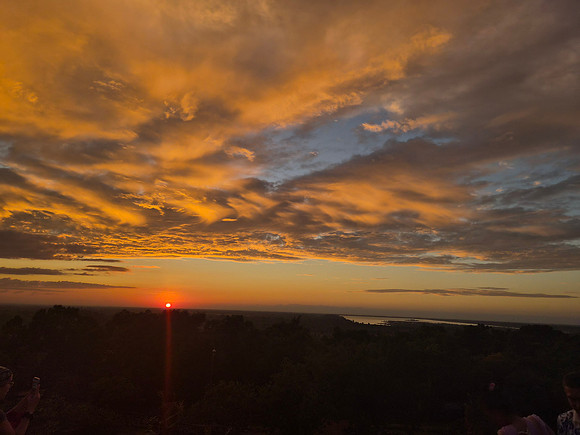
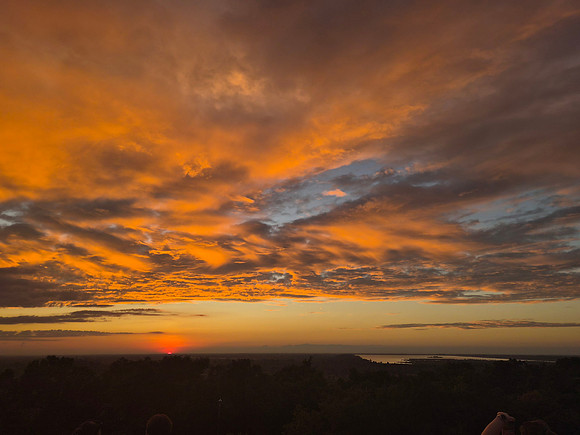
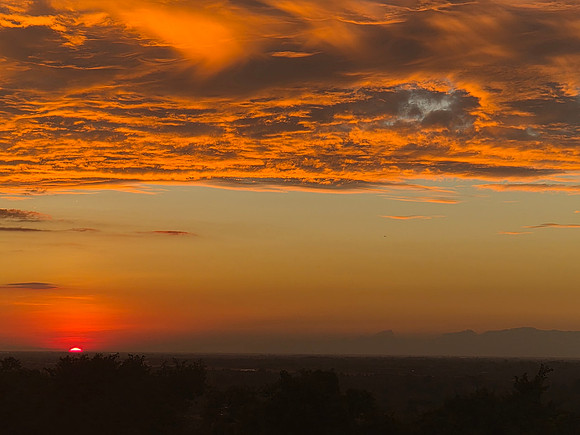
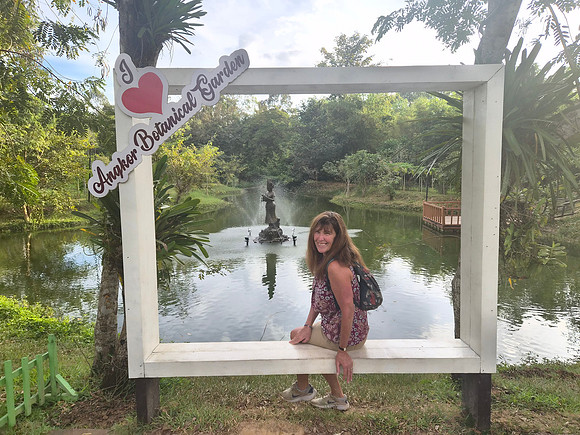
Every trip to Angkor Wat either starts with a sunrise or sunset. We chose sunset, which involved a long climb to the top of a hill at the end of nine hours walking in high humidity and heat. Phew! Sitting and looking out over a pristine woodland canopy, it was honestly worth it—but I probably won’t remember it forever unless I read this back in ten years.
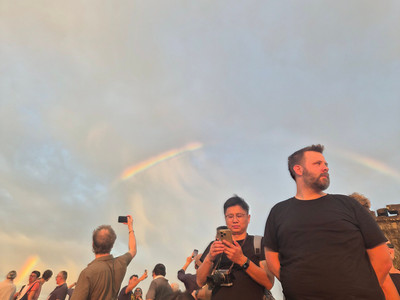
There is something I will remember, though. Looking west toward the dipping sun, with not a cloud in the sky, just behind our heads a fully formed rainbow appeared from nowhere. If I had lived in the temple a thousand years ago, I would probably have put it down to divine intervention! Some in the group did just that, but being the cynical old grump you all know I am, I went and looked it up on Google.
Meeting People Without Judgement
On our last day in Siem Reap, we spent most of it beside the pool at our hotel. I felt the need to relax for a while, read my book and do some writing. It has been a hectic five weeks so far. On the face of it, you wouldn’t imagine it would be a memory I will probably never forget—but travelling is like that.
As I walked toward a lounger beside the pool, the young woman on the next bed smiled and asked, “Who’s the book about? Anyone I would have heard of?”
“It is the story of Robert Maxwell, a newspaper editor in the 1980s and 90s—rather like a Donald Trump of his time,” I replied.
I had a feeling this girl was interesting, so I let the conversation flow to show I was not reluctant to chat to my semi-naked new friend.
We chatted for quite a while, and I found out she was a wine promoter living in Perth, Australia, recently split from her boyfriend and taking time out in Cambodia to celebrate her freedom.
I then asked, “Where are you from? I can’t really place your accent—it’s certainly not Australian.”
“I’m Russian,” she replied.
It is amazing what goes through your head in a single split second. Literally all my values about judging people not by their ethnicity, colour or creed—but by who is in front of me—are suddenly confronted. I was proud to say I didn’t hold back.
“So how’s that going down in Australia, with what’s happening in Ukraine?” I asked.
She didn’t seem too surprised by my question.
“Not too bad, considering. Most Australians know we don’t all support Putin.”
She has worked in Australia for quite a few years now and only returns to visit her mother—which is fine if she brings home money or gifts.
She went on to cheerfully tell me about her adolescence in the far northwest of Arctic Russia, where extreme cold had led her to hate the snow and ice of home. Unlike her ex-boyfriend, who is now skiing, she prefers the sun.
She has three brothers, and when her parents divorced about twenty years ago, two brothers moved with her and their mother to Moscow, while the other two brothers and her father moved to Kyiv in Ukraine.
I asked the obvious question:
“How does that work out with the war?”
For the first time, she showed a little emotion. Two of her brothers are fighting for Ukraine on the front line. She can sometimes call them, although it is always harrowing and always on an unregistered phone outside Russia. Her other brothers are near the front, but her mother has enough connections and money to keep them just far enough away—for now.
She explained that none of them support the war but have no choice. They all realise it is a situation that could ultimately lead to them unknowingly fighting each other on behalf of a madman.
When you talk to someone first-hand, you realise there is so much more to consider. She might well have been an ex-boyfriend murderer for all I know—but it didn’t seem to me that she was a “bad Russian”, just like so many others.
Big Rats: Very Big Rats
“You’re going to pick up and hold a giant rat on a lead?” I asked, amazed.
“Yes, he’s cute,” Wendy smiled.
And sure enough, she held the extra-large vermin in her arms, looked lovingly at him, and I took photographs for posterity.
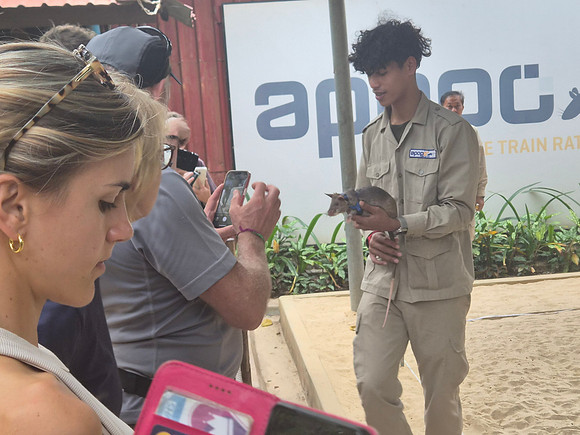
But this was no ordinary rat—this was a “Hero Rat”: a giant African rat trained to detect landmines and bombs.
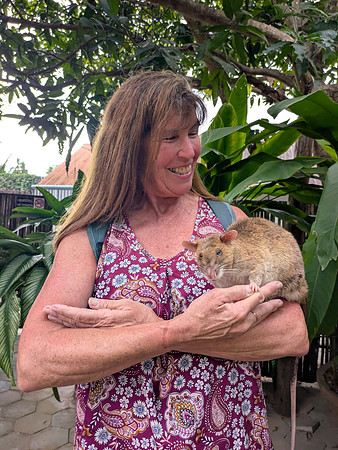
We were at a demonstration at the rat landmine clearance information centre on the outskirts of Siem Reap. As we stood on the edge of a roped-off sand pit, two handlers slowly made their way down the sides, holding a rope between them. A very large rat was attached to a harness and ran below the rope. If he smelled a landmine, he stopped, scratched the ground to mark the area, then returned to the handler for a treat before moving on again.
It is quite amazing how quick he is compared to a human, and great swathes of Cambodia have been cleared of these deadly explosives.
“Does anyone have any questions?” asked the guide.
“Ah yes, I do…” I paused to choose my words carefully.
“You are a charity asking for donations to help clear mines laid in your country—but how do you feel about the fact that, as we speak, there is fighting on the border with Thailand, with alleged laying of more landmines?”
Oh shit—I just couldn’t help myself. This was awkward, as all eyes turned from me to the poor Cambodian girl giving the talk.
“It is not something I am in a position to talk about, and I do not really know about it,” she replied before moving us on.
I felt a little guilty and wished I hadn’t asked—but I find it hard not to confront reality, no matter how uncomfortable.
Later, after a video about the charity’s work, she quietly took me aside.
“I am so sorry I could not answer your question. Please do not think badly of me—but it is not something for me to know about. I do know that what we do saves children and farmers from horrible injuries and death. Not only that—they can earn money again from the land.”
I internally reprimanded myself. This girl was wonderful—a ray of light. It is too easy to forget what her country has been through and how vulnerable her situation is.
It did the trick—I went straight to the shop and spent some hard-earned cash, hoping we can remove mines faster than we lay the stupid things.
Siem Reap Pub Street
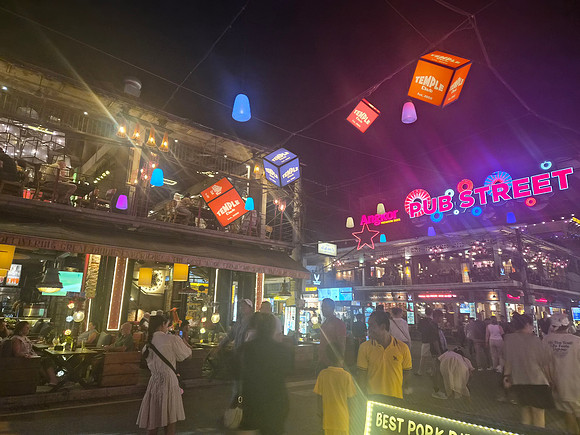
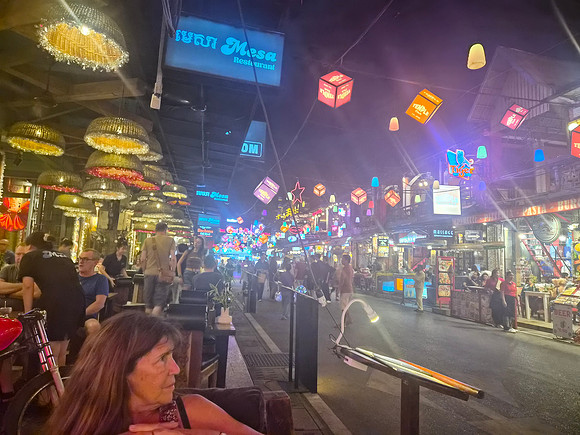
Every Asian city seems to have the equivalent of a “Pub Street” or a strip, but the one in Siem Reap is one of my favourites. It is tastefully done, and with hardly any hawking and no noticeable sexualisation, it comes across as a safe, fun place.
The buildings are mostly two-storey French colonial, giving it an almost Wild West feel. The food was good everywhere we visited, and so were the staff.
It is quite noticeable in Cambodia how many people are affected by birth defects and disability—but equally noticeable is how little attention they attract compared to other places I have visited. It is brilliant the way they just get on and persevere with life, no matter how harsh.
There was a tiny young man in a wheelchair who made his way up and down Beer Street. He never asked for money—he just chatted to visitors and quizzed everyone on football teams. He had a stray dog as a companion, and over several visits I never saw him without it. He told me the dog simply came up to him one day—and they became inseparable
He said his land lord where he lived was not as happy about him as he comes back each night.
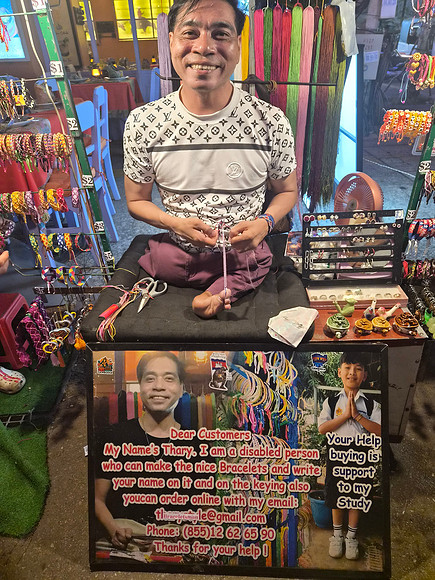
Another man I liked had no proper legs—another legacy of war. He had two children he was supporting so they could attend a good school. He made woven bracelets on a table in Beer Street and was with his daughter when I met him. Of course, we bought some—and made his daughter laugh with our antics.
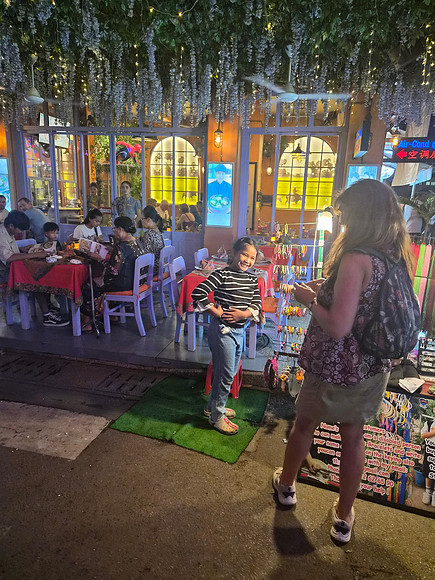
Photo Gallery
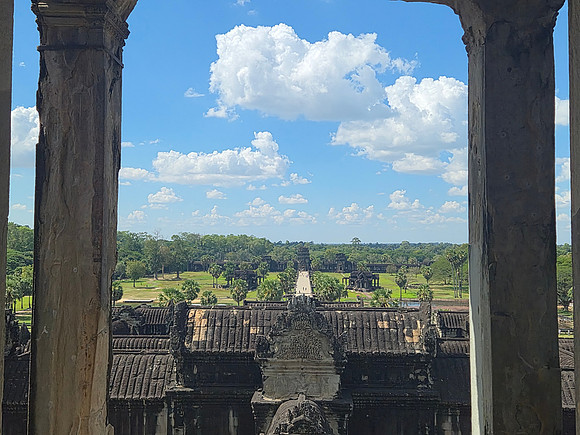
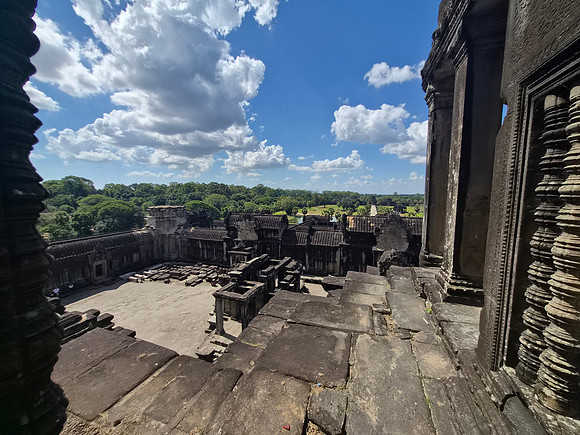
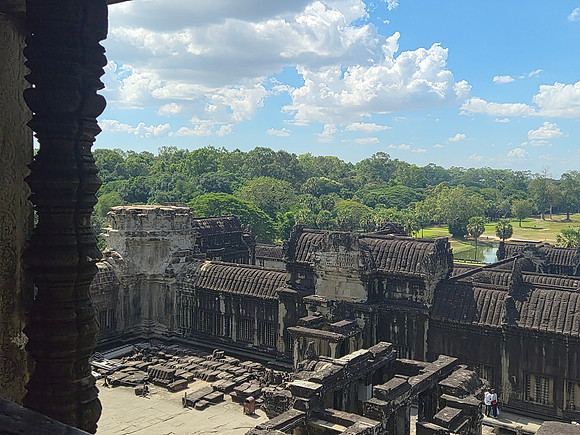
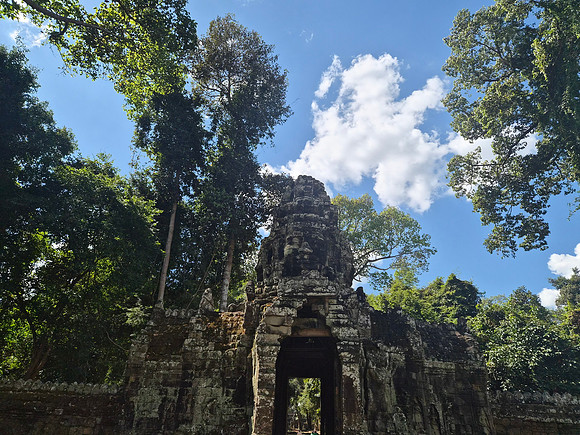
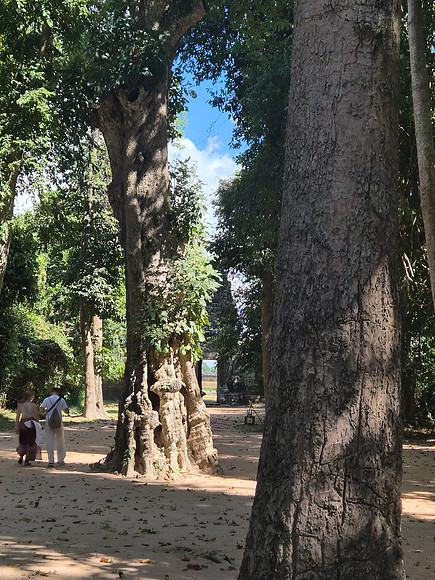
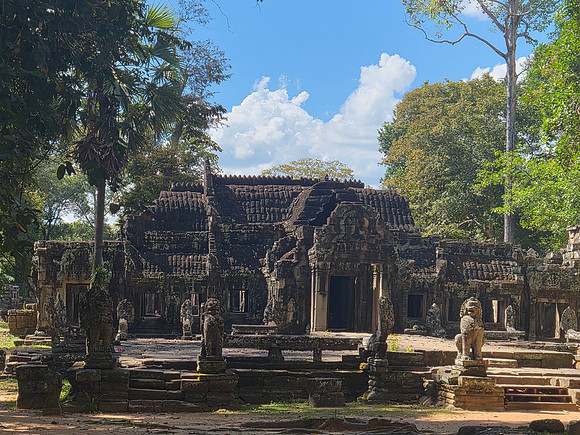
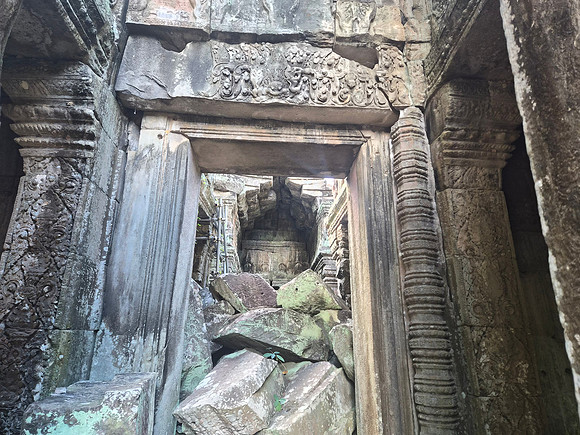
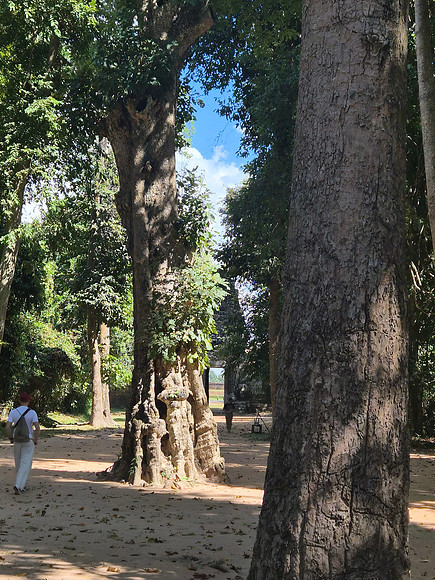
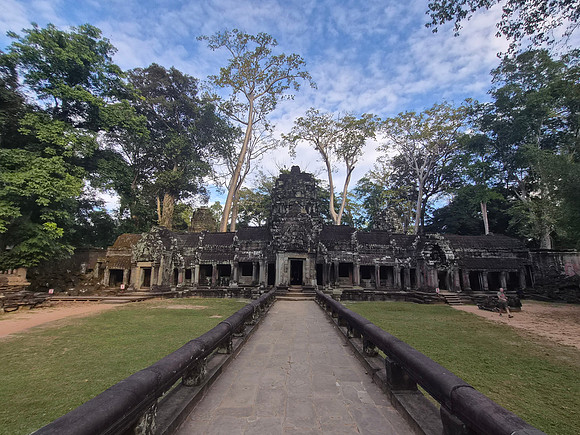
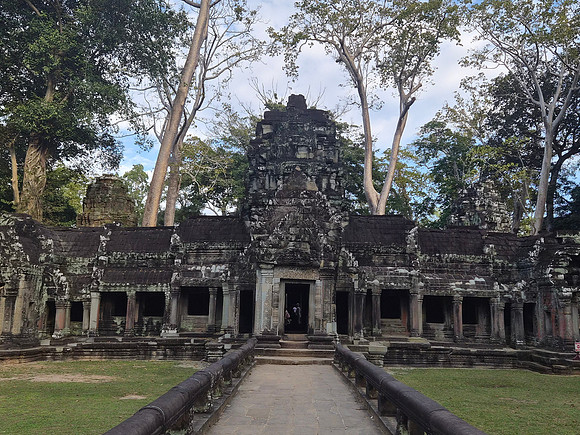
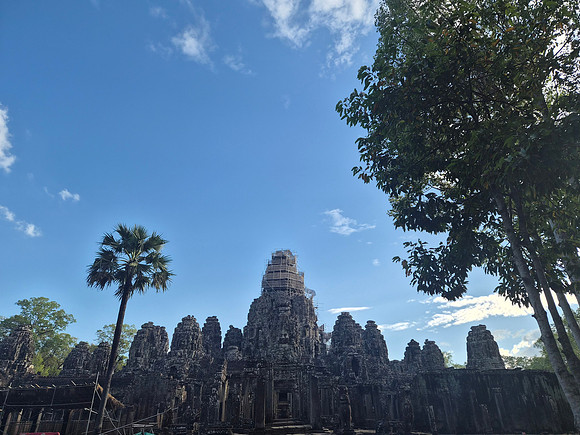
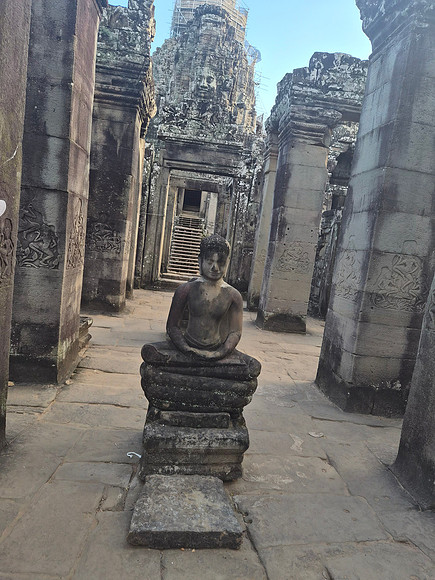
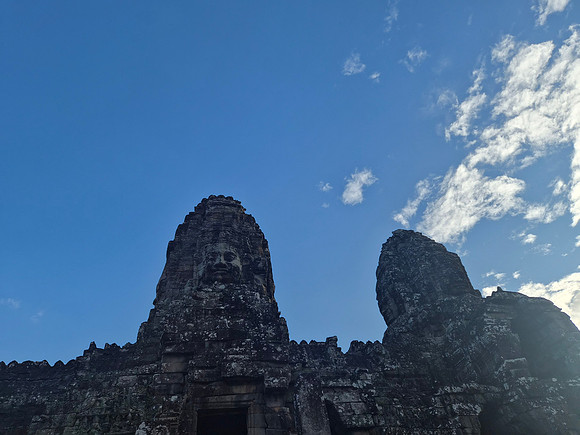
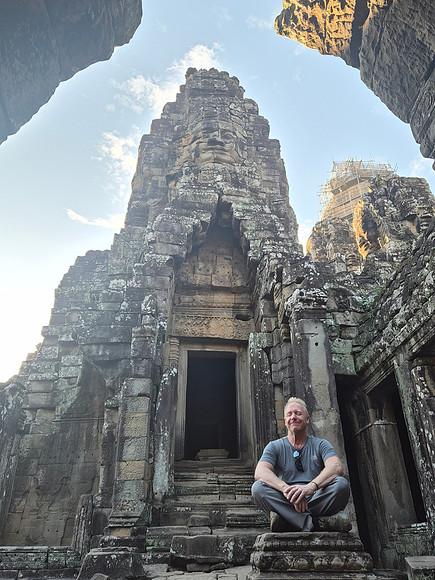
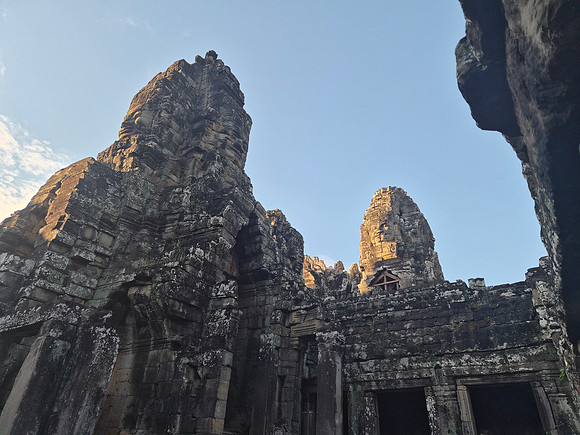
]]>
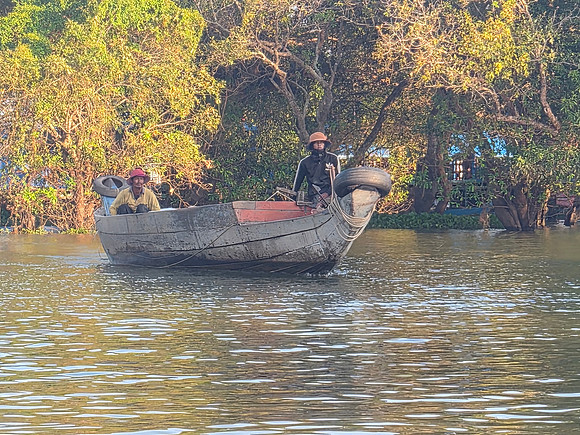
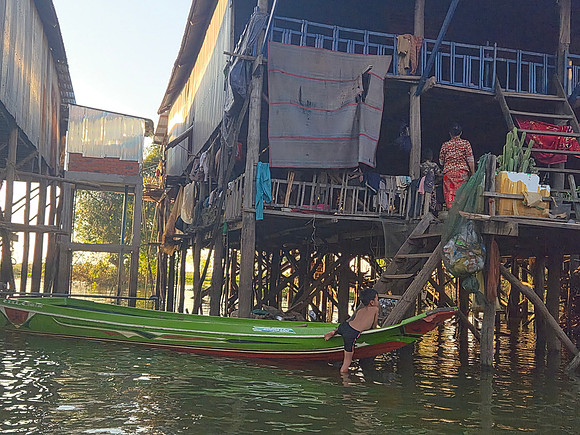
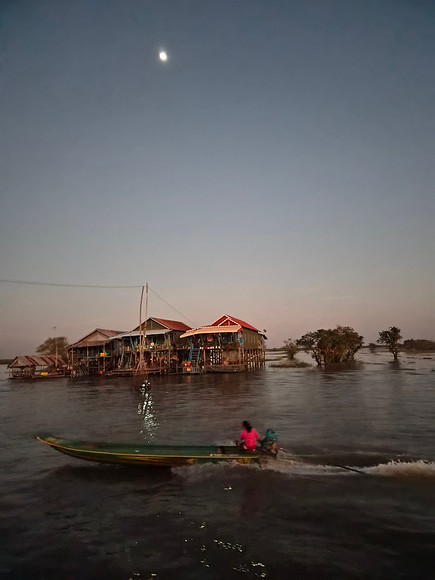
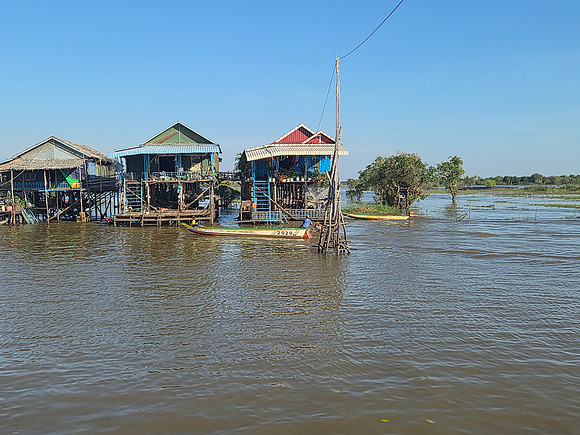
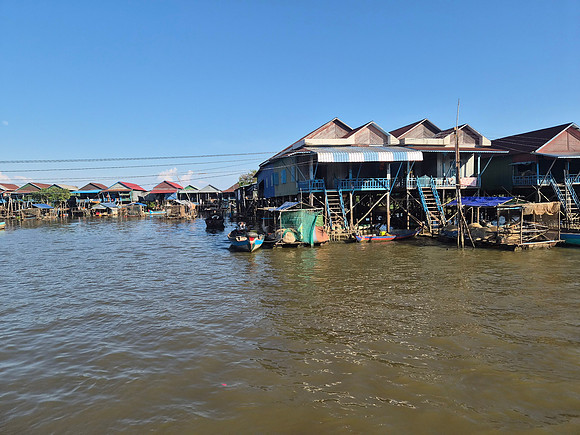
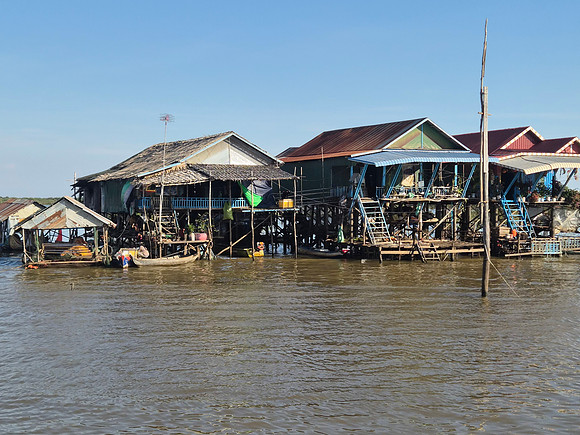
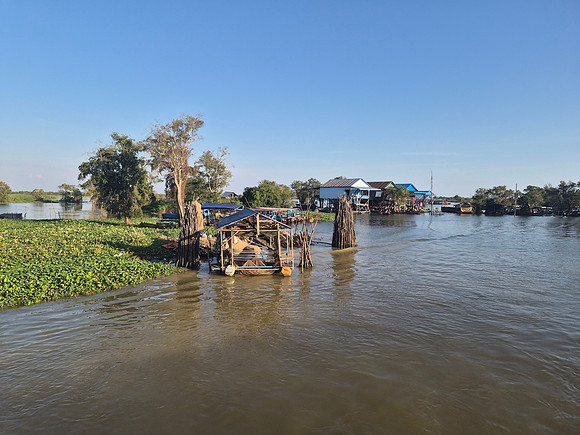
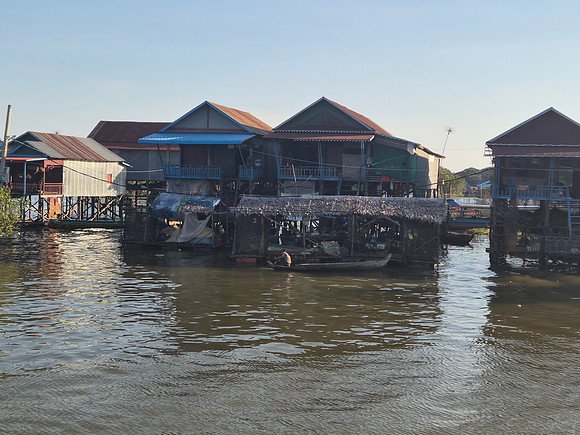
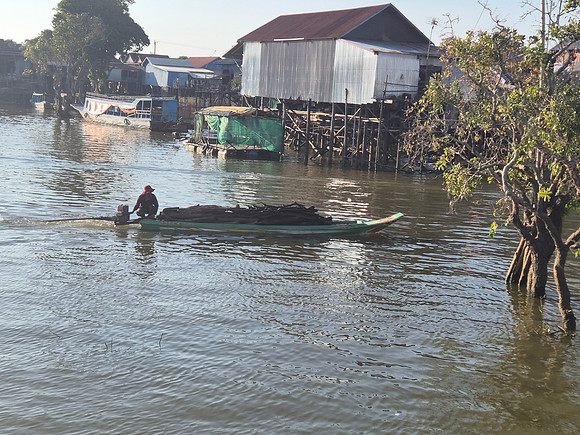
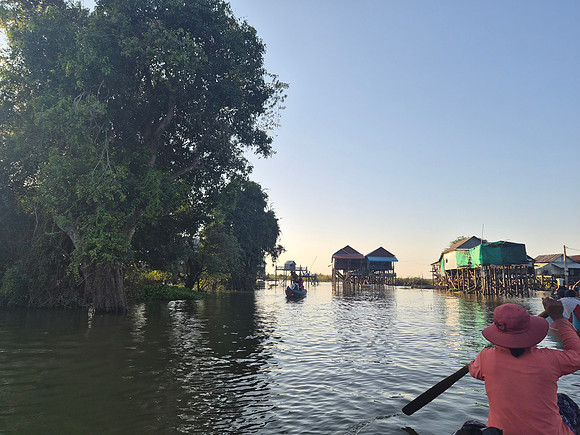
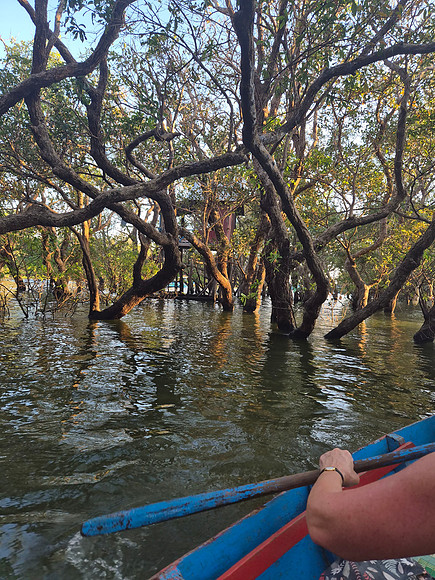
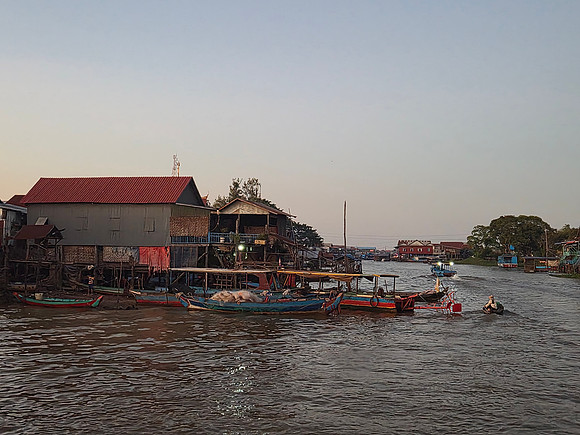
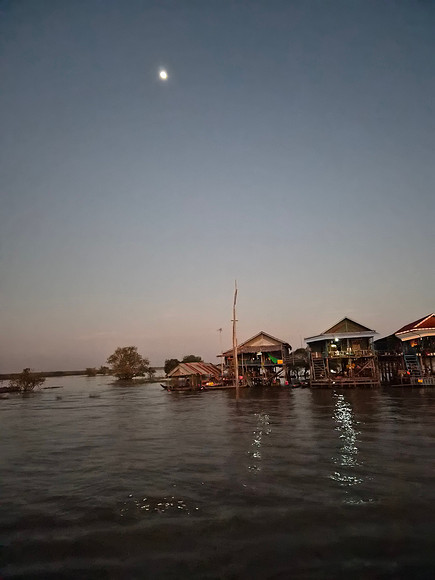
Life in the surrounding villages revolves entirely around the water. Roads give way to boats, and houses rise on tall stilts that seem to float when the lake is high.
We spent a full day exploring, and I’ve struggled to put into words just how incredible the experience was. We genuinely felt like explorers in a remote corner of the earth — so I’ve mostly let the pictures do the talking.
A Glimpse of Village Life
If I could speak Khmer, I imagine the children’s conversation went something like this:
“Hey look, it’s a puppy,” a little girl says, peering down at a tiny body lying on some trash. “It’s dead though,” another replies, unimpressed. The first girl nudges it with her foot. “Is it breathing?” A small boy crouches down, opens its mouth, and pokes around, but there’s no sign of life.
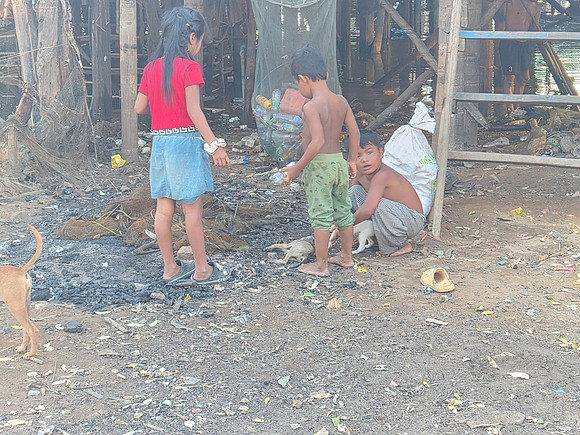
The girls quickly lose interest. “Come on, let’s go find something else to play with.” They run off along the muddy waterline beneath the houses. An older boy watches from a step, unfazed, and the dog becomes just another piece of rubbish.
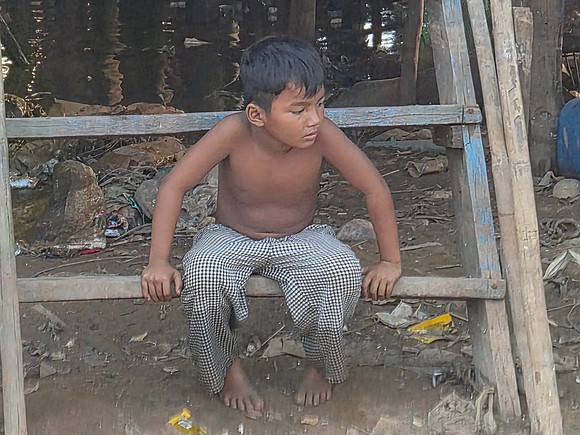
Life here is undeniably harsh. We’re visiting a remote water community on the edge of the lake, and Wendy has found us a guided tour with a local villager — it’s fascinating.
The Village and Its Rhythm
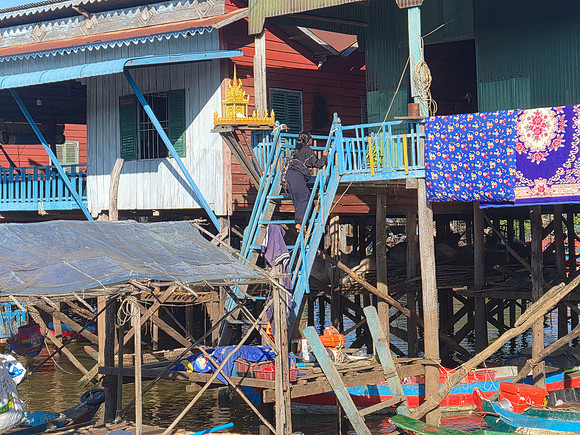
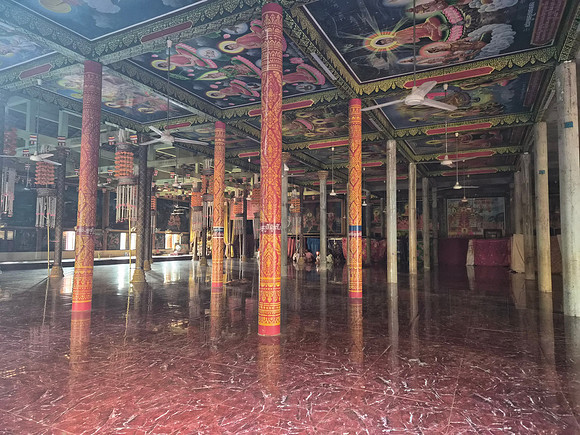
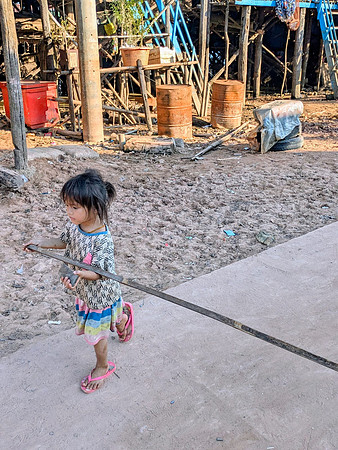
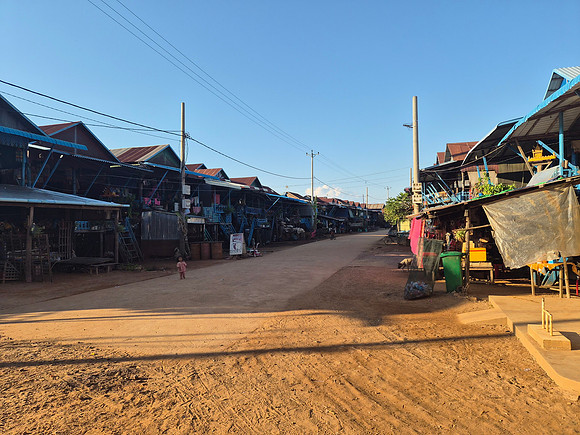
The houses stand high on stilts, and with the receding water a temporary island forms, complete with dusty streets. On the higher ground sits a Buddhist temple that doubles as a school. Many of the children seem to have adopted me as their entertainment for the day. One particularly cute girl has already half-emptied my wallet selling me wristbands — I’m clearly an easy mark.
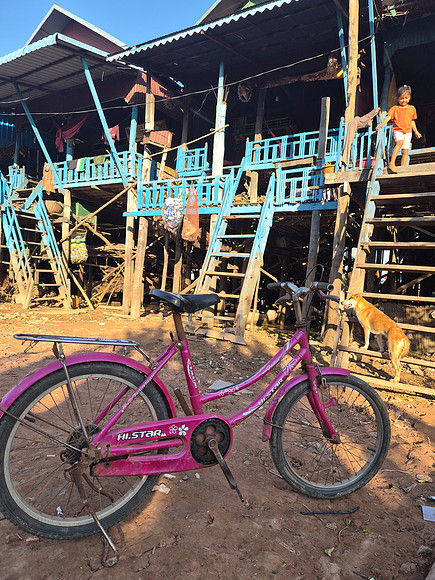
Our guide explains that during the rainy season the water reaches around 10 metres deep, while in the dry months it can disappear entirely for at least two scorching, dusty months. Life here is almost entirely subsistence-based: fishing, crocodile farming, and fish farming. The scruffy chickens wandering around are kept only for eggs. Tourism is a recent addition, and it now helps raise money for schoolbooks and stationery.
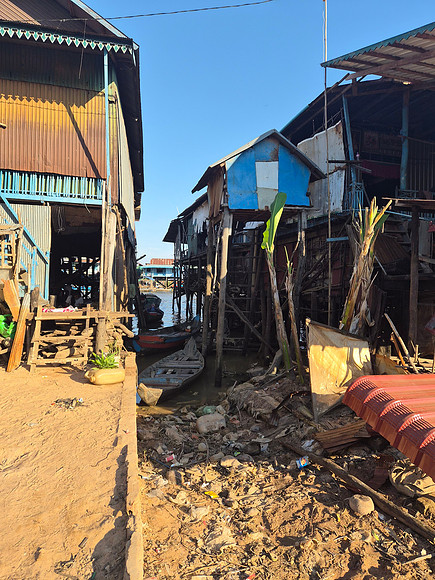
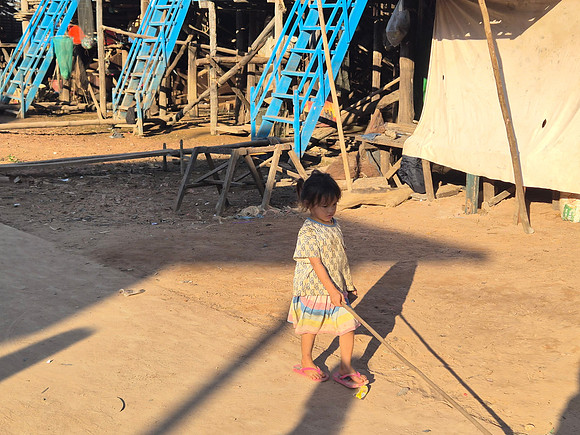
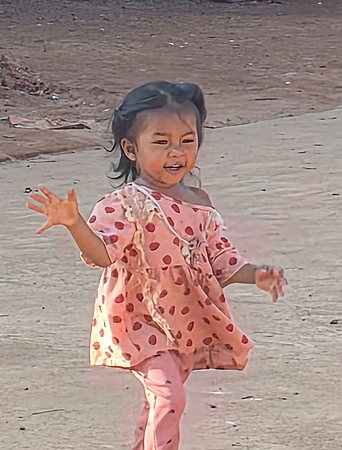
Before boarding a small open boat to explore the flooded forest, I buy a packet of books and pencils from a woman fundraising for the school. I insist on taking them with me after handing over $20, and I give them to a cheeky little girl who’s been following us. To my surprise, she calls over the other children and shares everything out between them. A wonderful, unexpected moment.
Through the Flooded Forest
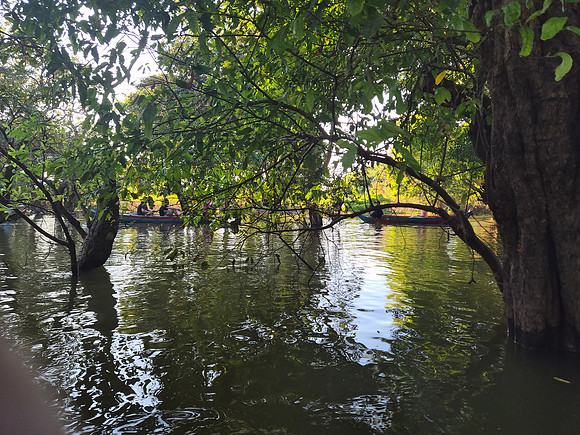
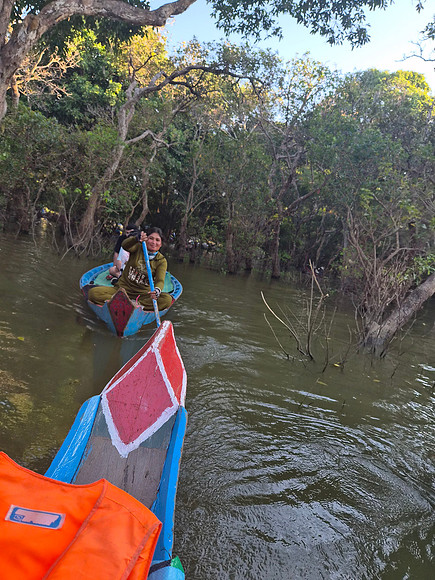
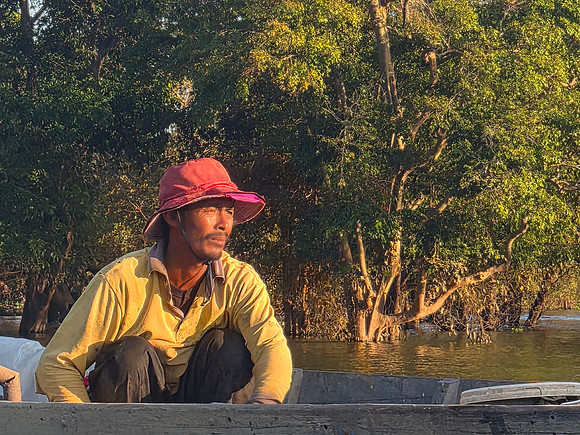
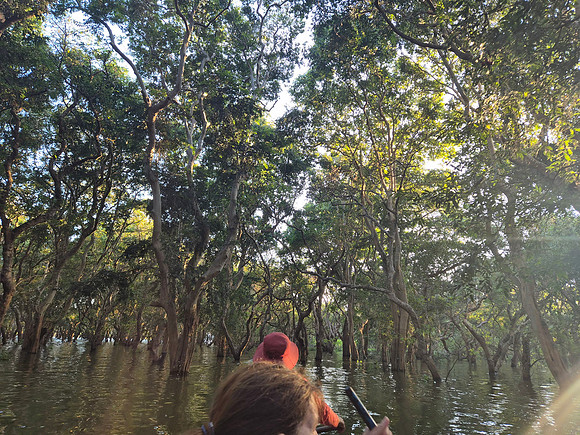
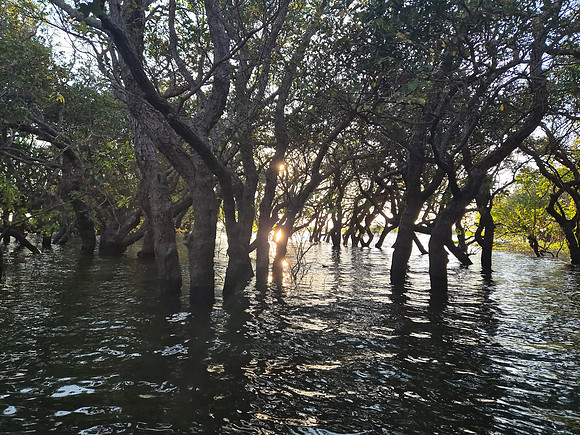
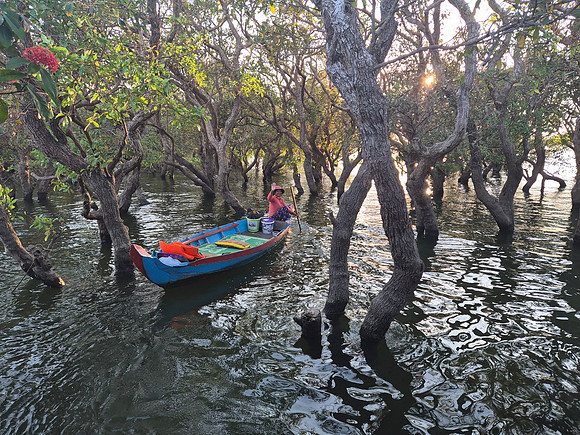
Paddling through the forest canopy feels otherworldly. The woman guiding our small boat lets us join in with the paddling and even sings as we weave through the branches. We scoop up bits of floating plastic along the way, and although we can’t understand each other’s words, we feel like kindred spirits.
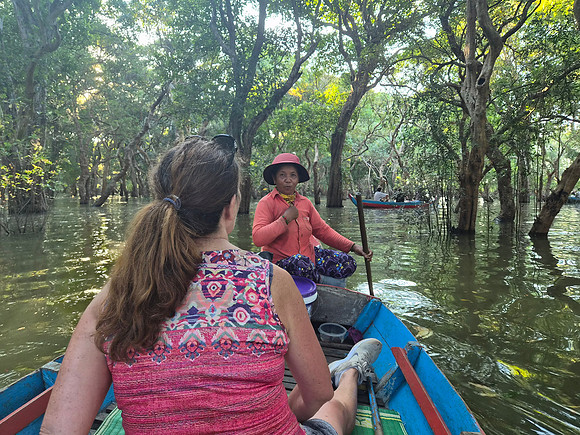
We finish our paddle at a bar–restaurant–crocodile farm hybrid. After cheerful goodbyes, we climb the steep steps into the raised building, learn more about life above the water, and take in the view over the flooded forest.
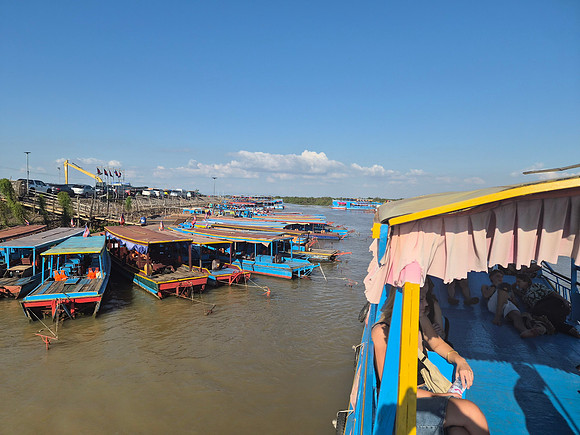
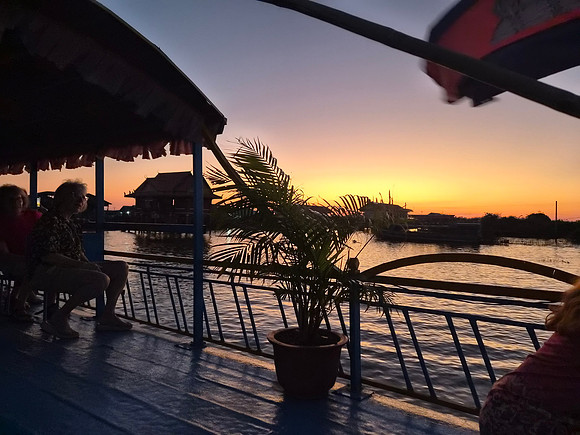
A larger boat collects us for a sunset trip out onto the lake.
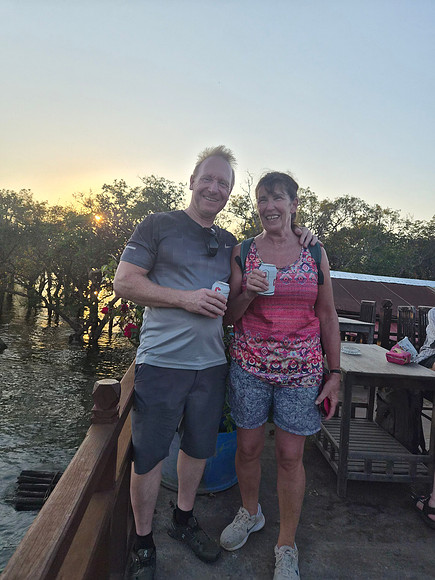
Sunset on Tonlé Sap
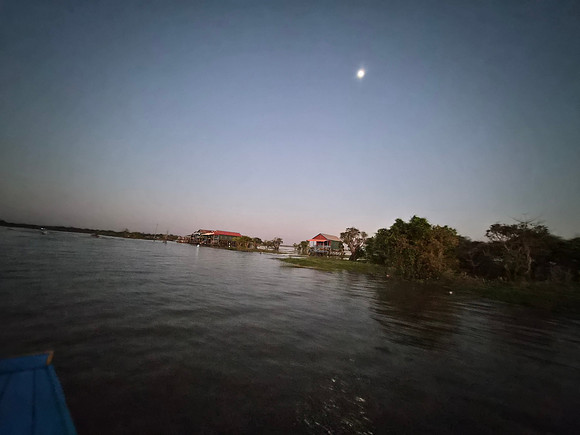
“This is unreal,” I say to Wendy. “It’s incredible,” she replies as we round a bend and the waterway opens into what looks like an ocean. “How big is it?” “About 175 km long and 50 km wide,” our guide says.
We’re stunned. How did we not know this existed?
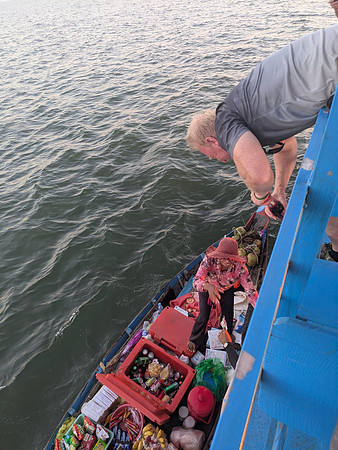
Just before sunset, a woman rows up to our boat, calling out for anyone needing provisions. Her boat is piled with fruit, crisps, and cool boxes. “Has she got a cold beer?” I ask. She grins and holds one up. “One dollar half!”
I hand over $2 and receive a beer and two bananas in return. Perfect. I have always wanted to do that!
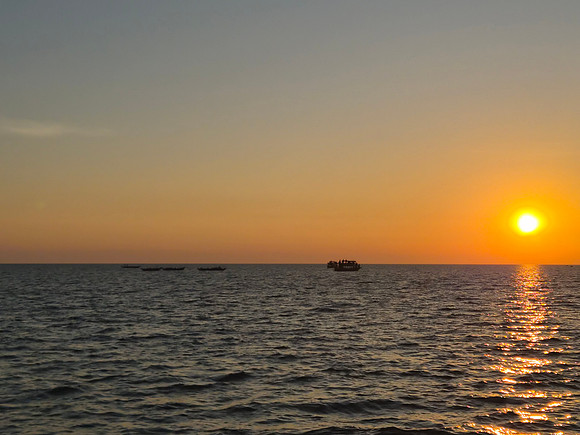
We sit in near silence as the sun sinks into the horizon. My only regret is that Wendy and I aren’t sitting together — I’d gone to a lower deck for photos. I’ve seen many sunsets, but this one felt truly special.
We cruise back through the canals for over an hour, watching the village shift into its nocturnal rhythm. It’s a glimpse of life that will stay with us for a long time.
Gallery Of Pictures:
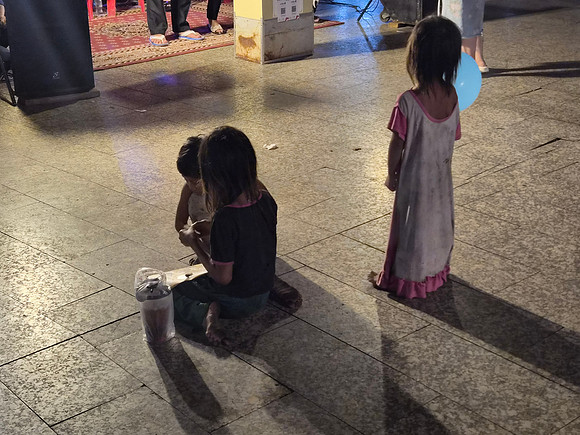
From our vantage point on the opposite side of the street, two young girls and a small boy play a nursery game like “Ring of Roses.” It is simple, but they laugh and tug at each other as they circle. All three are very dirty, with dark matted hair, weathered skin, and no shoes or socks on their little feet. The game fizzles out, and they drift to the shade of a couple of large bar umbrellas wedged against the wall of a fine building.
It looks as though other family members are underneath, lying on an old rug. I can see feet sticking out, though it is dark in the shade. A skinny young girl emerges and makes her way into the road. Barefoot, perhaps only two or three years old, she flirts with the traffic before spotting something further up. In seconds she darts through the cars and is gone. It is hard to comprehend, as the parents take no notice and do not worry.
Our vigil is interrupted: “You want Tuc Tuc? Where you from?” “No, we are fine, thank you.” “I do one hour trip,” he insists. After several rounds of “We are fine,” he eventually gets the message and leaves us to our watch.
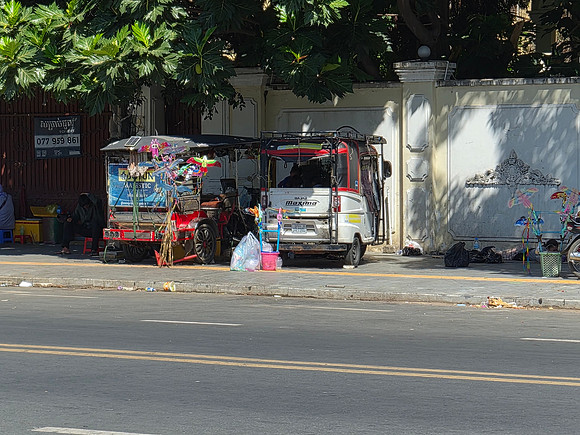
A click of a key fob breaks the moment. A nearby Toyota flashes and bleeps as a woman approaches with her little girl. A raggedly dressed man rushes out from in front of a parked tatty Tuc Tuc by the umbrellas , waving and gesticulating wildly in a pantomime of helping her back into the street. It works though as the woman winds down her window and hands him a few small bills. He doesn’t thank her or even acknowledge the gesture. As the car drives away, a woman—perhaps his wife—emerges eagerly to see what he has collected. She snatches the money and disappears again. The man, meanwhile, positions himself in the road, blocking large cars and waving them toward the now‑vacant space. He has little success, and for the next twenty minutes he and his wife take turns cajoling traffic into the spot.
Again, our vigil is interrupted: “You want Tuc Tuc? Where you from?” “No, we are fine, thank you.” “I do one hour trip,” he repeats. Eventually, he too leaves us alone.
A young man in a really dirty hoodie and woolley hat walks in the road near the parking space and tries his luck with a few cars. Our man moves in on his space and with no words said sidles him off his patch. Head low he checks out the bin. After a little rummaging he finds a plastic drinks cup with lid. He looks pleased and proceeded to crush the plastic together in an attempt to remove the crushed ice before swigging back the remaining liquid. He then throws it back down and moves on up the street.
Bizarrely, a young woman in what looks like a shop uniform appears from the bushes. She carries a large bottle of water, washes her feet, slips on flip‑flops, and tosses the bottle onto the rubbish pile by a bin before strolling up the street. I wonder if she is off to work?
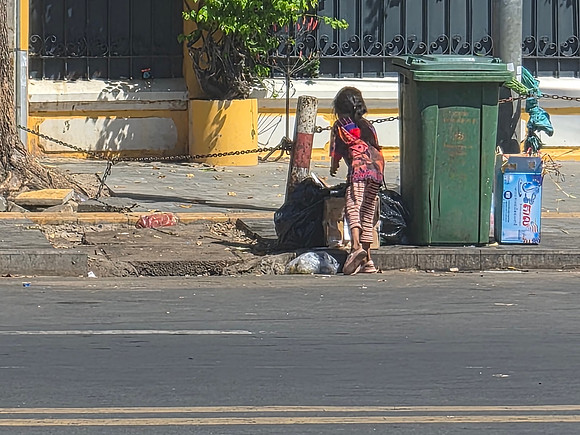
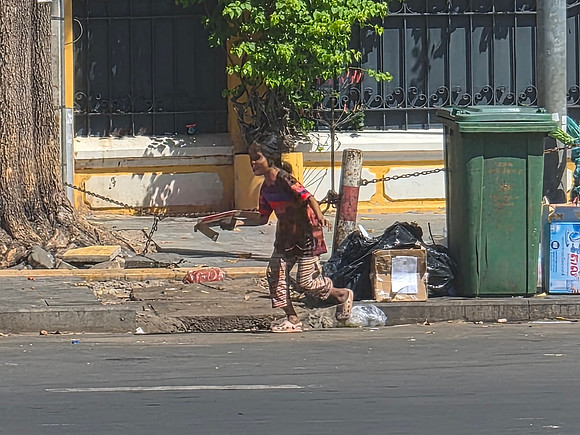
The sound of plastic on plastic draws attention. The tiny girl runs to a black bin bag beside the wheelie bin. Now wearing rubber shoes, she rummages inside and pulls out a cardboard box. It looks quite new. She reshapes it neatly and examines it with delight before showing it to a younger boy, perhaps three years old. He beams as they climb into the back of the family Tuc Tuc to play with their treasure. Ironically, the empty pink box once held a new toy. I wonder if she has ever had a proper toy—have any of these children?
All is quiet for a while until a monk walks straight up the middle of the street, oblivious to traffic and the constant chorus: “You want Tuc Tuc? Where you from?” “No, we are fine, thank you.” “I do one hour trip.” After several refusals, all seven drivers in a row finally leave us to our watch.
We sit on a wall in the shade. To our right, a battered old Toyota minivan pulls up. Its doors open, and a mixed group of men, women, and a large orange‑robed monk file onto the pavement. Within seconds they are surrounded by hawkers. Our family reacts swiftly, rolling out an old plastic bin filled with ragged children’s kites. The wife seems in charge of this part of the enterprise, while the husband, frustrated at missing his chance to cajole the group into his parking space, becomes a mobile traffic block.
Others succeed: the group buys dubious cold drinks in plastic bags and birdseed to feed the pigeons—enough seed, perhaps, to feed our family. We feel strangely attached to them, though we know nothing of their backstory. They are not alone; so many live like this across Asia and the world. It is heartbreaking, especially seeing the children in such a state. We cannot help them all, only highlight how lucky we are—and how fortunate others should feel.
Before leaving, I carried our two empty water bottles, plus one from the floor across the road, to the wheelie bin. Just as the lid dropped and I turned to cross back, the missing little girl strolled past with a half‑full crisp bag. She had a beautiful, cheeky face. She looked up, at me waved, and smiled.
A wonderful heartwarming present she gave me on my 60th Birthday today!
How are you supposed to feel?
A Sunset Interrupted
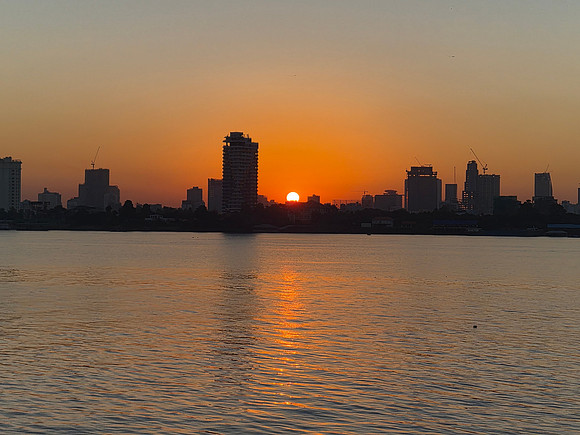
My other present was a boat trip on the Mekong—sunset and city lights for $6, upgraded to $12 with unlimited bar. Far better than I imagined: the boat sailed miles upriver past fishing villages, farming communities, and vessels making a living.
But I missed most of it. Standing in awe watching fishermen cast hand nets, my phone rang: “Hello Grandad, Happy Birthday.”
“Hang on, I’m on a boat on a famous river in Asia. I’ll go inside where I can hear you.”
Through the magic of WhatsApp, I had a wonderful forty‑minute tour of Christmas gossip and school news. It doesn’t matter where I am—I know who the boss is, and she’s seven years old.
I still caught the sunset, and it was all the better for the interruption. Gosh, I am a lucky man.
A Perfect Ending
Our time in Phnom Penh was nearing it’s end with beers in a cool part of town and then a wonderful Indian meal.
“Order the special, not the single curry Masala—you’ll save $4. And Madame, do the same with the Butter Chicken,” the owner advised.
“Thank you so much,” I replied, knowing he didn’t have to do that. It really summed up the people of Cambodia and Vietnam.
The restaurant was like a British classic—flock wallpaper, white tablecloths and great beer. To our left, eight Dutch youngsters (six girls, two boys—come on lads, you’re being shown up! Get travelling). To our right, two Indians chatted while watching the cricket on TV.
The whole thing was perfect along with the food. It just couldn’t get any better!
Or could it? “Hello Dad Happy Birthday how are you?” Walking home talking to my wonderful daughter brought tears to my eyes!
]]>
Standing in the immigration building on the border of Vietnam and Cambodia, the man just in front of us was pulled aside and informed he was in some trouble. “No correct visa.” “But I don’t need one,” he replied calmly in a British accent.
“Yes you do,” the lady from Immigration insisted, now waving a blue passport in front of him.
This back‑and‑forth went on for a few minutes. It was a little alarming, as we only had e‑visas printed out and were just hoping everything was correct. Our British‑Indian compatriot began to sweat when the lady, frustrated, started waving a passport in his face and loudly declared: “Every Canadian needs a visa!”
“But I’m not Canadian,” he pleaded.
“Well why has it got Canada written on the passport?” she huffed, clearly losing patience.
“I don’t know? That’s not my passport.”
She looked inside and huffed again. “It looks like you,” she said, studying the picture before calmly calling, “Mr. James Porter, next—come through.”
From behind me, a Mr. James strolled past holding his Canadian visa out to greet the inspector as we all moved one step nearer the border. The man behind me quipped: “We all look the same to them.”
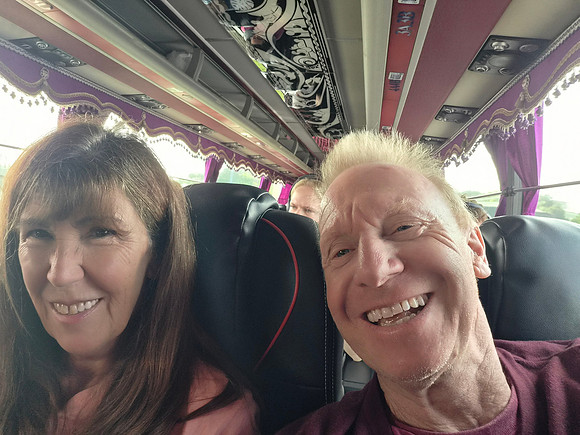
We got through within one hour—almost record‑breaking speed for this border! Back on the coach, we resumed our seven‑hour trip to Phnom Penh, the capital of Cambodia. A pleasant ride all told, with nice scenery and my time taken up writing my last blog.
Phnom Penh: First Impressions
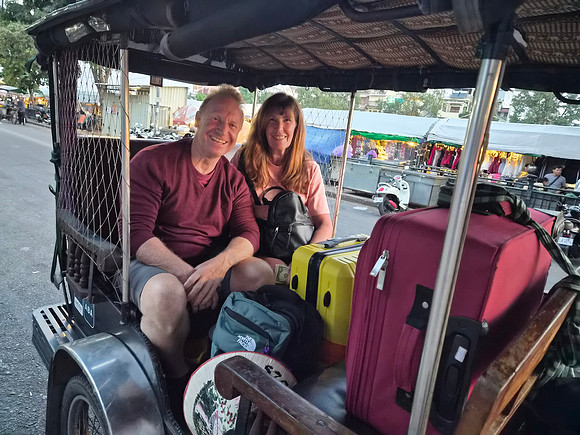
Wow—Phnom Penh was a shock. It was calmer for sure, and our ride to the hotel was, of course, in a tuk‑tuk. Loving it already.
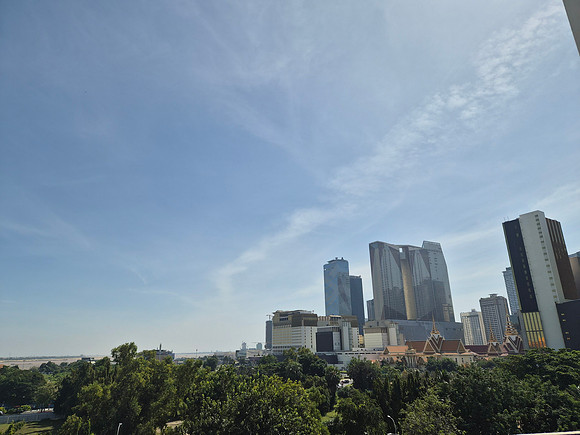
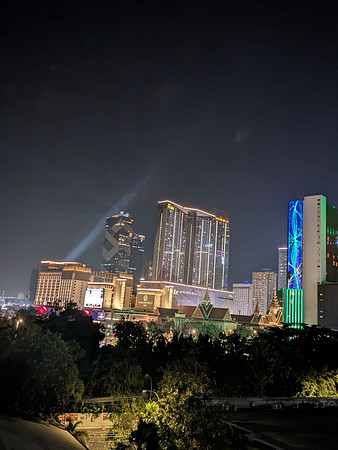
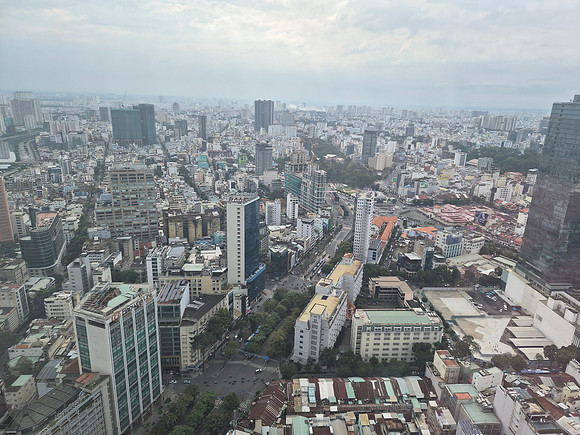
Our hotel was posh, and as we stood on the roof by the swimming pool, we looked out in a state of shock. The skyline looked like a wealthy city with a name you’d recognize. Cambodia was not supposed to look like this—I thought it was on its knees! I felt naïve, as in all directions were large towers representing banks, hotels, institutions, and a massive casino. And right through the middle of the city flowed the mighty Mekong, almost three kilometres wide. Exploring this lot was going to be interesting.
S‑21: Khmer Rouge Torture Base
At the ticket booth, the lady asked if we wanted an audio guide, but Wendy struggled to hear her through the Perspex screen. I stepped forward, couldn’t understand either, and stepped back. We read the prices, got the correct money, and tried again.
We entered through a turnstile into the former schoolyard—a French colonial square complex with a courtyard surrounded by two‑story buildings. The arrows directed us into the first ground‑floor room. Inside was a metal bed with chains in the centre, a large photograph showing a shackled corpse, and some hard‑to‑read writing. Terrible acts had clearly taken place here.
Outside, I said to Wendy: “I think it’s important we understand what happened here. I’ve read you can get a guide. It doesn’t really matter what it costs, does it?”
Wendy agreed and approached the booth again. Surprisingly, the lady shut her cash desk, came out, and declared: “I’ll take you around.”
I don’t need to describe the unearthly barbaric atrocities that happened in the halls and rooms of the former school, but a couple of things struck me hard.
I asked her: “Were you old enough to remember the Khmer Rouge, or were you too young?”
She pulled us aside and explained softly: “I was 12 years old when I was forced to walk from the city here to the camp. We walked for three long months. I saw dead bodies, lots of bodies by the road, and of course those who fell from that journey.”
Her tone was deathly, haunted. She wore large dark sunglasses—perhaps to hide her sad eyes. Goodness knows how many tears she had shed since 1975.
Pointing to a painting of trenches being dug by hand: “Twelve hours every day. No breaks, no talking, just a cup of watered‑down rice at night.”
I asked: “And your parents?”
She replied: “My mother made it, but the rest of my family were all killed. My father—killing fields. You know what this is?”
I nodded silently, noticing her clenched hands, the hands of manual labour.
The Photographs
Obviously, being shown around and told about the hundreds of thousands of people tortured and murdered in the school camp is harrowing. To get through such an awful place, you almost have to close yourself down slightly. I managed to endure the impromptu cells and the women’s and children’s halls—but I broke down after catching the look in a girl’s face.
All through the building were boards covered with black‑and‑white photographs, reproduced in the 1980s from recovered negatives. Face after face stared back as we moved from room to room, building to building. Nearing one of the most horrific blocks—where the killing of babies was documented—I suddenly caught sight of a young girl’s eyes looking out from a photograph.
She looked about seven or eight, with a fear I could easily recognize from my own daughters’ or granddaughters’ eyes. It was a silent fear, the kind that longs to be scooped up and held safe by a father or granddad. But she had no one. Her father would have been butchered; she herself beaten, electrocuted, subjected to unspeakable cruelty. Those poor eyes, dulled by suffering, still reached out across time.
I wanted to run to her, to lift her from that picture and save her—but she was only a ghost now, trapped in one of the most horrible places I have ever stood. I cried then, and I still feel like crying as I write this. As long as I live, I will always try to be there for my little girls and, of course, my boy. But she had no one—alone, afraid, abused. And for what?
Aftermath
We walked around the central market, but it didn’t grab us. We tried the waterfront, swam at the hotel, even worked out with improvised weights on the roof. Still, a sense of melancholy hung over us.
That evening, Wendy declared she wanted to go home. It sunk in—we were depressed by what we had seen earlier. Without knowing it, we had let the evils of the past make us miserable today.
I quoted Shakespeare’s Julius Caesar: “The evil that men do lives after them; the good is oft interred with their bones.”
We decided not to visit the Killing Fields. We already knew the history, had read extensively about Pol Pot’s regime. Going felt like dark tourism. We weren’t sheep—we’ve always lived on our own terms.
I’m glad we made that decision. The same applied when we visited Krakow in Poland. We had already seen a concentration camp with our kids. We didn’t need reminding of Auschwitz.
We lost one day of fun, but gained perspective. The next day we were out again, refusing to let anything but joy in.
Reflections
It’s hard to believe how stupid and horrible humans can be. As I write, BBC World News reports Thai jets bombing Cambodia. Will we ever learn?
If you don’t know about the Khmer Rouge and Pol Pot, I suggest you read John Pilger’s Heroes—the most impressive book I’ve ever read. Pilger highlights the genocide (2–3 million murdered out of 7 million), compares Pol Pot’s regime to Nazism, and exposes Western complicity. He shows the resilience of Cambodians as true heroes.
When my children were young, I read chapters to them so they could understand history not taught in school. If I had my way, history at school would be simple: just read Heroes.
One thing the book leaves you with is the urge to question everything you read and consume. Will we ever find the truth behind the headlines? Maybe not—but we should keep trying.
Crossing to Silk Island
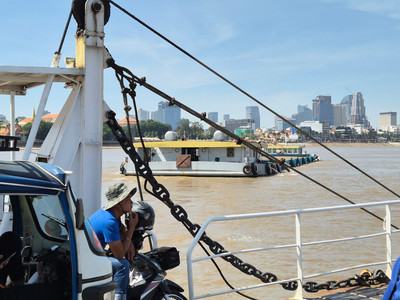
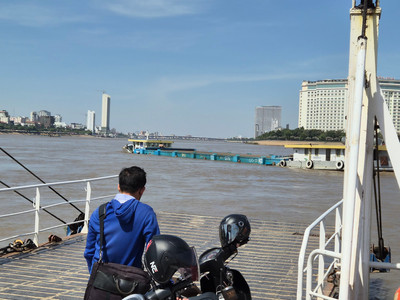
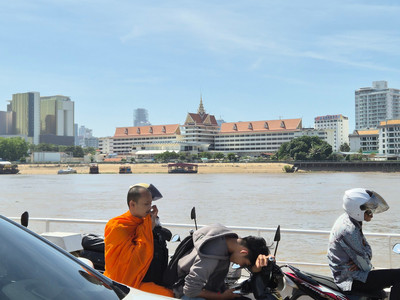
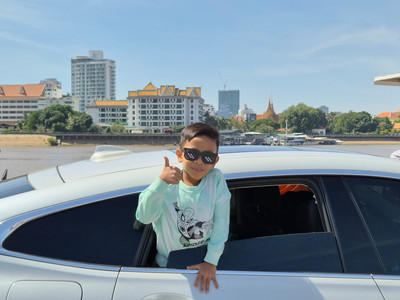
No matter what I said or did, the ladies were not letting me on the ferry to Silk Island. We needed another plan to get on one of the many ferries carrying cars across the Mekong. The roll-on roll-off boats rammed into the sandy shoreline below, and motorcycles, tuk-tuks, and cars rushed on, along with the odd person running up the ramp.
“There are five ferries—let’s pick the red one in the middle. I reckon it heads towards that island,” I said, pointing. “We can then try and get across that one and get another crossing to Silk.” “OK, let’s go.”
We rushed toward the ticket lady, and as we passed I placed a 1000 note into her hand (about 20p), then hurried down to the sand and across to our ferry. She didn’t look happy, but we were onboard! A few cars but mostly tuk-tuks soon filled the ferry, and we were off. Struggling against the ripping tide, the old diesel engine spewed out dark smoke in protest but slowly, surely, headed across the water. With no health and safety here, I wandered right up to the slightly raised ramp, looked into the water, and took in my surroundings. Wow—I was in the middle of the Mekong on a ferry to who knows where. How exciting was this!
The boat was driven right into the bank, and immediately the traffic was driving off as the ramp came down. It was a complete free-for-all, but it made you smile. Taking our time, we strolled up the bank to the road and noticed we were right in the middle of a fishing village. The mostly blue-coloured vessels were tied up just offshore or resting on the muddy banks. Families lived on these small boats under tarpaulins—cooking, washing, and fishing all from a tiny space. In the mud and dirt, some kids had set up a volleyball net and were amusing themselves sitting under it. A little girl walked down the slipway towards the boats, dressed in a crisp, very clean white school uniform—amazing against the backdrop of dirty boats and muddy shore.
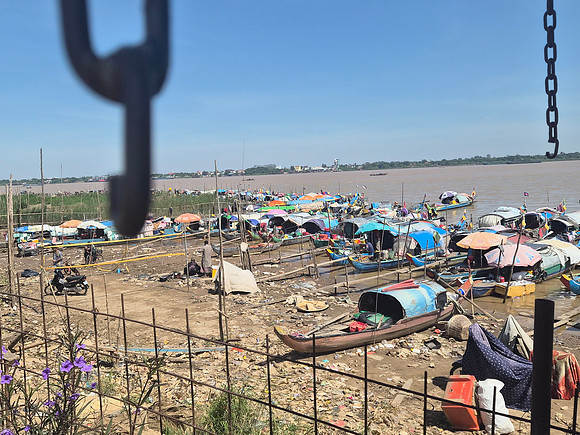
After about twenty minutes it was clear we were lost! Google Maps was no help, and the area we were walking through was looking decidedly unappealing. We did, however, manage to get a tuk-tuk ride to what we were told was another ferry to Silk Island. Boy, were we relieved—we really needed that ride, it was absolutely miles!
Just before boarding this latest ferry, a motorcycle with a massive trailer full of cut palm leaves slowly ground to a halt on the steep hill up from the ferry. I crossed the road quickly and helped it over the brow of the hill by pushing hard at the back while the grateful driver revved it within an inch of its life. Just in time, I turned and made the ferry before it left us behind.
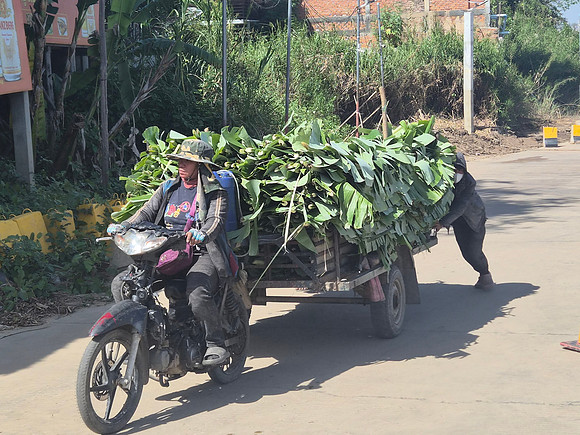
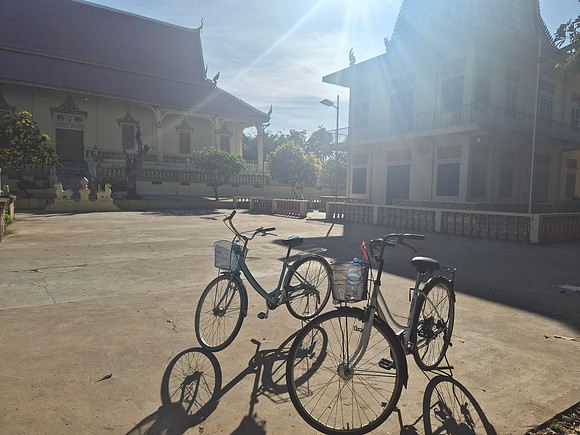
On the crossing we met a young Cambodian woman who, although friendly, was quite pushy about hiring us some bikes from her sister. Well, to cut a long story short, we tried to lose her for about forty minutes, but no matter where we headed on foot she seemed to pop up. We relented and acknowledged she had won the little battle of wills, and we hired two quite nice bicycles for the rest of the day—for the princely sum of $4 US.
It was quite simply magical. We were off the beaten track, cycling through beautiful farmland and small rural villages. Every person we encountered smiled and waved, and children often ran out to the road to greet us.
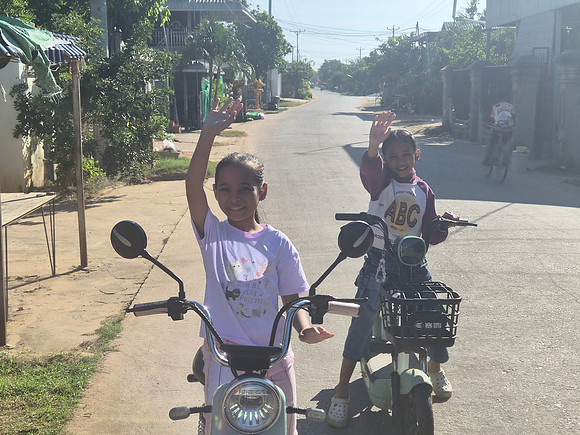
Wendy was behind me on a dusty stretch of road when I heard talking. I looked around and she had company. “Where are you from?” a little girl asked from a motorcycle beside her (yes, a motorcycle). “England,” Wendy smiled and replied. “So why are you in my village? What are you doing here?”
There were two young girls, so Wendy pulled over to chat with them and I pedalled back to join. They were eight and ten years old and spoke amazing English. They told us their names and how they learned English at school, and they genuinely welcomed us to Cambodia. It was a lovely ten minutes or so chatting before they headed off back to their village beside the road.
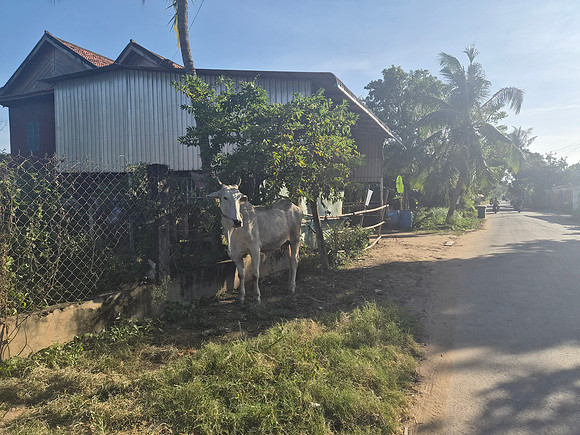
We stopped at a temple beside the Mekong and watched the water in the shade for a while, while some young boy monks played and tended the grounds. We saw water buffalo and a cow tied to a gatepost on the road. Exotic fruits, bananas, nuts, and many crops we did not recognise lined the way, and we glimpsed into and around the wooden homes along the road.
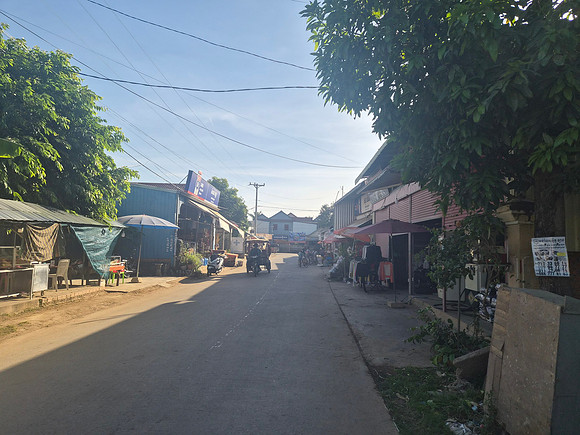
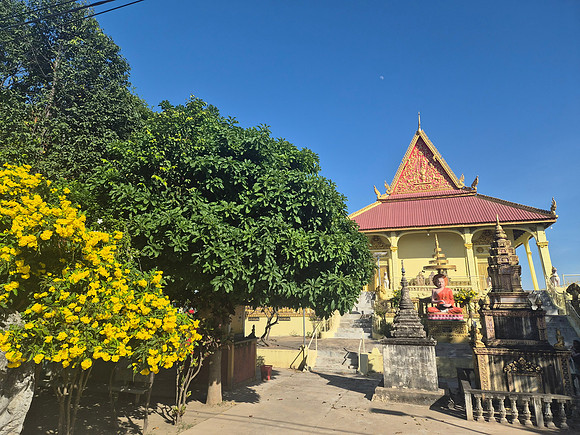
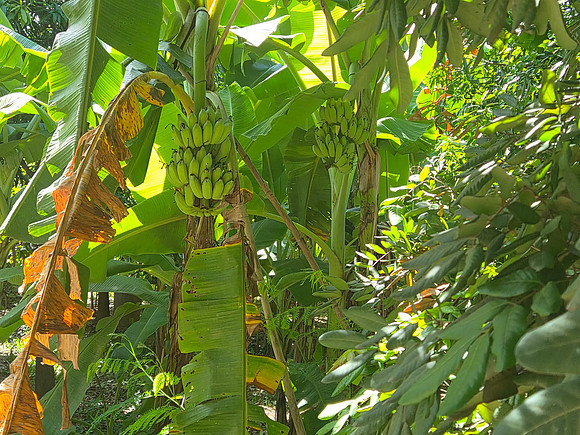
We spent a whole afternoon cycling miles across the island and saw so many sights and sounds that gave clues to what life is all about in this beautifully green but very hot country. We even had a strange encounter with a smartly dressed Australian when we rocked up at a family’s house that offered tinned drinks. There, at a plastic table having a Fanta, was a tall young man in a white shirt and pressed trousers, alongside a Cambodian young man dressed equally smartly.
“I didn’t expect to see you guys here. Are you holiday tour reps or something?” I asked as we sat at another plastic table. “No, we are missionaries,” he replied. “And you?” he asked, equally puzzled.
We sat and chatted for a good twenty minutes about all sorts of random things, but it was really odd—he had no knowledge of anything you would normally take for granted. “Convict immigrants from Britain to Australia and ten-pound Poms?” Never heard of it. “Angkor Wat?” Never heard of it. “Thailand?” Nope. “Vietnam War?” Nope. “My brother lives in Tasmania.” Never heard of it.
He came across as a very polite young man, but it was as if he had been brought up in a commune under a stone or something. Not once did he and his pal mention religion, thank goodness, but it did make you wonder just what the hell his mission was—especially in a country almost completely Buddhist.
He did have one good use, though: he asked if I could use the lady’s toilet in her house, as his mate spoke Cambodian. A nice hole in the floor with a pail and jug to chuck down after it.
I could hear the very loud clatter of machinery at the entrance to a house beside the road. I peered in and saw what looked like a 19th-century wooden loom manically shaking itself to within an inch of destruction. A fairly old man spotted me being nosy, but he wasn’t cross—in fact, he smiled and gestured for me to come in. He was making a long sheet of beautiful blue silk and was constantly tending the wooden mechanism as it creaked and rocked back and forth. The real loud noise was the hardwood shuttle, which was so fast it was invisible as it raced from one side of the machine to the other. He spoke no English—and you couldn’t have heard him anyway—but he showed us the raw coloured threads and the completed silks, all produced in the front of his home. Yet another memory to treasure from what was the most wonderful of adventures.
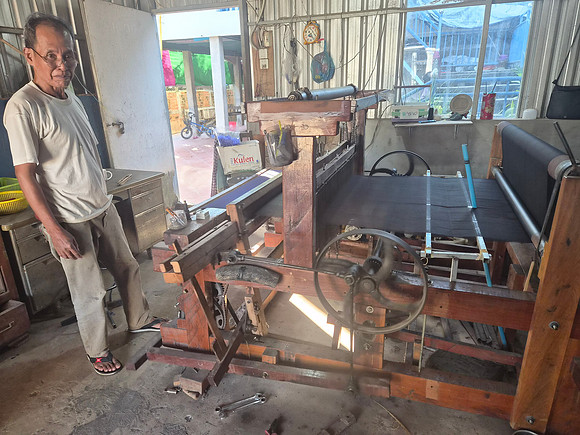
We dropped off the bikes late in the day and were soon on another ferry in the right direction.
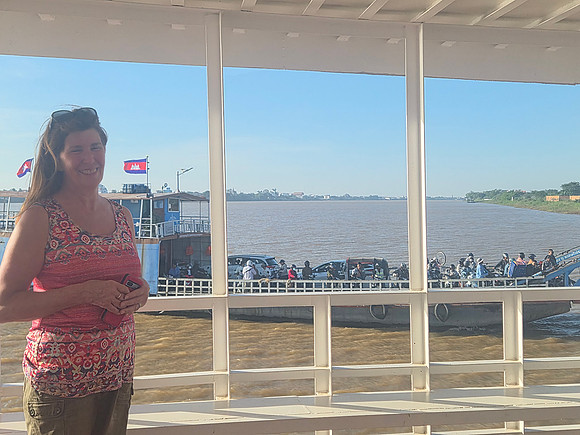
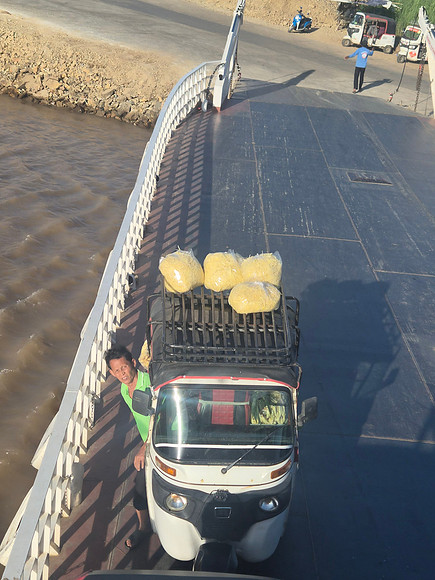
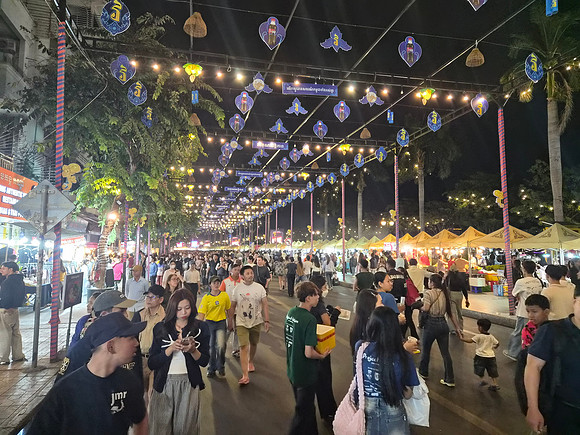
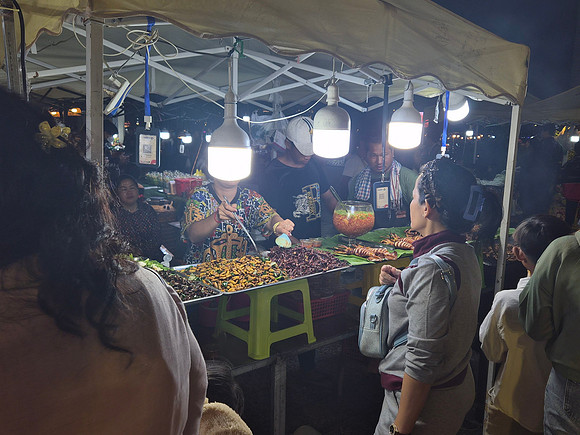
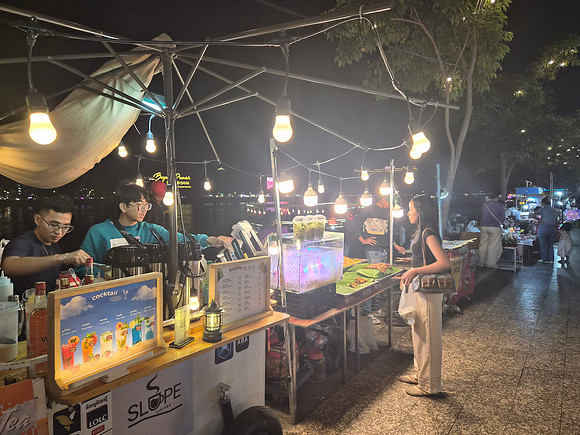
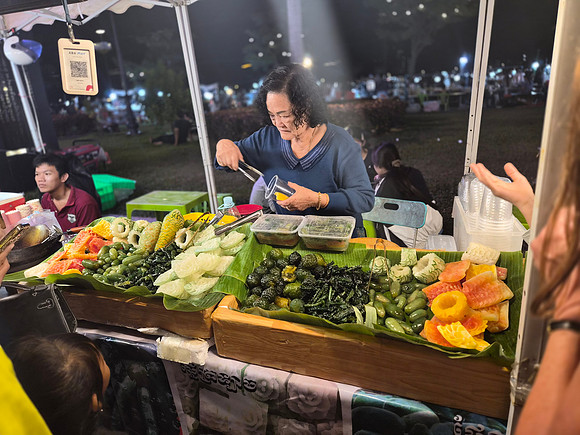
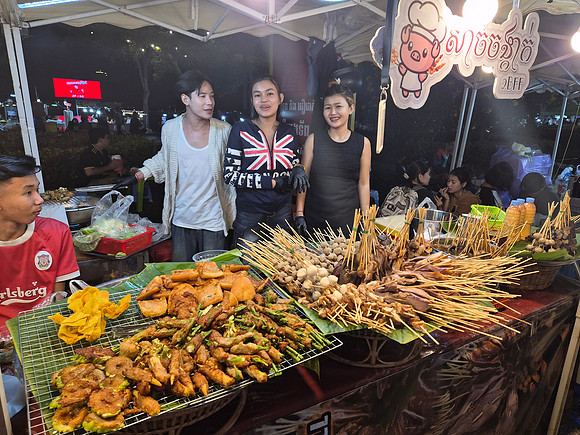
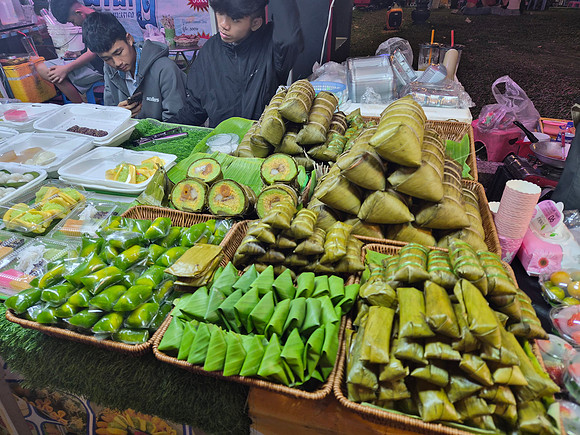
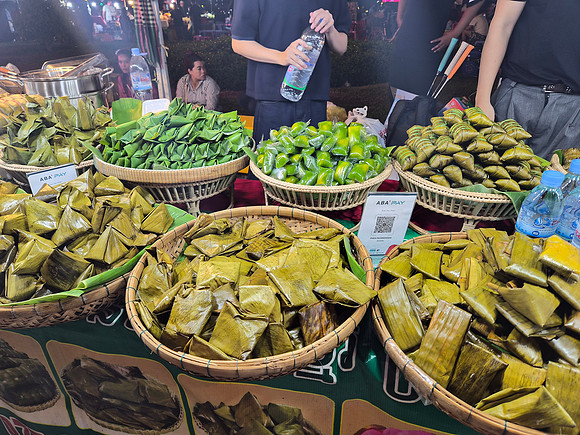
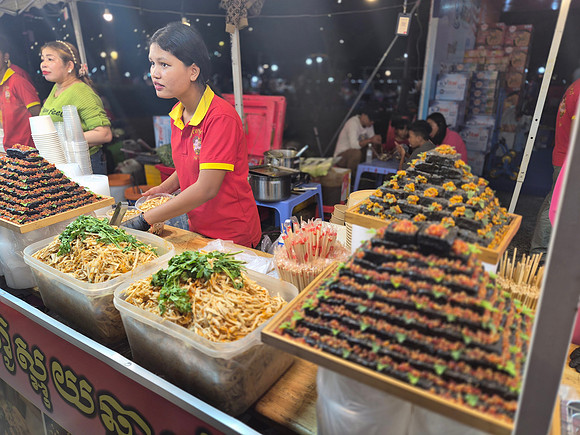
We ended up back in the capital after a good hours Tuc Tuc ride and just in time for the amazing walking street night market. Thousands of little marques stretch along the main road alongside the river.The road it seems is closed of from 5pm every Saturday and Sunday and all manner of food and crafts are sold along with festival attractions such as music and street entertainers. Free music and balloons on sticks looked wonderful for the many bare footed street children who watched and played on the pavements in front of the singers
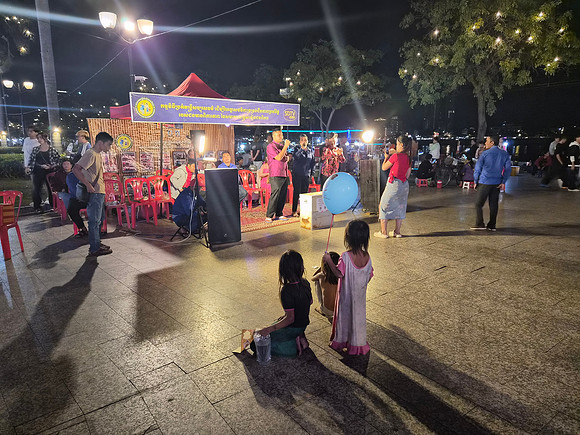
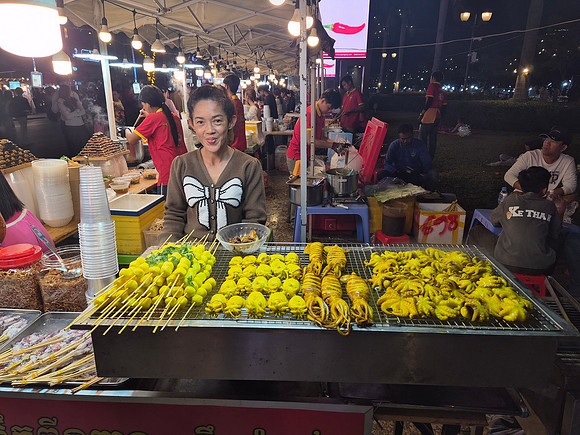
And apart from New Year’s Eve at the Brandenburg Gate Berlin I have never ever seen so many people in a single space within a city. It had the most wonderful atmosphere and the colourful lamp lit stalls are just amazing. It was a real privilege to spend the end of a wonderful day strolling through the happy throngs of people and feeling the most positive vibes from Cambodia.
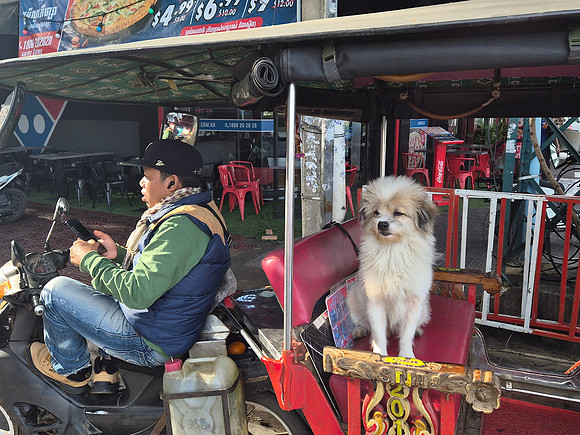
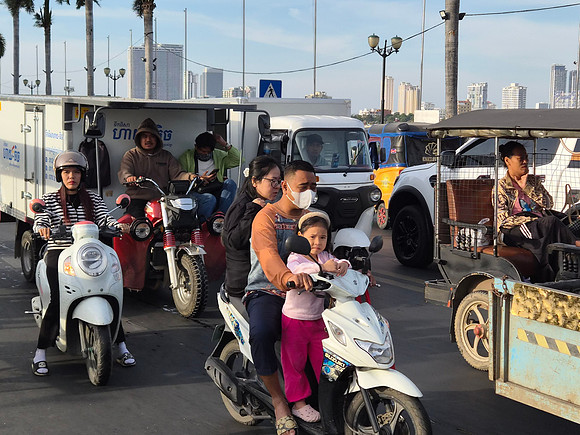
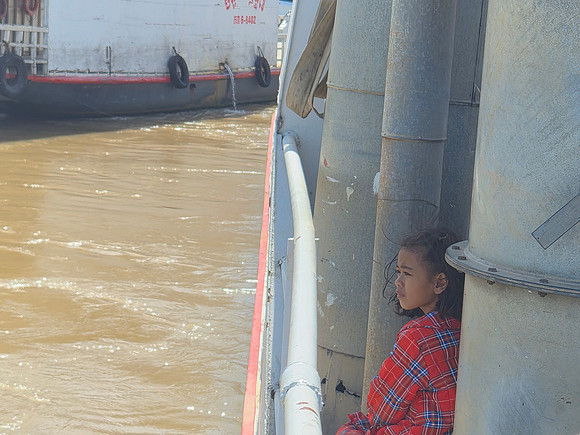
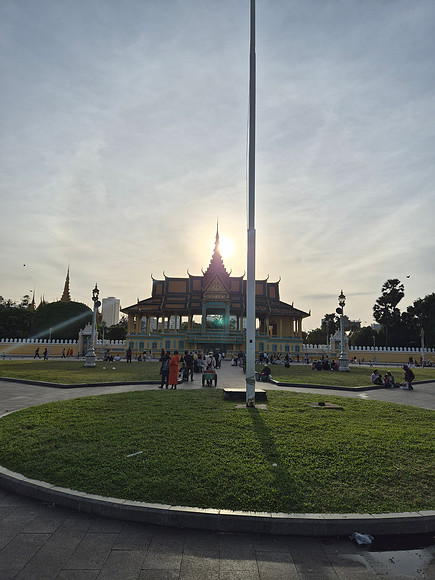
Selection Of Photographs from Cambodian Capital:
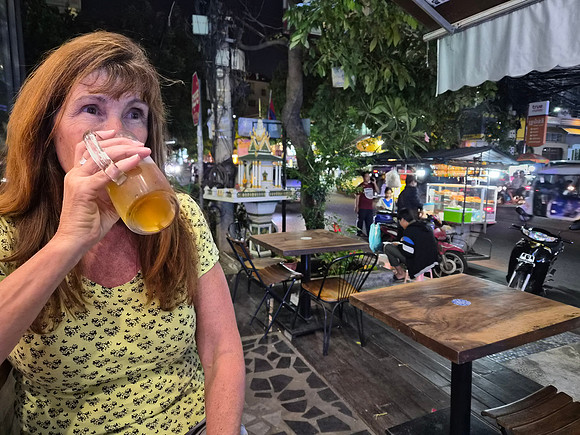
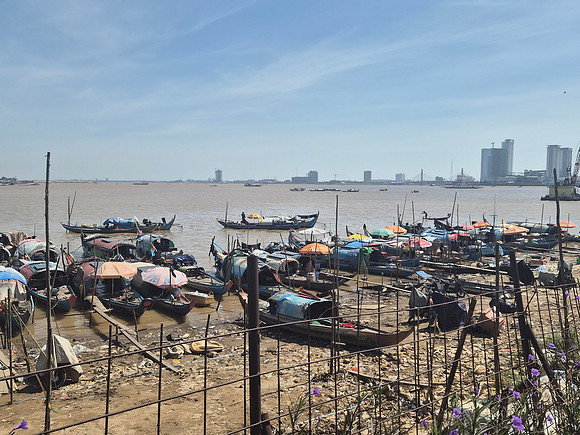
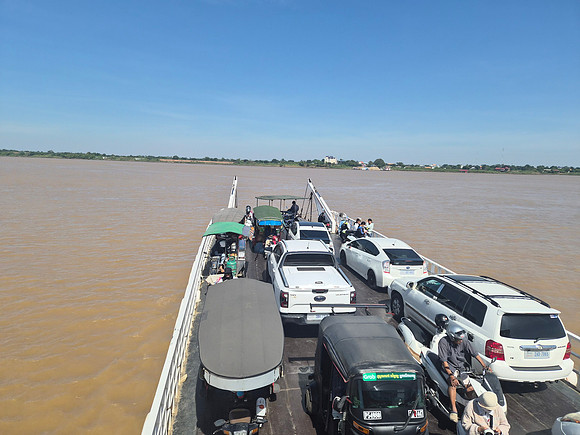
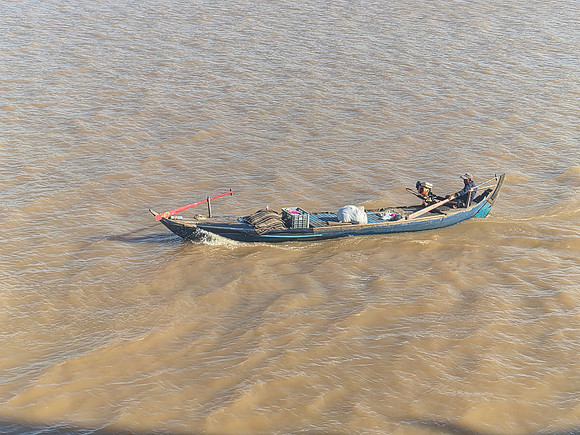
]]>
Reflections Of A Month In Vietnam
I have been in Vietnam for a month and as with all very long trips there are ups and downs it is only natural. But to be honest Vietnam has been 99% positive! I have fallen in love with the people and their smiling faces and will treasure my memories for ever and a day. On my trips I love to learn and observe and the following waffle is reflections that I have written on a seven hour bus trip through Cambodia. I share my memories on this blog but hopefully write a truthful account of our exploits so I can read them in ten years and relive some of the adventures.
The People of Vietnam: What Are They Like?
I have written about some of our interactions with ordinary folk as we wound our way through the country.
Vietnamese people are friendly—there is no doubt about it! They have a sense of humour and seem so positive in their outlook. Time and again they showed us help and overwhelming generosity. But one incident summed up our faith in them.
We had ventured—or should I say mis‑adventured—to a large town called My Tho on the banks of the Mekong River. We had heard it was a great place to explore the bamboo waterways and experience some real culture. Upon arrival we booked into what seemed to be the only hotel in town, and what a hotel it was. Quite simply stunning, with an amazing room 17 floors up overlooking the mighty Mekong.
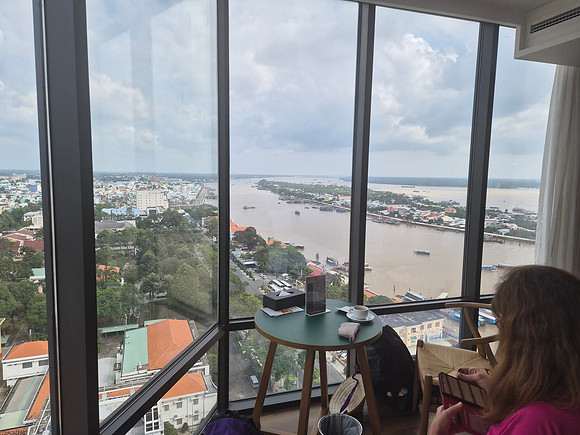
The place was mostly empty, and when we ventured out it was clear we were the only Western faces in the city. It wasn’t intimidating at all; in fact, quite the opposite, as all the youngsters giggled and said hello. But with nothing but endless streets, all pretty much the same, it was an early night as we looked forward to our trip the next day.
There were plenty of trips to choose from, but hardly any customers. This was odd. Buses arrived with organised groups, but we had to book a boat at the dockside. It was pretty expensive, but to our surprise we had a boat all to ourselves, plus a guide. It felt surreal crossing the huge river alone, but exciting—after all, this is on many people’s bucket list! Still, there was something about our guide I didn’t like, though I couldn’t put my finger on why.
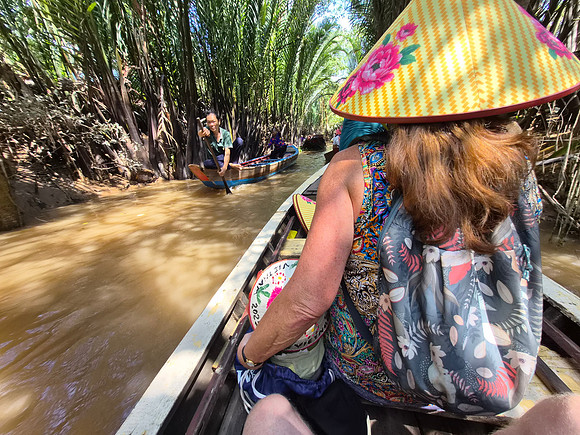
We landed at a honey farm on an island called Dragon and were immediately sat down at a table where they tried to sell us honey products. We bought a balm to be polite and asked to move on. Next came a boat ride down the bamboo waterway to a restaurant with traditional music, but we didn’t want food. Our guide was starting to lose interest, so he put us on a pony and trap advertised as a ride around the island. Ten minutes up a dirty street and back—it was over. Absolute rubbish. Then on to a sweet factory to be sold candy we didn’t want. All we really wanted was some nature, not a shopping trip. Rather early, our sulking guide announced we were heading back on the boat and the trip was over. We were all too pleased to return, as to be honest it was utter shite.
Once ashore, I offered a small tip to be polite. Outraged, he threw the money back at me and demanded a huge amount he claimed we had promised. We ignored him and walked off.
It was sad, and the sadness lingered because it was the first real negative in four weeks. Wendy was upset, as it had been her idea to travel here, and apart from the trip on the river there was very little for us to do apart from take interest in the local way of life. It was strange how it affected us—I just couldn’t get the confrontation out of my head and kept trying to reassure us it was just a bad trip.
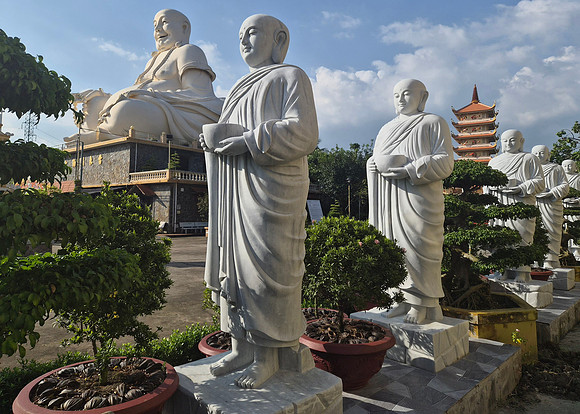
We did however manage to walk to a magnificent temple on the outskirts of town. I love Buddhist Temples not because I have even an ounce of religion but because the grounds are usually areas of calm and quiet and I just love beautifully tendered gardens. A lovely place to sit and get your head in gear.
After a swim at our fabulous hotel, we headed out for a beer and a snack. Along the hazardous pavement Wendy caught a kerb and fell quite badly. A group of youths nearby, sitting on deckchairs, looked concerned, but as I picked her up they laughed and waved us off.
We couldn’t find a beer and couldn’t find food, so we bought a bun and sulked back to the hotel. And we really were sulking—until, down a completely different street, we were accosted by a young man sitting on deckchairs with his friends, drinking coffee. He held up a credit card and asked, “You Venn Ardy?”
I took the card—it had Wendy’s name on it! This was an important card, our financial lifeline in Vietnam. He explained it had fallen out when Wendy fell, and they had spent two hours searching the local streets for us. We couldn’t believe their kindness, and they refused a reward. Back at the hotel it really hit me how wonderful this was, so I left Wendy and ran back to see if I could find them.
I did, and explained I needed to thank them again. I also said I was writing about my travels in Vietnam and asked if I could mention them with a picture. They all agreed, but insisted I wait five minutes—there was no way they were going in a photo without doing their hair and make‑up!
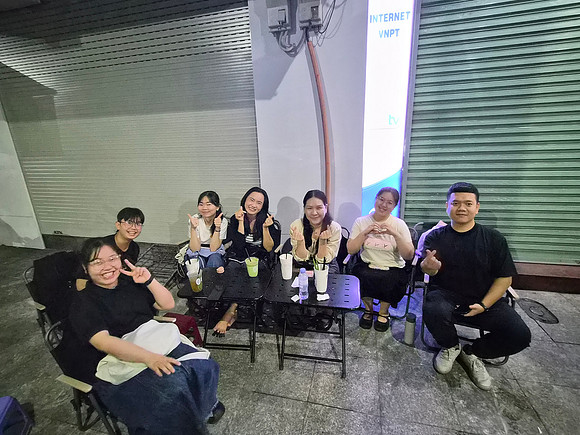
I laughed with them for about fifteen minutes before returning to Wendy and retelling the tale.
Oh my goodness, they erased all the bad feelings we had about our trip to their town and delighted us with their kindness.
But I don’t think I’ll be going there again.
The Food: How Was It?
I was looking forward to the food, but after a few days in Hanoi I was convinced I would finally be losing my pouch! I just didn’t find anything visibly attractive—it all looked slightly bland to me. I personally love all types of Asian curry, but in Vietnam it is pho, a more soup‑based meal with noodles. Wendy loves it though and so we alternated between local food and Japanese Restaurants which we both loved.
The street food vendors everywhere were a bit of a no‑no for me. The sanitary conditions are fine for local people, but in many cases it would have meant an upset tummy for me.
Ironically during our second week I had some great pizzas in Tam Coc! The town seemed to specialise in proper wood ovens, they were everywhere and the product was as good as anywhere I have ever travelled. I tried some local specialities, again Wendy loved them but they weren’t high on my “great grub” list. Then we went south—and boy, what a difference. The food looked, smelt, and tasted great. It was so much tastier to me, and I found some new favourites.
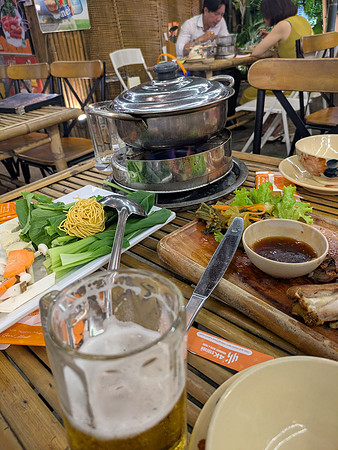
In Ho Chi Minh City there were many different international restaurants, and we discovered a Korean chicken‑and‑beer place that was heaven. Boy, it was hot though!
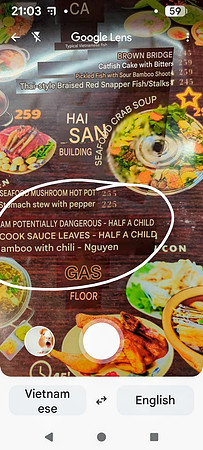
A word of advice: don’t always trust Google Translate. We ordered what we thought was a shared dish and ended up with “the full child! Half each obviously ”!
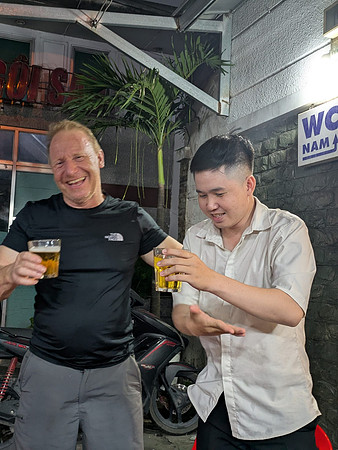
Beer
Vietnam loves a beer and so do I! Especially at about 20p
Motorcycles
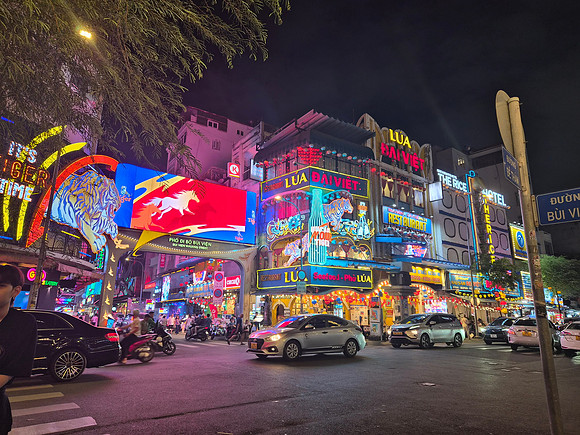
Katie once sang that there are six million bicycles in Beijing—but in Vietnam there are 79 million motorcycles. Yes, 79 million, which works out at around 800 per 1,000 people. It’s mental, it really is, but you soon become accustomed to the chaos: the constant beeping of horns and the nerve‑wracking experience of crossing roads with your eyes shut! In fact, someone told me there are no real rules on the road—things like “one‑way signs,” roundabouts, and pedestrian crossings are merely suggestions.
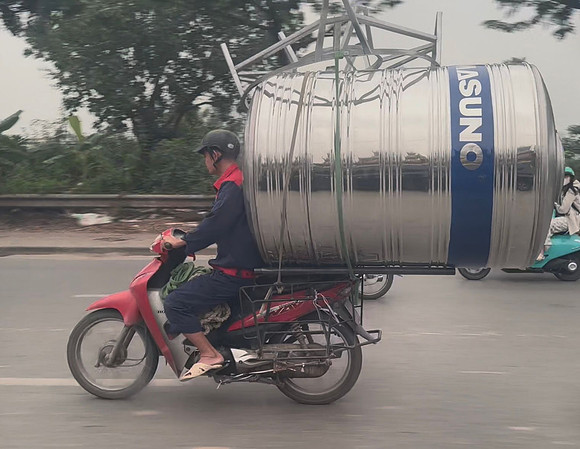
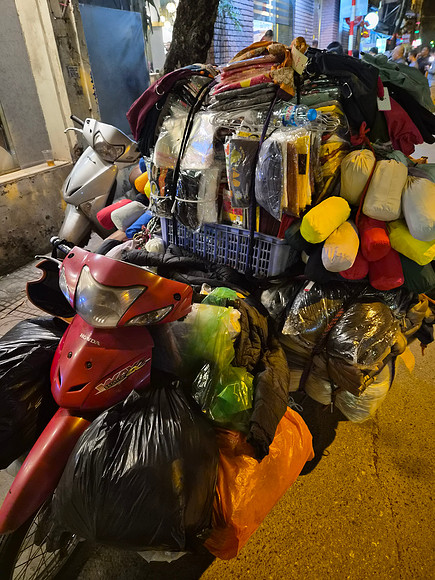
You get used to seeing children on them, babies, and even whole families—it’s simply a way of life here. But no matter how long you stay, there’s always a surprise in the weird and wonderful things that can be carried. I’ve seen ladders, scaffolding, a whole American fridge‑freezer, livestock, dogs, furniture, goldfish bowls, even another motorcycle—and every now and again something trumps all the others.
Vietnam: Don’t Mention the War
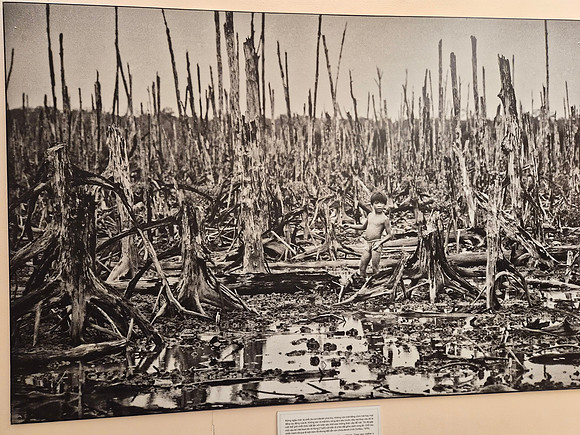
“That’s the place where the war was, isn’t it?” It was—and it remains an inescapable scar on life in Vietnam today. But it wasn’t just the Americans; many other countries fought to gain control over the years. Only in the last forty or so years have the Vietnamese truly known peace. Even now, they are rebuilding the country while dealing with the lasting effects of Agent Orange—poisoning not only the land but also the people, in the form of birth defects and health issues. The danger of unexploded ordnance and land mines continues to maim people just as viciously today as it did all those years ago.
We visited the Ho Chi Minh City War Museum and spent nearly four hours inside. We saw horrific pictures from that ghastly conflict—essentially a “Horrible History Lesson.” The exhibits were, understandably, a little biased toward the Vietnamese, but no more than any Western museum would be in its own telling of history.
I took no photographs. I tried to make sense of the war, which of course is impossible. But one image summed up the horror of Vietnam: a photograph of a dead mango forest and a little boy after the dropping of Agent Orange.
When will we ever learn?
Plastic and Rubbish
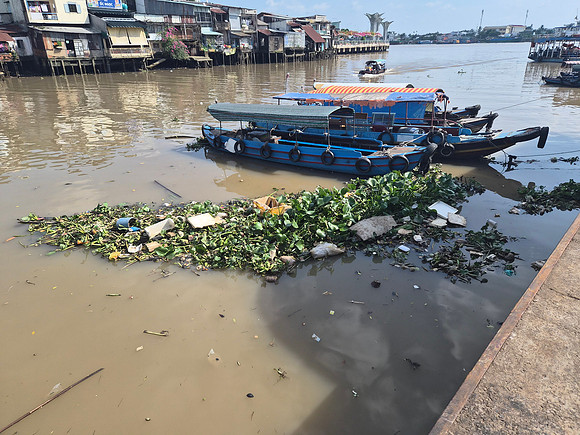
I was sat at an outdoor bar in Saigon HCMC and watched while a local man brushed up the leaves from a tree that had blown down around the tables in the wind. He carefully wielded his wicker brush around bottle tops and a discarded cigarette pack and left them in situ. It is quite bewildering they just cannot see rubbish they are oblivious to it! You have a mega rich city centre just like other major countries and right outside a five star hotel or Major watch brand you will have a great pile of general crap lying there!
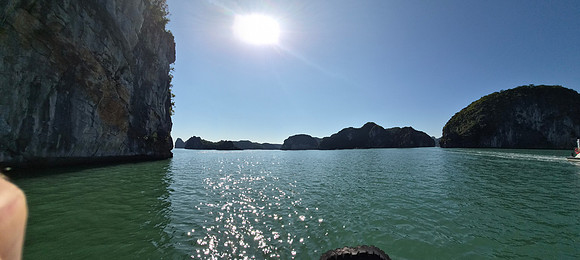
Vietnam has some of the most beautiful scenery in the world, there is no doubt and places like Tam Coc and Ha Long Bay are attracting welcome visitors from all over the world. This is certainly a massive boost to the economy so why the hell don’t they keep it clean. If there is one thing that really pissed me off it was Plastic and rubbish that could so easily be removed.
On a suggestion feedback talk on our boat in Ha Long Bay I suggested that they offer the opportunity to clean a beach or scoop plastic from the see for thirty minutes would be a great activity and once you started to do it others may follow thus keeping your Golden Goose forever attractive. Complete silence and look of puzzlement before a reply of “Why would customers want to work on their holiday?”
“Because Europeans that have bothered to come this far they generally care about nature and environment”
Still a look of bewilderment so I stood up to the twelve other paying guests in earshot and asked “Would you give up 30 minutes of your trip to help keep the bay clean”
An overwhelming and enthusiastic “yes’ along with an addition comment of “it would be better than the squid fishing we would definitely catch something!”
My guide pulled me aside a little later and said he had been thinking and it is a good idea what I suggested “I will tell the boss”.
He don’t think he has the nerve to suggest it and it wont happen I am sure!
I have seen Indonesian and Malaysia rivers chocked to death by plastics. It is so sad and a wicked scar on our beautiful natural wonders. The Mekong was wide and mighty but the plastic shit it carries tarnishes very bank and tributary. If Vietnam is not careful it will be too late before they know it and the tourist will vanish, I say don’t kill the “Golden Goose”
Is Vietnam Poor?
There is certainly poverty here, though it feels different from the humble dwellings and simple food you witness across much of Asia. That said, overall you get the impression this is a country mostly pulling together for a more prosperous future. Everyone you talk to is keen for you to love their country—and they are proud of it.
It is a communist regime for sure (BBC is banned), but it does not seem repressive. People speak openly and are not afraid to criticise the government. Political posters adorn many streets, showing a country of workers pulling together in harmony. And to be honest, whether or not that image is entirely true, it carries a certain feeling of just that. People seem to simply get on with life.
Again you might imagine the USA is a touchy subject, even a dirty word. Far from it. As far as we could tell, the past is the past and the future is peace. In fact, we met many Americans who could not believe the lack of animosity toward them.
I saw a quote at the War Museum that made me smile. A Vietnamese man said to an American: “What makes you so special? We have been fighting 400 years for our freedom.”
We were waiting for a Grab car at a busy corner in Saigon when there was a violent crunch as two motorcycles collided. One rider had a newish bike and had acquired some expensive‑looking damage. They berated each other for about thirty seconds, both blaming the other. Then, as quickly as it had turned sour, they paused, smiled, shook hands reverently, and went on their way. We just couldn’t believe it.
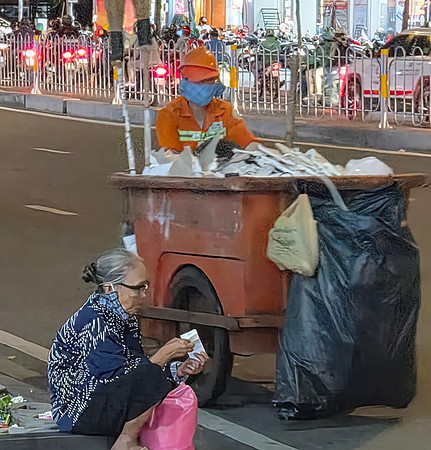
There are the dirty jobs that people all over the world cannot enjoy doing—but someone has to—alongside the top jobs in clean offices. Yet the disparities between them are not as obvious as in many countries. Even the cars are mostly basic, cheaper models, with the local VinFast electric car being their own brand. You won’t see many BMWs, Ferraris, or Mercedes even in the rich centres of Saigon.
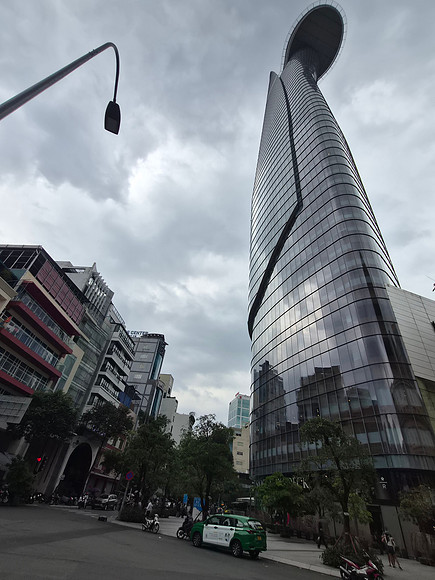
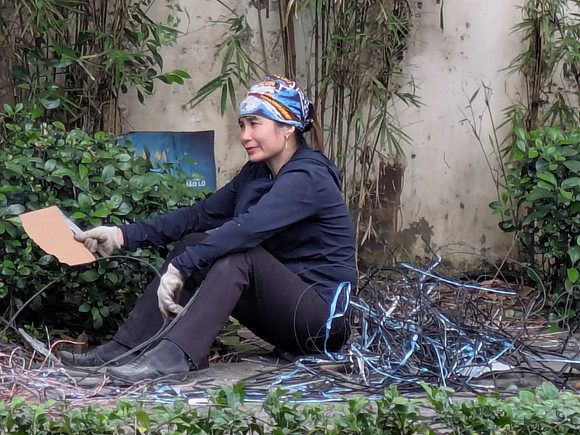
I remind myself that I am a guest in this country, and even at home there are thousands of people living in doorways across our so‑called rich nation. That said, it is hard to know whether a lady collecting cardboard is doing this as her sole income or simply to earn a little extra. Perhaps it is a supplement to another job—but I don’t know. What struck me was that no one seemed to look down on her. People certainly spoke to the “trash lady.” I may be wrong, and in my privileged position I can only look in from the outside. Who knows.
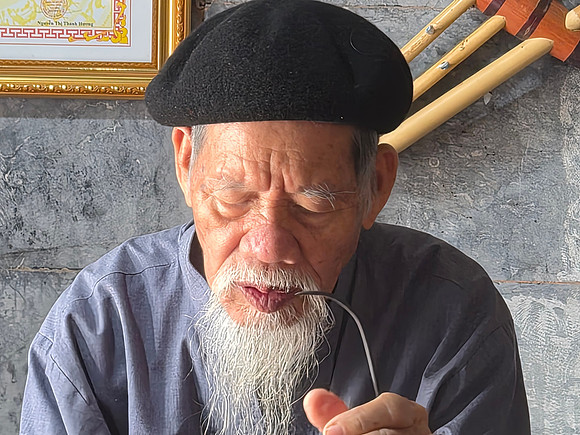
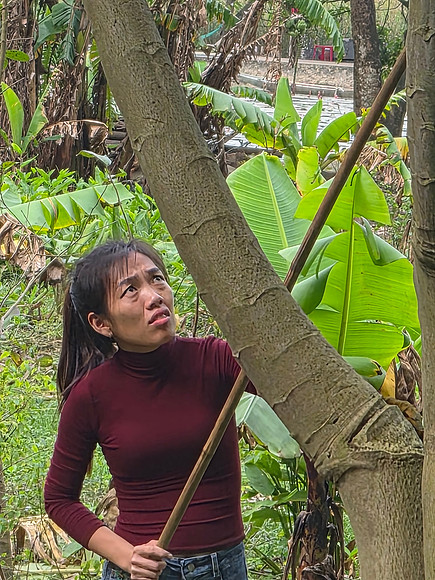
The Face Of Vietnam
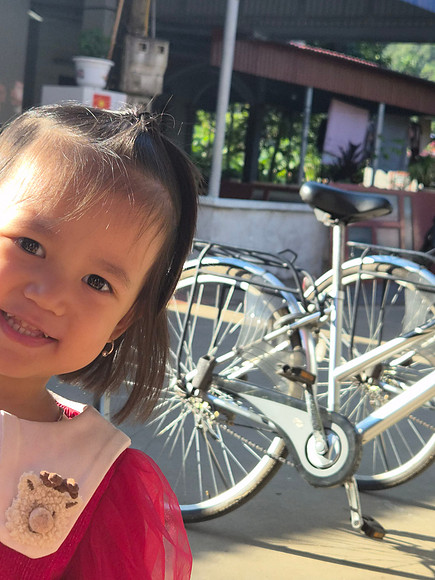
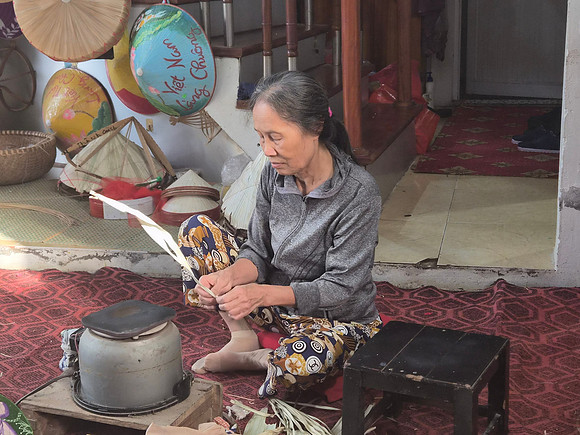
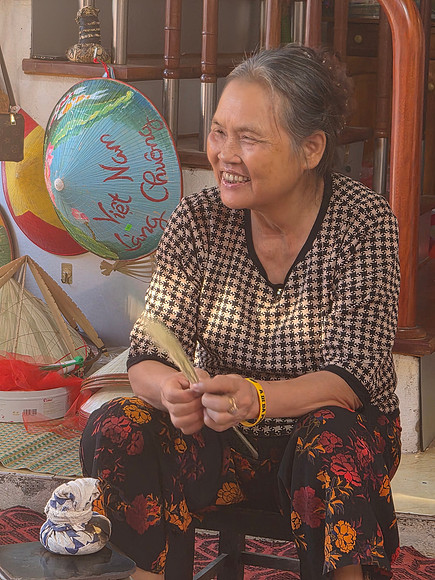
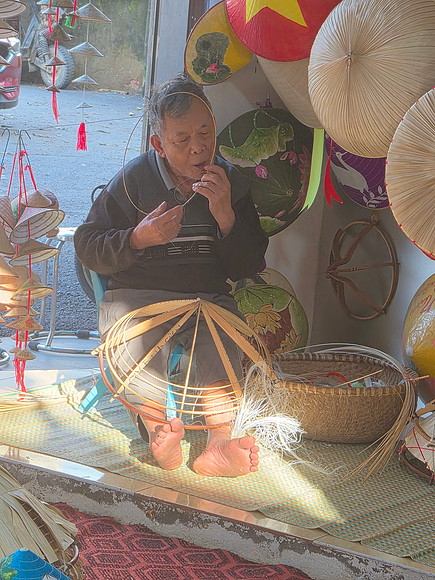
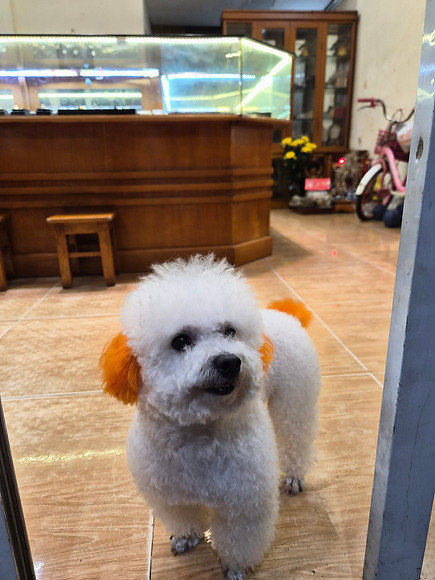
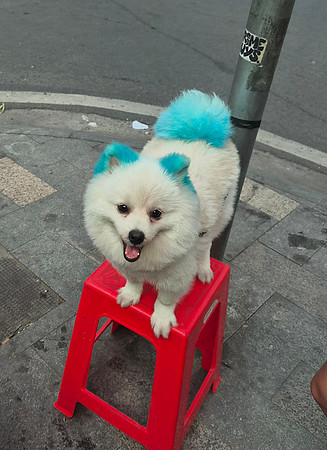
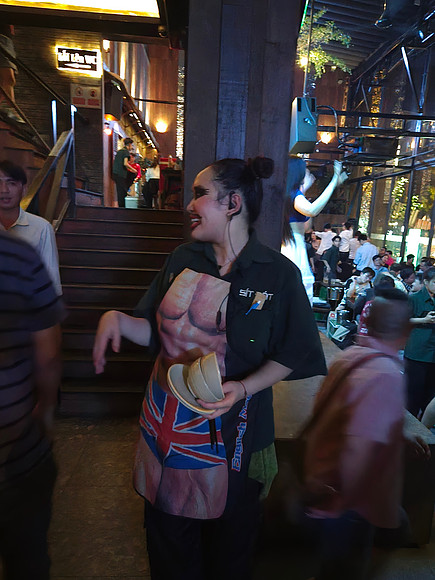
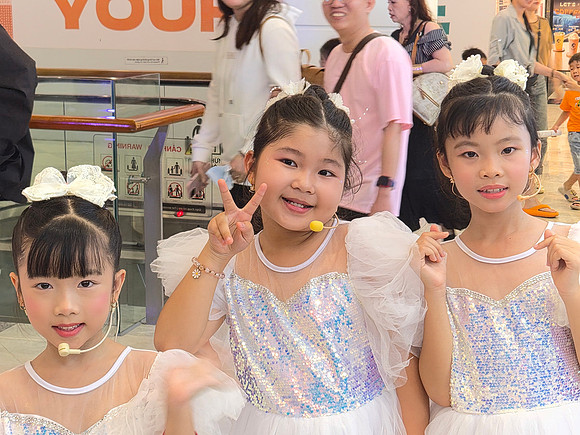
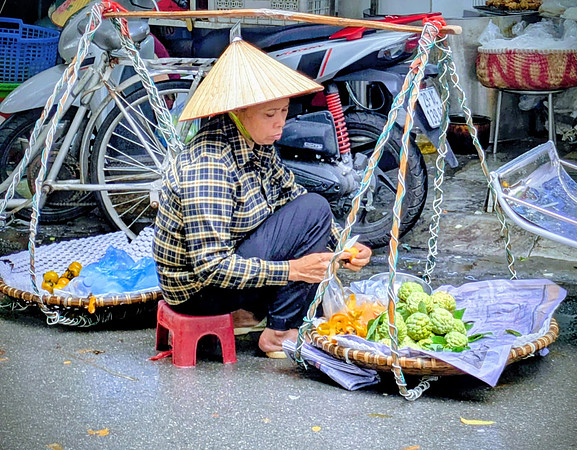
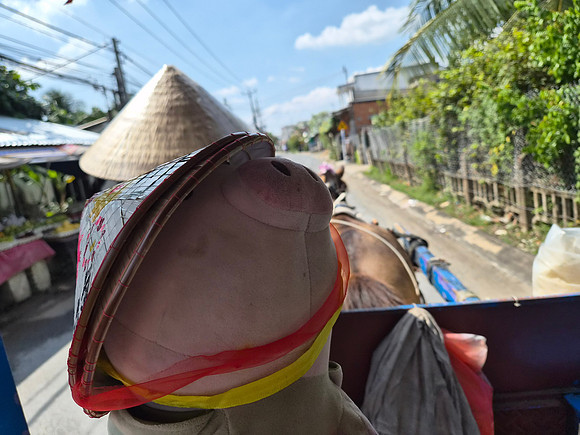
People’s faces I will remember fondly this is my Gallery of faces, Where possible I always asked permission to take them.
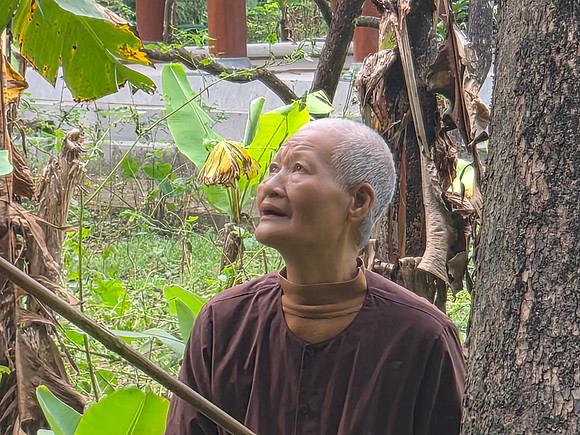
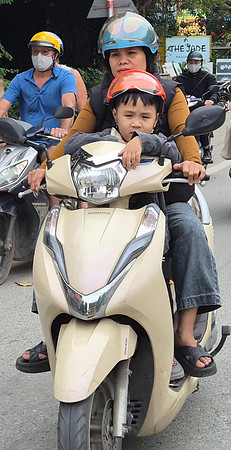
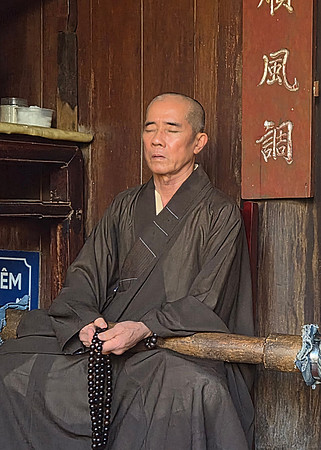
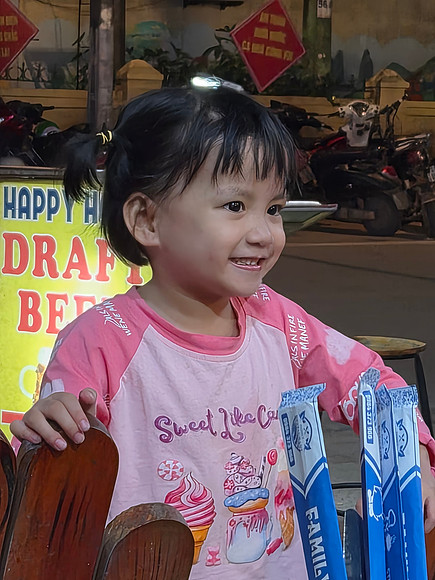
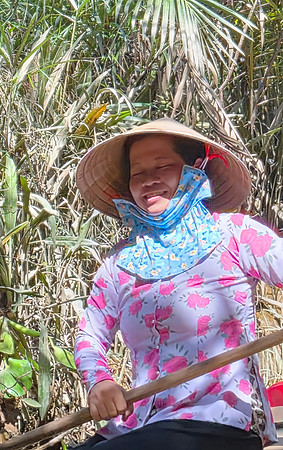
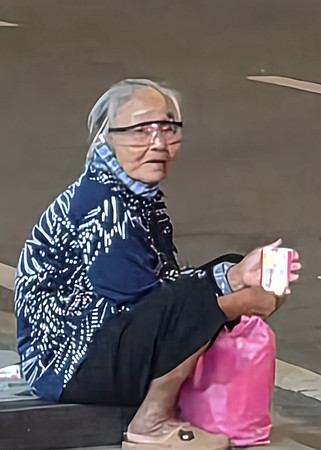
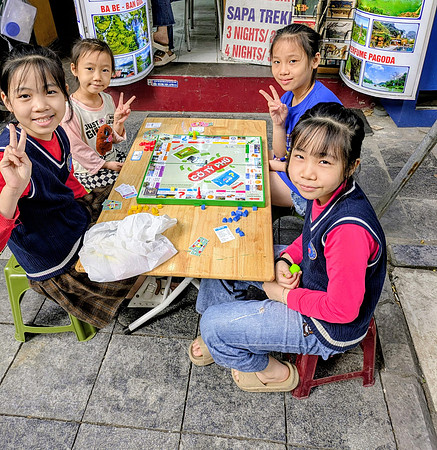
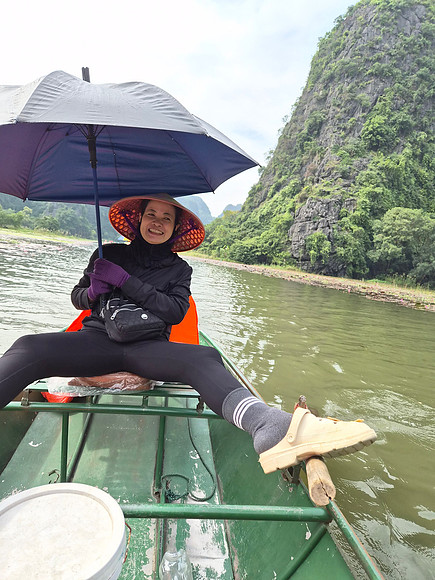

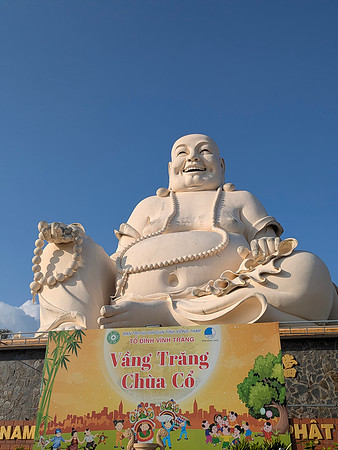
Sights And Memories Gallery
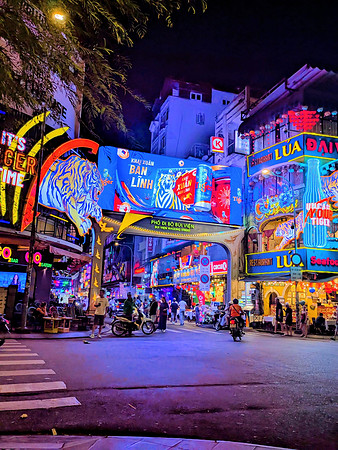
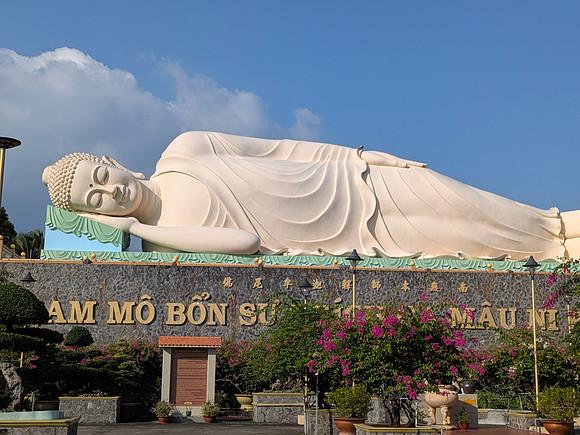
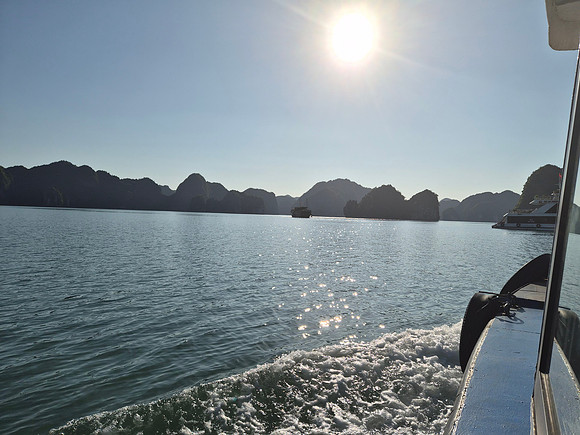
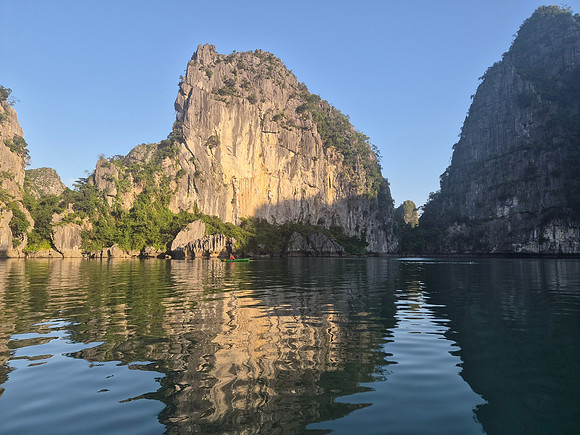
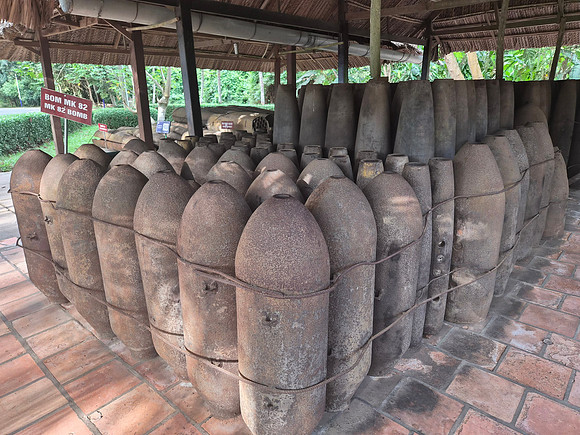
I had read a lot about the Vietnam War when I was younger—mostly the appalling aftermath of a brutal conflict—but the Cu Chi tunnels were not a subject I knew much about. A trip out to them seemed a good idea. A quick look on Get Your Guide and we were booked on a minibus and on our way.
But what’s this? Our tour guide asked, “How many of you will be shooting today?”
We looked around, puzzled, and three hands shot up.
“Ok, three of you. We will arrive at the range in a few minutes. For those only watching, have your money ready—it is one dollar a bullet, minimum of six. OK?”
We jumped off the bus and were led into a very old military room. For some reason, it could only be a military room—with its brown walls and floors, hideous green doors, and cabinet edges. And in those cabinets: “Ammo.” Lots of it!
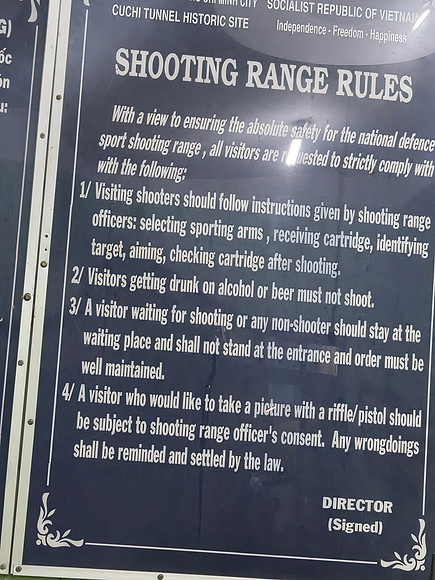
Through a second door was a small corridor clearly leading to a range. The noise of gunfire was extraordinary as it cracked through the air and bounced off the concrete walls. I quickly browsed around and was pleased to see among the list of rules above the cash desk: No firing while under the influence of alcohol. “Pissed with an AK-47 is never a good idea,” I thought.
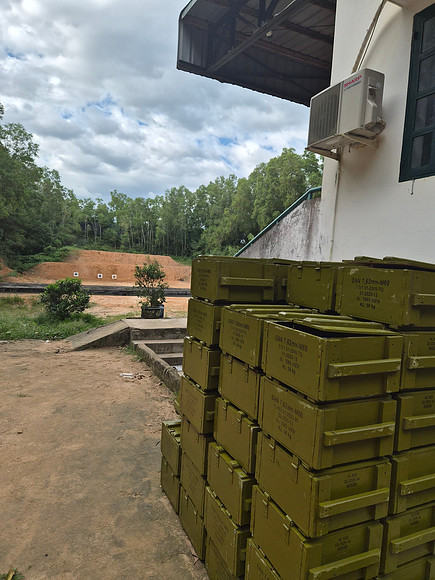
Wendy and I are not great fans of guns, so we went back outside and stood on a bank beside the range, taking in the scene together as automatic and single-shot gunfire rang out in the quest to maim a glass bottle or target a paper baddie 100 metres away. I stood beside used ammunition boxes and soon worked out this was a great business to be in—each box held hundreds of $1 bullets, and there were an awful lot of them! On some steps leading to our vantage point was a small dog sleeping. I called him, whistled, even meowed at the little fellow to attract his attention as $6-a-second gunfire rang out. No—he was deaf as a post! I wonder why?
The Cu Chi tunnel complex is 250 km long. It was a massive network where Vietnamese fighters waged guerrilla war against the Americans. Some tunnels are deep underground, built on three levels. Ingenious systems for cooking without smoke detection are highlighted, along with elaborate camouflage ruses to escape detection. The resistance fighters fine-tuned every aspect of fighting over the years: tiny dress details to tell friend from foe, rubber sandals shaped back to front to leave backwards prints, and of course booby traps—some quite horrific.
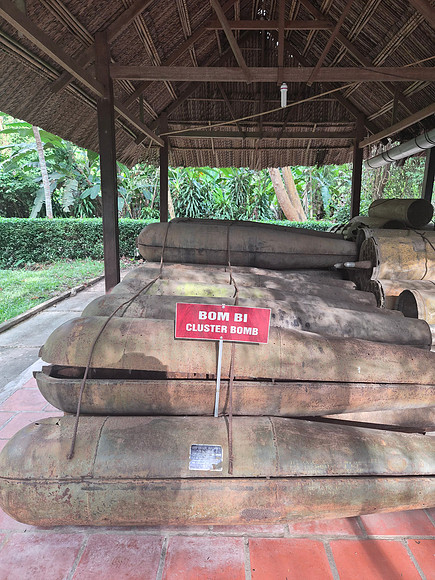
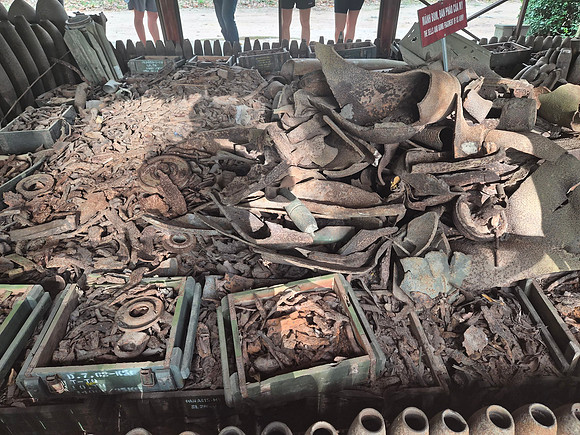
We were shown an awful lot of unexplored ordinance which still plagues Vietnam today and of course we had some purpose made tunnel to go through for the experience.
But the biggest advantage the Vietnamese had was their size. After years of starvation diets, they averaged around 40 kg and were very slender. No American could enter the tunnels due to size, as we were about to find out.
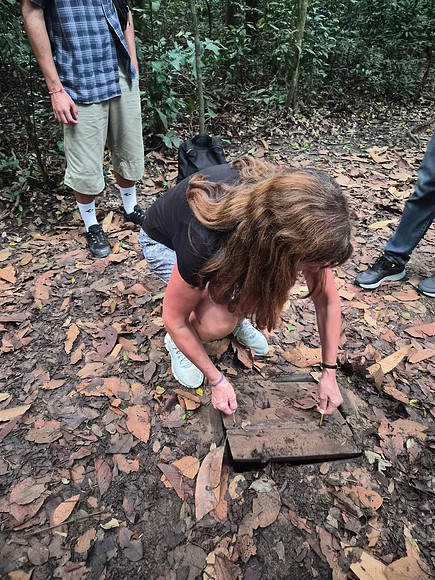
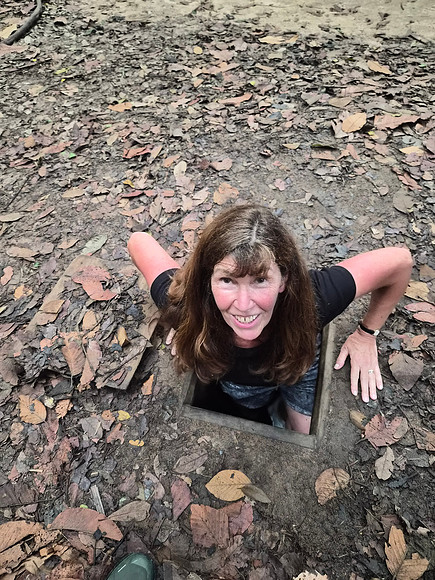
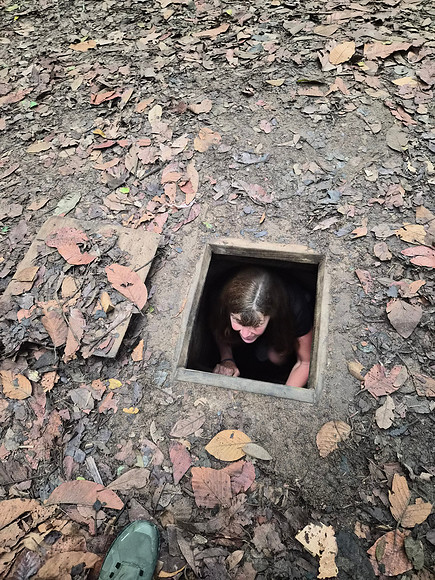
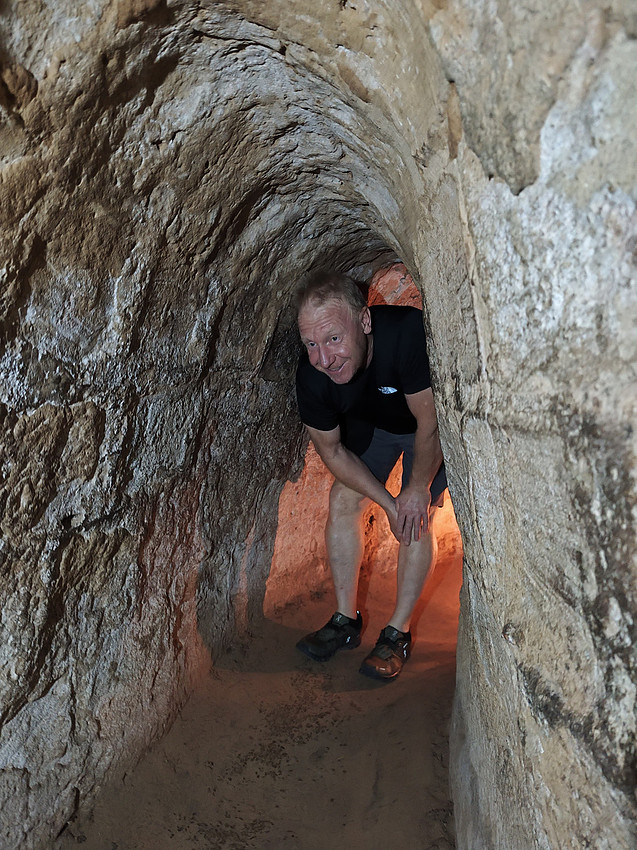
The guide scrapped away some leaves to reveal a small wooden hatch. Once removed, it exposed the tiny entrance to a tunnel. There was no way any of our group could fit down that, so with another scrape of leaves and dirt, a slightly larger hatch was revealed—the equivalent of what was needed for US servicemen.
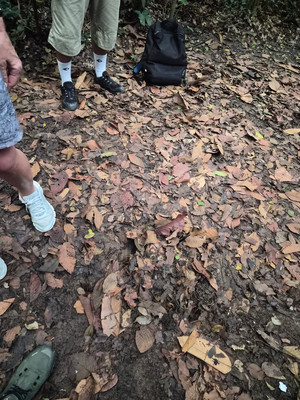
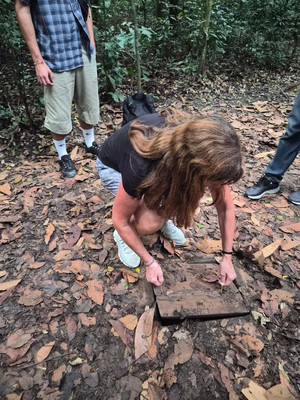
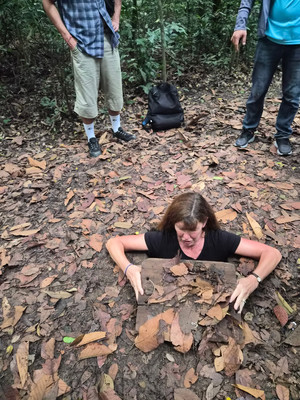
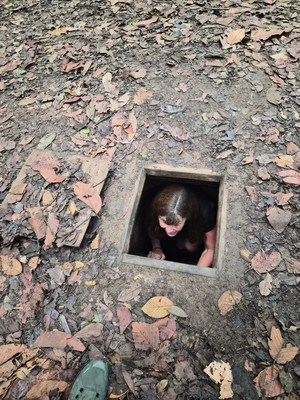
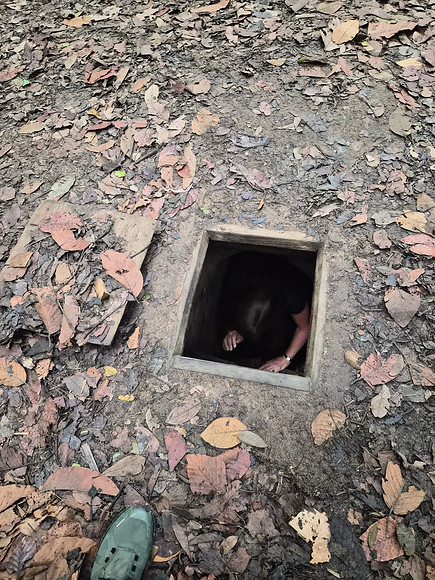
“Any of you willing to give it a go will place your feet into the hole, raise the wooden door above your head, and feel your way down with your feet. It is fifty metres long and you can crawl all the way through to the exit over there,” our guide said, pointing into the distance. He then added, “Do not—I repeat, do not—enter the tunnel if you have osteoporosis, heart conditions, muscular problems, or bad knees.”
All credit to our group—no one opted out. And guess which idiot went first?
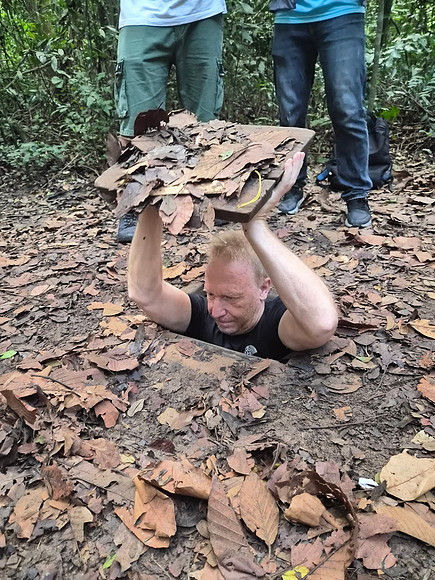
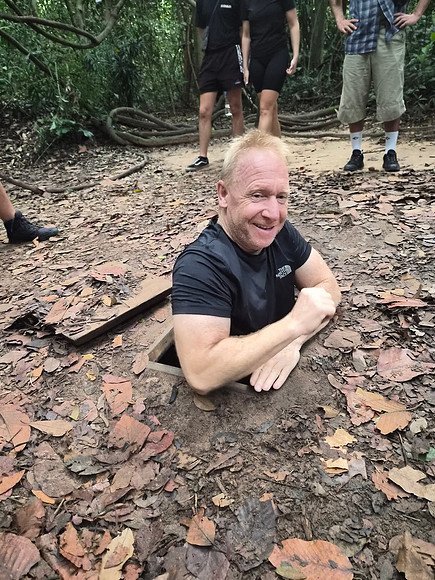
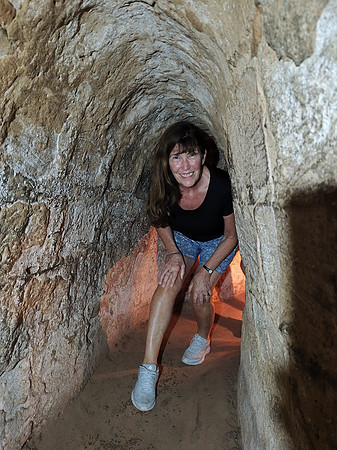
It was dark but dry, and the walls were sharp and unforgiving. I slid down a steep slope to a lower level and crawled along. Yes, it was agony on my knees, but I made it nearly to the end when… well, I got stuck.
I was crouched low, ready to stand for the exit, but my knees wouldn’t lift me. Someone behind asked if I was okay. I explained all was good and I was just making some adjustments to my exit strategy. Then I heard a familiar voice echoing down the tunnel: “Paul… Paul, are you ok… Paul?”
Calmly, slowly, I turned my body into a flat crawling position and forced my way up the steep rock steps into the light.
“Piece of cake,” I smiled nonchalantly, while Wendy rolled her eyes, smiling.
The tunnels were barbaric, insightful, a bloody reminder of war—but overall fun. The Vietnamese do not seem to dwell on the past or make these memories depressing. It’s more along the lines of: Do not forget, but always look forward.
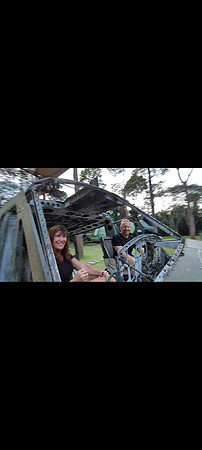
Very unlike us. We even had our pictures taken in the downed helicopter and looked at the destroyed tank, seeing things in a slightly different light than usual.
On The Outskirts Of HCMC Saigon
“Just drop us off here. They have beer, that will do,” I gestured out of the side window toward locals eating and drinking at a sprawling collection of tables and chairs encroaching onto the pavement.
“Nice to meet you all and safe travels!” we shouted as we jumped out of the tour bus.
We stood waving for a few seconds as they drove off into the busy streets, then looked around to get our bearings. Right next to us were two small stools and a little table—it kind of had our name on it!
We literally took two steps, sat ourselves down, and had an ice-cold beer in minutes.
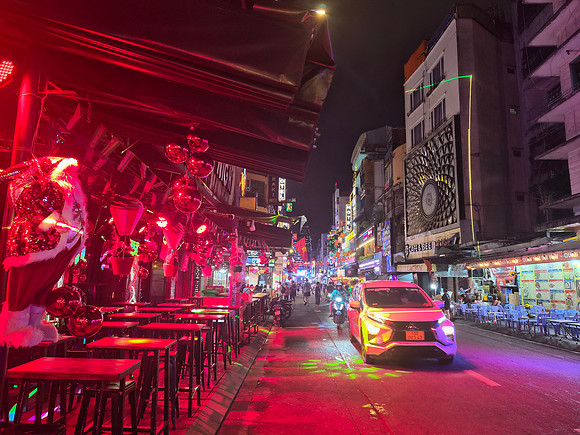
It was certainly an area of town where western faces still seemed to be a novelty. We were the center of attention—or maybe even the entertainment—for the evening. Some people stared, others came up to say hello, and the staff fought to sell us more beer. One girl was dressed in a “Tiger Chill” promotional dress and seemed keen on us choosing that as our beer of choice. She was so tiny and sweet, but held her own with the other rowdy guests who were going through can after can in rapid time. They would all cheer each other and then throw the empty cans under the table. For the life of me, I have no idea where they put it all, as none of them were very big!
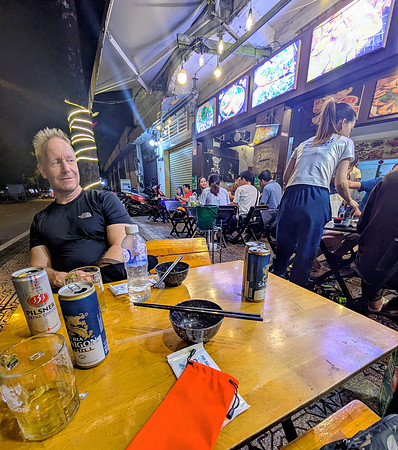
Anyway, Wendy and I had to put them in their place when something bizarre happened—as usual. We had only had two cans each and thought a third was a brilliant idea, so we ushered over our new favorite girl. She carefully placed the can down, used a special opener on the ring pull, and inspected the lid before opening. We found this quite odd, as we were sure opening and pouring a can of beer was easy—even for an idiot like me!
Then all was revealed. A massive grin spread across her face as she announced to us and everyone in the bar: “You have won!” she cried, literally jumping up and down on the spot.
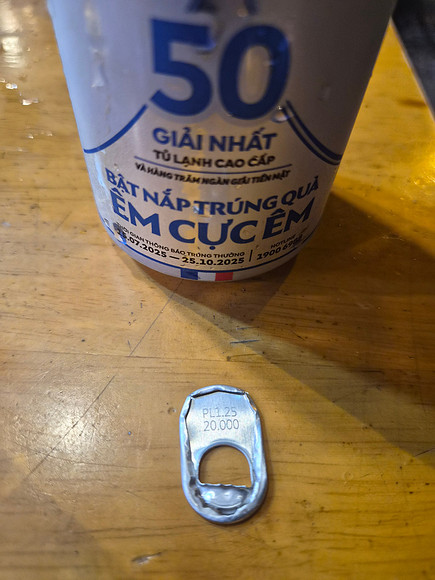
Gasps of joy filtered through the whole place as she told us the prize: “20,000 Dong! Cash!”
“Well, that’s fantastic,” I thought, trying desperately to do the maths in my head. “The same price as the can of beer—about 55 pence.”
Despite the fact the bar had gone through about 200 cans with no winners, everyone seemed delighted for us. And yes, of course, the pretty little barmaid got the cash!
We both felt a fourth beer was not such a good idea, as we had not eaten all day. So we said our goodbyes and moved on.
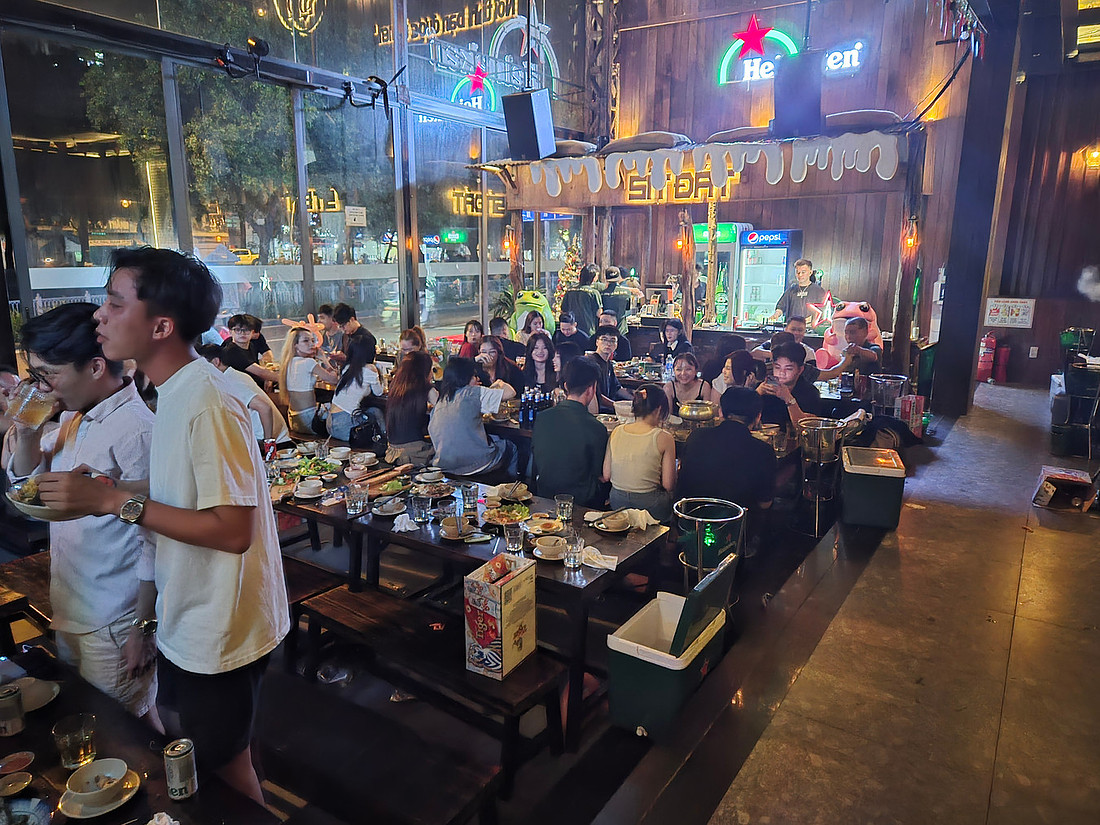
We only made it about 200 meters along the street before finding ourselves outside a giant glass-fronted restaurant. Before we could even look at the outside menu, two young girls dragged us inside.
Honestly, the wall of sound as we entered was incredible. We were expertly handed over to a young man who swiftly ushered us upstairs to a corner table overlooking the crowd below. We sat opposite each other and couldn’t hear a word we were saying.
It went something like this:
-
“What are you doing?”
-
“Are we staying?”
-
“This is mad!”
-
“Oh my god, we have beers!”
-
“Shit, I think I’ve ordered chicken sinew!”
Serious faces quickly turned to outright laughter as we realised we were stuck in one of the craziest places we had ever seen or experienced.
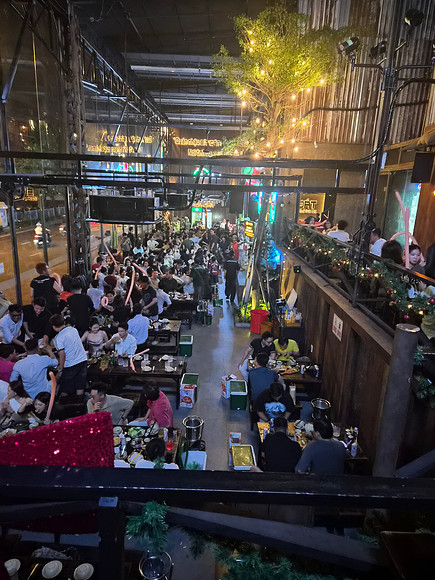
From above, the massive venue was lined with rows of long tables, very much in the style of a German beer hall. It seemed that parties of ten or twelve had booked each table, arriving dressed to impress. Copious amounts of food and alcohol were spread before them like a medieval banquet. At one end of the hall, a DJ belted out Vietnamese favorites, interjecting with shouts that whipped the revelers into action—all at incredible decibel levels. And boy, did they love it. “Letting your hair down” was an understatement; they would have ripped it out if given the chance.
You couldn’t help but smile and laugh as they jumped on tables, screamed, and toasted each other—without a hint of malice in the air.
After a little while, we caught the eye of a few revelers and were dragged into group photos, plied with beer, and welcomed to Vietnam! Maybe it was reverence for us being at least twice the age of everyone else.
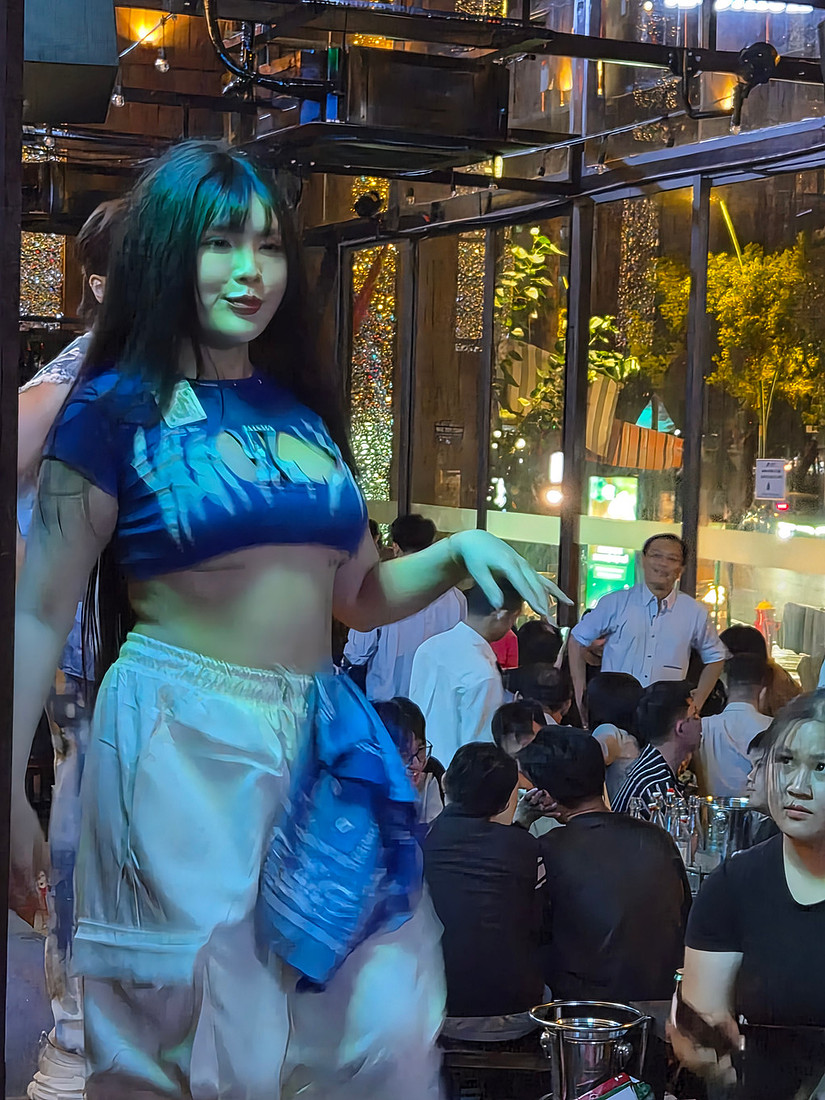
I paid the bill, and on our way out Wendy needed the loo. She joined a long queue, which gave the skinny young girls a chance to grill the giant among them. She was treated like a princess—they even had the loo specially cleaned for her. When she came out, she was a celebrity and even got hit on by a boy dressed as the Christmas Bunny, who was delighted when Wendy told him, “You’re beautiful.”
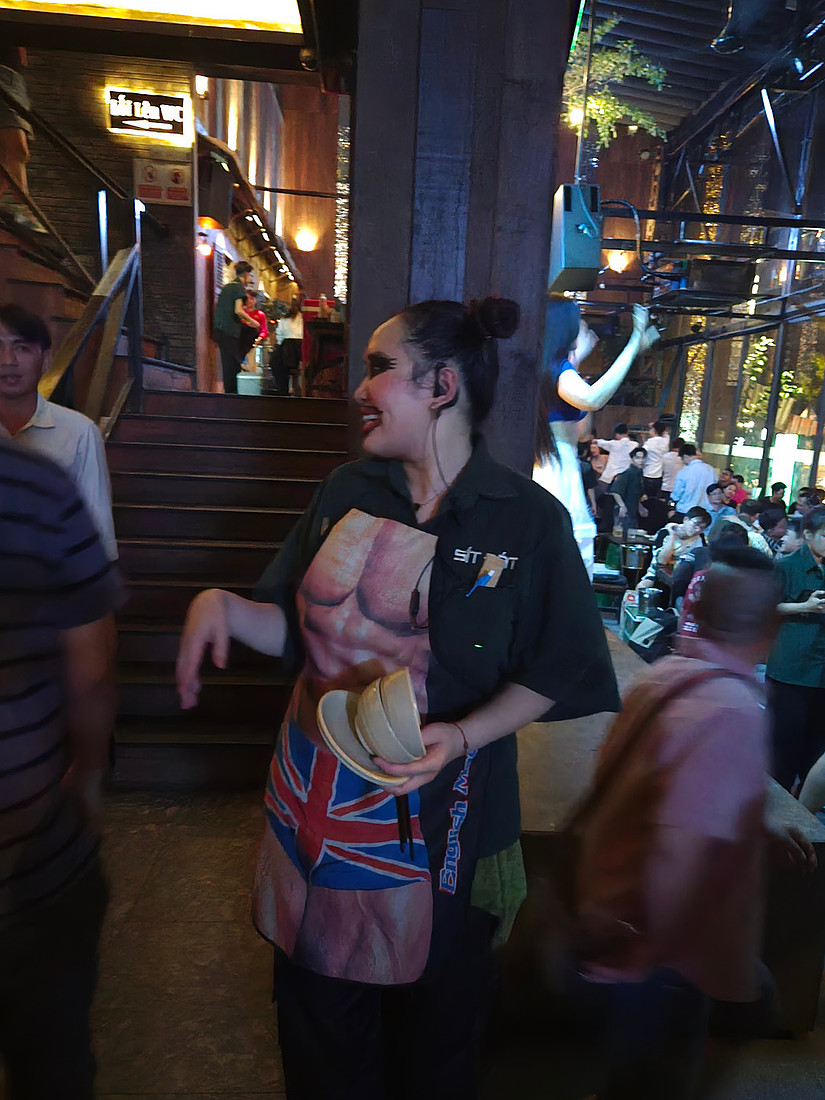
Meanwhile, I was talking to one of the waitresses, unashamedly dressed in a bizarre pinny with Union Jack boxers emblazoned on it. Like everyone else, she asked the same question: “Where are you from?” followed by a puzzled, “What are you doing in here?”
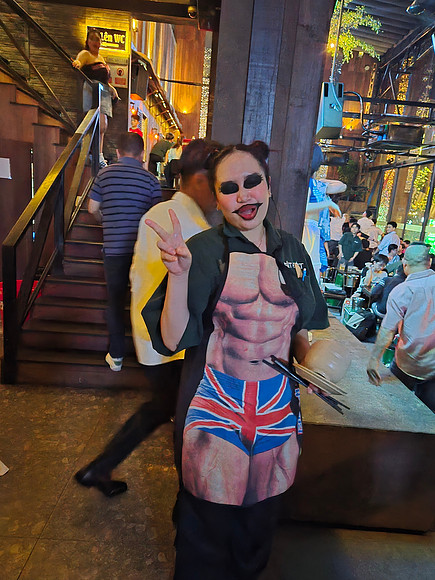
Reunited at the bottom of the stairs, we were escorted out in the fashion of stars. Before we knew it, we were back on the street.
“What the hell just happened there?” we laughed as we skipped off up the street
MORE DELAYS
“I know we need to get back, but would you mind if we just stopped at one of these street places and had one cool beer before we go back? My head is still ringing from the noise and I could do with a moment to just chill and enjoy a beer,” I asked.
“Where do you want to go?” Wendy replied as we walked back toward the hotel.
“Just up here looks good, if they’ll let us have a beer as everyone seems to be eating.”
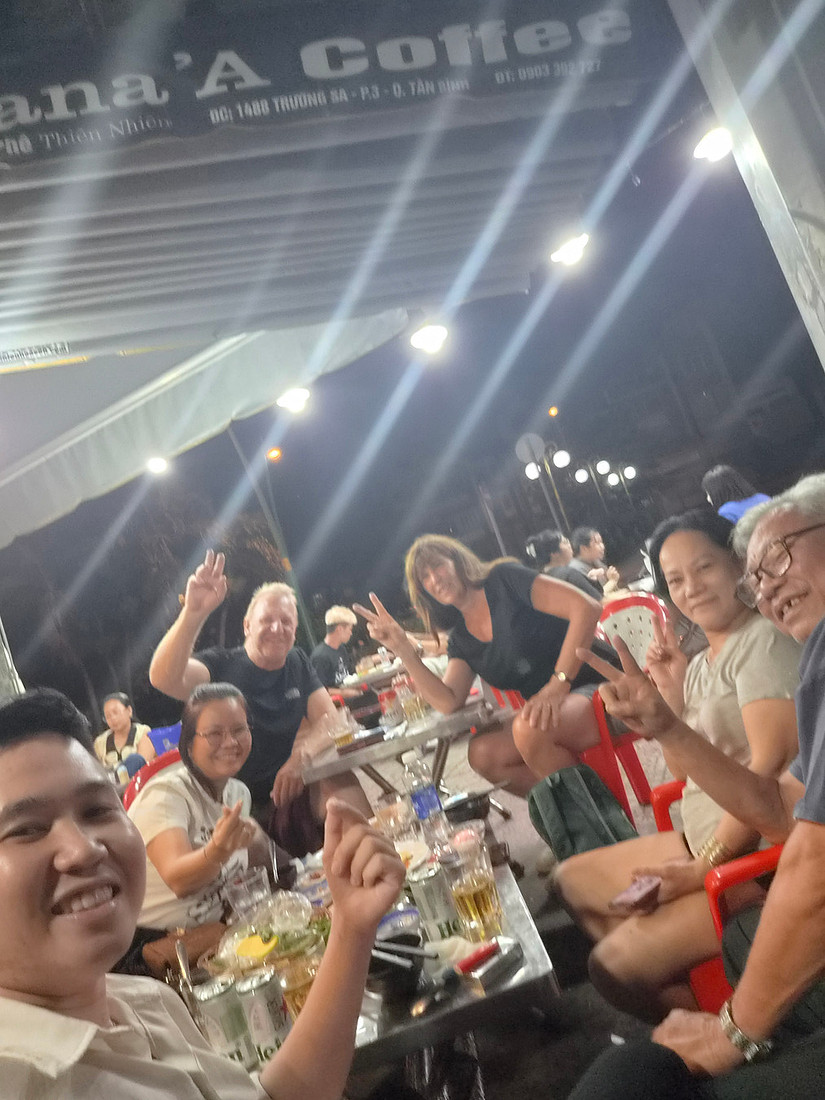
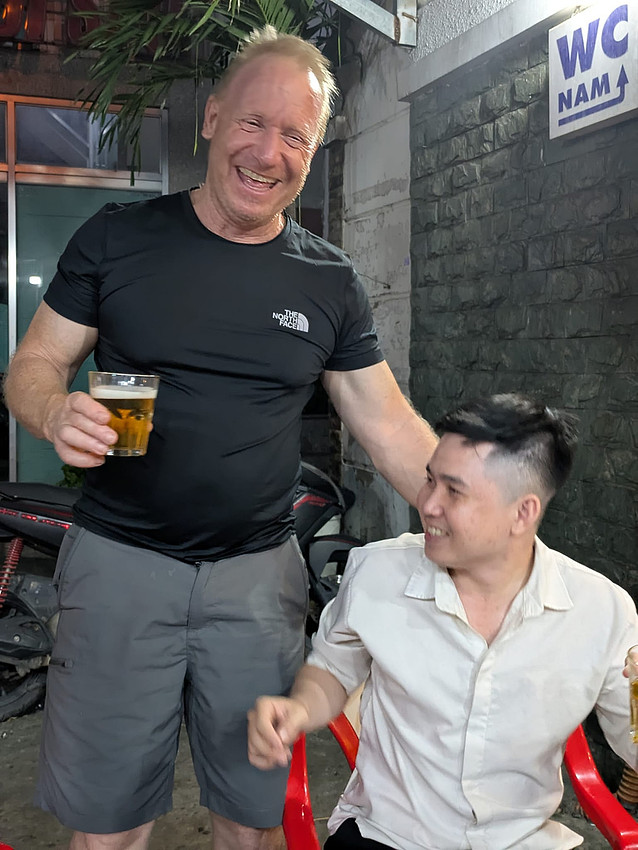
They didn’t mind, and soon we were seated at another table on another pavement—and, would you believe it, causing a stir! Almost as soon as we sat down with a cold beer, a woman’s voice from behind asked, “My father would like to know where you are from.”
I leaned around and replied with a smile, “UK.”
He immediately got up, raised his glass, and clinked it with ours in a cheerful toast.
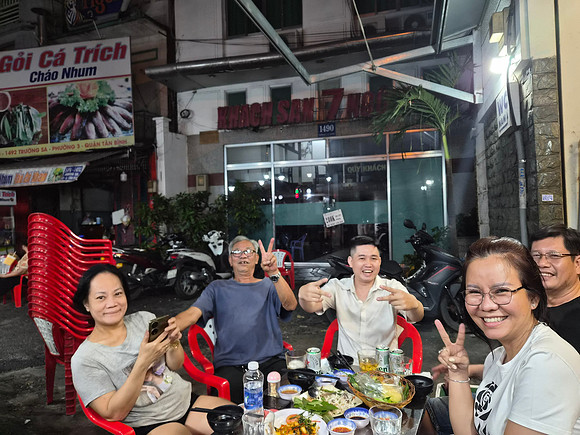
You just couldn’t make it up—it was a family of four with a best friend out for a meal. After about a dozen rounds of cheers, the old man walked over to our table and declared us guests, moving our table to join theirs. Fortunately, the daughter was a high school teacher who had learned English but had never had the chance to speak to anyone from our country. Her best friend was in the same class. I’m pretty sure the old man spoke a little, but he wasn’t letting on.
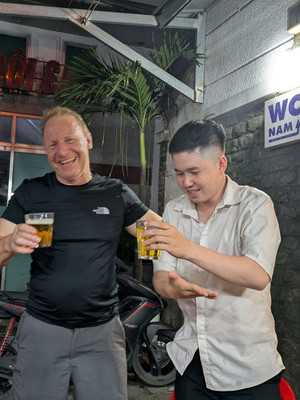
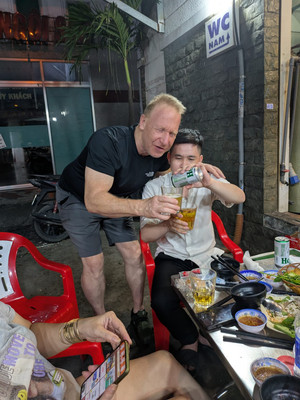
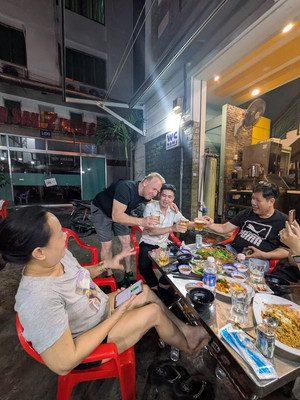
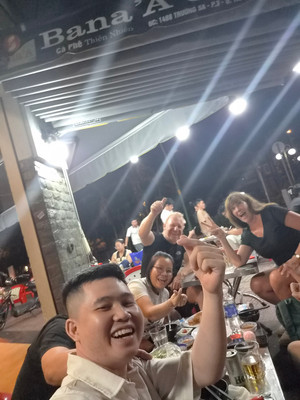
Oh my goodness, we had a whale of a time—laughing, joking, and drinking rounds of beer. They even purchased us the Vietnamese specialty Bánh mì pastry rolls with spicy meat inside, and we cheered them as well. We watched videos of the school prom, talked about our hometowns, and generally made friends with the loveliest family.
After at least an hour and a half, they bid us farewell, hopped onto three Grab scooters, and whizzed off—never to be seen again.
We looked at each other in disbelief, finished our drinks, and requested the bill.
“All paid.”
I just couldn’t believe it—they had paid our bill before leaving, and a significant one at that in Vietnam!
We had ventured out where there wasn’t another western face to be seen, and it had paid off in the most marvellous memories of a very special place.
Photo gallery Below:
“Would you like a crisp?” An open bag appears from the seat behind. “Oh, no thank you, but thanks,” I smile and reply. A little while later: “Would you like a Haribo?” An open bag appears again, and I politely decline with a “thank you, though.”
“A banana?”
”Thank you that will be nice” I smile as I accept the fruity gift.
We are on a small bus we booked to Tam Coc, and it is a good four-hour journey. Our fellow passengers are a group of very bubbly and slightly noisy Brits—four girls and a very camp young man. When they got on the bus, we both looked at each other and thought, oh no! But travel again proves to be such a brilliant way to bring people together. They were lovely, and boy, what an adventure they were on!
Within no time they were swapping stories and telling us about their route across Thailand, Laos, and the high mountains of Vietnam. They had even done the “Loop”—a trail through the mountains for three days on the back of scooters! Sore bums and wild nights in the middle of nowhere to you and me. And they still had six months of a massive trip to go. It looked like travelling had really opened their eyes—a real breath of fresh air.
“Tam Coc Full House Homestay”
“Is this it? It doesn’t look like the pictures,” I said apprehensively as a small sign at the end of an alley confirmed what we already knew—this was it. We dragged our cases through mucky puddles and between motorbikes parked at the edge of a murky green swimming pool, where we were greeted by the owner.
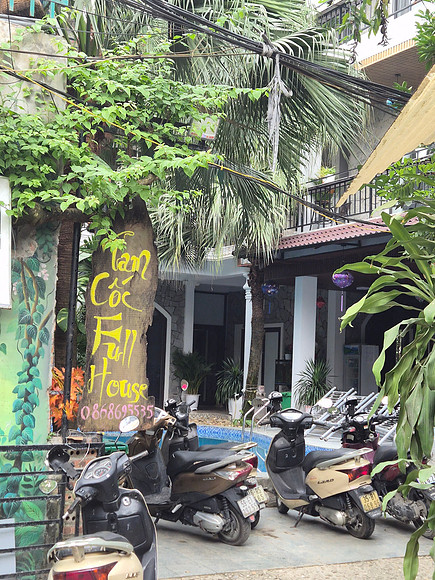
In seconds, we were sat down with fruit and ginger tea as she ran through everything she could sell us—cabs, trips, scooters. We eventually managed to get the key to our room and shuffled away to its privacy. “What do you reckon?” I asked as we looked at each other. “Well, it doesn’t quite look like the pictures, but she seems nice and it is clean.” Wendy then added, “We can go somewhere else, but we would upset the lady.”
We deliberated a little longer and decided to stay. We were glad we did because, on the whole, it was pretty nice once we got used to it. It turned out Tam Coc is a noisy little town, full to the brim with all sorts of mostly European travellers heading out to trek the local wonders. Every Vietnamese house down the alleys and backstreets seems to be offering rooms and board. With so much competition, they try very hard to over-elaborate on travel sights to get business. And let’s face it—with prices from just two pounds a night, who can blame them?
For us, Tam Coc was a shock. We were expecting a quiet, rural little place in the countryside with just a few places to eat and drink. Tam Coc is not like that! It is bar after bar, restaurants all competing for business by trying to outdo the next place. Happy Hours, meal deals, and special offers are everywhere—and boy, some are just so cheap! A beer was generally 7,000 Dong to 20,000 Dong, and for one pound we get 35,000! So, when in Rome and all that, we gradually changed our mindset. It was party town, and we needed to join the party.
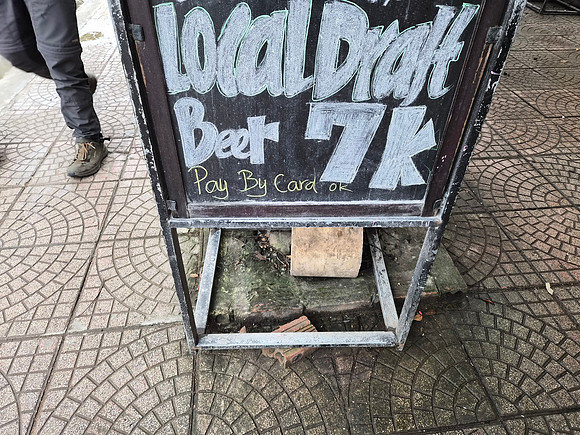
OK, maybe we were the two who just hung out talking in the kitchen—but we were there. We had great fun, some great beer and food, and we slept well, as the room was pretty good at insulating us from the loud music coming from everywhere. After three days, we had fallen in love with crazy Tam Coc and our homestay, and we were rather sad to be leaving.
First Day Chilling: Or So We Thought!
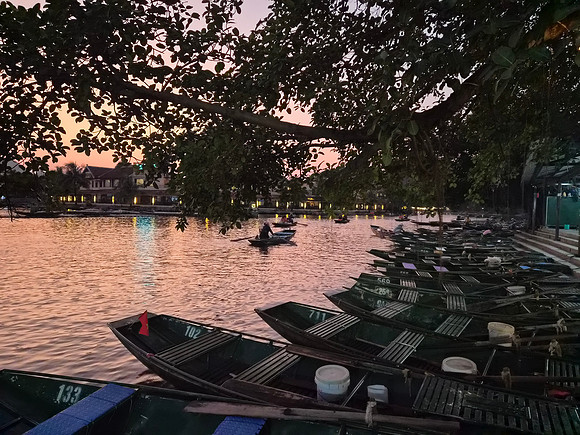
“Let’s just go over to the lake and take a boat ride,” was our thinking after a hectic couple of full-on weeks. Tickets purchased, we hopped on one of the hundreds of boats paddling what was obviously a tributary of the river.
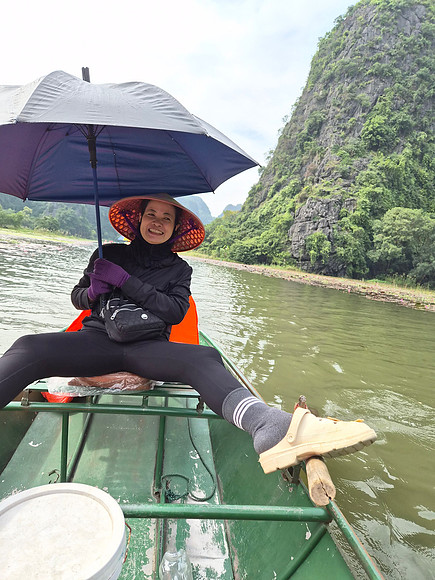
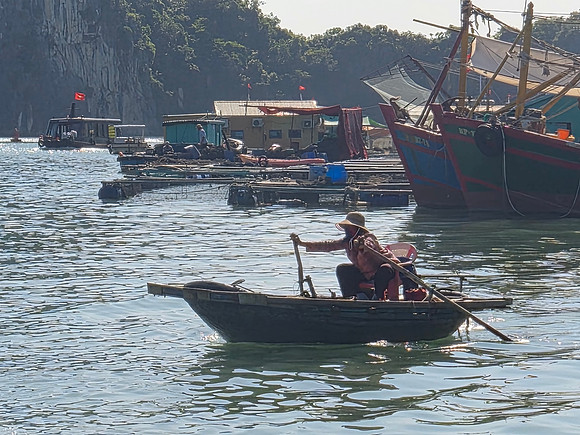
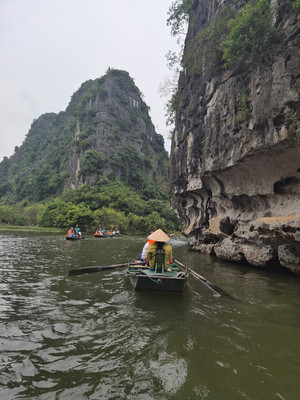
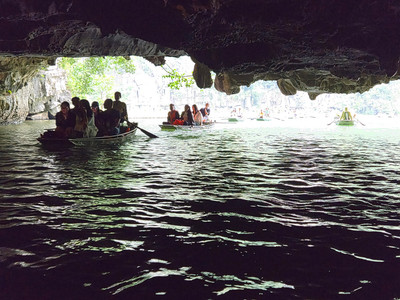
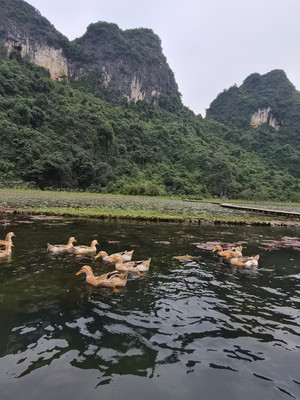
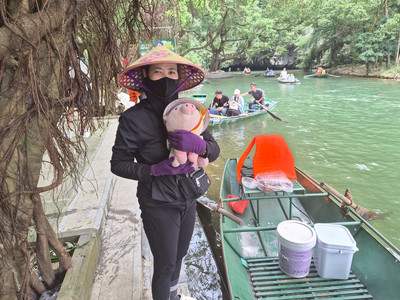
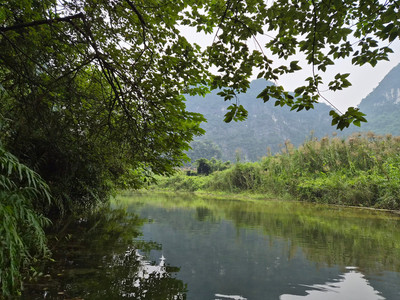
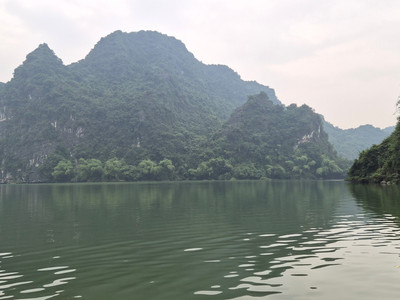
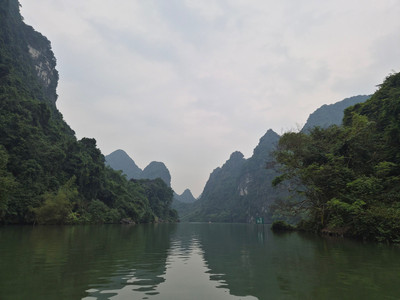
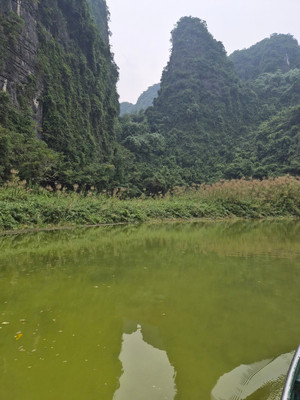
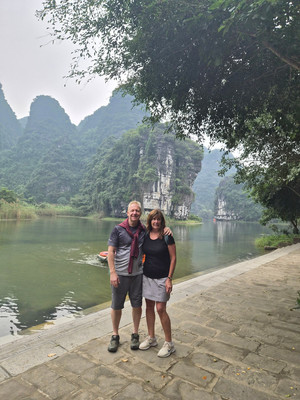
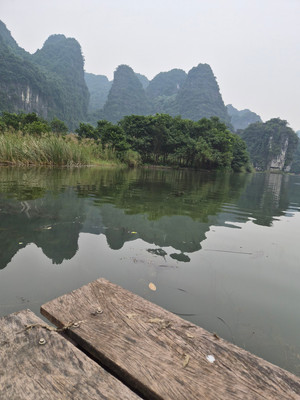
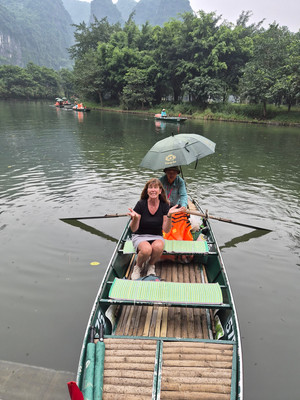
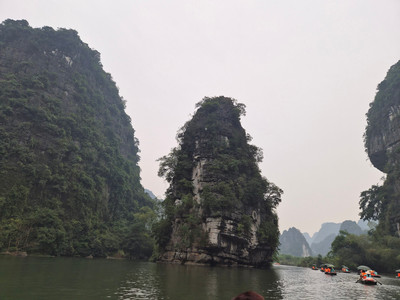
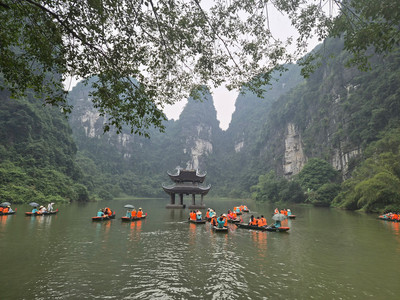
The lady paddling us was using her feet on the oar handles (yes, her feet!) and taking us across the water at quite a rate. And she paddled, and paddled, and paddled. We could not believe it as we headed into incredible karst ravines—rather like those at Ha Long—and through rice pools and lily pads near the river’s edge. Stunning high cliffs, like nothing I have ever seen, greeted us around every turn. Then, just as the river looked like it was ending, we floated through caves under the mountain into more ravines.
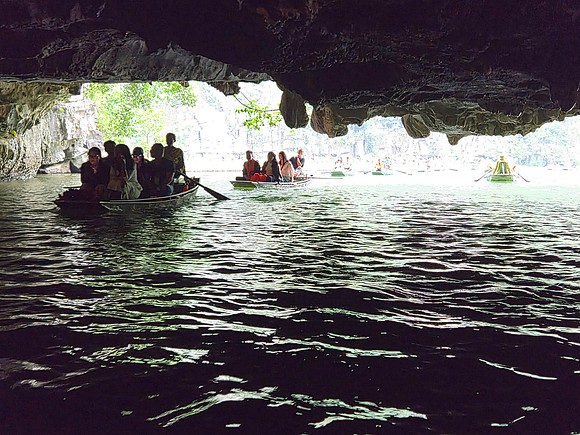
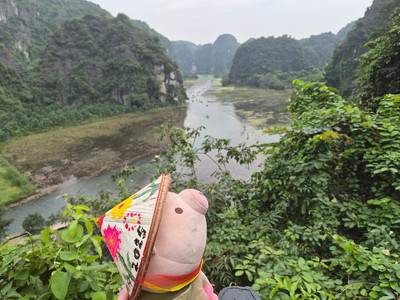
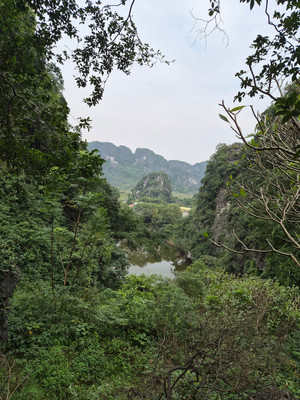
We pulled in under some low-hanging trees and were ushered off the little boat. The Vietnamese lady smiled and pointed toward a path. Another exciting surprise—as we found ourselves climbing hundreds of steep steps through a narrow crack in the mountain. What a view greeted us at the top! Hundreds of feet up, we looked down in awe at the snaking river through the valley.
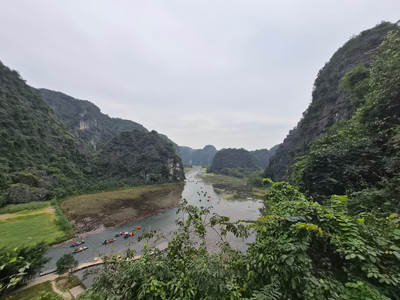
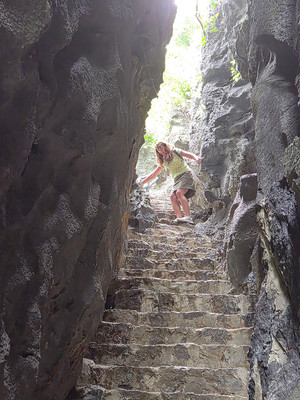
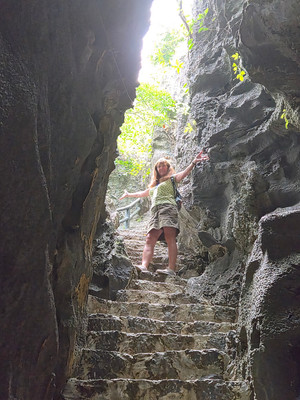
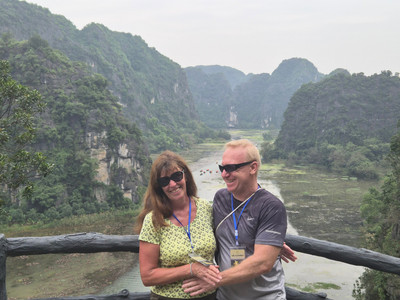
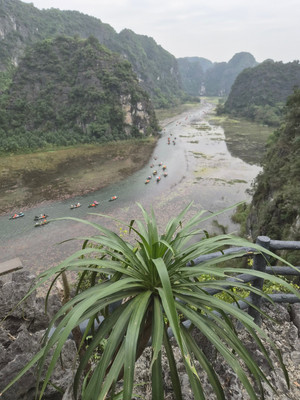
Once we returned to the boat, we encouraged the lady to rest a while, while we sat on the water’s edge taking in the breathtaking beauty. She smiled and sat beside us, but the Vietnamese are very industrious. The next thing we knew, she was opening a plastic tub filled with pretty silk pictures she claimed she had made. What the hell—I’ll buy a couple, I thought, and did a deal for three pretty pictures.
We were at least two miles down the river and could not believe her fitness level and skill with the oars. She could even answer her mobile while paddling. “All day, very tiring,” she communicated to us at one point. I hope the money from a few pictures sold each day was just reward!
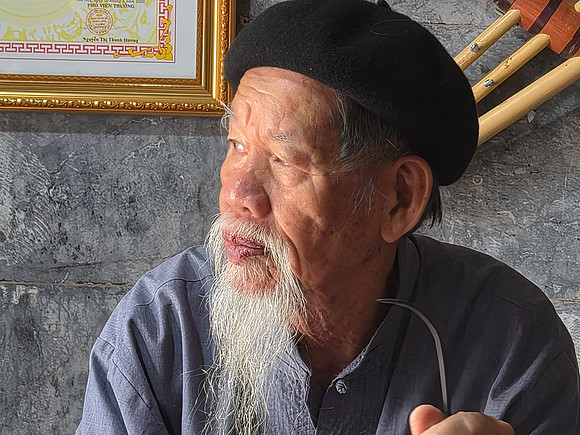
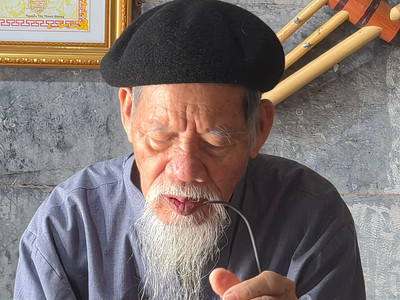
We had two more stops on the journey back, including one where we left the boat and were picked up in an electric buggy to view a temple. The temple was, as all temples are, very nice, but the highlight was a wizened old man with two sleepy dogs who was playing a flute and a bamboo instrument. I gestured for approval for a picture and he nodded yes. After a few minutes of atmospheric music, he placed the instrument down, pointed at me, and then at a hat on the floor. On his left was a large donations box for the monks. When he thought we were out of sight, our sneaky old fellow placed the smaller notes into the slit in the donations box, had a little look around, and—thinking the coast was clear—got out his wallet and donated some to himself! We had a good chuckle at that.
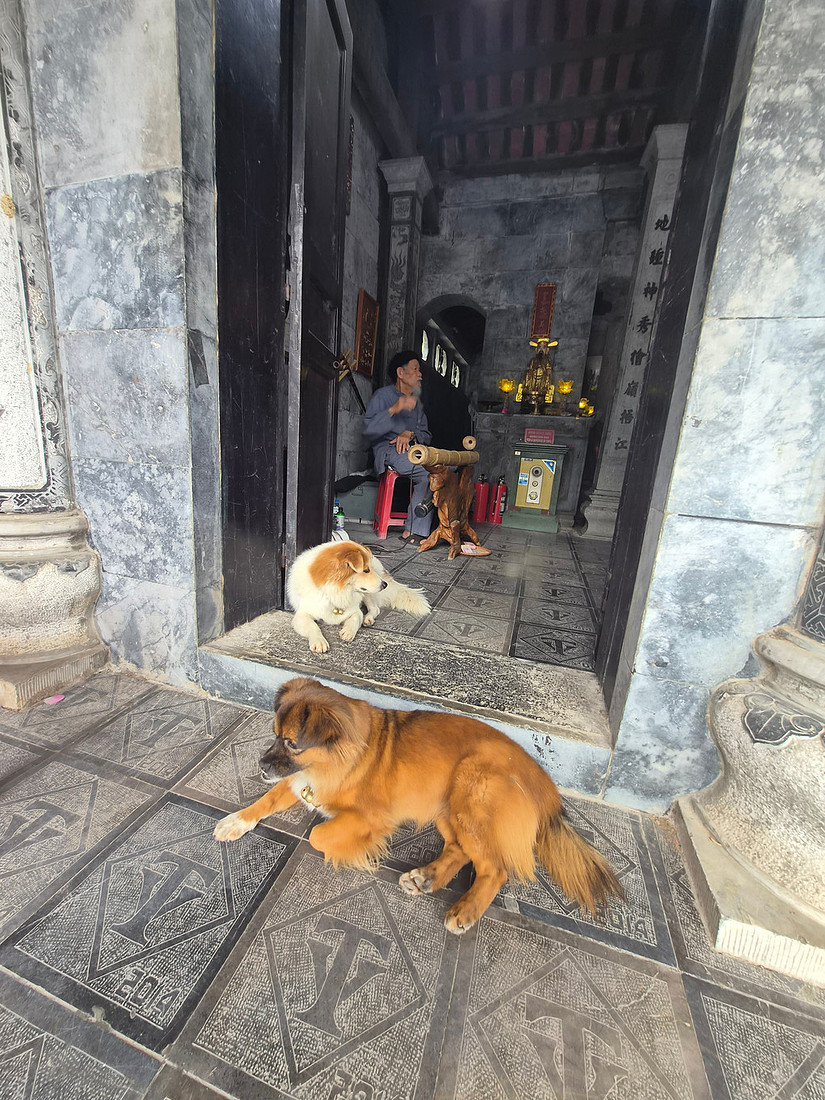
Back to the boat and a happy reunion with our lovely rower, who took us a little way to a drop-off point where we caught another electric vehicle for a ride through the countryside to a more spectacular temple within a karst mountain.
On the whole, the adventure was just stunning. What we thought was a quick trip across the lake finished about five hours later! Vietnam just keeps surprising us.
Vietnam Just Keeps Giving
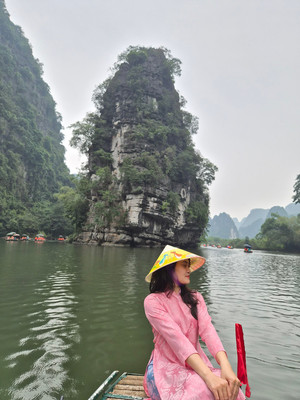
It just couldn’t be, could it? Better than Tam Coc River? Another boat ride in a place called Trang An, and we were not expecting it to surpass the day before—but it did. Oh boy, it did!
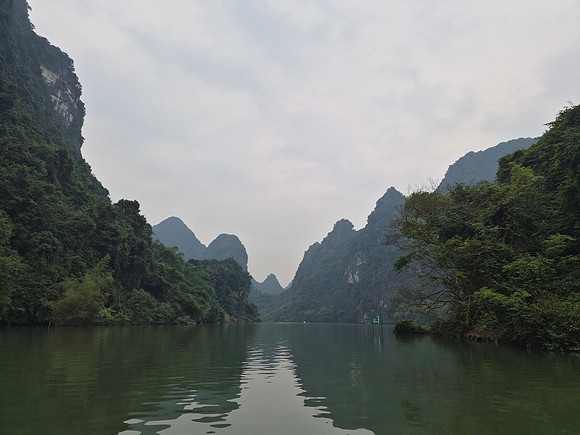
I remember when I was young my grandad gave me a painting of a river boat in New Zealand. It was titled River Wanganui near Pipiriki, and I dreamed one day I would visit somewhere just like it. And now I have! Miles of river coursing through jungle, caves, and mountains.
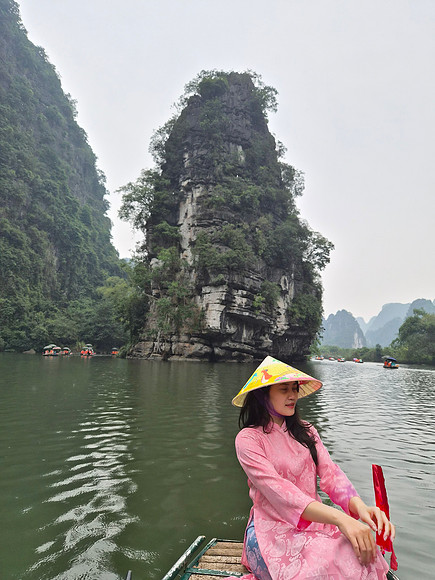
This time we had to share the boat with a young Vietnamese couple dressed in fine clothes for the occasion. At every opportunity they photographed each other against amazing backdrops. It was a truly wonderful experience, and very hard to describe in words the majesty of the natural world before us.
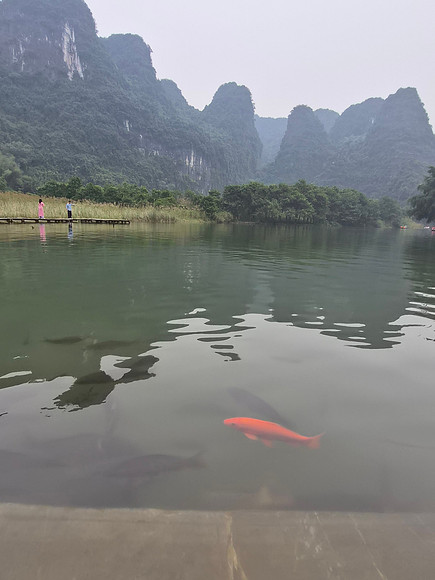
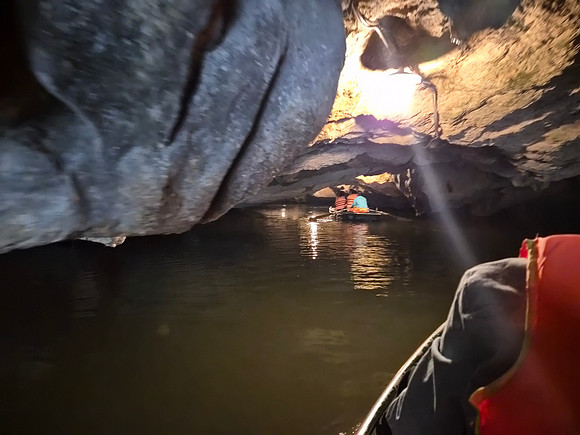
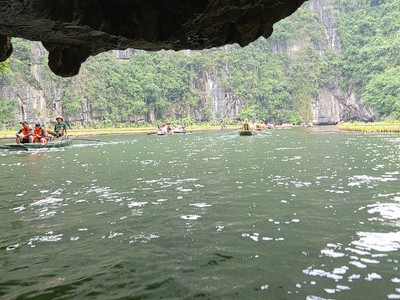
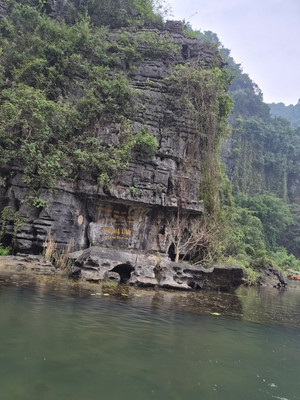
At a branch in the river we headed toward a shallow cave entrance and were shocked to find we had to crouch as low as possible, with only a couple of feet clearance from the side of the boat. We were instructed by our oarsman: “Keep low, keep low!” so as not to injure ourselves on the rock ceiling or the low-hanging stalactites. The journey through was one kilometre—exciting as well as awe-inspiring. In most countries this would be considered too dangerous, but here in Vietnam health and safety is an unknown phenomenon. It felt like exploring!
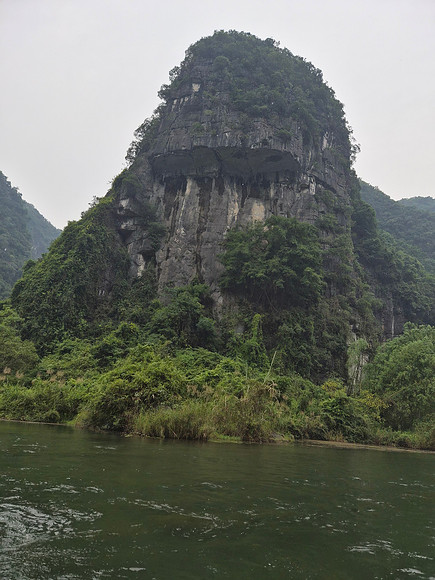
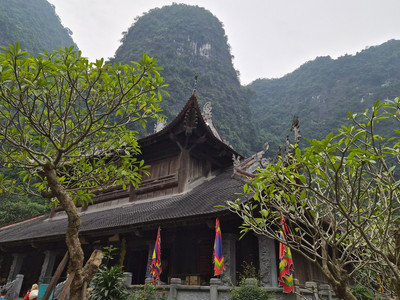
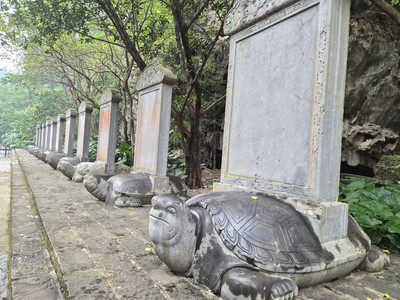
We visited temples, saw many types of birds, and explored three caves altogether. But the majesty of the mountains will live with me forever and a day.
We were supposed to be going on a twelve-hour overnight coach to Da Nang the next day, but central Vietnam was cursed with violent typhoons and massive floods. Sadly, many have lost their lives and others their livelihoods, as crops, homes, and villages have been washed away. It seemed pretty crass to include it now on our trip, so we booked a flight way south to Ho Chi Minh City.
PHOTOS BELOW:
]]>
Flat Out To The End Of The Day
We had no time to reflect on our mountain escapades before Bing had quickly packed us aboard the minibus in double quick time.
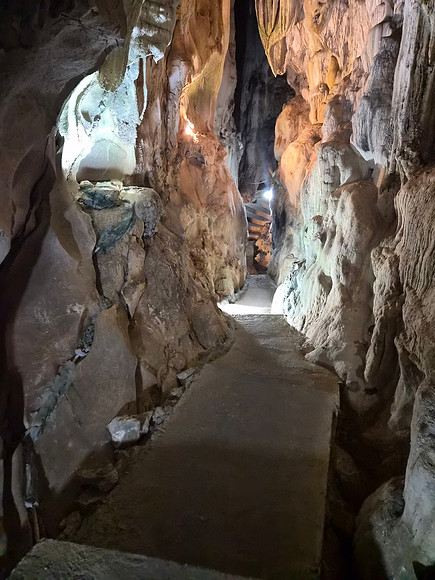
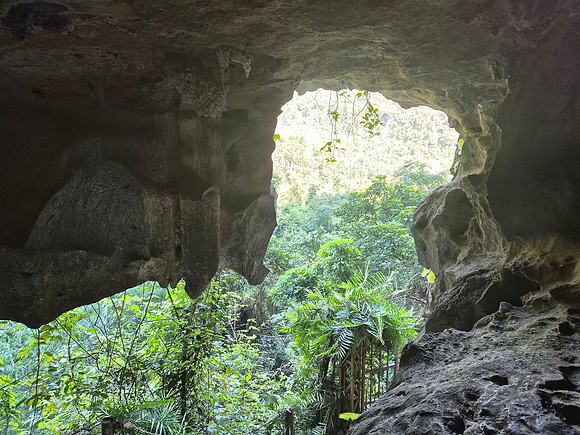
We managed to fit in a visit to a limestone cave, a fantastic lunch, an electric vehicle transfer, and another trek along the cliffs of Cat Ba Island before swimming in the amazing sea off a golden sand beach by 5pm.
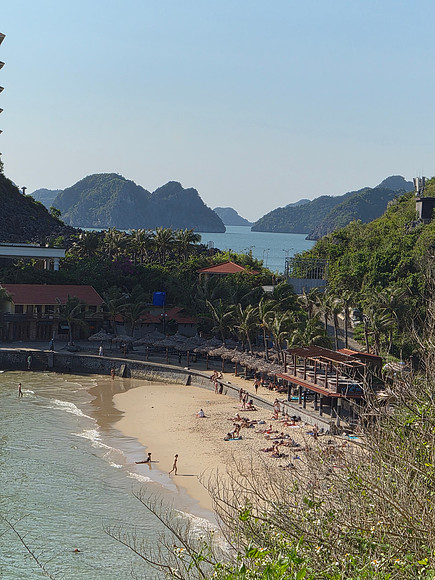
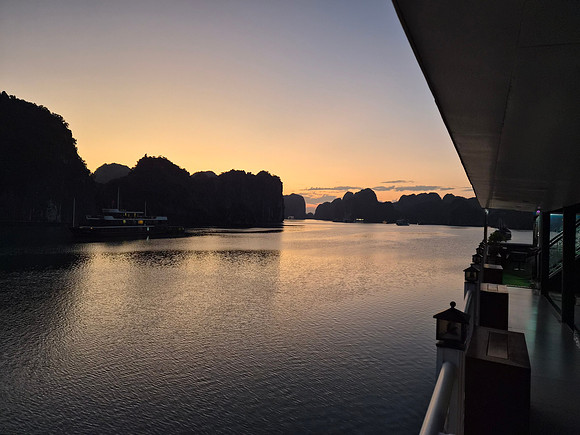
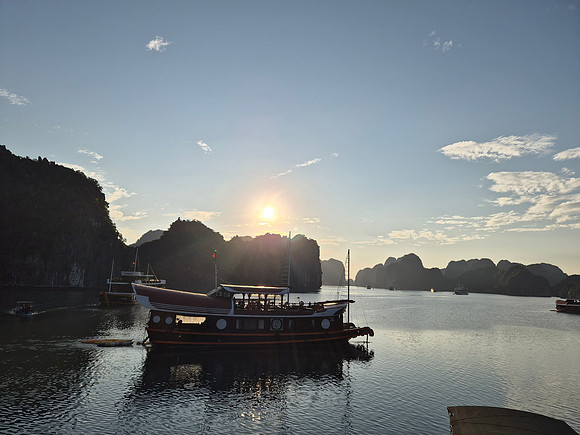
Playing in the water, we delighted in discussing the places we had seen and how we felt with others in our small group. It seemed we all shared the same feeling—overwhelmed by it all. The group was becoming tighter; the ice was broken. Vietnam surprises us every single day! And what long days they are—we still had a trip by tender boat, swimming and diving from the top deck, and, believe it or not, a barbecue on board followed by karaoke. But don’t forget: up at 6am we were going sunrise cycling on the other side of Cat Ba!
EARLY START
“I don’t want to go” I protested “It’s not even light, and I have this lovely room”
“Stop winging and get up” Wendy said as she gave me a look of despair.
Like a grufalow I proceeded down to breakfast to find some greedy buggers had ate it all and the hot water for tea was not hot. We rushed from the breakfast room to the tender boat clearly late until I was informed by Wendy “No one is here because they are asleep, my phone has gone forward to Hong Kong time”
“So no one has eaten all the food it isn’t out yet!” Now I really was a grufalow!
CYCLING CAN BE FUN!
We rode along the water’s edge for ten minutes before heading inland through a rock tunnel into a long green valley. Bing, in typical style, said “Follow me,” and before we knew it we were off-road through the wet fields! He doesn’t do things by half, and once again we were on an adventure.
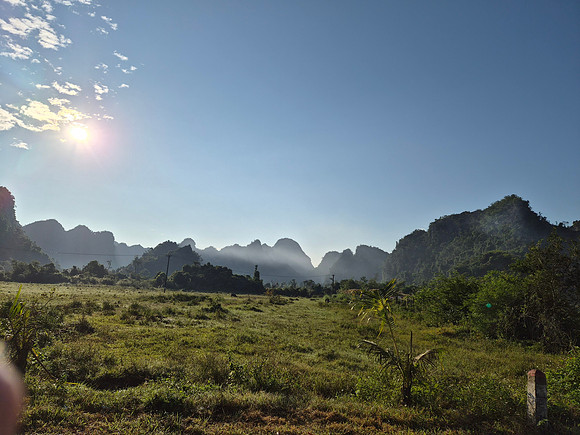
I stopped for a photo opportunity in a valley that resembled heaven. But what to photograph? The butterflies? The line of hawks perched on an electric cable? The baby buffalo a few feet away? Or the majestic walls of the mountain under a brilliant blue sky? Everywhere I looked was stunning—no photograph could ever do it justice. It was quiet too, until just a few meters ahead a loud scream rippled through the valley. Jackie had caught a wheel and ridden straight into a muddy, smelly water buffalo ditch. It was unkind to laugh, but even her husband was thrilled to have caught it on video! The poor girl was sprayed down with a hose in a local village, much to everyone’s delight.
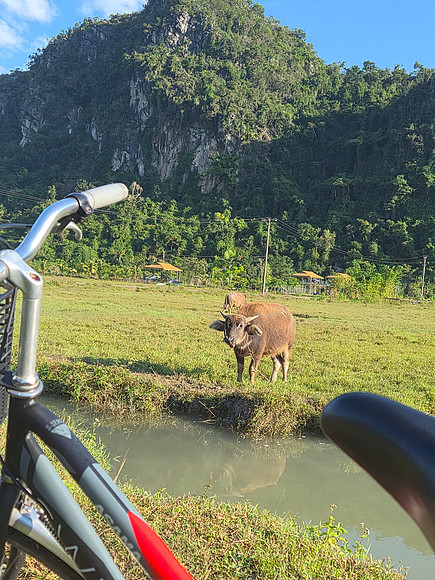
The little village was truly rural, having only recently gained electricity, but it was a special stop at a makeshift café-home. Out front, a dog lay in the early morning sun, and my new little friend wanted to show me him. She was about three or four years old, with the cutest smile, and she thought the guy with white hair doing an impression of a one-legged chicken was hilarious.
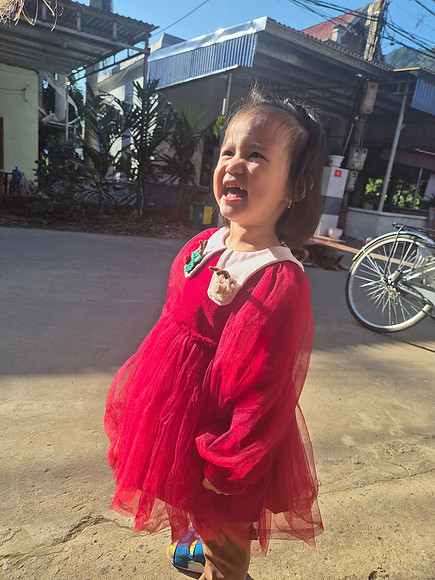
Bing wasn’t going to let us off lightly—he had one last piece of tortuous steep road for us to climb on a fixed-wheel bike. Of course, it was worth it. He never lets you down, and the view was out of this world.
We arrived back at the dockside to see other groups picking up their bikes and heading into the valley. They had enjoyed a lie-in and a hearty breakfast, no doubt. But honestly, I wouldn’t have swapped our early morning jaunt for the world. It was truly wonderful having the whole route to ourselves, surrounded only by nature. “Not so grumpy now, hey?” Wendy smiled.
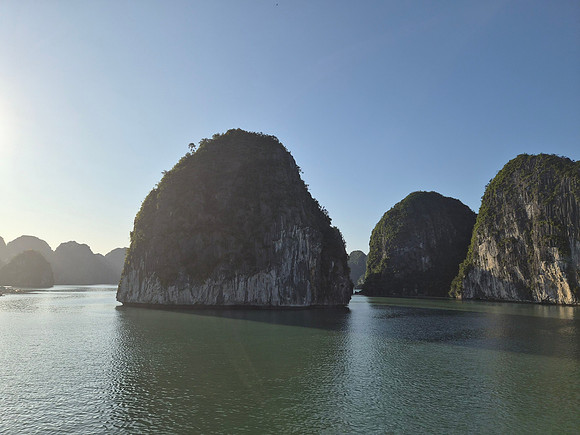
We did however have a leisurely cruise for three hours through the karst channels back to the docks for the end of our two night cruise. It was good value and amazing but without Bing we would have missed so much! We went with a company called Vega Travel and I couldn’t fault a thing. Wonderful.
Of on a coach to Tam Coc now surely it can’t match this?
A selection of pictures of the two days below:
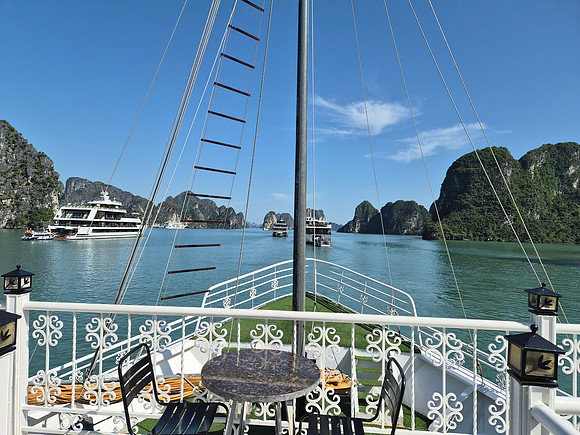
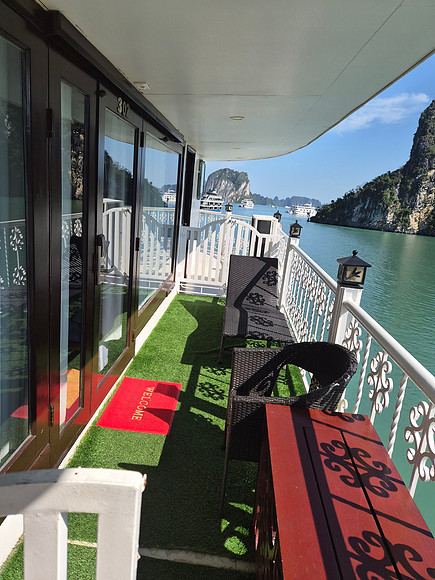
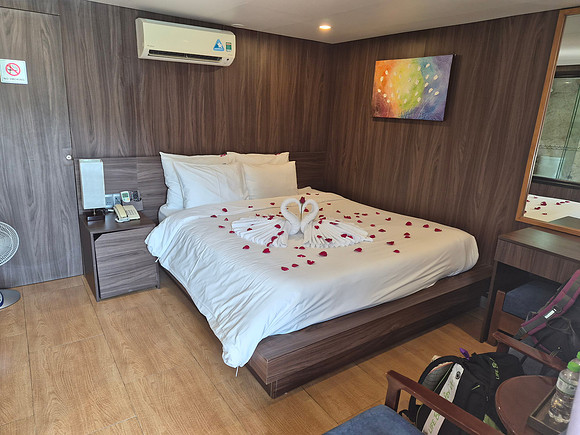
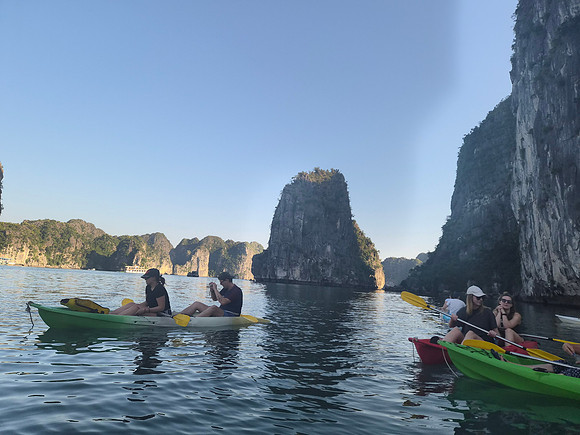
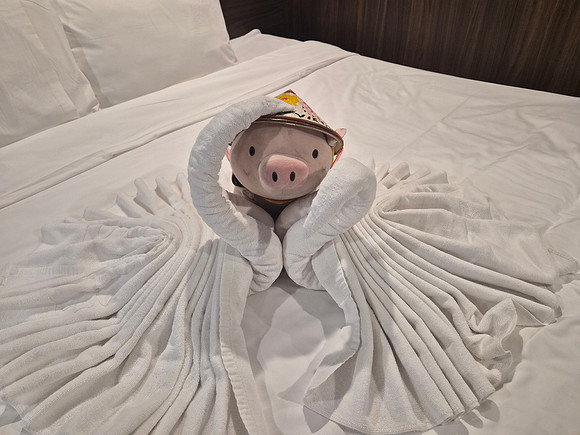
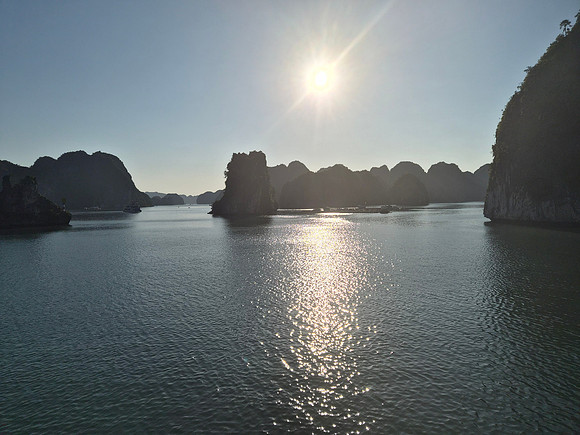
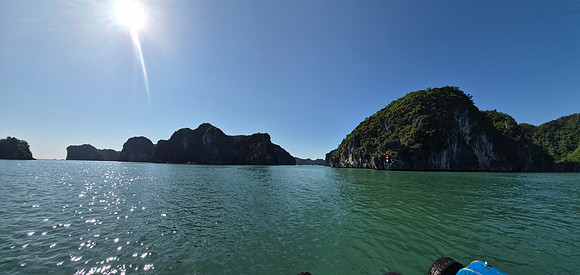
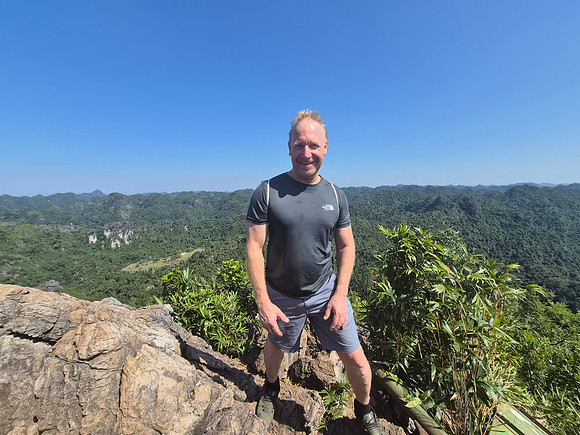
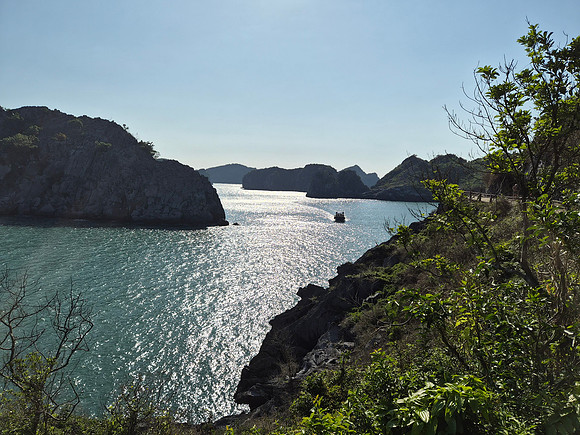
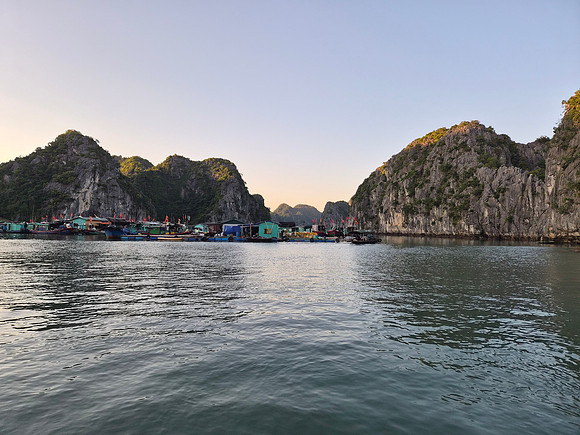
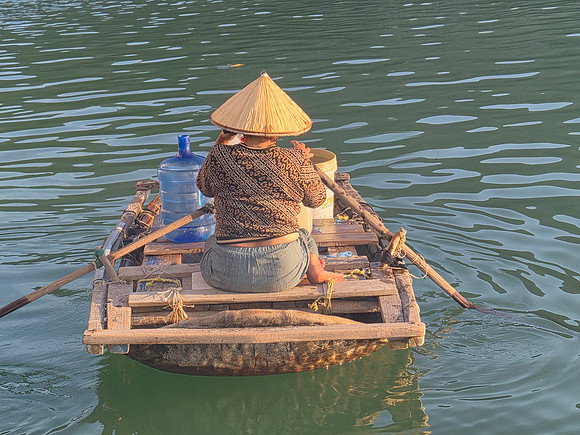
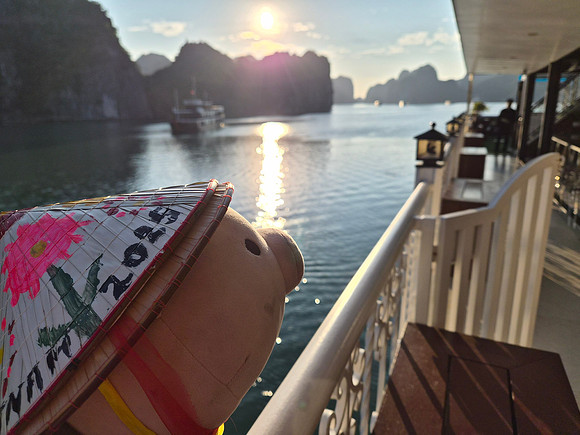

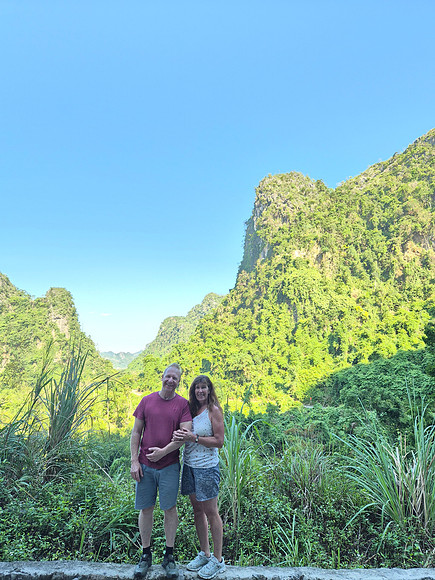
]]>
Day One:
First of all, we’ve had some luck here! We were due to stay on a traditional luxury boat for three days, sailing around Ha Long Bay and the quieter islands of Cat Ba. But the company had overbooked and cancelled on us, so we had to stay in Hanoi for a couple more nights. It turned out well, because it has been torrential rain every day on the proposed trip, and reports said it wasn’t the best experience because of the weather.
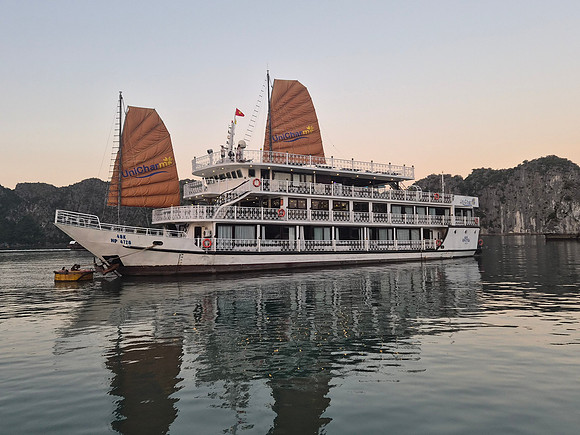
We rebooked for today, and the sky is blue with not a cloud in sight for the first time in days. Not only that, but when we explained how disappointed we were about the cancellation—since this was our honeymoon treat (OK, it’s a bloody long honeymoon that may last years!)—it worked. Boy, did it work! We now have a luxury honeymoon suite all to ourselves, right on top of the boat next to the captain. It has a balcony courtyard with seats and loungers, and inside it’s quite decadent: a queen-size bed caressed in red rose petals, with a couple of folded towel swans to complete the scene.
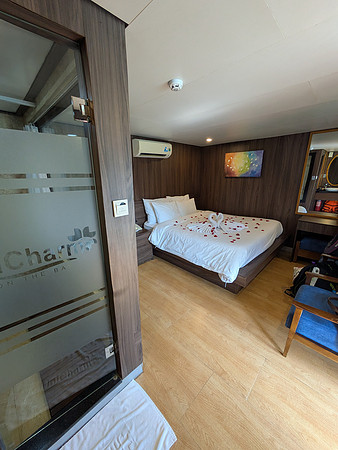
But there’s no time for the room right now—we’re straight onto a tender boat. We cut away from the main vessel and cruise through limestone pillars and islands to a floating fisherman’s platform tucked away in a cove. Standing on the loose wooden planks just a few feet above the water, looking toward the kayaks we’re about to explore on, it all feels almost unreal. I’m in one of my dream destinations halfway across the world, and it truly seems like a dream. Every single thing is amazing—it’s sensory overload. If you let your mind wander to something mundane, you suddenly feel guilty for not soaking in the majesty of what’s here.
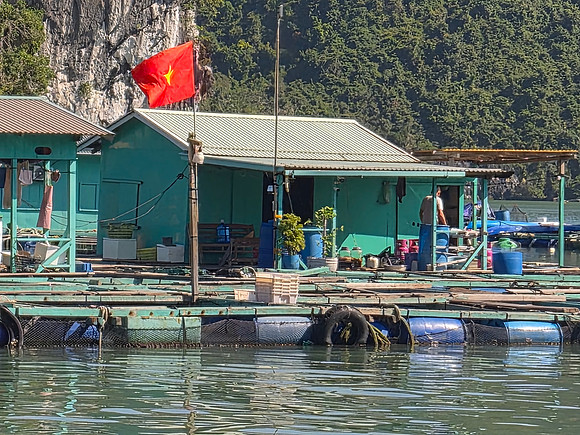
I thought kayaking in Montenegro and Alaska was good, but this is on a whole new level. We paddle through endless narrow channels between towering karst walls of rock, each undercut by the erosion of tides and weather. Lush greenery clings to every crevice, and trees somehow thread their roots through the tiniest porous cracks and holes. Above us, kites and sea eagles circle in the sky.
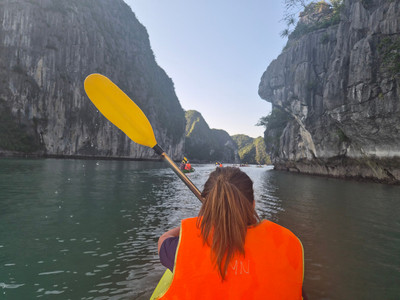
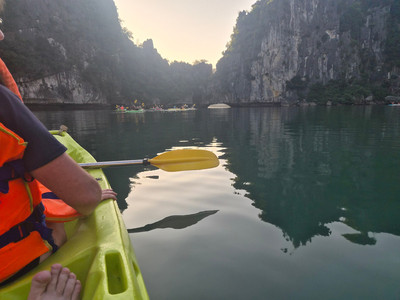
We thread our way under a small arch in a massive cliff and paddle into a hidden lagoon, greeted by gasps of disbelief and joy. This really is something special. Already, friendships are forming within our small group of maybe twelve, as we laugh, joke, and swim together in the fresh waters. Well, some of us swim—Wendy isn’t confident about getting back into a floating kayak. “Come on, how hard can it be?” I thought. Bloody hard, as it turns out! With my dodgy knees, I struggled like a walrus, egged on by the laughs and cheers of our fellow paddlers.
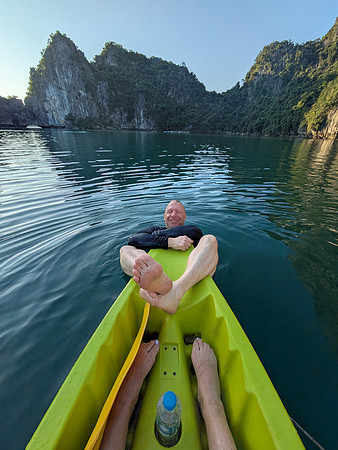
Back on board, there’s no time to waste. It’s straight into a cooking lesson, followed by a buffet lunch out on deck. But no staying up late—it’s an early start tomorrow! We’ll cruise through the islands of Lan Coc to a floating village, then tackle hiking, mountain climbing, caves, dinner, and swimming at a secluded beach. Oh my goodness—we’ve signed up for boot camp!
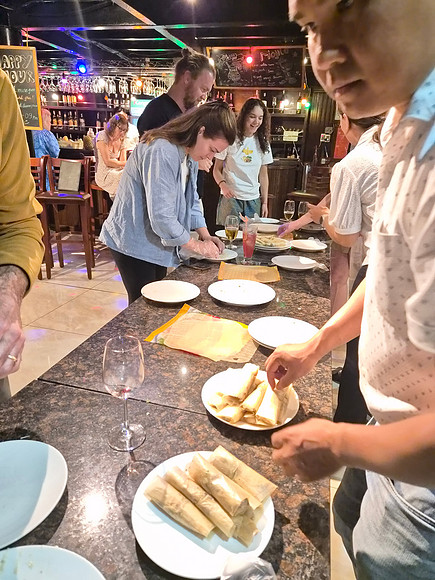
Day Two: The Floating Village
After an unforgettable cruise through the myriad of otherworldly islands and inlets, we entered a narrow gorge that opened into a sheltered bay. Beneath the protective sheer rock face lay a very large floating village.
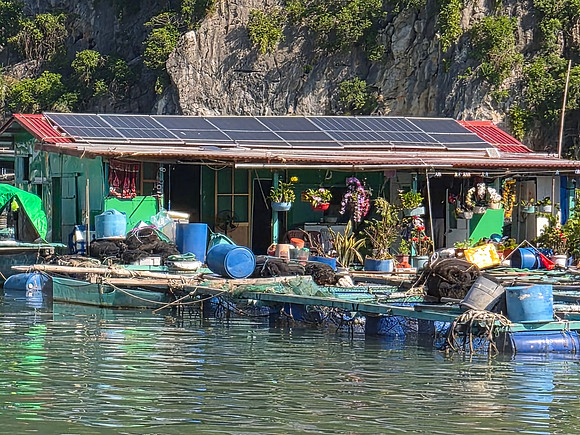
Local boats harvest oysters in baskets placed in the shallow waters beneath the cliffs. With tides rising and falling about two meters most days, the oysters can be collected at low tide. Outside their floating homes, rectangular pens keep the catch of oysters and fish alive.
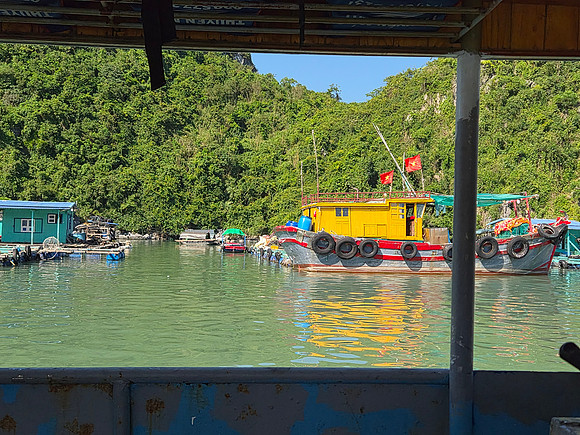
Life here looks hard, but the fishing families are friendly and seem to tolerate tourists forever gawping at them and snapping pictures. I was no different—the urge to photograph was irresistible. Life here feels so alien to anything I’ve ever seen, yet it carries a notion of freedom and romanticism.
The Jungle Trek
Our guide for the jungle trek on the island of Cat Ba was Bing. He waits for no one—running a tight ship and keeping everything to schedule. At a fork in the dense forest, he announced:
“Whoever wants to turn back can return from here. If you’re fit enough, we’ll climb the mountain to the summit. The path will run out and we’ll scramble over rocks, but it’s not too difficult with everyone helping each other.”
It was a quick decision—because Bing was already off! A few stayed behind, but most of us followed, not knowing if he was joking. He wasn’t. And it was amazing what a group of mixed ages and fitness levels could achieve when not left to ponder.
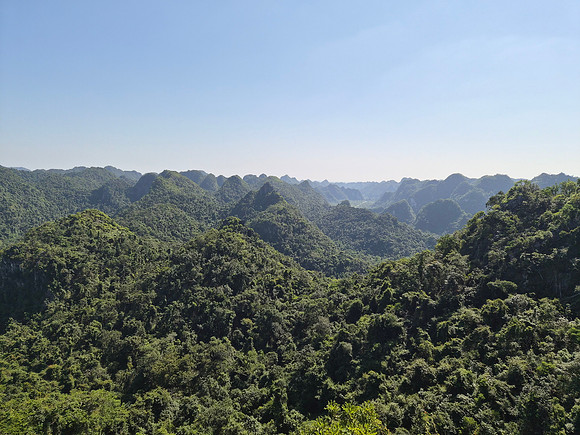
The Summit
Most of the group made it to the summit, though some stopped just short as the final few meters were the hardest. The top was about ten square meters, triangular like a child’s drawing of a mountain peak.
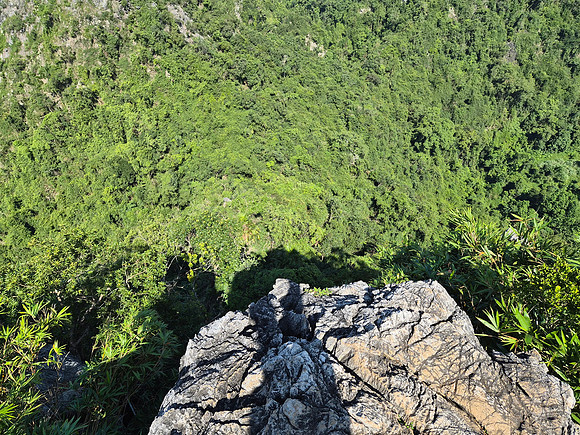
Above: The Drop
I walked to the edge and stood looking out at one of the most breathtaking views of my life. The horizon was literally hundreds of peaks, all green right to the very top. The valley floors were jungle canopy stretching as far as the eye could see. Even at the summit, butterflies and dragonflies buzzed around me.
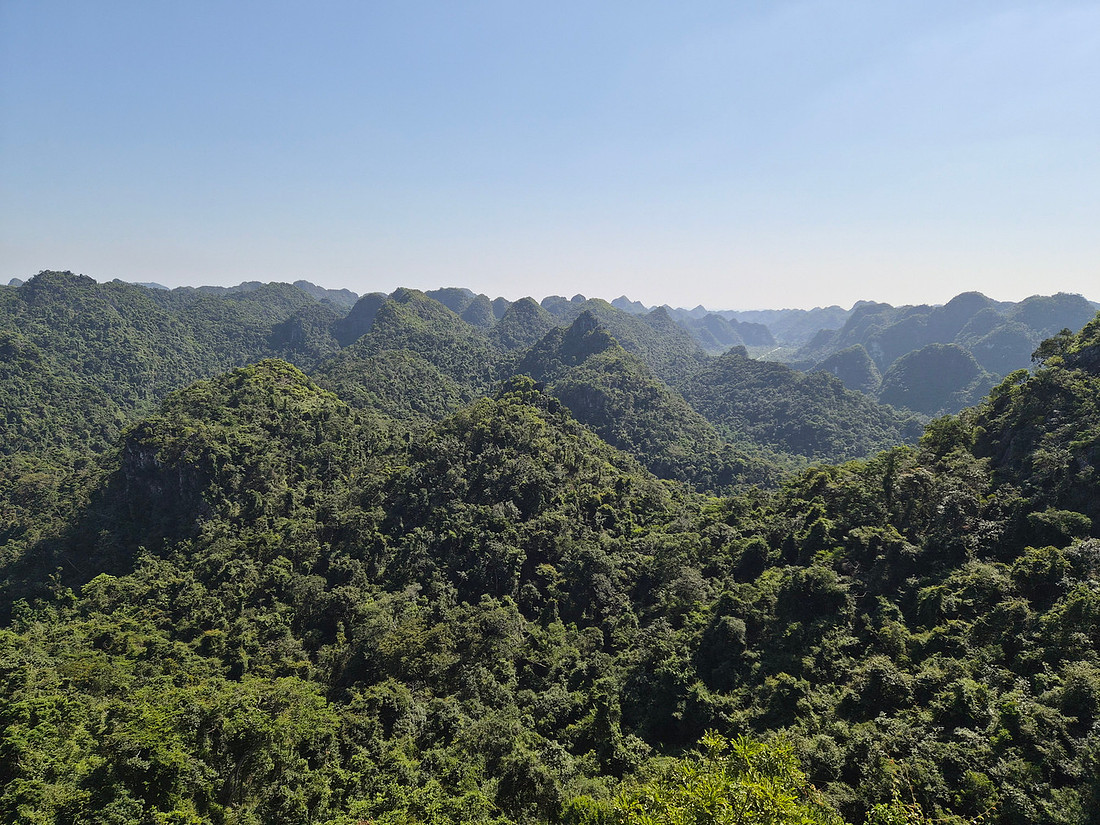
I peered down at my feet and saw the sheer rock face drop away. At first I felt no fear, but when Wendy joined me, I advised her not to go near the edge and held onto her. Then came a delayed fear—I realized how dangerous it was. The sheer overwhelming majesty had numbed me to it.
We shared the moment, congratulating ourselves that all the “oldies” had made it, leaving the younger ones behind. Truly magical, almost overwhelming—we were so fortunate to witness these wonders of the world. It makes you feel alive and grateful to be.
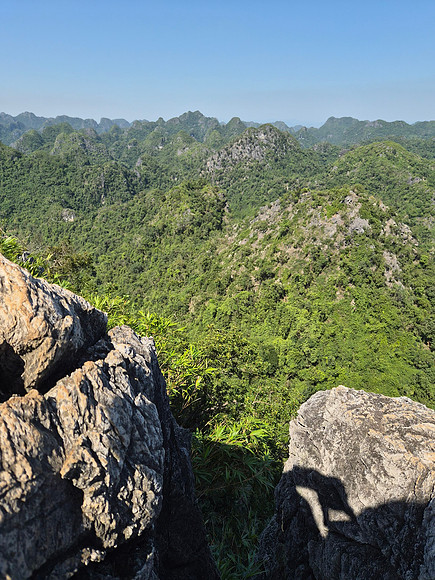
The Descent
As always on our adventures, we descended the mountain in an unlikely fashion. We got a little lost until, at a fork in the trail, we found an arrow pointing to a downward path marked “Dangerous.”
“I’m surprised Bing went this way,” said one of my new friends. “But I’m sure I saw him up ahead.”
Like Wile E. Coyote or Daffy Duck, we took it—why wouldn’t we! It was crazy, bloody dangerous, and no, Bing had not taken it. But we shaved off a good half hour from the descent. Evidently, it was a very old path wiped out by a super typhoon, hence all the fallen trees we had to climb under and over.
It was brilliant though!
]]>
It’s a very rural village, dirty and dominated by small‑scale manufacturing. Discarded plastic, tarps, rubble, and all manner of waste pollute the waterways around the edges of the commune. It feels a little depressing as we are guided down an alleyway, hurried along because we are late. To the left and right are courtyards and garage‑like homes, all full of industrious women working with what looks like wood.
We are introduced to a young woman who, at the front of her home, is working with a sharp hatchet‑type axe. The guide explains that she is splitting bamboo into very small strips for a rattan mat being woven by an older lady. The straighter, stronger parts of the bamboo are split into thin lengths for incense sticks. Someone from the group asks about her wage.
It turns out she works ten to twelve hours a day and earns between $4 and $8, depending on how much she splits. It’s easy to read about low wages in countries like Vietnam, but when confronted with it in person, it is still shocking. The ladies smile and seem kind—and maybe, when you have to work every daylight hour, you’re not going to be too bothered about cleaning up the village.
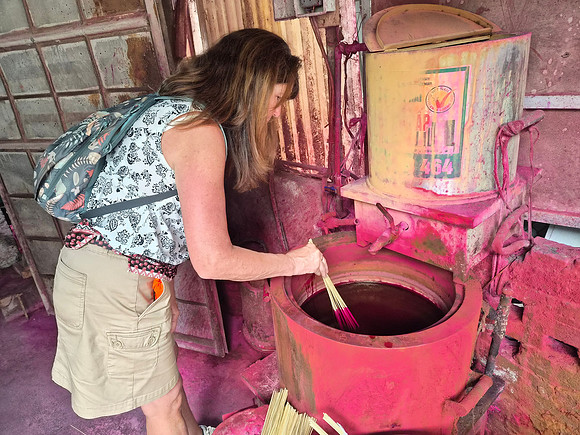
We saw the machinery and learned how incense sticks are made. We even had a go at making our own. But to be honest, as with everyone else, the highlight was the drying yards, where bundles are neatly placed to dry in the sun. They make a beautiful sight and a fantastic photo opportunity. On the whole, it was an enlightening and thoroughly good trip.
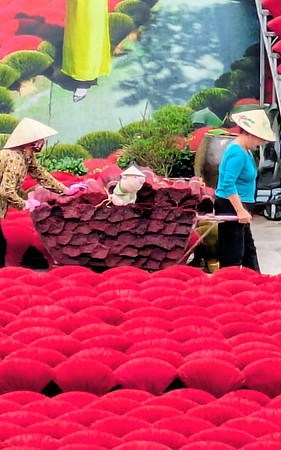

MAKING HATS
It was another surreal experience, sitting in a Vietnamese family’s front room painting a traditional conical hat. We were taught how they are made and how, even today, they are produced in large numbers by multiple families in this village. And now it was time to decorate ours.
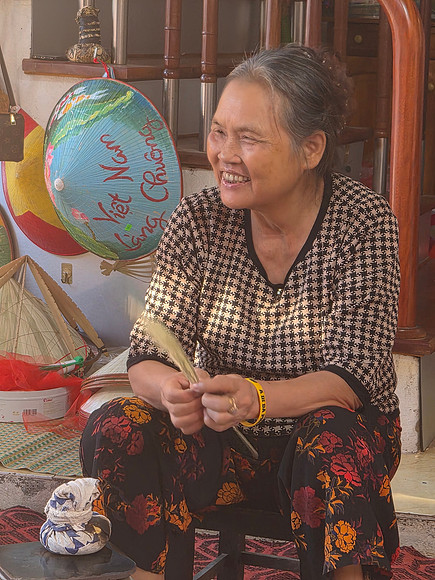
I am no artist, but through more luck than judgement I ended up with a quite pretty hat—or at least I think it’s pretty! Wendy was ashamed of hers and claimed it looked like a child had done it, but to be honest, I’m not sure hers was that good.
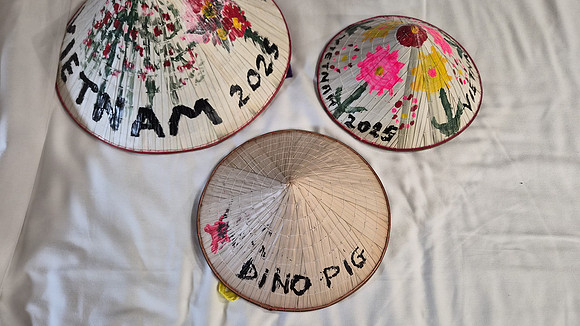
The highlight for me came when I had a quick look around the village alone. Down a little dirt‑floored alley, a girl of about seven rode up to me on her bike. She stopped in front of me, looked up with the most beautiful smile, and said “Hi” before high‑fiving me and giggling as she rode off. I miss my kids and my seven‑year‑old granddaughter, but that moment made me smile inside for ages—and even now, when I think about it.
SOME PHOTOS FROM THE TRIPS
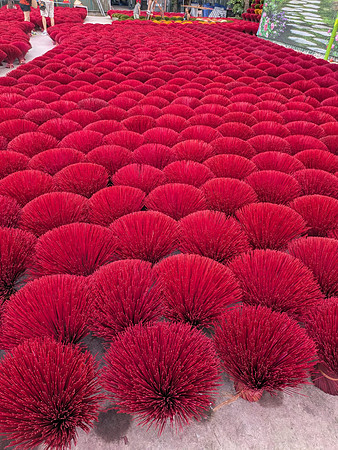
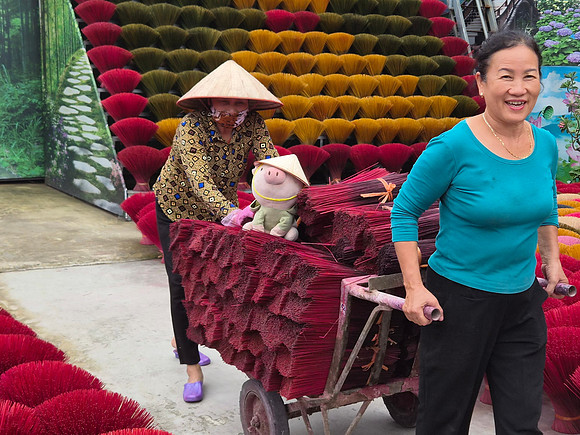
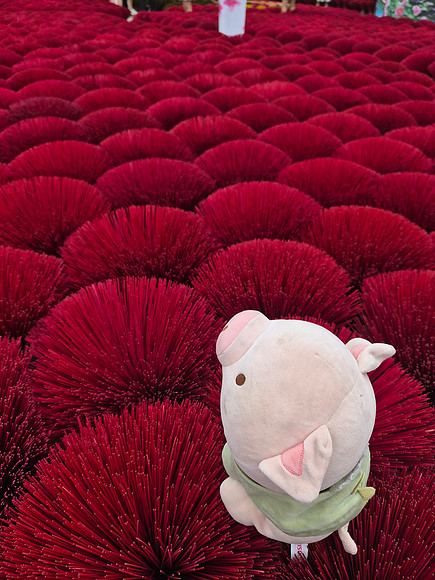
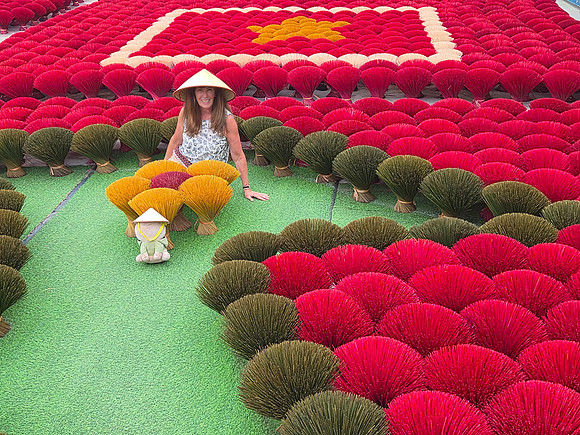
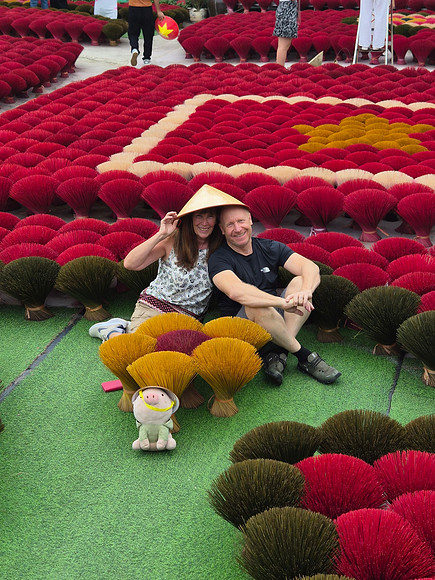
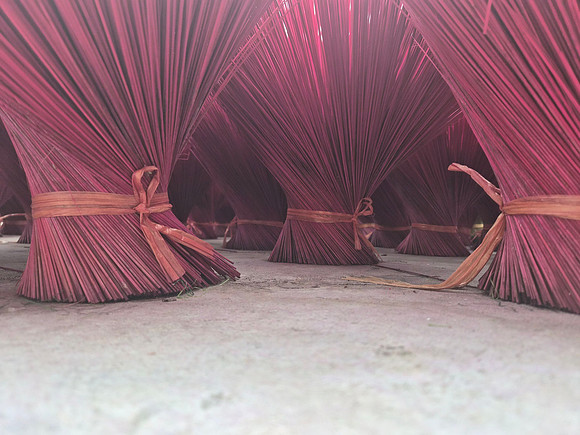
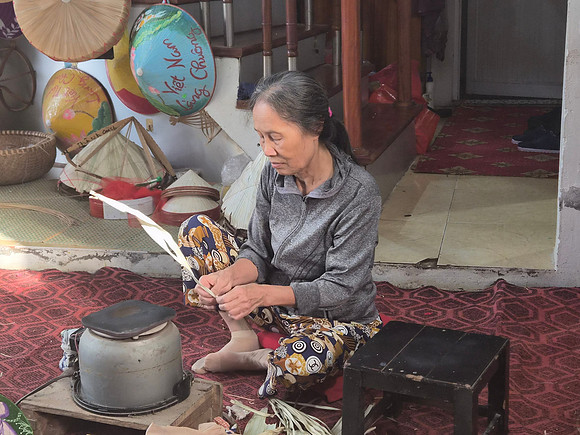
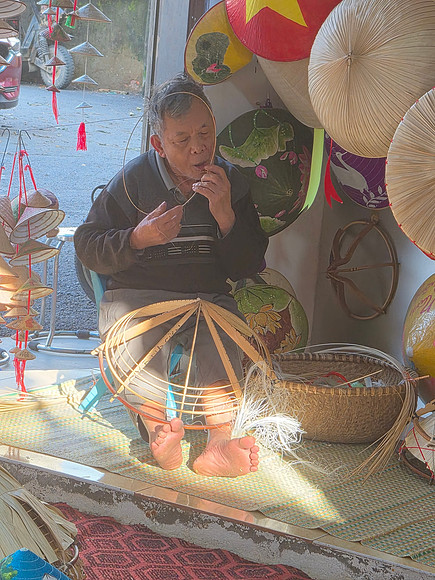
Train Street I Love It!
“Sit here sir, two beer, best seats.” He click‑clicks the bottle tops off and places them on the railway track just two feet in front. “Souvenir for you later,” he smiles.
This was our welcome to Train Street, Hanoi—a now famous stretch of bars and shops on both sides of a main line. Not just next to the line, but spilling over onto it. I smile as I sip my beer because this is as surreal as it gets. To my left, just a few feet away on a seat in the next bar, is a rooster. Well, why wouldn’t there be! There are tiny dogs on the table, as well as a paddling pool on the line with a little yellow baby duck. Bar owners rush back and forth fetching drinks as it gets busy, seizing every opportunity to earn cash in what is clearly a competitive market, with fifty or more bars all in a row.
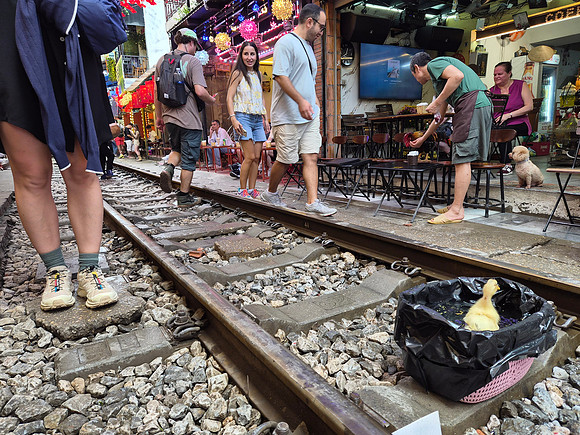
As always, we end up in random situations. A loud bell rings, clearly indicating a train must be arriving—time to get everyone back from the rails and coax a few more people in for drinks under the premise of safety! The whole family pitches in, serving, directing, and hawking. But then: “You hold baby. You nice. He like you.”
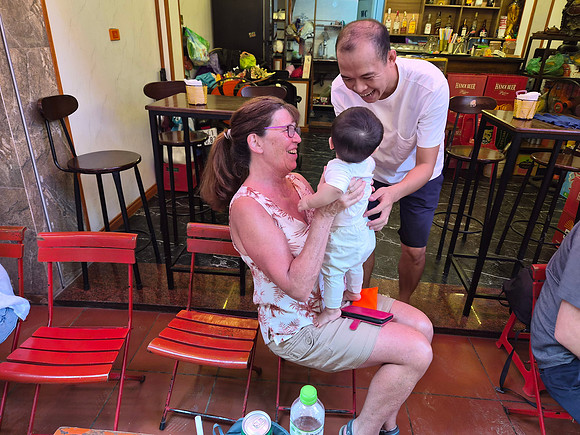
Wendy is babysitting—and boy, he is cute! “Look at his little face,” she smiles. “He is gorgeous,” she adds, as he happily plays in her arms. “Oh my god, you are too old to be broody. You’re loving this, aren’t you?” “Oh my goodness, he’s after my pookers now,” she laughs. The guy next to me laughs as I reply, “I’ve been after them for years.”
Just before the train arrives, the baby is handed back to the owner—no doubt because waving to the passengers will be good for business.
The train does indeed come within inches of you—closer than you might expect—and yes, it is dangerous. It’s a tourist attraction, but boy, it’s a good one. You just can’t help but smile at the craziness of it all. At night, all the bars try to outdo each other with colourful lights and gimmicks. Drinks are about twice the price on Train Street, and you can be sold expensive souvenirs like T‑shirts and bags. In fact, you can even buy a chicken or a duck. But the point is: it’s fun, and I don’t think you can replicate it anywhere. I love Train Street.
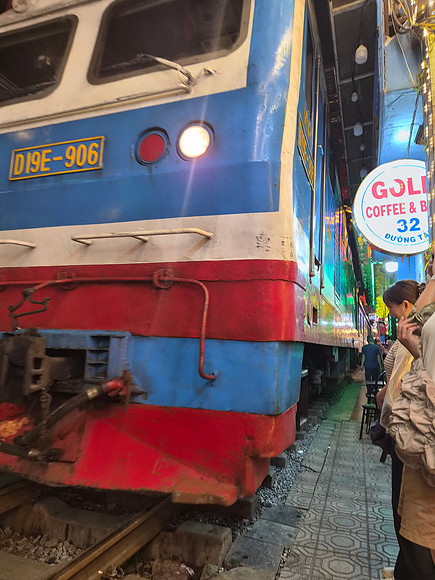
And the bottle tops? The train crushes them wafer‑thin, making a super souvenir for your wallet, stamped with “Hanoi”—the local beer.
We visited about five times, day and night, and each time it had a different atmosphere—but we loved it every time. I was delighted when, on our last evening, we visited the same bar. Thousands of people were there, and he welcomed me with a hug like a long‑lost friend—our barefoot, vested pal. A quick tickle of the baby and two beers. This time we sat on the opposite side of the track facing his bar. He brought the beers over because, you know how posh I am—I need glasses for beer. To save him coming over, I chose two from the shelf. He smiled again and shook my hand. Clearly, he liked me.
As I sip my beer and smile, something catches my eye. Wendy smiles and asks, puzzled, “What are you thinking? You look miles away.” “Oh, I was just watching the guy who picked my glasses off the shelf, shook my hand, and opened my beer.” “Why?” “Well, he’s just sat opposite having a bloody go at his athlete’s foot!”
“He’s still a nice guy, I’m sure,” I added.
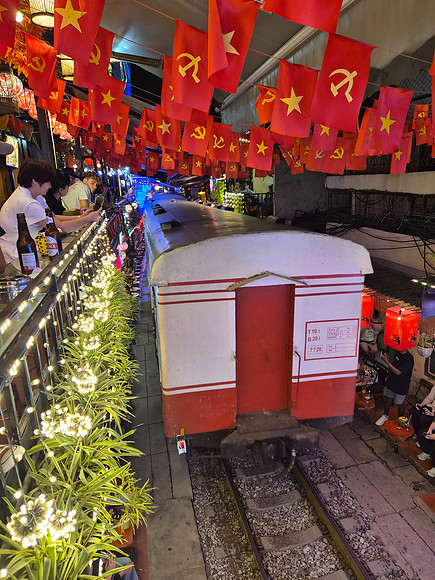
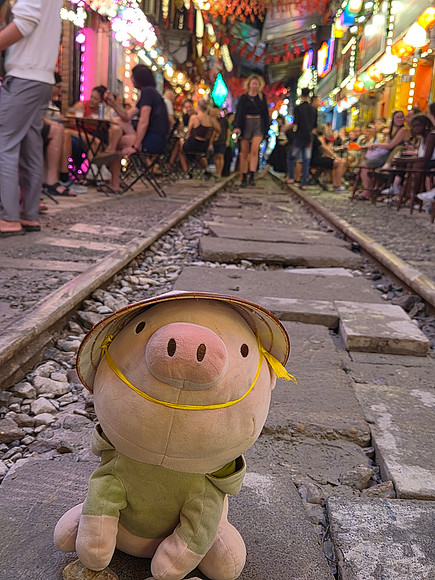
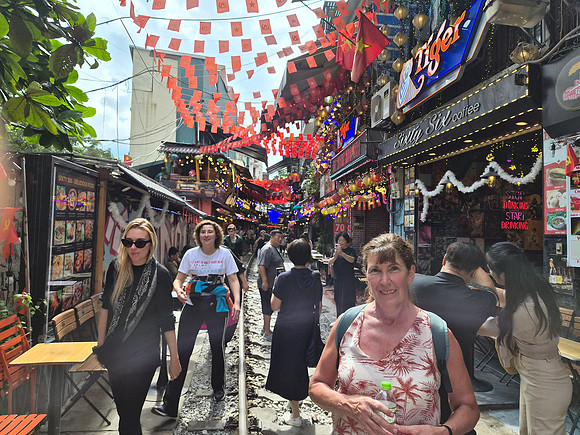
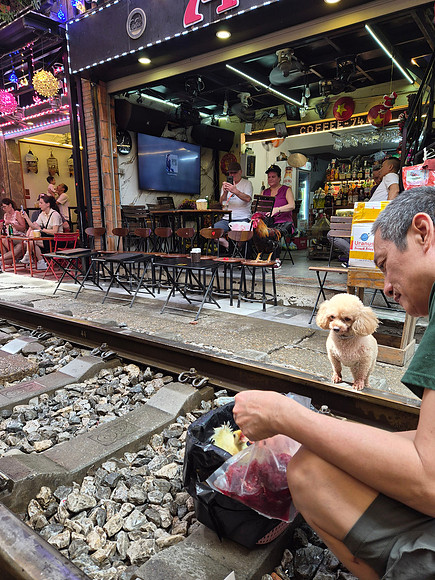
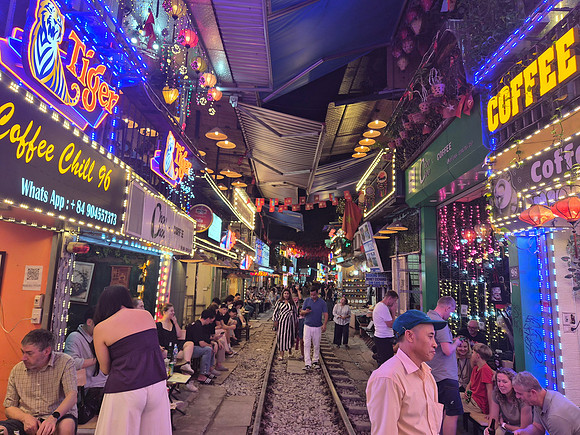
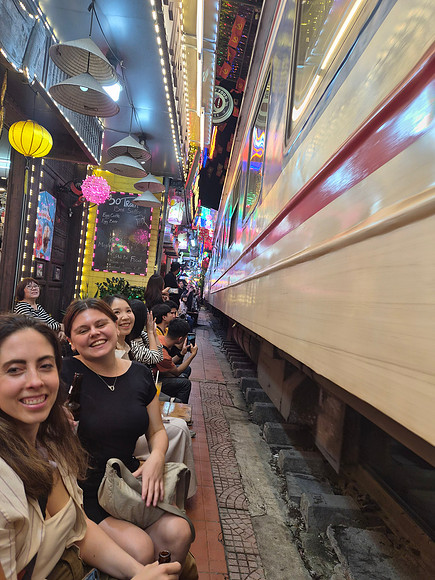
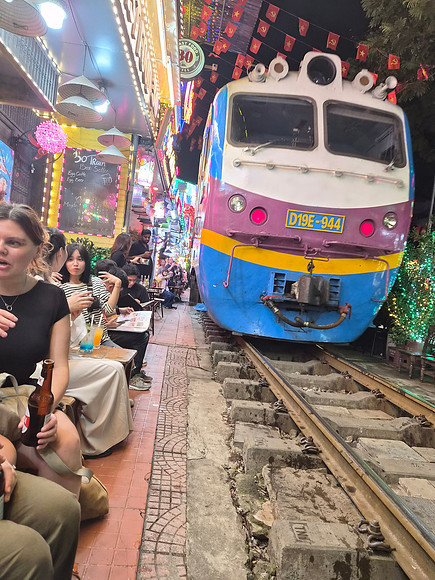
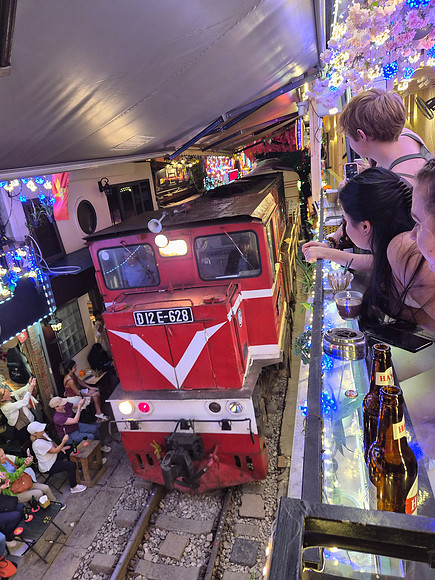
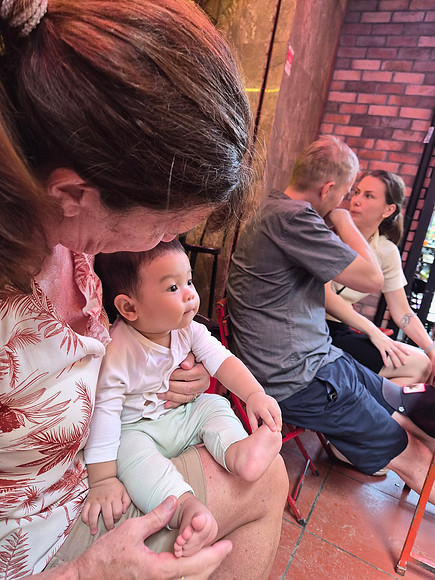
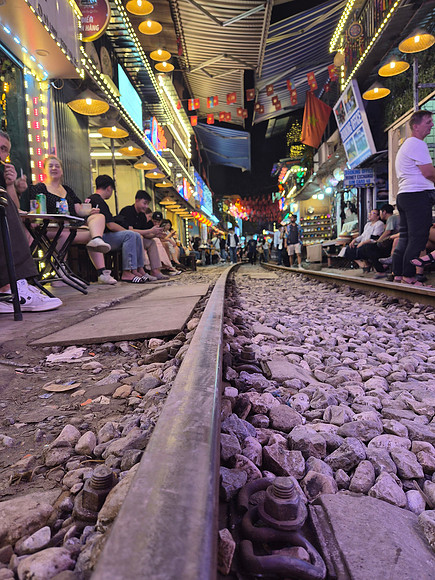
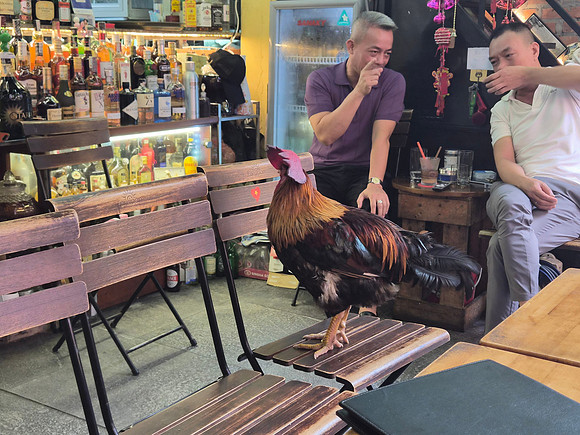
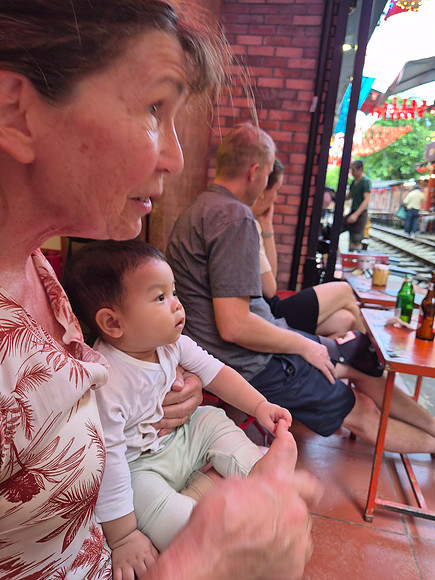
]]>
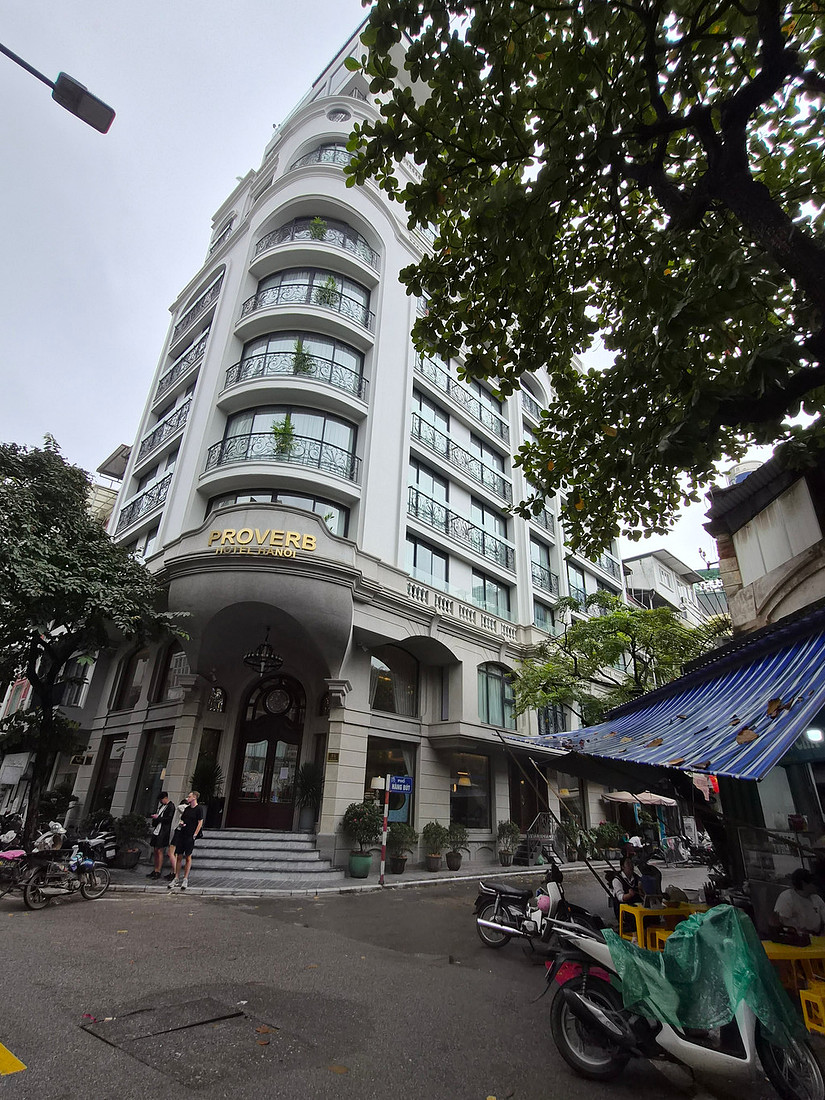 The receptionist, dressed in his resplendent turquoise traditional wrap‑around suit, is lovely—I mean really lovely—but boy, I wish he would get on with it! I don’t need to be shown the places to visit on our little tourist map at this time of night. I need to see the room, dump the bags, and nip out for a beer before it’s too late. Eventually, we prized ourselves away from him—hopefully with some dignity intact.
Almost immediately after stepping out of the hotel foyer, I have to admit I felt quite apprehensive, and so did Wendy. Hanoi is like an attack on the senses; I have never experienced anything quite like it!
Hanoi can easily paralyse you before you ever get into the flow of things here. There are perfectly good pavements, but you cannot walk along them—it’s impossible. Every inch is taken up by motor scooters, little kitchens, shops, and clutter filling what’s left. You have to walk in the busy road with the traffic. You can’t wait for a break in the traffic to cross a road; there isn’t one! You just walk, and the cars and bikes avoid you. It’s hot, it’s pouring down, and the smells are not bad—just alien.
Our first half hour looking for a bar was painfully slow as we edged our way along the streets. It was hot, humid, and overwhelmingly alive with noise. And I was thinking: I’ve signed up for five weeks of this? Oh well, flights can be changed—it’s only money, heh!
We found a bar—a “Craft Bar,” it said in big bright lights. It was busy, mostly with western faces, all perched on tiny deck chairs spilling out right up to the very edge of the busy road. Tiny chairs are novel, I thought, but how the hell do I get up and down from them with my dodgy knees? Wendy found this amusing, but eventually I was sat down, looking out on the nearly flooded street, sipping a local pilsner. Happy days.
Ah, the pub settles the nerves! We listened and learned from fellow travellers, all having the time of their lives and keen to tell us about their amazing adventures—filling us with confidence. In the space of an hour, I had gone from full‑on nervous wreck to someone overwhelmed with excitement.
Just before we left, a little lady with the most gorgeous face smiled and offered us fruit for sale. She had a bamboo pole over her shoulders, bending under the weight, with ropes at each end holding wicker trays filled with fruit. She wore a conical hat and wellingtons, and she was soaked. I had no idea how old she was—anywhere between 30 and 60—but she smiled at me, and I melted. I didn’t know what most of the fruits were, so I bought two bananas. It was quite a fuss because my notes were too large, and the waitress lent me the money.
“How much was that, love?” I asked Wendy, trying to work it out at 37,000 dong to the pound. “About 2 pounds,” she replied, raising her eyebrows and nodding her head in disbelief. “More expensive than home!” “Ah well, she looked happy,” I smiled. “She would do.”
I know Wendy thought I was a muppet, but it made me happy! She especially thought I was a muppet when we arrived back at the hotel and I casually announced, “I left the bananas on the table in the bar. Never mind, love—they’ll probably have some at breakfast.”
How does she put up with me?
]]>
As I look out from my room, opposite stands a sadly decaying colonial-style building, clinging to its very last vestiges of magnificence. Its features are slowly crumbling away, ravaged by the elements and overtaken by vegetation sprouting from every tiny crack and crevice. The rusty, ornate window bars offer a glimpse into the dark, forbidding gloom behind each pane. Or is it really so bad inside, I wonder? For wedged between the sill and the iron bars is a lady’s stiletto shoe. The owner, I wonder what she is like?
As I write this, a tiny Vietnamese woman pushes a bicycle along the street below, loaded with flowers front and back, all carefully arranged on wicker trays. She wears a traditional conical straw hat adorned with a floral pattern, easily admired from above. Clear waterproofs cover her blouse and trousers, and she wears bright blue rubber wellingtons. I wonder where she is going?
Under a tin shelter on the pavement, six or seven potted palm trees stretch out over the road toward the light. In the dark shade, a woman sits on a tiny stool, carefully preparing vegetables with a sharp knife. Just a few feet away, another crouches low, furiously washing pots and pans in a big blue bowl. An older lady steps out into the road in a full-length colorful dress and smart shoes. Like a matriarch, she surveys the scene before retreating into the shadows. I wonder who she is?
My road is not a busy thoroughfare, but to my right lies a much livelier street. On the corner opposite the hotel entrance, I watch a group of women who prepare and serve food day and night. I haven’t yet figured out if they are one family, or if that little room behind them is their home. It’s early morning, but already they’re serving locals and what appear to be two backpackers—a girl and a boy, both sporting ponytails and tattoos. I wonder where they’ll be heading?
It’s a busy vista to observe, full of life and movement, but also rich with sound. Rain taps gently on the tin and tarps stretched over the walkways. The purr of scooter engines and the constant tooting of horns fill the air. Cheerful chatter drifts up from the women and customers at the café. And what’s this? A smell of garlic—or maybe ginger—wafts up toward me.
Ahh, lovely Hanoi. I wonder what she is cooking?
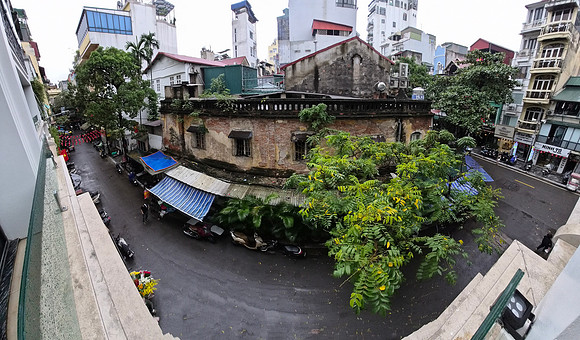
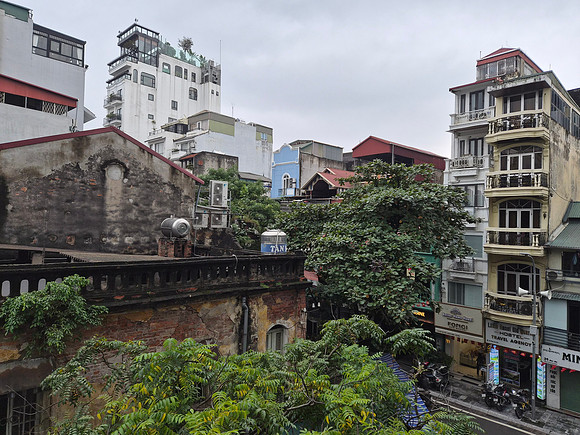
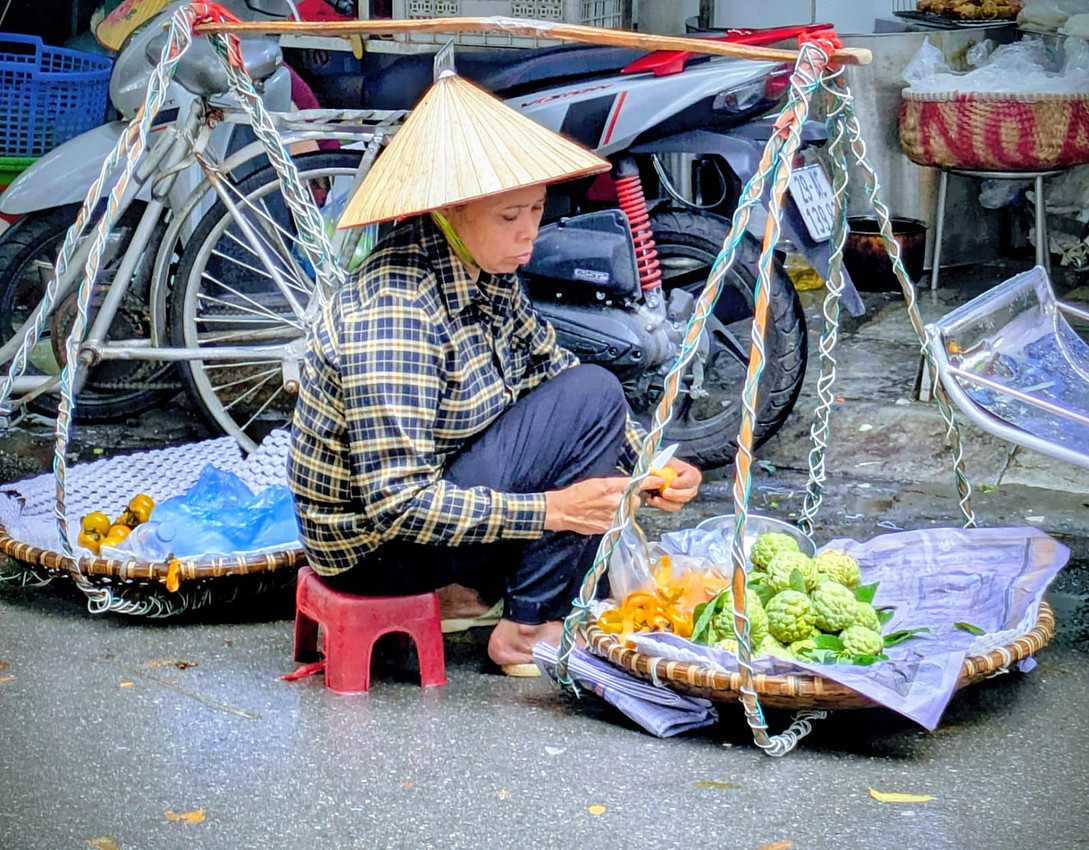
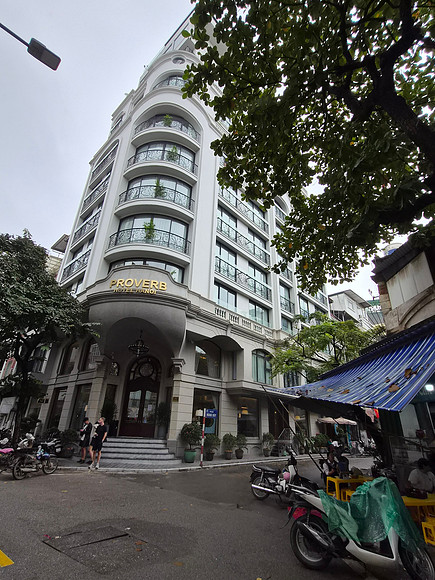
]]>
“Ah, Mickie is a girl,” I said, pointing toward the black Tesla. “She’s also very strong,” I noted, as she lobbed our cases into the boot.
Mickie was a really lovely Hong Kong girl who made us feel comfortable immediately with her enthusiasm to converse, impeccable driving, and useful snippets of information about the territories.
I always feel joy and privilege when seeing a new land, and this was no different. My eyes darted across the vistas, trying to take it all in and compare it with more familiar cities. It certainly wasn’t what I imagined—Hong Kong is quite large, consisting of many mountainous islands. From the airport, it’s a typical Asian multi-lane highway with huge bridges linking one island to the next. Mickie pointed out distant islands shrouded in steamy haze. One, whose name I do not recall, was home to Mickie—still an area of apartments, though not very high compared to where we were headed. It’s also home to her beloved cat, who’s evidently lonely because Mickie works long hours. But that’s okay—she rescued her! Isn’t it funny the things you learn chatting to strangers?
Closer to the main cityscape, we passed the container port, which for many years made Hong Kong the world’s busiest. It looked a little jaded, to be honest, along with the tenement blocks we were now approaching. It seems that by becoming a trendsetter in high-rise modernism—now replicated across China—Hong Kong has become the older, less modern example.
We arrived at the wonderful Cordis Hotel in the heart of Mong Kok on Kowloon Island. We said goodbye to our new pal Mickie and entered our palace! One of the tallest buildings in the area, our room on the 29th floor offered a “room with a view.” And wow—what a view! A wall of glass looked out across the city toward the sea.
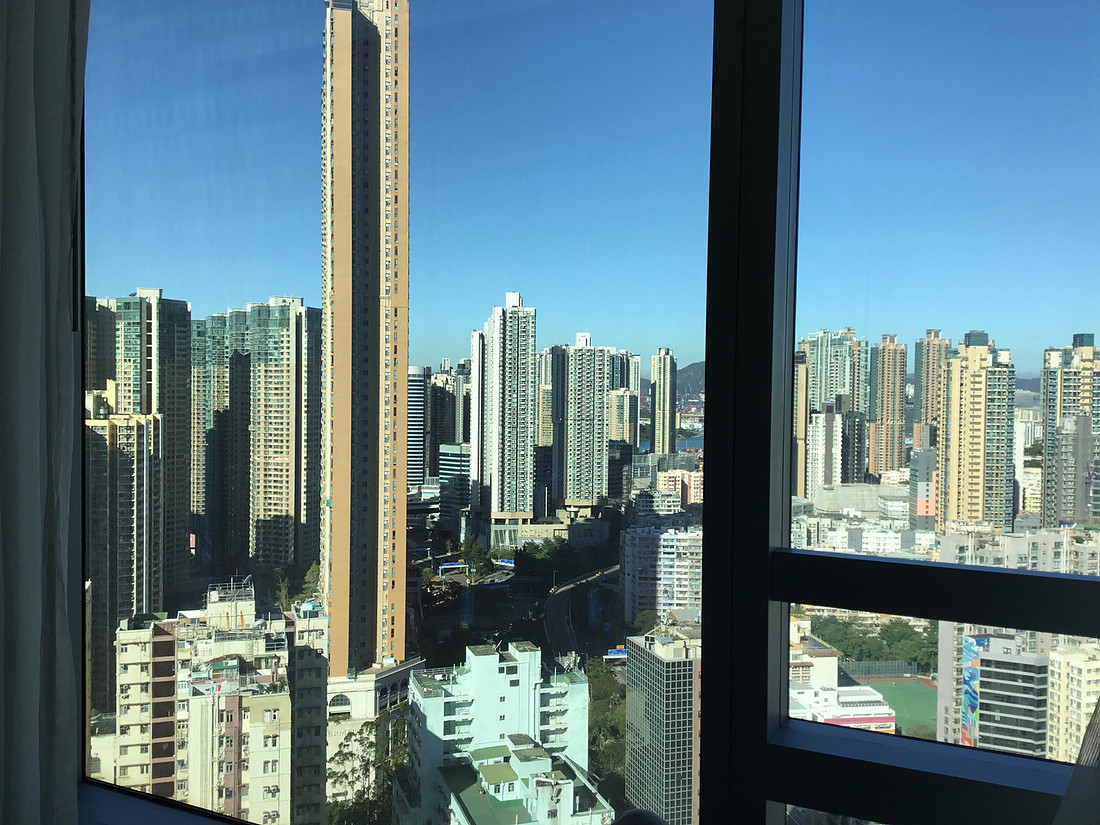
With a nine-hour time difference, it was difficult to know what to do. We were tired, but it was only four in the afternoon. Should we go out and explore or check out the rooftop pool?
Life seems surreal sometimes, I thought, as we paddled up and down the amazing pool high above the streets of Hong Kong. It was stunning! We finished off with a relaxing sauna and steam and were now wide awake—ready to explore the area for food and drink.
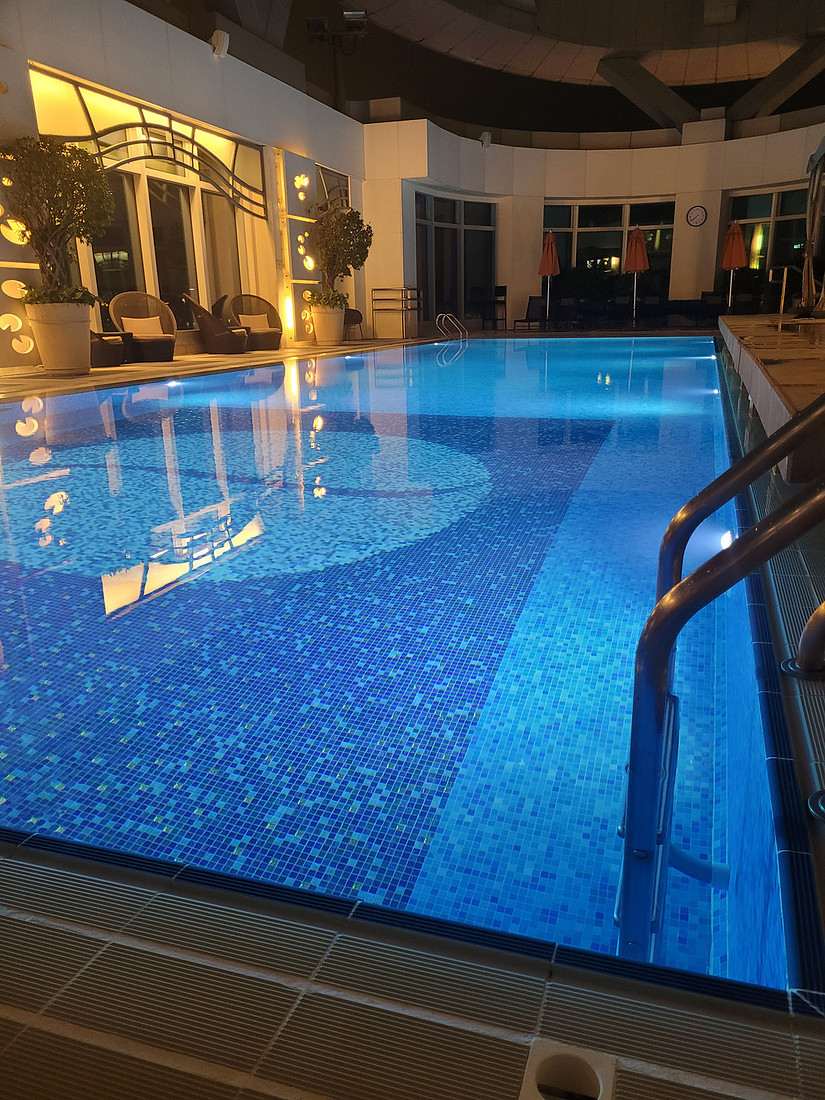
Mong Kok Madness and Korean Hospitality
Mong Kok is mad for sure, but a great place to experience. It’s just so busy, yet people are polite and warm. Within an hour, we were sharing a table in a delightful Korean restaurant with a local couple, discussing life in general. I was already learning firsthand the unusual difficulties faced by a young man working across the border in China while living in expensive Hong Kong. It was only an hour, but a wonderful reminder of how lovely it is to travel and meet new people. We felt like we had new friends and were disappointed to say goodbye so soon.
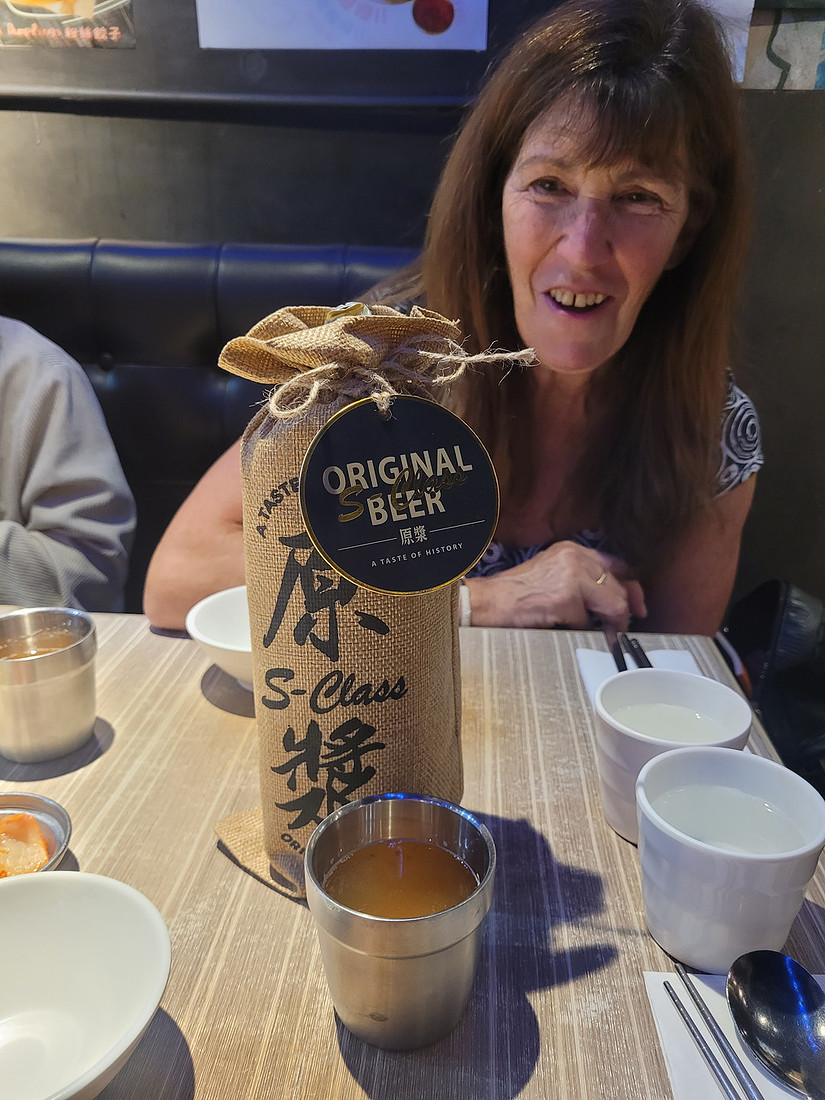
Typically, we were now on the hunt for a beer—but found ourselves in an area of just food outlets. No problem! We walked into a real locals’ café and explained our plight. Easier said than done—they spoke not a word of English and had never seen anyone just in for a beer! After much gesticulating at pictures of beautiful cold bottles of beer, they arrived—followed by another staff member pointing at the food menu, and then another, and another! In fact, about six people came to point at food pictures. Eventually, a young girl miraculously appeared and, in perfect English, asked what we’d like to order. We explained we had what we needed as we held aloft our giant bottles of Chinese beer. Ahh—she smiled and explained to the rest of the staff. Ahh—they all smiled and laughed at the two crazy Westerners!
Only an hour, but a lovely one, as we watched the workings of a traditional budget café. Wendy even got an escort through the kitchens to the basic but very rural loo. What a great first day.
Views, Typhoons, and Flower Markets
Wow—what a view to wake up to. I was beginning to feel at home here on top of the world. We might have to stay a little longer, as we kept checking updates on Typhoon Tino, which was due to make landfall in Vietnam at almost exactly the same time as us. The poor people of central Vietnam had already been hit with no less than 17 typhoons this year, dumping incredible volumes of water on already flooded valleys.
The flower market was our first call today. Always a good place to visit in tropical regions, as the flowers and plants are so different and exotic compared to home. This was no exception—we were wowed by what must be a local specialty: orchids.
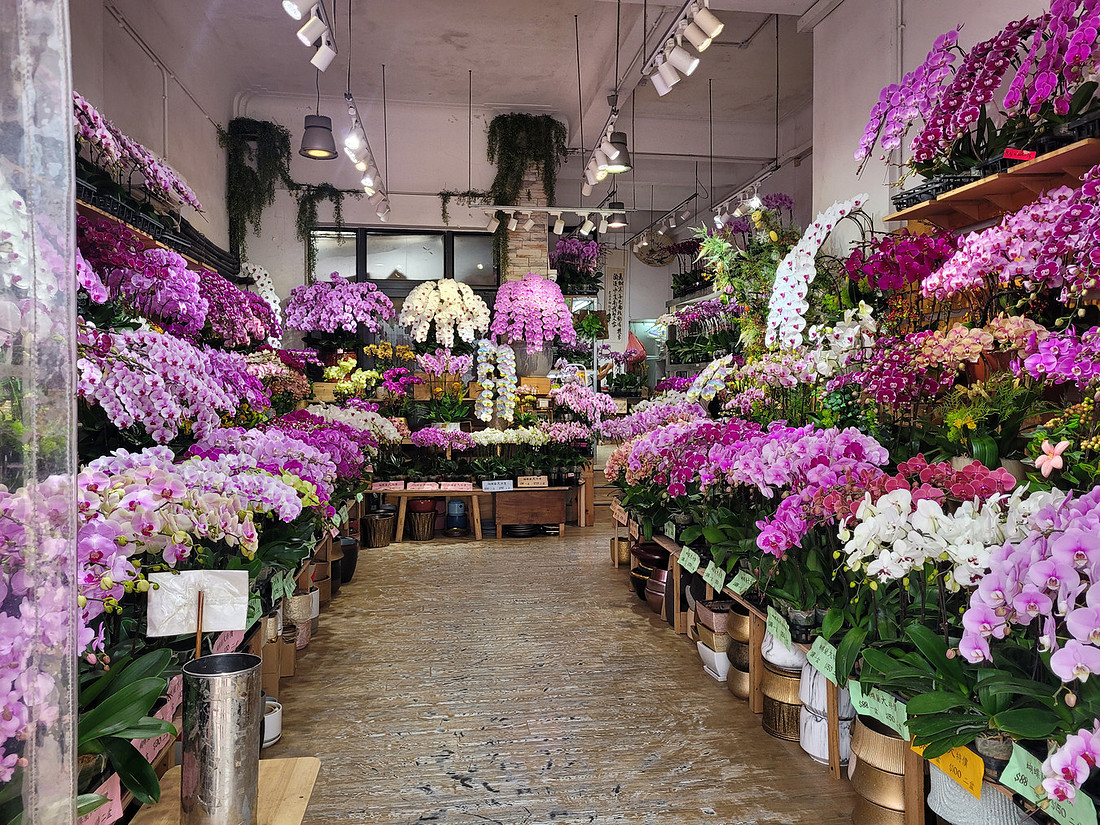
We walked for hours toward the harbour, noticing the change in feel as the streets became lined with modern buildings, designer shops, and many more Western faces. Kowloon Harbour front is impressive and looks directly at the massive commercial towers of Hong Kong Island. It’s hard not to keep snapping pictures of what is probably one of the most recognisable skylines in the world. Exhausted, the trip across will have to wait till tomorrow—we headed back to the hotel for swimming and gym. Oh, what a hard life!
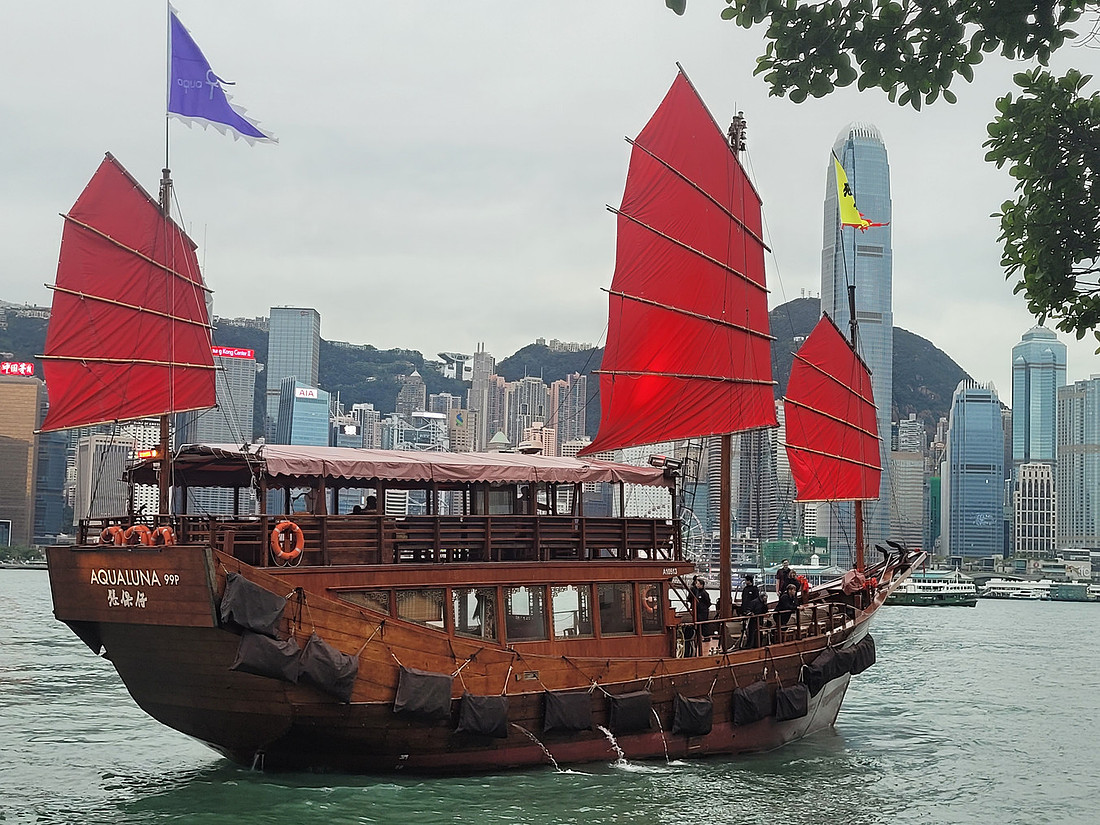
Escalators, Trams, and Happy Valley
“Wow, this is a bit of a shock—there’s no one here,” Wendy said.
“I know, it’s a bit deserted.” It felt strange wandering around the skyscrapers of Hong Kong—it was just so quiet.
As I looked up toward the acres of glass, I replied, “Maybe they’re all in there working away in the offices.”
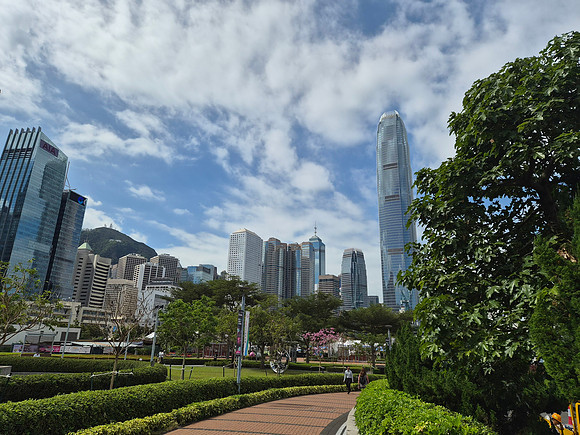
We made our way to the waterfront that looked out on Kowloon and mostly saw runners and joggers winding through quiet parks and gardens. Eventually, we arrived where the ferries land from across the water. Streams of passengers disembarked and took a raised concrete walkway into a massive, nondescript building: “The Shopping Mall.”
The mall was mostly high-end stores, some amazingly presented, and all seemed to be doing good business—it was certainly busy here.
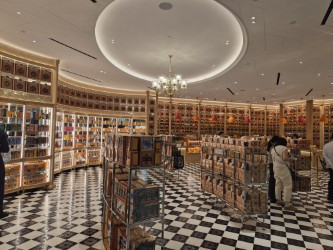
Exiting the mall, we had our first taste of the real Hong Kong, passing overcrowded streets in search of the mid-level escalators. It’s an intriguing walk—the whole area is like a highway for people, with flyovers and intersections passing over busy roads below. It’s also a brilliant place to marvel at the engineering feat that is Hong Kong City. I had no idea it was built into the side of a very steep mountain! There’s a super mix of colonial buildings and sleek modern high-rises. Wide streets resemble London, while narrow connecting alleys are 100% Asian—lined with street sellers and food stalls, lit day and night, deprived of sunlight by towering walls.
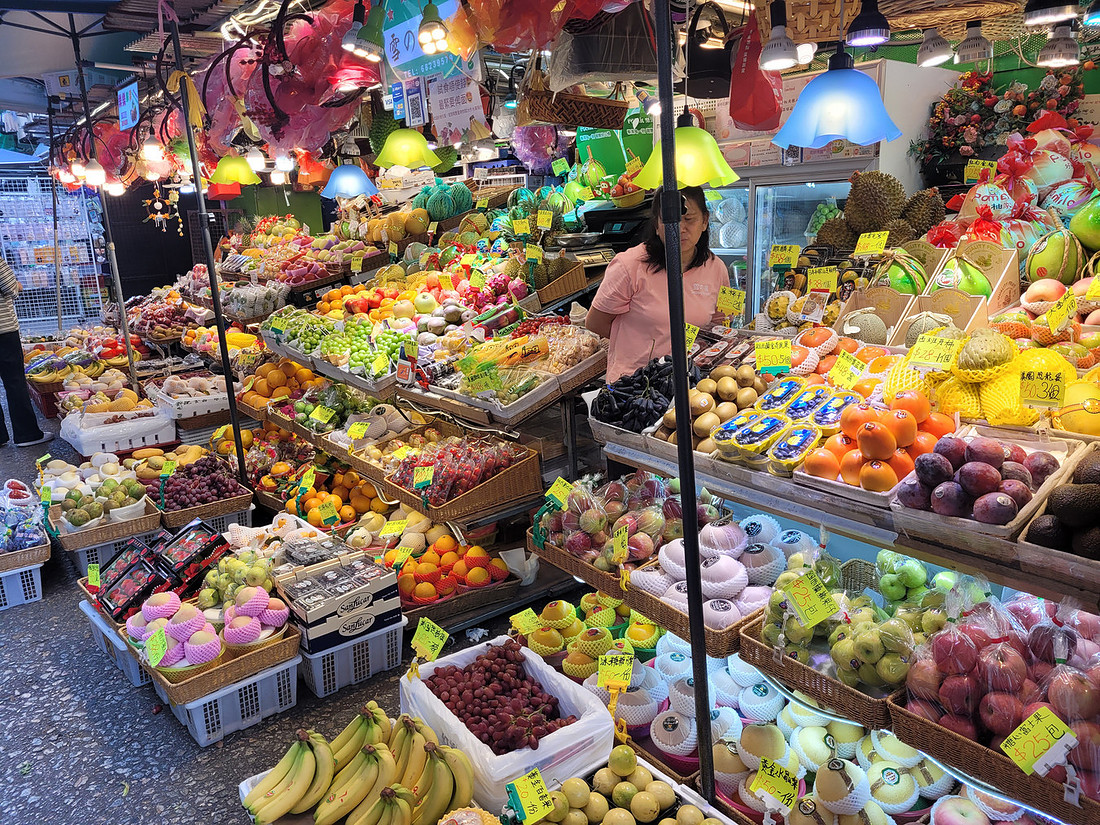 Another reminder of British rule: red London-style buses and trams, all driving on the left. The taxis, however, are all red Toyotas—mostly iconic Toyota Crowns that look like relics from the early 1970s.
I’ve certainly never had this much fun riding escalators since trying to run up them the wrong way as a kid in Bournemouth! The mid-level escalators run up the steep streets, lined with bars and restaurants, crossing narrow roads and ending at high-altitude residential blocks. In the morning rush hour, they take commuters down to work; the rest of the day, they switch direction to head upward. They turned out to be a great way to explore the characterful areas on different “levels.” In total, I think they span nearly 900 metres.
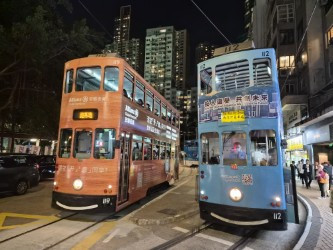
We took a tram! Wooden seats, bells, and sounds from another era. A classic case of “If it’s not broken, why change it?” These wonderful relics must have carried millions of passengers over the years—and now they were carrying us to Happy Valley Racecourse. Wednesday night is race night!
It’s incredible—you get off the tram in the heart of the city, and there it is: bright lights, a stunning green strip of grass, majestic stands and terraces, all with a backdrop of high-rise buildings and a full moon rising between two towers. Free for tourists, or ten dollars (a pound) if you don’t want to queue.
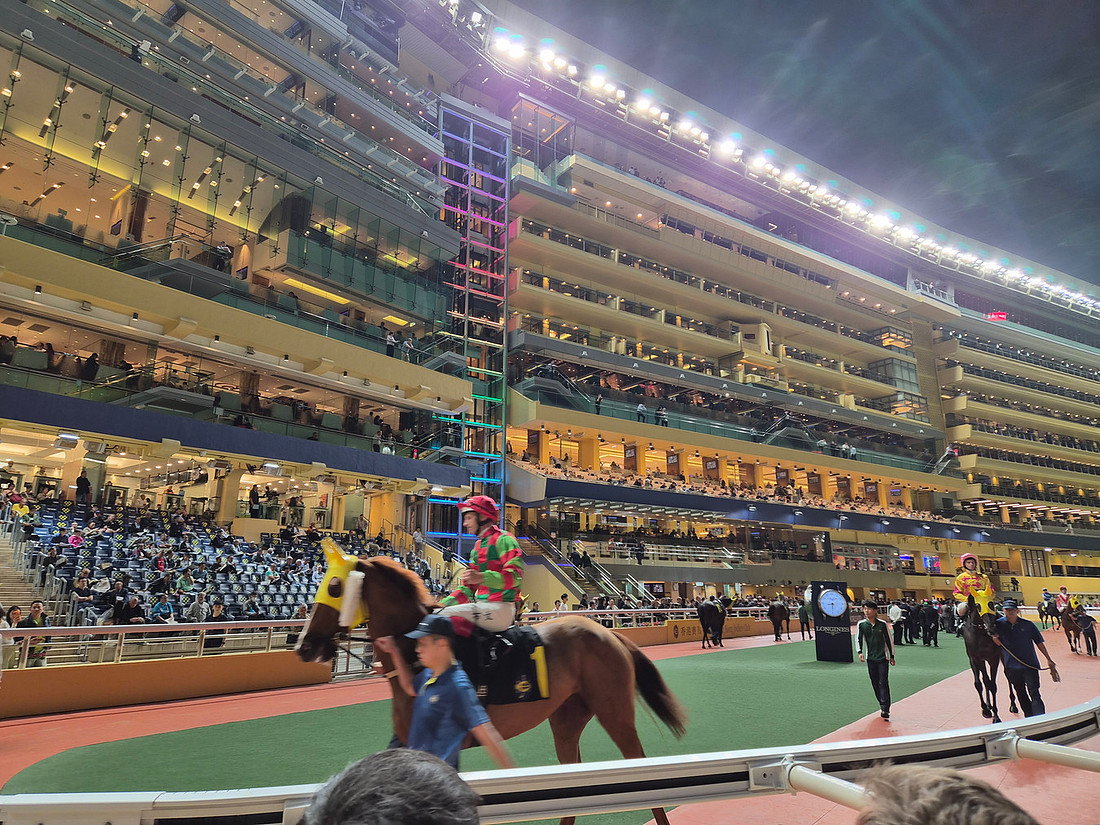
Inside, the buzz is infectious. Bars, dance groups, and of course—betting! I’ve never really bet; losing a pound usually breaks my heart. But as the saying goes, “When in Rome…” Fortunately, there are helpers to guide you through the process. Armed with my foolproof gambling system—pick number one at random—I placed my bet. The races last only 1–2 minutes, but the build-up and frenzy are brilliant. Of course, number one won!
Race two: I switched to another foolproof method—pick a horse whose name makes you smile. “Fortunate Son” was in last place with 100m to go. Oh well, my system was crap.
“Did you see that?” Wendy said excitedly. “They’ve just given it to number 3—Fortunate Son! He came out of nowhere!”
My luck was really in tonight. Four races, four wins! We left Happy Valley very happy indeed.
Trip to Macau: Speed, Serendipity, and Shades of Grey
I thought a day trip to Macau, China was a great idea—it would be country number 60 for me, and it also meant a journey across Hong Kong Harbour. After passport control, we were shown to our leather seats with seatbelts. I wasn’t expecting this at all—it felt just like boarding an aircraft.
I headed upstairs, presuming it was for outside viewing, but was hastily reminded that I must remain seated with my seatbelt fastened for the entire journey. I sat there sulking, thinking it was a bit over the top and slightly peeved that I wouldn’t get my pleasure cruise around the bay. Sulking lasted only until we set off.
Flipping heck—this was nuts! We tore off at warp speed. It felt more like a speedboat hammering across the water at what must have been 40 knots or more. You really needed the seatbelt—when we hit a wave, it felt like we were airborne. An incredible journey, really: 60 km in about an hour.
Another jaw-dropper was the view from the sea of the road bridge to Macau—the longest bridge in the world at 55 km!
For some reason, when we asked for a map at the port’s information desk, we were randomly treated as VIPs and escorted to a waiting limo, whisked straight into the centre of town! Considering about 700 people exited the building, it was quite a surprise to find just three of us treated like royalty.
Macau has a well-worn tourist trail of nicely renovated Portuguese buildings and shiny cobbled streets, where a snake of mostly Chinese tourists follow one another in single file—running the unending gauntlet of hawkers selling stick-like, flat, brittle pork confections. By the time you’ve tried one at the start of the street, you could eat the equivalent of a box by the end, as they’re thrust into your hands.
To be honest, it wasn’t our thing. The route felt a little contrived, so we headed into the backstreets. What a contrast. It seemed Macau had run out of paint once you left the tourist zones. There were wonderful old buildings with ornate, rusty railings alongside temporary shacks and blocks. Many could be quite charming, but they were all so grey.
One street was stunning—reminiscent of a Sicilian lane, with balconies and washing hanging over the main street. But again, if only it wasn’t so grey.
We walked for miles, seeing only the occasional modern, colourful outlet, which seemed oddly out of place. Life in the backstreets was just as it is in many Asian cities: tiny garages, metal workshops, fabric shops, and convenience stores. Some of the architecture was genuinely cool, but again—so dull, as if no paint had touched it in decades.
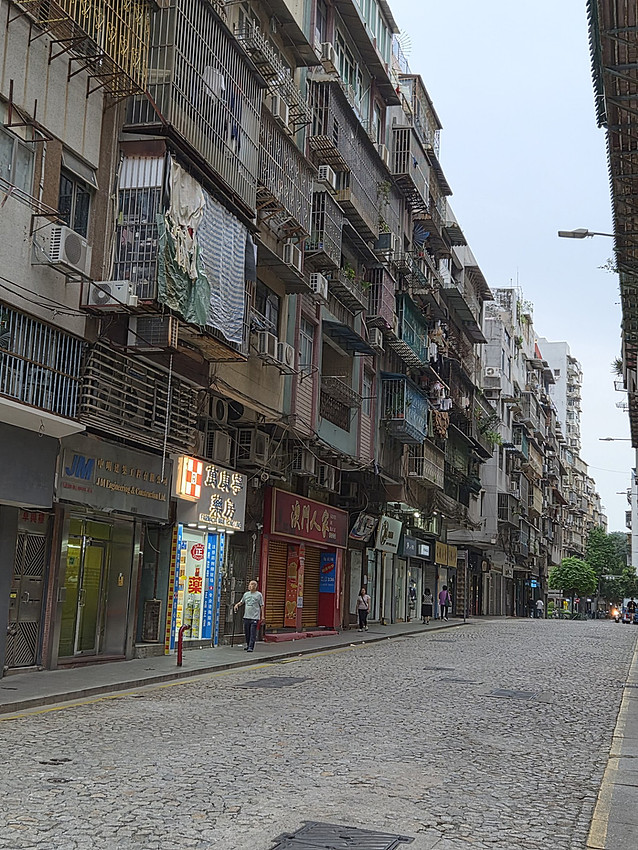
ABOVE: A RARE GLIMPSE OF COLOUR IN MACAU
Eventually, we looked at each other and knew we’d had enough. It was no longer inspiring—in fact, it was a little disheartening. Time to find a local and figure out where we were on the map.
As the takeaway driver puzzled over our tourist map, his finger landed right on the very edge of the paper—on the edge of Macau! We couldn’t be that far out, surely? He must be wrong. So we ducked into a shop for a second opinion. She too looked puzzled before placing her finger in the same spot.
She couldn’t quite believe we’d walked all that way and suggested we needed some kind of transport. A little alarmed at how far we’d rambled into the middle of nowhere, I approached a young man at a bus stop. There were buses everywhere and dozens of stops—we didn’t have a clue.
“Help!”
“You need the number sixty to the port,” he replied.
“Where do we get that?”
“Right here,” he said.
I smiled, then decided to overwhelm him: “How do I pay? How do I know when I’m there? When will it come? When, when, when?”
He stopped me. “Don’t worry—I’m going there. I’ll take you onto the bus.”
“Phew—thanks!”
Unbelievable! Only four people from a nearly full bus got off at the last stop—the port. He spoke perfect English and was the first person I approached. He even took us through to the port ticket office, as he was meeting his girlfriend arriving on our ferry.
Now that was lucky!
Macau isn’t a bad place, and the people seem friendly, but it was one of the few places I’ve found uninspiring. The tourist trail is fine for selfies and Instagram shots, but next time I visit the real Macau, I’ll bring some pastel paints—it really needs brightening up!
We did pass through the gambling strip, said to rival Vegas, but again—it wasn’t our thing. Bright lights and shop after shop hoping to buy your jewellery so you can gamble it away… or sell it to you if you win. It reminded me a little of a Spanish tourist hotspot crossed with a modern outlet centre—all built in straight lines. Wow—some people will hate me for that!
But as my friend, Bus Buddy, nonchalantly said when asked about the casinos:
“It doesn’t filter through to us—except when families are split up by gambling debts.”
RIGHT NOW I AM WRITING THIS ON TOP OF A BUILDING IN HANOI VIETNAM! THAT’S NEXT
BELOW IS A SELECTION OF PHOTOS FROM HONG KONG AND MACAU
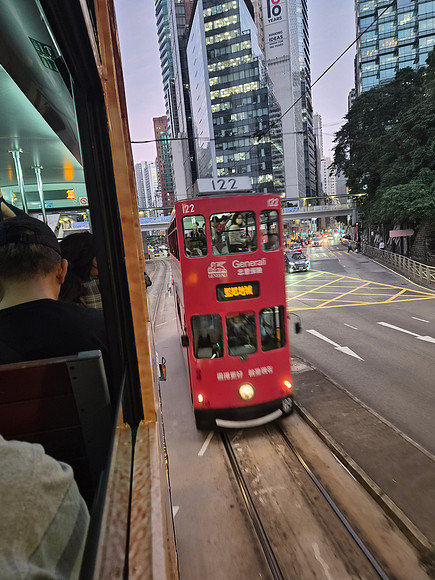
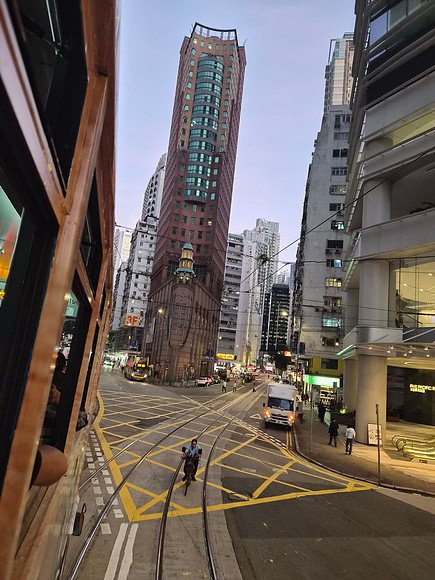
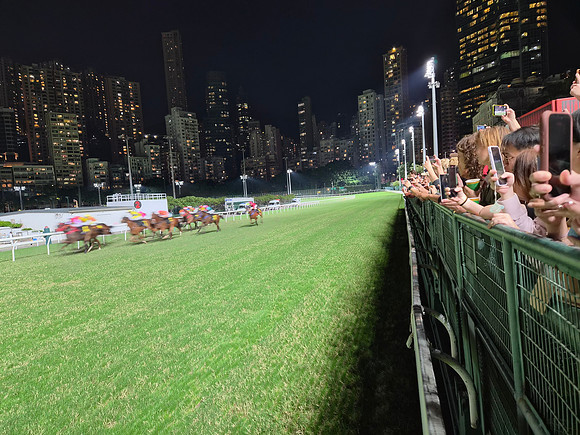
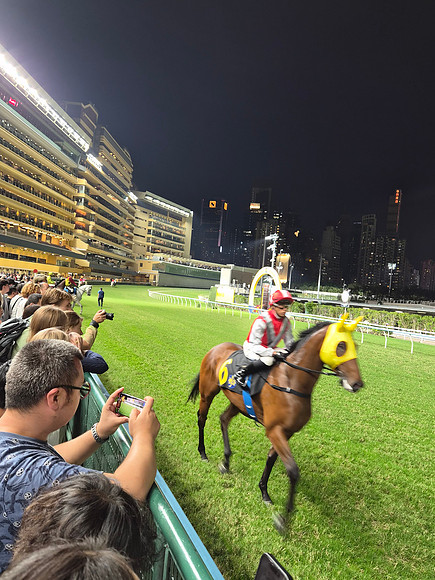
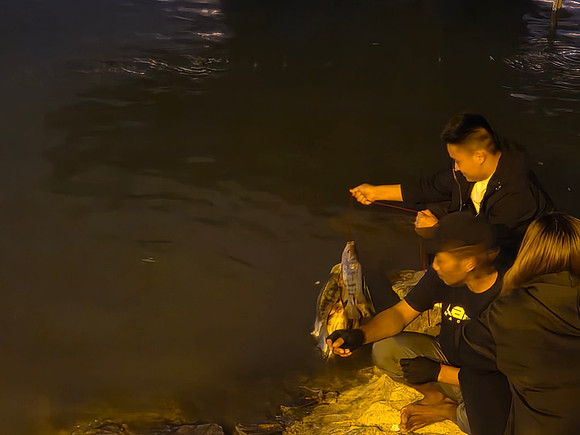
Sneaky fishing in macau
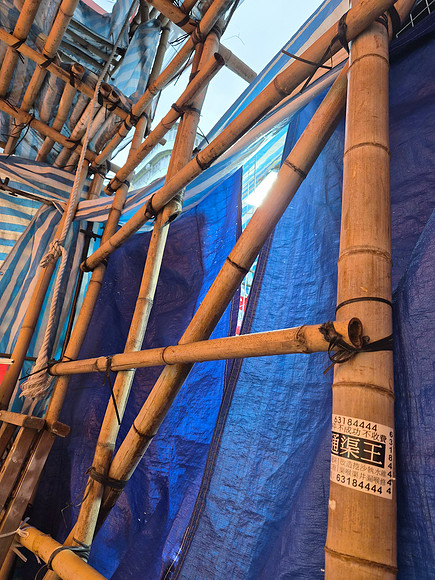
AMAZING BAMBOO SCAFFOLDING USED EVEN ON THE SKYSCRAPPERS
VERY BAD PIG
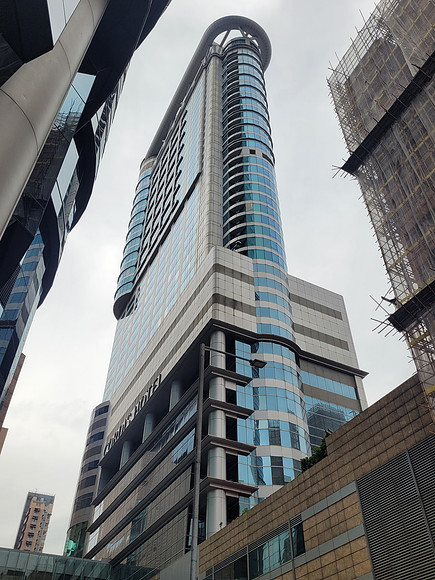
CORDIS HOTEL
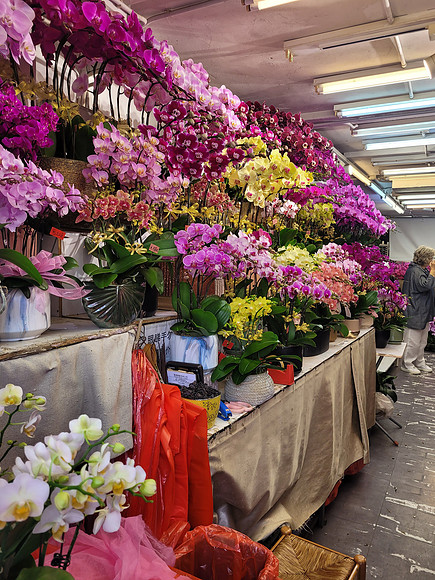
FLOWER MARKET ORCHIDS
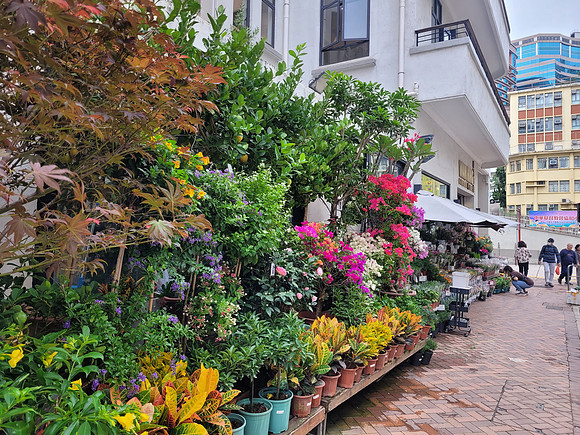
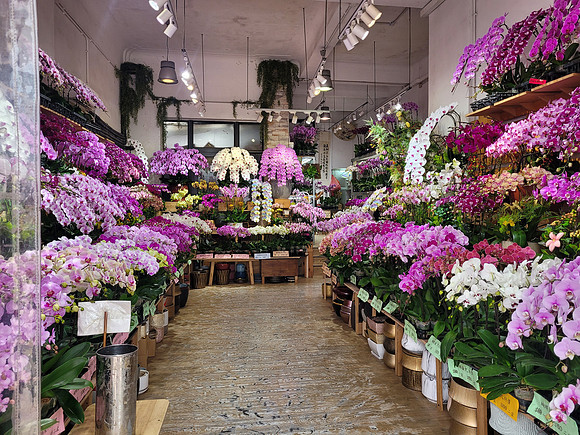
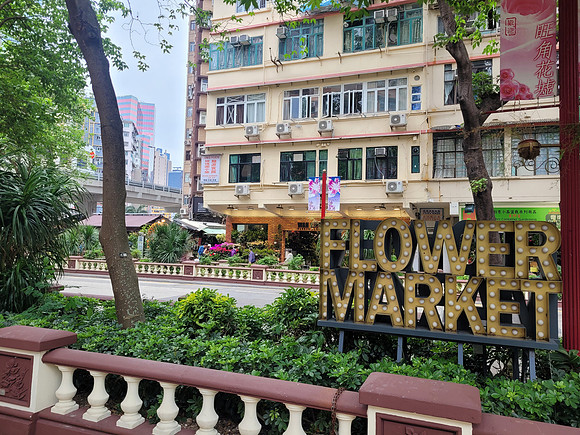
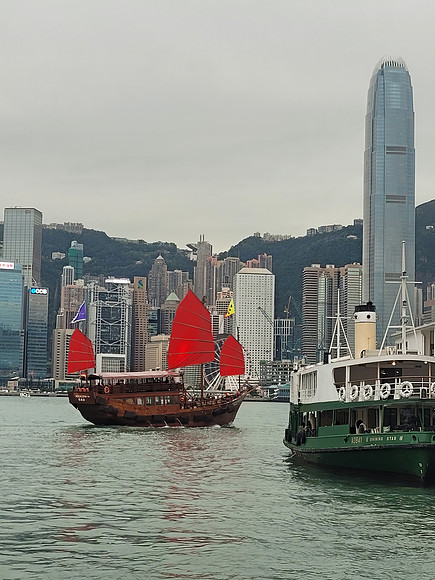
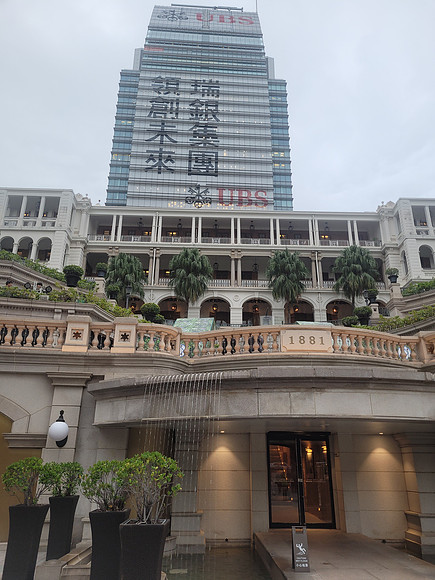
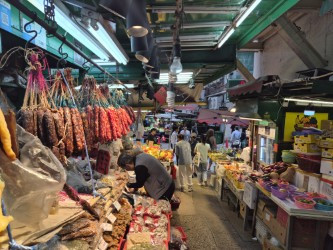
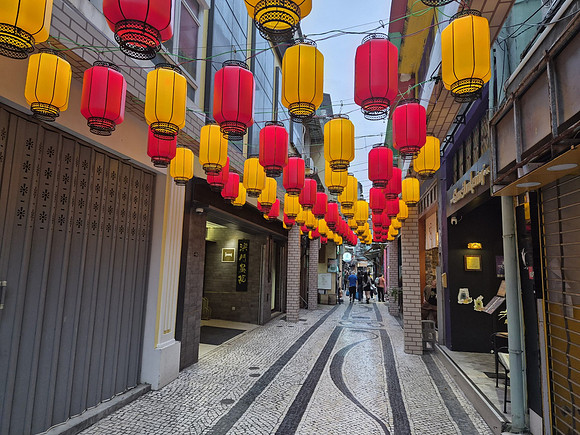
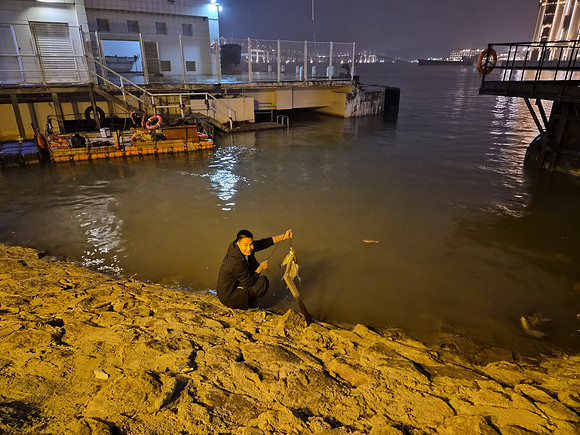
]]>
Borobudur, also transcribed as Barabudur, is a 9th-century Mahayana Buddhist temple in Magelang Regency, near the town of Muntilan, northwest of Yogyakarta in Central Java, Indonesia. We spent the day getting there—what an adventure!
We arrived at the rather nondescript port of Semarang on the island of Java first thing in the morning and hopped on our tour bus. It was quite an expensive trip we’d opted for, but after meeting a very persuasive photographer who insisted—almost lethally—that we must take the tour, here we were.
As we exited the port, it was clear the roads were totally jammed, yet we seemed to be moving with ease. Over the coach PA, our guide explained we had a police escort to get us through the traffic. During a Q&A session, he added that the escort would accompany us all the way to the temple and back—a full five hours on the road. “This is why your trip is expensive! Without them, we could never get there and back in a day!” “Do the police normally provide a service like this?” someone asked. “Oh yes,” he replied nonchalantly. “If the bribes are big enough, the Indonesian police will accommodate you.”
It turned out every traffic light was held for us, roadblocks were put in place as we tore down the wrong side of the road, and we even drove on a motorway that hadn’t been completed yet. That was truly surreal. Without the escort, it simply wouldn’t have been possible to make the round trip in a day.
The coach journey was long, but I was excited to see the changing landscape. Semarang was immediately striking—clearly a very poor town. The early colonial buildings were crumbling shelters, and many families seemed to live half in, half out on the street. Everywhere were tarpaulins, old tyres, and junk. Every inch of road buzzed with motorbikes—some carrying entire families, all seemingly hurtling somewhere fast.
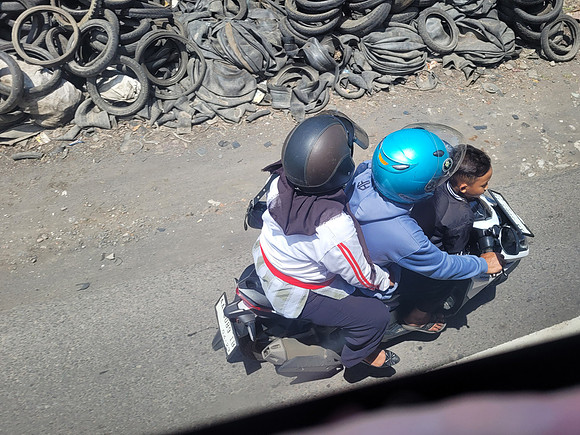
Just feet from my window, I waved to young children who looked up at me. Dino Pig peeked out and got the most wonderful laughs from the kids.
Our guide, who seemed to speak for all of Indonesia, laughed constantly and told stories as we drove. He mentioned the motorbikes and claimed it was very safe to ride here because everyone respects each other. Helmets are compulsory for the driver—but not for wives and children. He even said Indonesia was one of the safest countries to ride a motorcycle. I couldn’t help myself and did a quick Google search: In 2021, the WHO estimated around 31,000 fatalities in Indonesia due to road crashes, accounting for 2% of all deaths in the country. Most fatalities were motorcycle passengers.
On the journey, Wendy and I had a little competition to spot the largest load on a bike. She spotted a farmer with what looked like half a ton of rice piled up, but I got the record with something scarcely believable: at a set of lights, a scooter pulled up next to our window. A father had his six- or seven-year-old standing in front of him, holding the handlebars. Behind him sat another small girl, squeezed between the father and mother. In her right arm she held a baby, and cupped in her left arm—another breastfeeding baby!
Looking out the window was immensely interesting. It was a full hour of ramshackle city before any breaks in the buildings appeared. These revealed small holdings and city trash tips, where I saw young people clambering through filth, trying to eke out some form of income. A sad sight, but perhaps one that will fade as prosperity grows.
Eventually, the landscape opened up—and it was truly stunning. A magical, velvety green carpeted everything. Whether flat, mountainous, or jungle, no matter where you looked, it was the most beautiful green.
Before arriving at the temple, we stopped for tea, sandwiches, and a toilet break at a coffee plantation. This could have been planned better—three coaches of 40+ people and only ten toilets meant only the luckiest got to sip tea and explore the impressive grounds.
I had a problem. I’d drunk a lot of bottled water (well, it was free) and was near the back of the toilet queue. I just couldn’t wait. Rushing around like an idiot, I searched for somewhere private, worried I might be arrested for public urination. I ran out toward the main highway and spotted some houses a few hundred metres away. There was only one option. I rushed through a front door and mimed pissing myself. A friendly smile greeted me, and I was shown to a hole in the ground. It must have been the longest wee in the world. Relieved, I began to own up to my embarrassment. No problem, it turned out. Through another door, the young family revealed a little shop full of things I didn’t need—or did I? After chatting about football teams and why on earth an Englishman was in their house, I purchased some much-needed “Posh” underarm deodorant. Yes, it was genuinely called “Posh”—and it worked very well on my socks!
It had taken a while to get to the temple, but it was certainly no disappointment. There it stood, nestled in an idyllic, lush green carving in the jungle.
Borobudur Temple is rather like a pyramid built on three levels. You’re free to roam, although the tour guides don’t hang around—they filter as many people through the grounds as possible. Despite the crowds, it’s still easy to find a quiet spot to contemplate or simply take in the surrounding vista, which includes the nearby volcano that once covered the temple in ash for centuries.
I found the place magical—a real testament to human engineering and willpower on three levels. First, the fact that a massive stone temple was built in the middle of the Indonesian jungle nearly a thousand years ago. Second, the intricate carved reliefs must have taken decades to complete. And third, the determination to uncover it from beneath the soil—not once, but twice in the last hundred years.
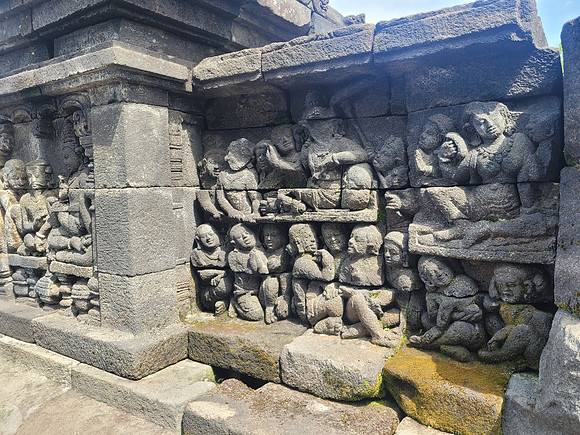
We learnt from our tour that: The entire structure forms a mandala, representing the Buddhist path to enlightenment. It features 2,672 relief panels and 504 Buddha statues, with the central stupa surrounded by 72 perforated stupas, each containing a Buddha statue.The temple is aligned with cardinal points and designed for ritual circumambulation, guiding pilgrims through symbolic stages of spiritual awakening. So there you are, some facts and figures to go with my ramblings.
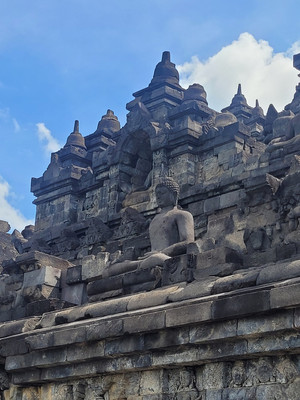
Finding a quite spot I decided it was time to send home some pictures for my Gandaughter Isabella of her best friend Dino Pig. As I was looking down from a plynth I saw a Korean girl with a Fluffy Bunny Rabbit. She had no idea anyone could see her taking pictures of her little friend and was shocked and thrilled when she met Dino Pig for pictures. The things we do for a smile hey!
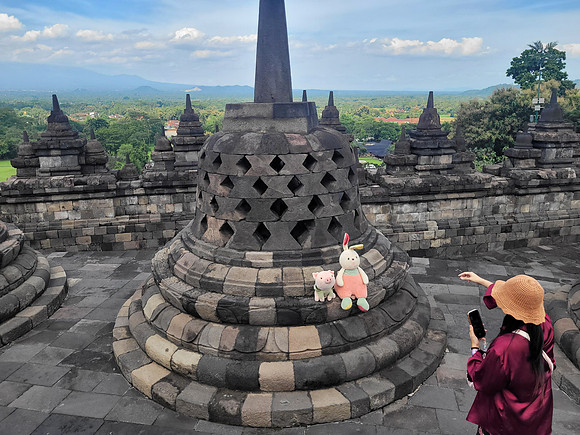
In the magnificent temple grounds, we were treated to an open-air meal and drinks. It was such a treat. Cool beer, spring rolls, meats, rice, and fruits fit for kings! We even discovered two new delights: snakeskin fruit and little cones with a soft inside—just like mini cornet ice creams.
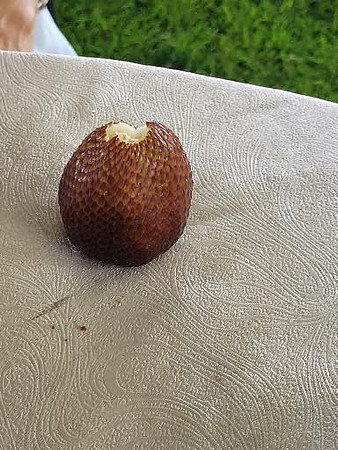
Sadly, our stay at the temple was short due to the three-hour journey back to port. At first, it seemed like a rushed, expensive tour—but it turned out to be neither. The day flew by, which is always the sign of a good time. It’s a place I’ll never forget, that’s for sure.
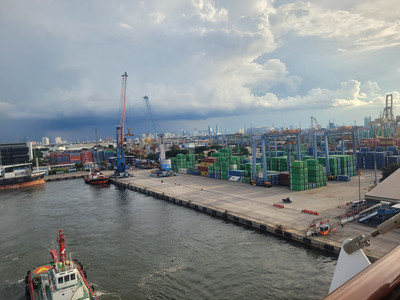
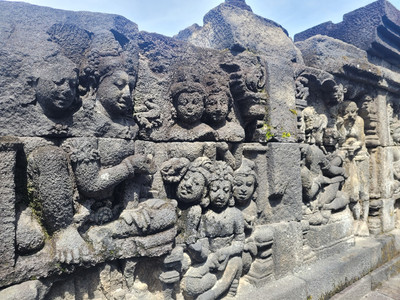
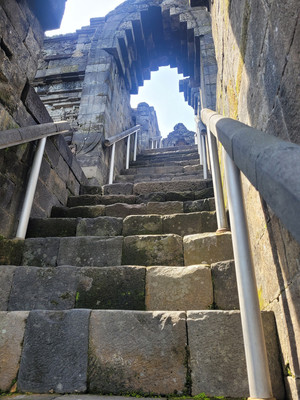
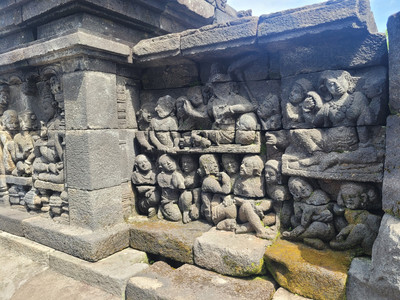
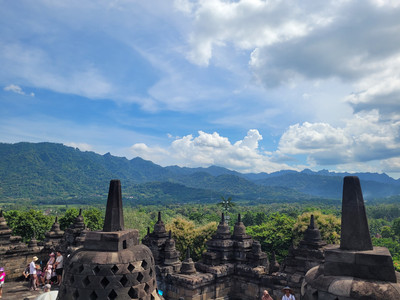
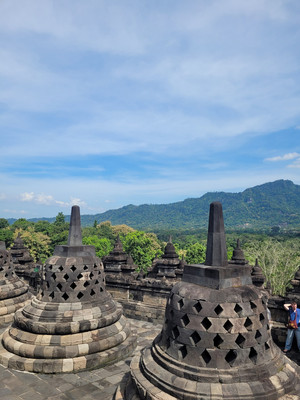
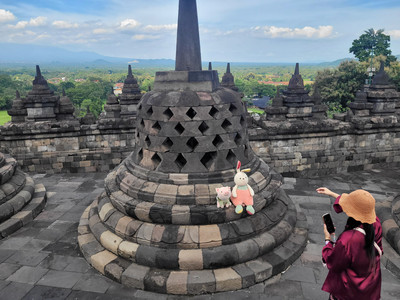
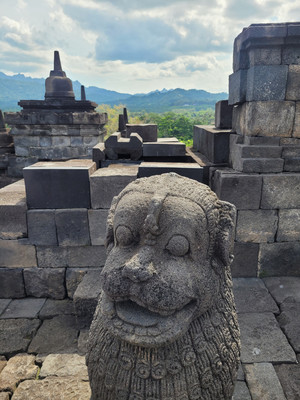
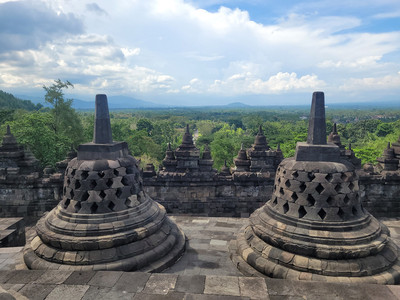
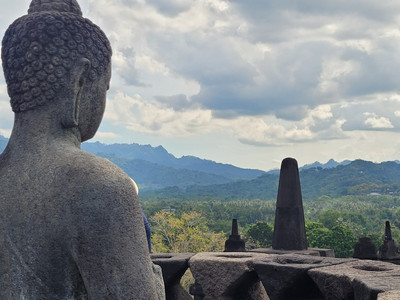
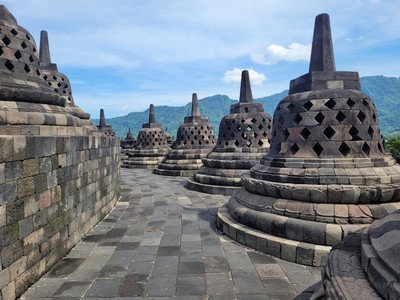
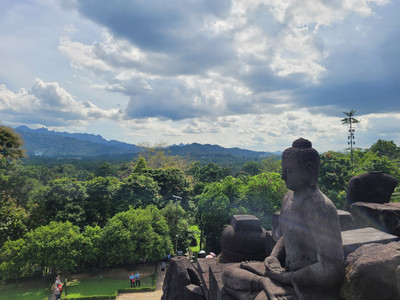
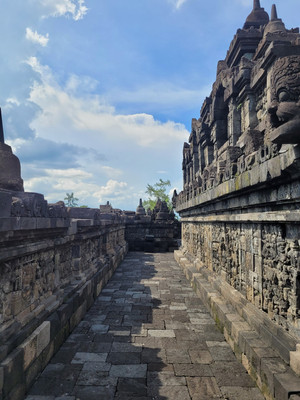
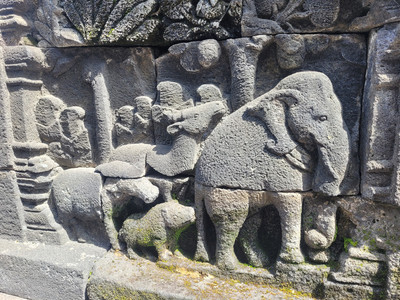
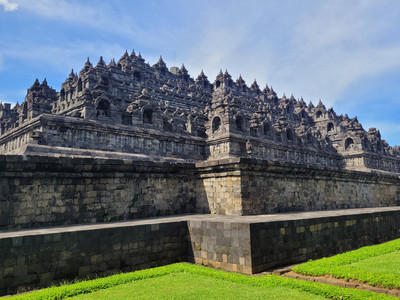
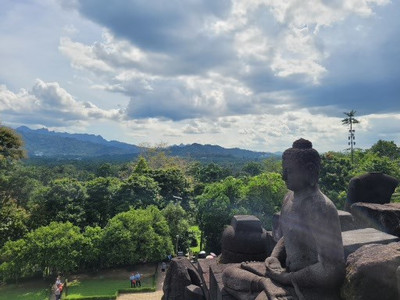
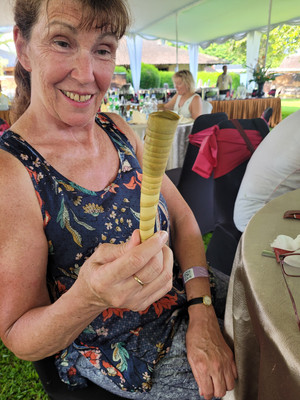
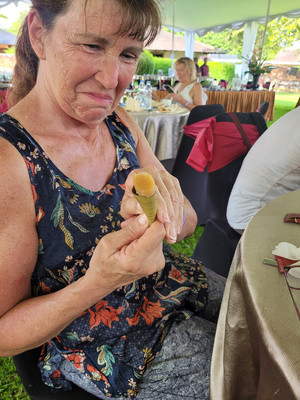
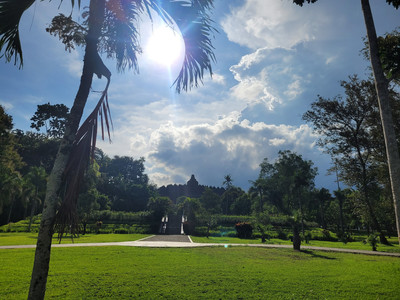
]]>
We visited Montenegro this summer aboard an NCL cruise ship. Sailing down the narrow inland fjord was simply awe-inspiring. It takes a few hours from the open sea to reach the end of the bay, where—nestled beneath towering limestone cliffs—lies the ancient town of Kotor. In places, the route is so narrow between the mountains you feel as if you could reach out and touch the sides.
We had decided to go sea kayaking and were met by a guide who walked us along the shoreline to a launch site. The whole experience carried an air of excitement—the waterway was breathtaking. As we paddled into the fjord, the fortified city of Kotor rose to our right, its majestic castle perched high on the mountainside. To our left, gentler slopes were dotted with houses and churches, and ahead of us stretched crystal-clear water.
After about an hour of paddling, we landed on a stony beach. Most of the group, including Wendy, swam and chatted among themselves. I chose instead to strike up a conversation with our guide. Around 30 years old, he was a native of Montenegro and had travelled the world. He spoke passionately about his homeland and its rich history. I learned more in that hour than I could have from any guidebook.
We paddled back to shore, and I said goodbye to my new friend—someone I hadn’t expected to be so genuinely warm and welcoming (you’ll see why that stood out).
Kotor is entered on foot through ancient stone gates and reveals itself as a labyrinth of narrow medieval lanes. It’s become famous worldwide among Game of Thrones fans, as much of the filming was done here. I have to admit, it’s unlike any place I’ve ever visited—truly deserving of its reputation as a medieval gem. The bars, restaurants, and shops look fantastic, but sadly, the town lacked warmth and friendliness.
I’m sorry to say that my first encounter was unpleasant: I went to post a card to my daughter and met perhaps the rudest person I’ve ever come across. She had a full-blown argument with another customer for using the only available pen, claiming it was for locals only—not tourists. Later, we went for a drink. The atmosphere was incredible, but the feeling of being unwelcome spoiled it. A slice of pizza from a shop was quite literally thrown at us, and in another bar, we encountered yet another rude waiter. It was just so disappointing and left a bitter taste in what is otherwise one of the world’s most stunning destinations. It made me wonder—was our kayak guide the only friendly person?
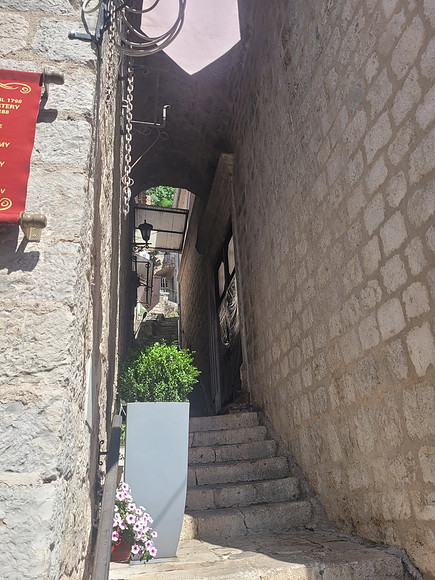
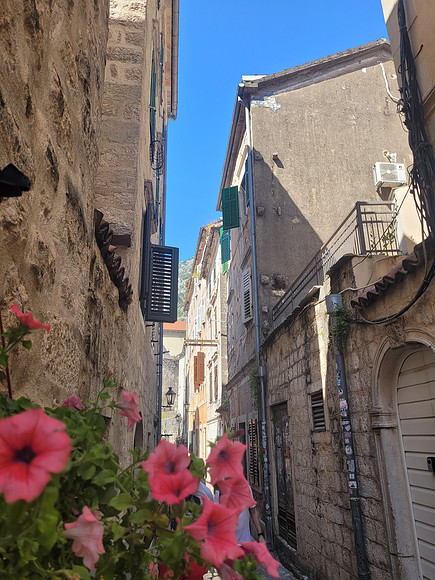
Back on the ship, quite a few passengers had returned early and shared similar experiences. What a shame. Tourists are the backbone of the local economy, and if they stop coming, perhaps people will look back and think, “Maybe we should have been a bit nicer.”
Sailing out was also prety magical as the sun was setting. It may have been a little disappointing but "What a stunning place"!
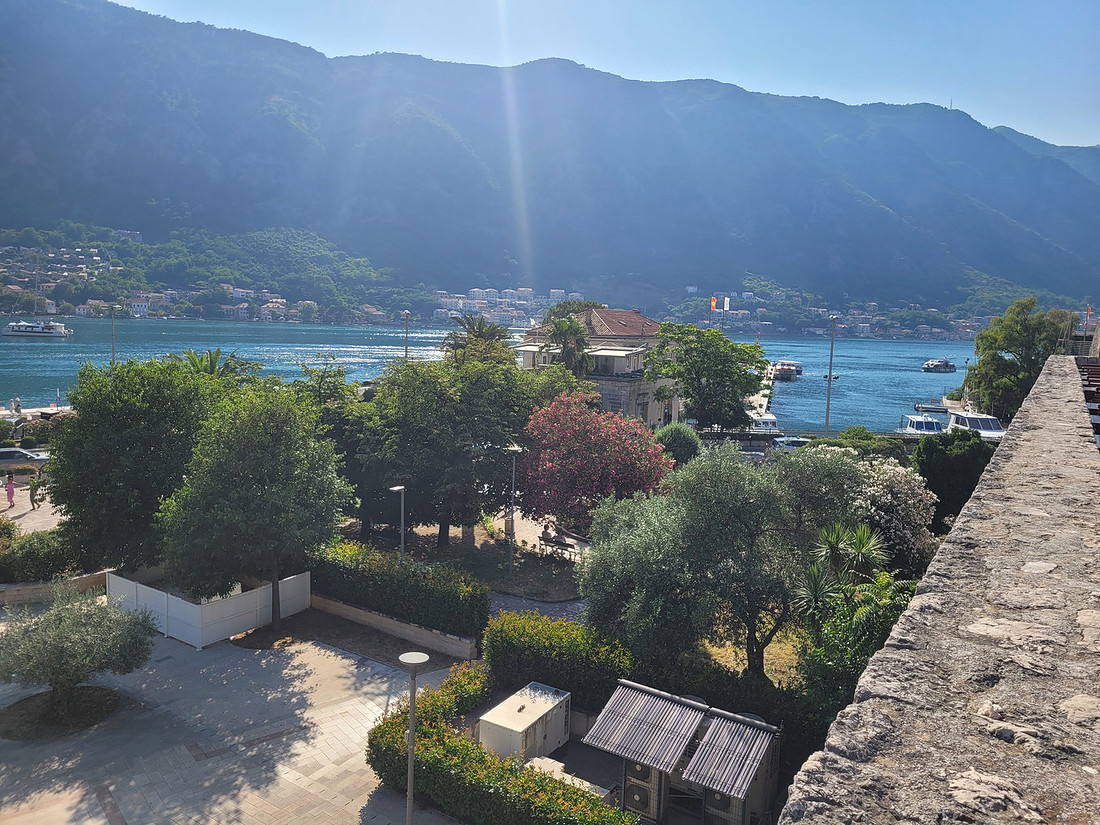
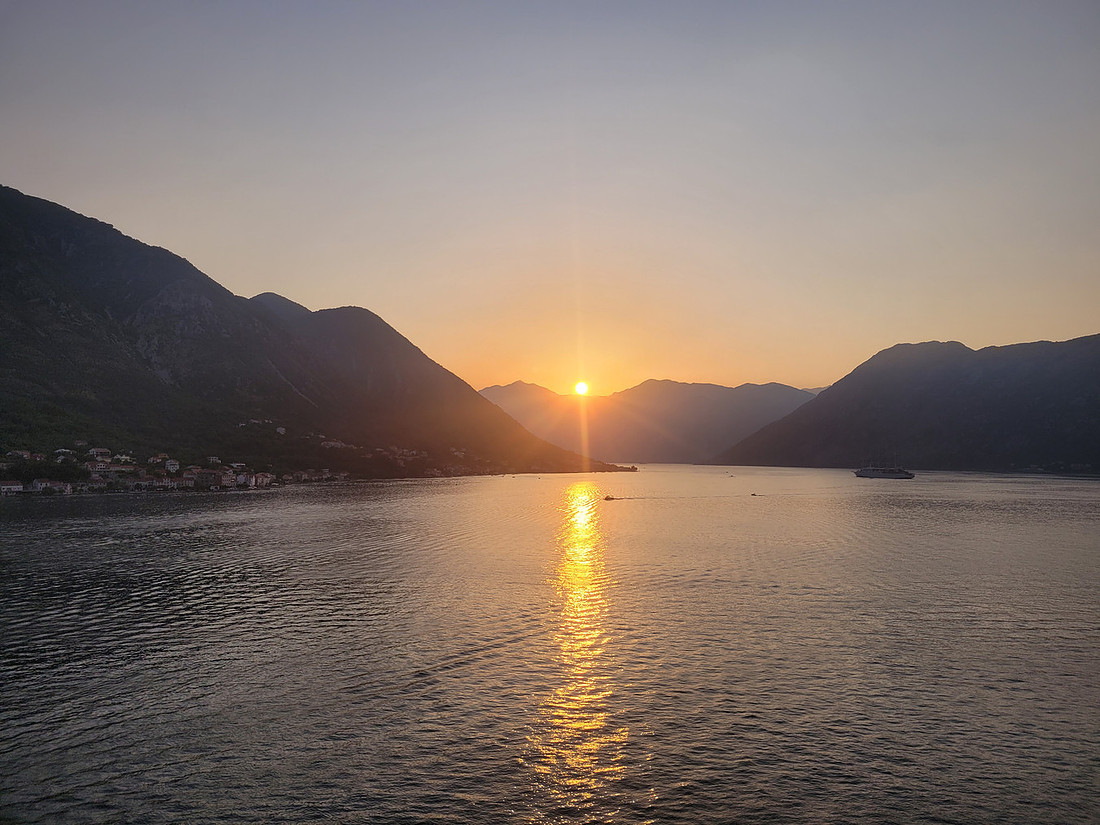 Sun Setting In The Fjord
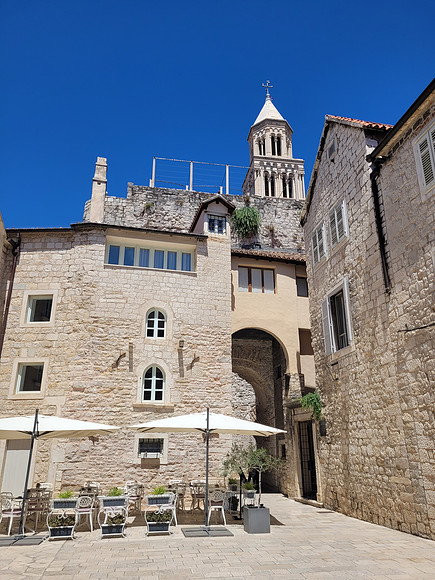
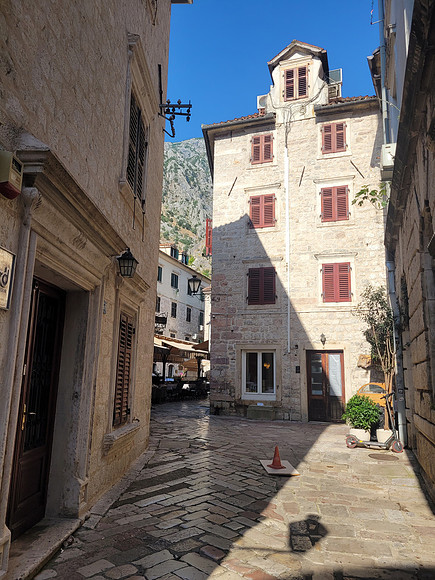
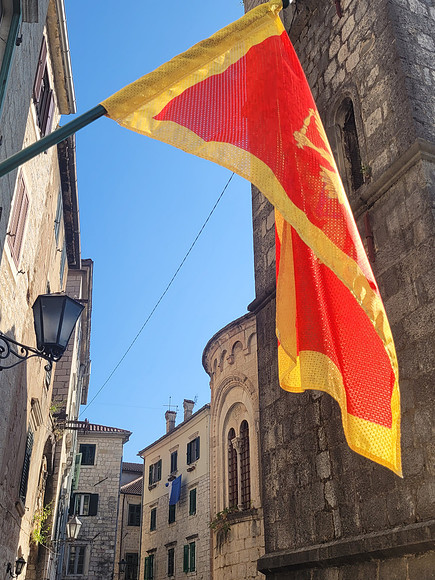
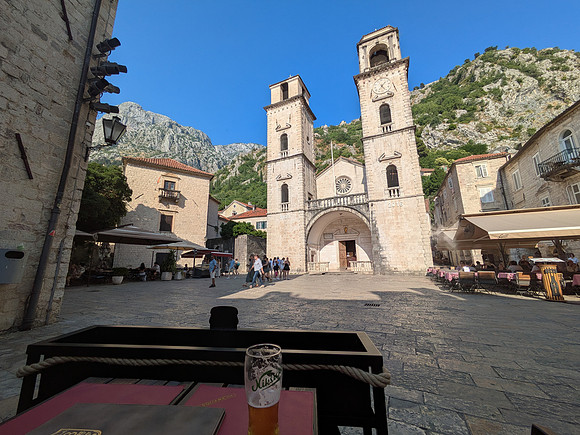
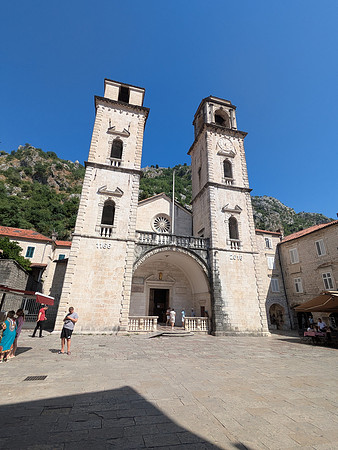
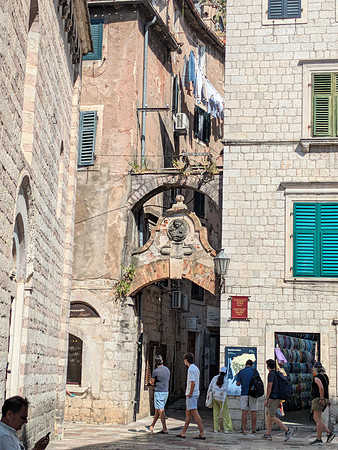
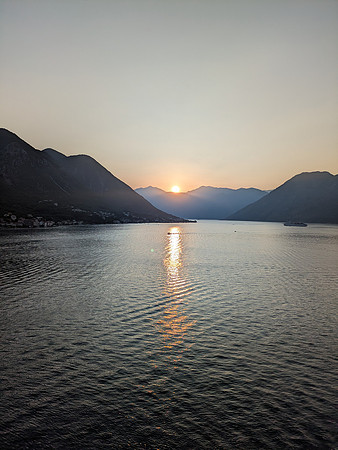
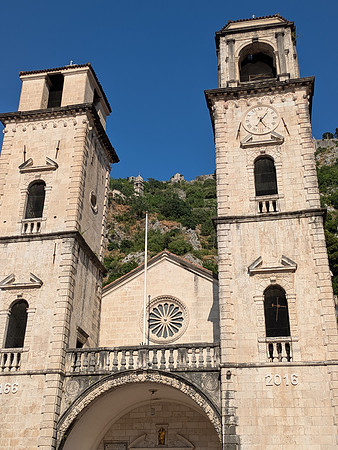
]]>
When you arrive in Split on a Cruise Ship as so many visitors do, it is very easy to think that the city is all contained within the extensive old city walls. This is what I thought when I visited in the summer. However this time we drove from the town of Zadar and entered what is a massive quite modern city with suburbs that stretch from the sea to the foot of the mountains. It took a good 40 minutes to cross the urban city to the old town where we were staying.
Our accommodation was just five minutes from the heart of the bars and restaurants tucked into the old lanes. Parking could have been a headache — the nearest on-street spaces were €24 a day — but a quick chat with the local bar owner solved everything. He had what might be the only ten free parking spots in the city, right outside his bar. They shuffled a few cars around and we squeezed in. Four days of free parking, just 30 metres from the flat — happy days.
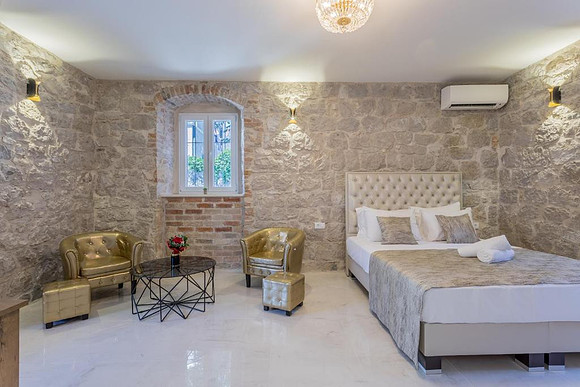
It seems to me that the apartments, rooms, and hotels in Split are all of real quality. On Booking.com, anything above 8.5 is usually considered exceptional, but in Split, nearly every listing was over 9 — and genuinely terrific value. Our place was no exception: a small basement room in a centuries-old stone house on one of the main cobbled streets. It was clean, beautifully maintained, and within a few steps I was in a charming restaurant-pub.
Split: Alive with Stone and Sea
I’ll be honest — I absolutely love Split. I spent most of my time simply walking, hour after hour, through its stunning alleys and lanes. They’re home to curious little shops, tucked-away bars, and some of the most architecturally striking restaurants I’ve ever seen. There’s a quiet magic in the way the light hits the stone walls and pavements — whether it’s night or day — and every turn seems to reveal another hidden courtyard or vine-draped archway. It feels ancient, yet very much alive.
The old town is a labyrinth of polished stone streets, worn smooth by centuries of footsteps on soft limestone. Sometimes they glisten as if wet — and if it rains, they really are slippery! But brilliant for photographs.
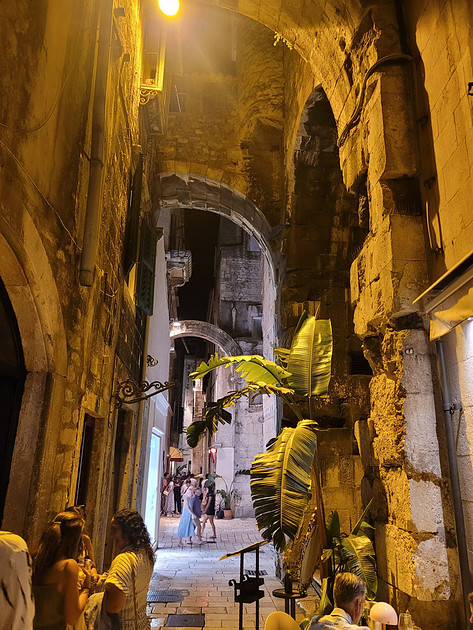
Diocletian’s Palace forms the heart of it all — a massive Roman house built by a retired emperor. Parts of it survive as the foundations for everything here today. It’s not just a monument, but a living, modern attraction. Cafés spill out into ancient courtyards beside the towering church, and in the evenings, musicians play under Roman arches while tourists and locals drink and listen. It’s a place where history isn’t just preserved — it’s lived in. Honestly, the hairs on the back of my neck stood up when we arrived one evening to the sound of a young band playing Ed Sheeran.
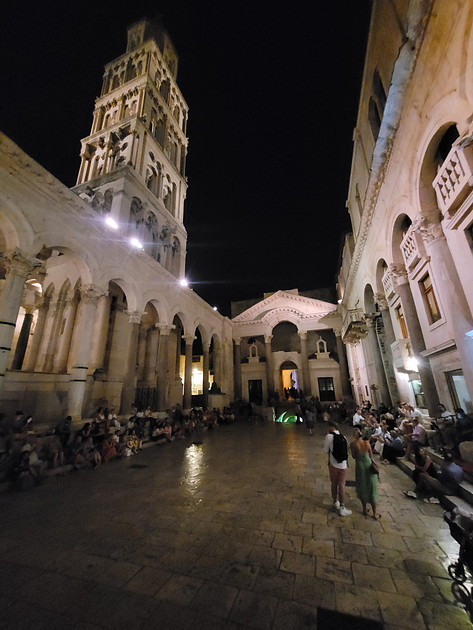
Marina Walking and Charter Plans
On our second afternoon, we walked around the marina in the hot sun. Hundreds of yachts were preparing for sea. At first, we thought it was some kind of regatta, but after a few enquiries, we realised it was simply a busy day for charters. It got me thinking — this is something for the future: hire a yacht with friends, go solo, or better still, join a group and make new ones.
Every budget is catered for, from small six-berth basics to state-of-the-art luxury catamarans. You can even ditch the sails and go for a superyacht like a Sunseeker. With so many islands and crystal-clear waters, it seems like a fantastic way to have an adventure — especially for a first-timer. I’ll definitely be looking into it for next year.
Cliffside Surprise
On our way back from the harbour-side marina, we chose to climb some steep steps toward what looked like a bar perched on the cliffs. When we reached the last step, we immediately realised we were out of our price range! White-clothed tables, suited waiters, and views to die for.
“If we walk through the restaurant and out the other side, we won’t have to climb the hill again,” I suggested.
As we reached the exit, I grabbed a menu for a quick look — and realised almost immediately we shouldn’t be leaving. This place was the best value in Split!
What followed was a beautiful hour of wonderful food, attentive service, and unforgettable views. The place was called Skippers, and I couldn’t recommend it more.
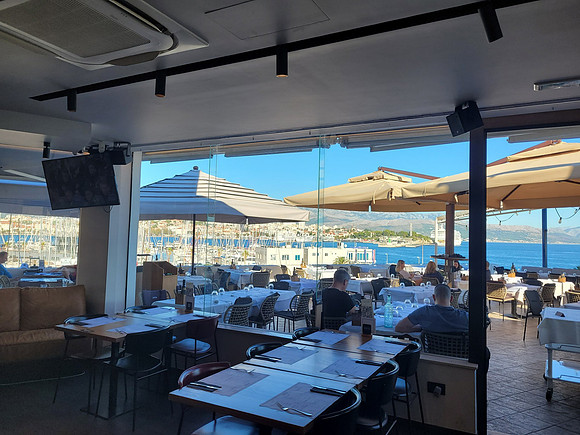
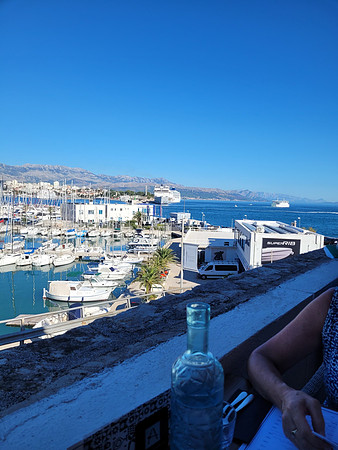
Filling In the Week
Two of our days were taken up by a trip to Brač, a nearby island — but that’s a separate story. We ate and drank at plenty of places, and not once were we left even slightly disappointed. Split is a friendly, beautiful town that blends tourism with local life effortlessly. It feels like the city has reinvested the money from tourism wisely: the buildings are renovated, the accommodation is modern and well maintained, and the town has managed to stay genuinely welcoming.
I must add — late one evening, I took my laptop out to a bar and accidentally left it on the seat outside. I went back the next day, and to my surprise, they handed it straight back. The lady said, “Don’t be surprised — any place in Split would have handed it in, I’m sure.”
And I think I believe her.
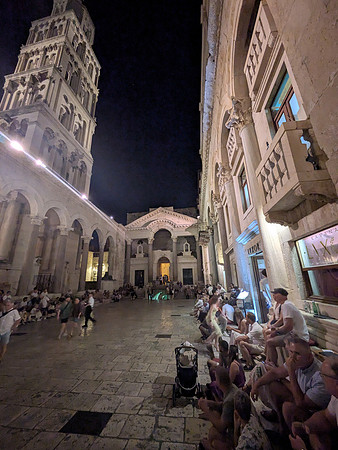
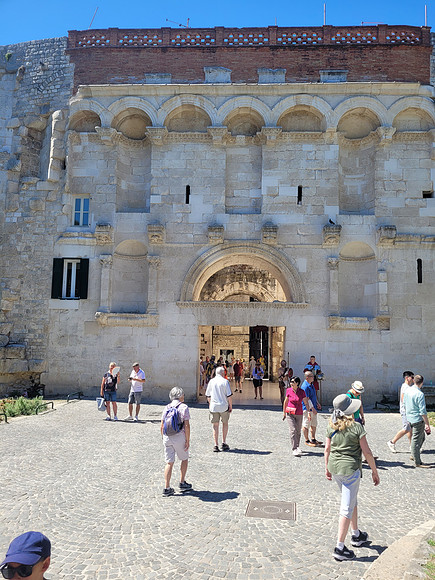
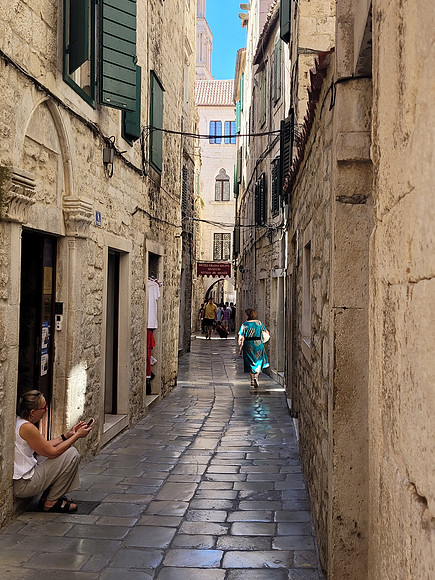
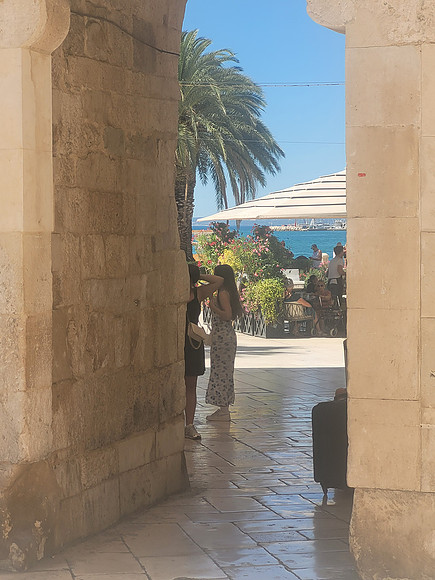
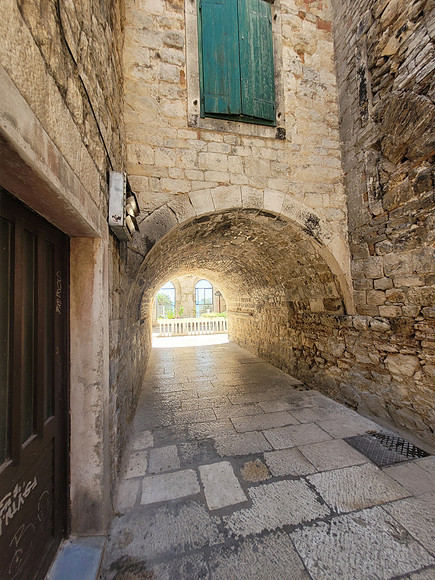
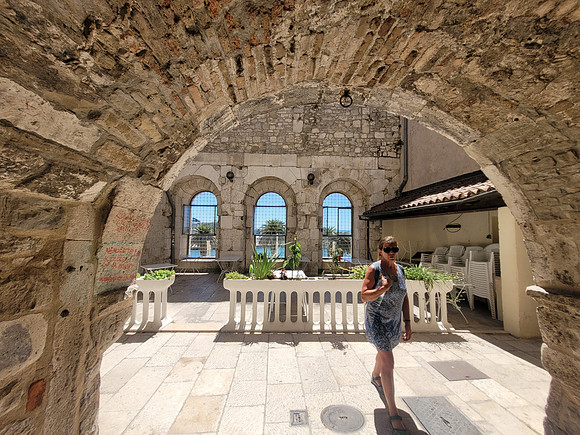
There’s a ferry from Split to Supetar on the island of Brač. It looks a bit old and tired, but it does a fantastic job crossing the water in just under an hour—and as a foot passenger, all for just €7!
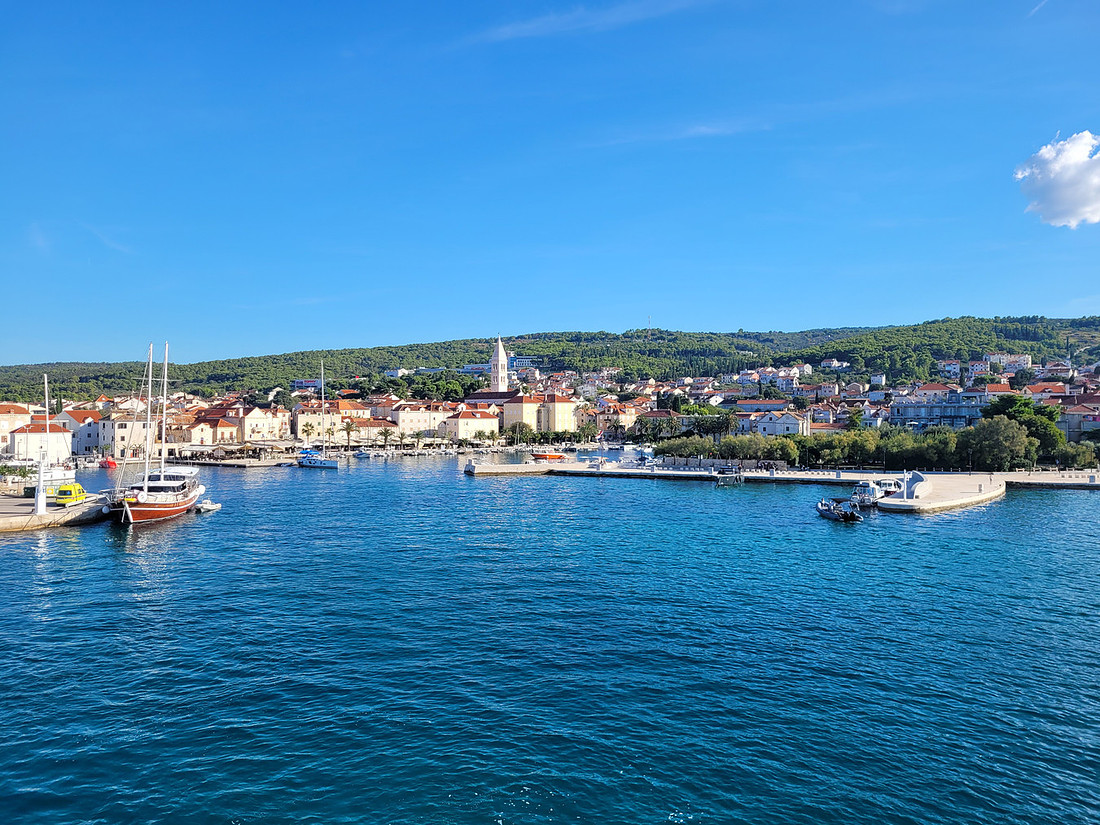 VIEW FROM THE FERRY
Almost immediately after disembarking, we found ourselves at the charming waterfront harbour. Its flat limestone promenade is lined with neatly spaced palm trees, offering just a touch of shade to the cafés and restaurants set back from the water’s edge. Their uniform canopies create the perfect backdrop to the cream-coloured stone buildings of the old town. The red-roofed houses, lofts, and central church look freshly restored. “This is a place that takes care of itself,” I thought. The picture-perfect harbour is filled with colourful small boats and the occasional visiting yacht or cruiser.
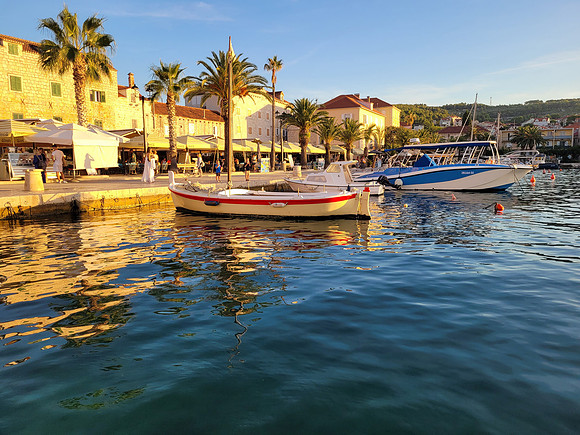
As we strolled along the harbour’s edge, we kept stopping to peer into the crystal-clear water. I don’t think I’ve ever been anywhere with such visibility—you can see ropes and anchors resting on the seabed, maybe 12 meters down, along with shoals of shimmering fish.
Further along the promenade, we passed souvenir huts and boutique shops. Here we found a brilliant swimming spot, with metal steps built into the sea wall. The swim itself was magical—bobbing in the water with a backdrop of mainland mountains and vivid green trees lining the island’s shore. I regretted not bringing swim goggles; the colourful fish were everywhere.
We swam, read our books, and soaked in the view until it was time to chase the sunset. As the sun dipped lower, we spotted a bar at the end of the harbour that would catch the last golden rays. We got lucky—the bar was full, but just as we arrived, two people vacated the best seats. Honestly, it beats working! Sitting with a local beer, good company, and a smiling barmaid as the sun goes down felt like heaven. In that moment, this was it.
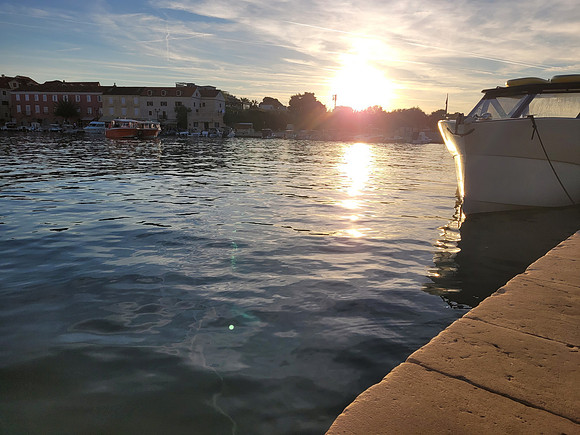
Before we knew it, night had fallen, and we wandered through the quiet side streets and alleys, maybe in search of another drink or a meal. Some of the restaurants were truly magical, with tables tucked into courtyards under ancient olive trees—even spilling onto steps and pavements. The soft lighting against pale stone walls created a warm, ambient glow, and the air was rich with the scent of seafood and garlic. Not being great at choosing, we ended up in a bar that served fifty different beers and something called “Messy Chips.” Gosh, we’re posh!
Later, we shared a wood-fired pizza at a harbour-front spot and lamented having to leave the island. We were back onboard by 9:45 and in Split just before eleven.
Sometimes you want to use fancy words to describe a beautiful place, but Supetar makes you feel something deeper. I felt warm inside as I walked its clean alleys and waterfronts, knowing that once again on my travels, I’d found somewhere truly special.
Useful Notes
🛳 Ferry Info: Departs from Pier 23 in Split via Jadrolinija Lines. Ticket kiosks are open day and night. Return tickets are valid for any sailing back to Split.
🏊 What to Bring: A towel and swim goggles—don’t miss out!
🍴 Food Tip: We returned the next day and did it all again, this time dining at a little open beach café called June. It wasn’t fancy, but the staff were amazing and funny—and boy, the food was good! Two meat skewers, chips, and a beer rivalled any top restaurant.
PHOTO GALLERY:
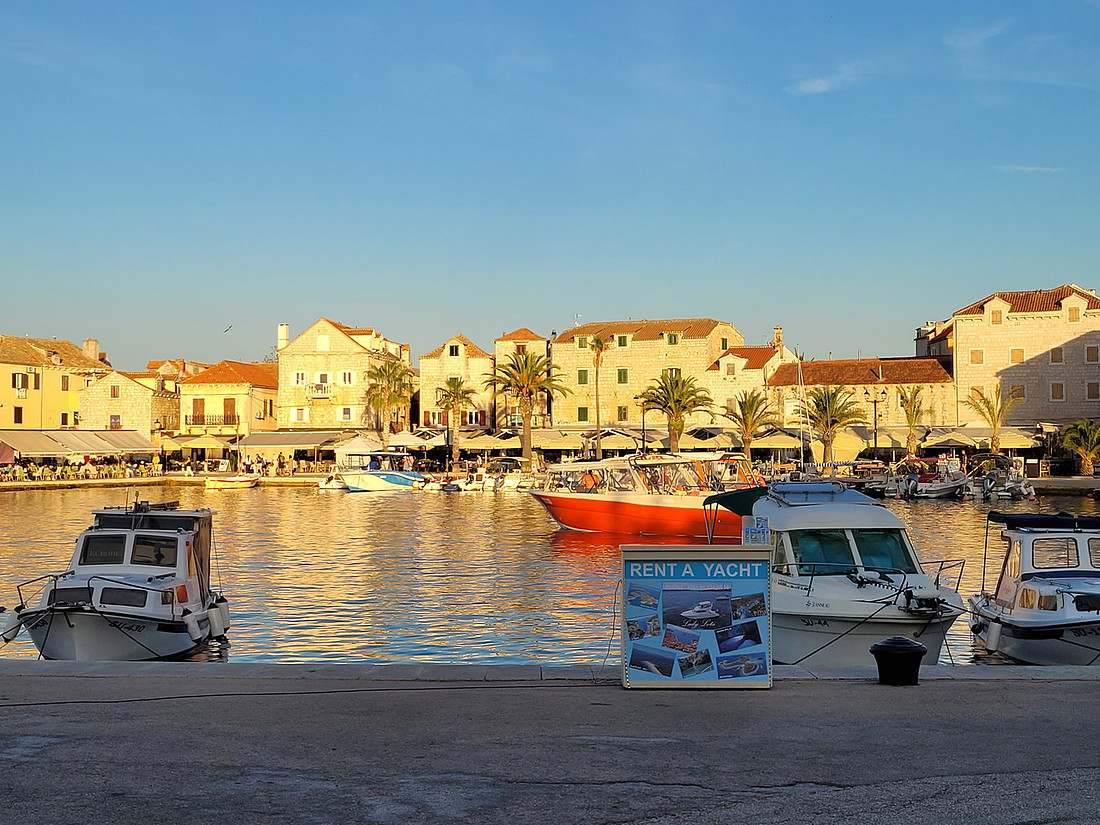
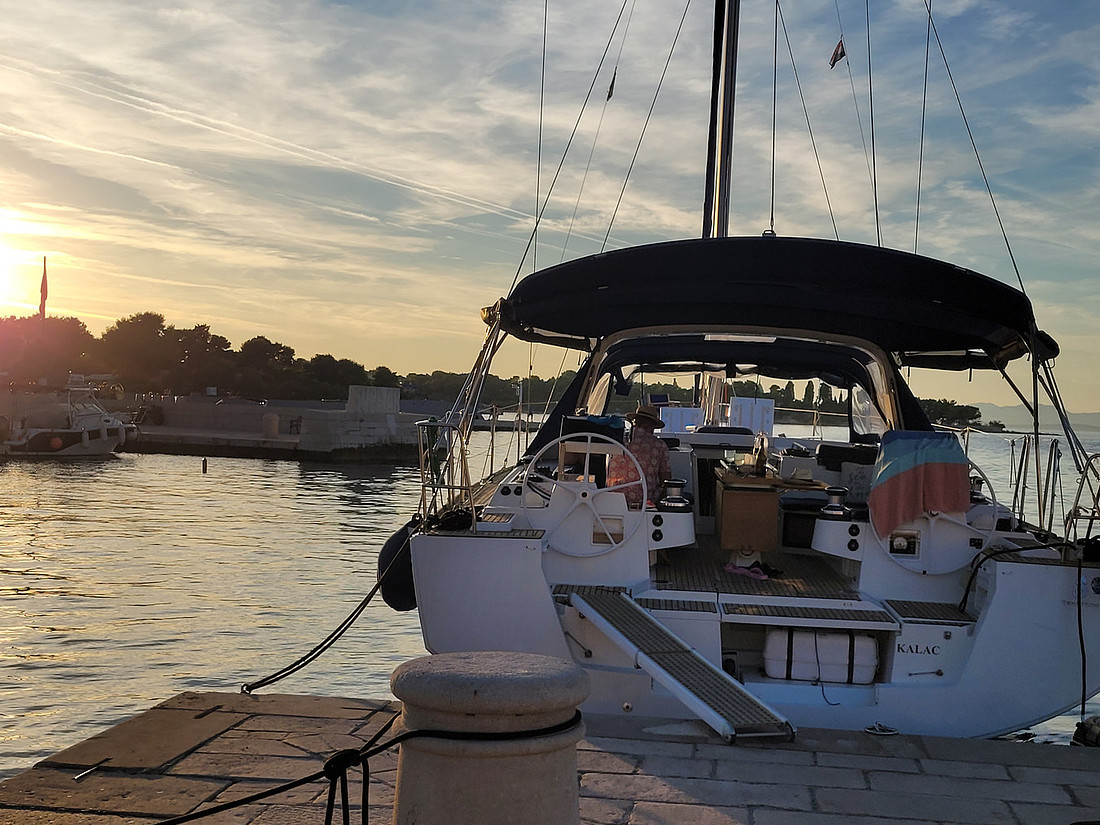
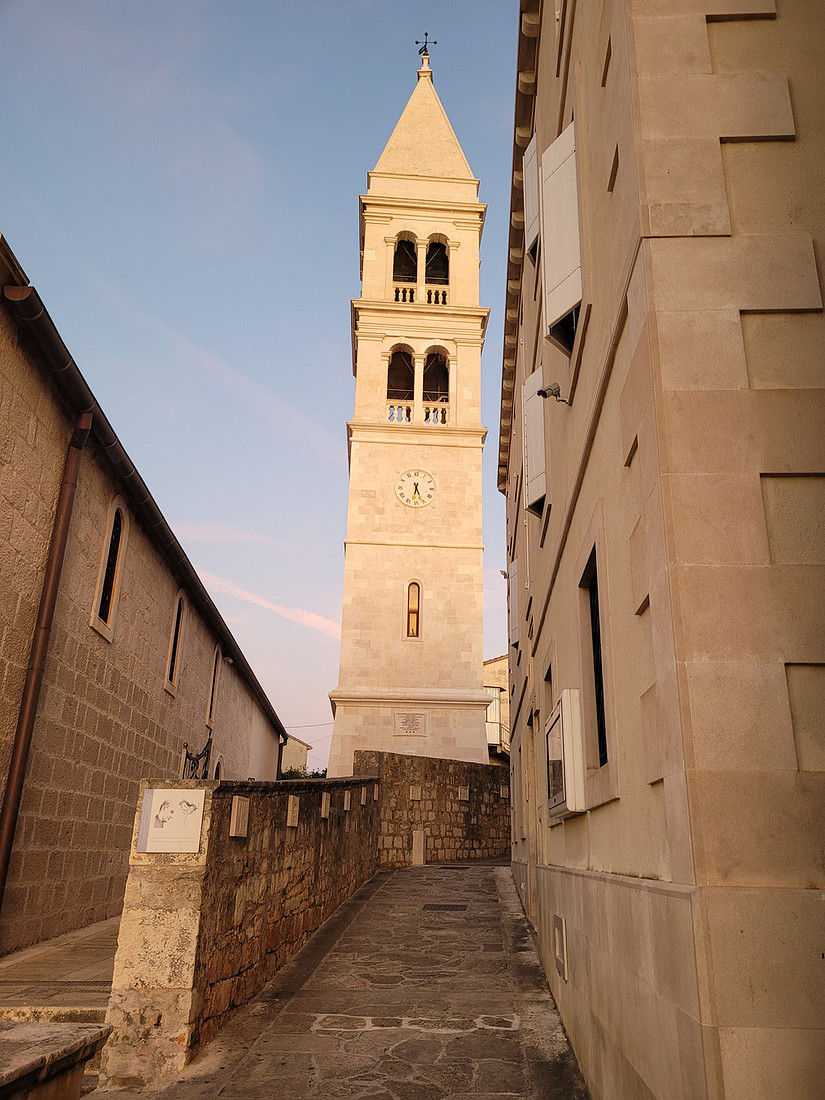
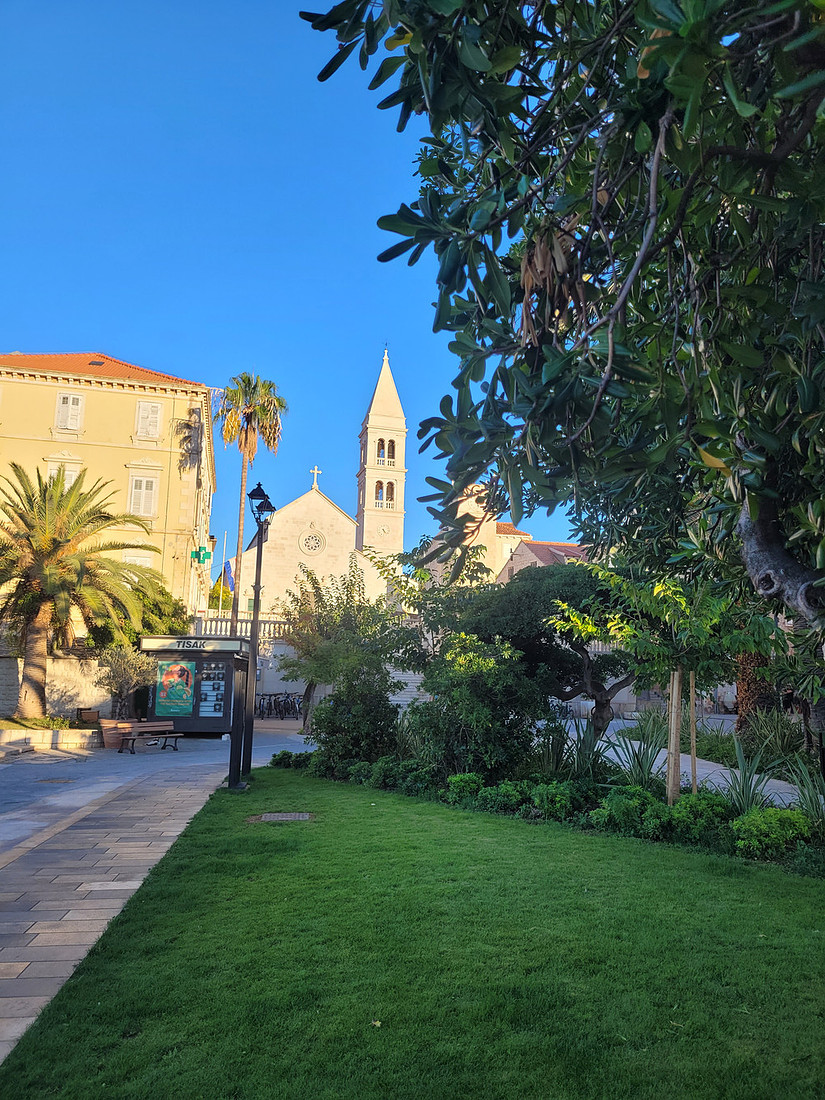
]]>
We had visited Phuket Island in 2019, just before the pandemic, and we didn’t have fond memories of it. So, for once, I wasn’t overly enthusiastic about seeing much of the island again.
Just to give you an idea: we’d stayed in a small hotel not far from the beach (it had very good reviews), and when we entered the room, there were literally hundreds of small bugs in the bed. Reluctantly, they changed our room. That evening, we discovered the nearby main streets were a massive tourist attraction, full of massage parlours and sex workers. I may be a bit of an old fart, but it makes me a little sad — it’s just not my thing. I kind of look at it as a father and realise that every girl is someone’s poor daughter.
We came out of a bar and walked the streets, where the girls were sat on the the pavements one after the other. Then I saw a couch with a grandmother and daughter sat side by side, offering themselves — and there, playing next to them on the arm, was the granddaughter, maybe four or five years old, about the same age as mine. I asked myself: how long before the cruelty of fate offers her up for cash?
We’d seen enough and returned to the hotel, which wasn’t too bad — for a few hours, at least. Then all hell broke loose: fighting and arguing in the hallway outside, and someone tried our room door. We barricaded ourselves in with chairs and waited until morning, when it was safe to leave. As we walked through the corridor, it was plain to see the hotel was a brothel. As I passed the last room, the door was half open, and there, sitting on the end of the bed half-naked, was an exceptionally young girl, sobbing from whatever she had gone through. I will never forget that image.
This was not for us. We said goodbye to the other two days we’d paid for and went to the Starbucks at the bottom of the road to use the Wi-Fi and find somewhere to stay in a different town. While searching, a young English girl collapsed from heat exhaustion in the coffee queue. The staff took one leg each, placed her out on the street, and got back to work. Clearly, she wasn’t good for business.
2025 And we are back at the Island!
I had not taken so much interest in this leg of our cruise so I wasn’t sure where we were in Phuket — we’d moored out in a bay, so it was a drop-off by tender. It was actually a brilliant twenty-minute trip to one of the piers: wind in your hair, across the water on a hot day.
We decided to explore the front esplanade and a few side streets. After about thirty minutes, I started to walk up a seedy street, with Wendy asking, “Why are we going up here? It’s a dead end.”
“It kind of looks familiar,” I replied, then pointed. “Oh my God — that’s that shit hotel we stayed in.”
Neither of us had even realised we were in the same town.
“Well, I don’t even want to look at it! I can’t believe we’re in the same place,” she said.
We explored a little of the very famous Bangla Road, which was quite dead during the day. Just a few yards in, on a pile of trash, was the emaciated body of a woman. She was only half-conscious and in a dreadful state. Nearby, in the gutter, were her worldly possessions in a single shopping bag — with a pink teddy. Even the teddy looked dirty and sad. I left her some money for her picture, if only to highlight the harshness of our world — whether it be home in the UK or here in Thailand. It seems everyone has a shelf life before they’re dispensable, or in some eyes, “trash.”
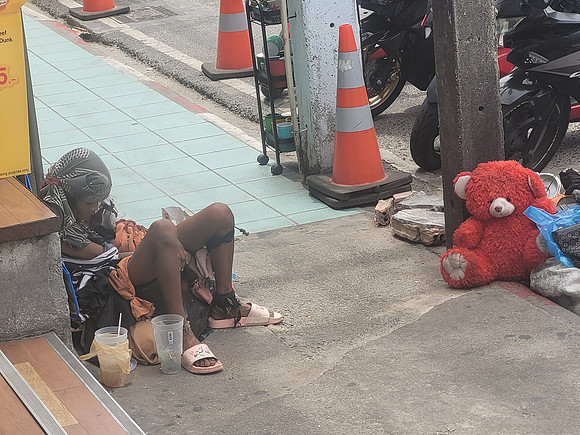
No matter where you travel there are always interesting things to see. Little things like a street vendor selling cleaning equipment from a Tuk Tuk, a mass or electric wires tied up like spagetti from a telegraph pole or even just a row of hundreds of scooters parked up on a street. It may not all be nice but boy the world is an interesting place!
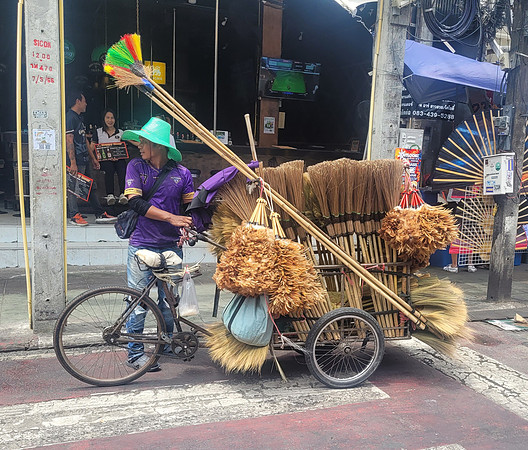
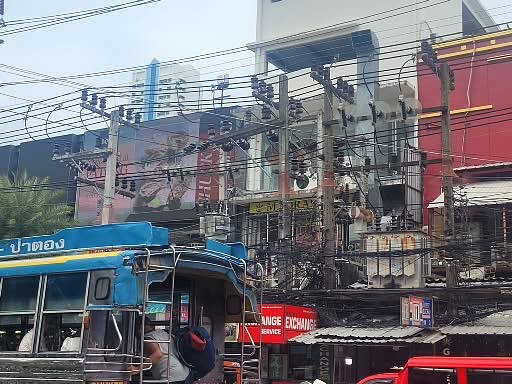
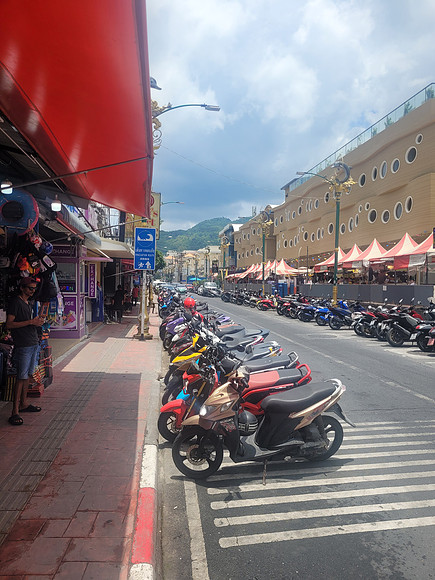
We did have a pleasant day, including a cold drink on the beach and a superb meal in one of the front-line restaurants. We walked barefoot along the shoreline all the way back to the pier, and by mid-afternoon, were back on the tender boat.
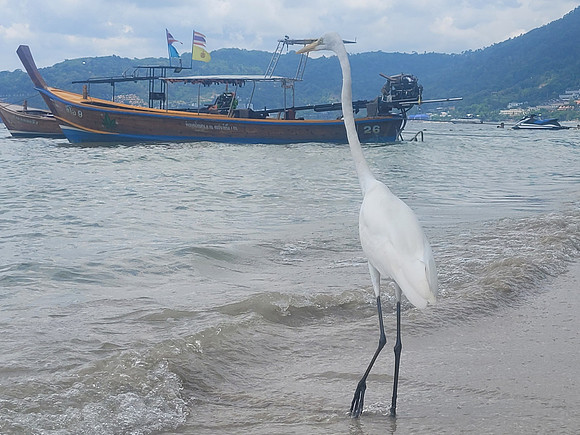
On the ship, we bumped into two new friends who suggested we meet up for a few beers back in town that evening. I agreed but explained my reluctance to hang out too long in the seedier areas.
“No problem — we just want to experience Bangla Walking Street.”
“No problem. End of the pier, 7:30 p.m.”
We entered Bangla Walking Street at about 9 p.m., and nothing can prepare you for the sheer scale of bars, clubs, street food, and sound. We’d been to Khao San Road in Bangkok, and this was like that on steroids — no, that fails to describe the indescribable.
It literally goes on for miles and is a sea of humanity, bombarded with deafening sound, flashing lights, hawkers, and, of course, the smells of every imaginable street-cooked creature. Every step is met with someone thrusting a laminated sheet in your face, insisting they have the best Happy Hour, best food, best Ping Pong show, and of course, best girls for you.
I stopped to take a picture for my blog, and a laminated sheet (shit) holder chased after me, clearly showing me in big letters: “PICTURE 100 Baht.” If you don’t know what “Ping Pong” is, I can’t describe it here — Google it.
You have to accept that this place is a reflection of humanity, as it’s almost certainly one of the world’s top tourist destinations. I keep telling you I’m an old fart and don’t get it — but there you are.
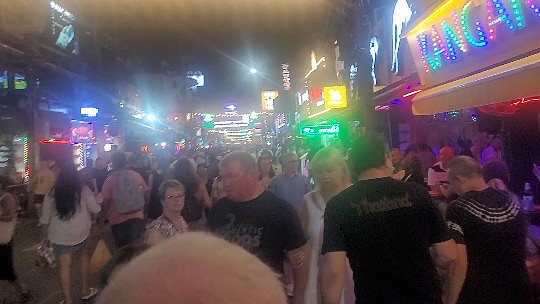
Just off Bangla Street, we happened upon a side street that was just fish street food. Instead of laminated cards to avoid, it was actual fish and giant lobsters thrust in front of you.
“Table for four — which fish you want?” they pleaded, one after the other.
It was interesting — I saw prawns the size of large bananas and lobsters as big as your arm.
We decided to move on, and after street after street of girls for sale, we found a small, quiet street market with lots of tables and chairs. We were all keen for a quiet beer but couldn’t see where to buy them. At one table sat a massive guy in shorts, tattooed from head to toe — including his face — and looking rather like a "Baddie Biker" in a movie.
“Where’s Paul going?” a concerned Joseph asked Wendy.
“Excuse me, mate,” I said, approaching the man. “I noticed you had a couple of cold beers — did you get them from one of these stalls?” I asked, looking toward the closest traders.
“No, no — right down there,” he said, then stopped mid-sentence, got up from the table, and added, “I’ll walk you up there. It’ll be easier, mate — come on, I’ll show you.”
A full 50 metres down the market: “There you go, mate. He’s got them reasonable, really cold — and look, you’re in luck, there are four empty chairs just there.”
“Cheers, appreciate that,” I replied.
“No problem — my pleasure, mate,” he said, walking away.
A valuable lesson: Never judge a book by its tattoos.
]]>
hi everyone
I was just thinking the other day whether the old races were better or do we look at things with rose tinted glasses. Well because I am dealing in memorabilia and books I came to the conclusion it is a combination of both!
My favourite cars were the group C Le Mans racers. So many happy memories following the exploits of the Jaguars and at first Porsche "yes I am a fan". The memories are not just the races but the travels, camp-sites, friendships and of course the many bars! There was also the pride of being there, the real fan at the track not just the TV watcher. All in all a lot of reasons to love this era.
Then there was the realisation that someone who never went has just as much passion. My friend Chris is the wonderful artist who I promote. He is passionate about the great race "Le Mans", it`s cars and the history. But he has never been. If you talk to him you would think he had been there a hundred times as with a huge smile he describes the Jaguar xjr9! At first I though that this was slightly odd but soon realised I do the same.
I was to young to see the Porsche 917 race and so was my son. But for both of us it is our favourite car! We have the books, the posters, the Steve McQueen pictures even the film has been watched a hundred times. If we see the car at Classic races we drool over it. Goodness me we do the same as Chris? The 917 at the time could not have been that exciting because most of the races it won it dominated so much it would have been boring! But the legend is much more for for filling! To imagine every race was Jo V Pedro battling wheel to wheel or on the grass against the Ferrari like Mike Delaney.
A few years ago my son and I had an experience which just about sums up what I am describing here! At the classic Le Mans I visited the Cafe on the Mulsanne straight. The owners recognised me and said we were welcome to take our beers upstairs to the bedroom and watch from the window. Well this room is on the corner 3 meters in from the straight and is directly above the famous road. The vista has not changed in 50 years as it is above the fencing. The start of the next race for 1969 to 1972 cars was due to come past. There we were leaning out the window looking directly up toward Tetre Rouge as streaming down the straight toward as at 200mph comes the field headed by the Gulf Porsche 917. I swear the hairs on the back of my neck stood up and my son was giggling like a fool. We slapped each other on the back a congratulated ourselves as we had mastered the art of time travel!
TO PURCHASE PRINT BELOW GO TO CHRIS DUGAN ART
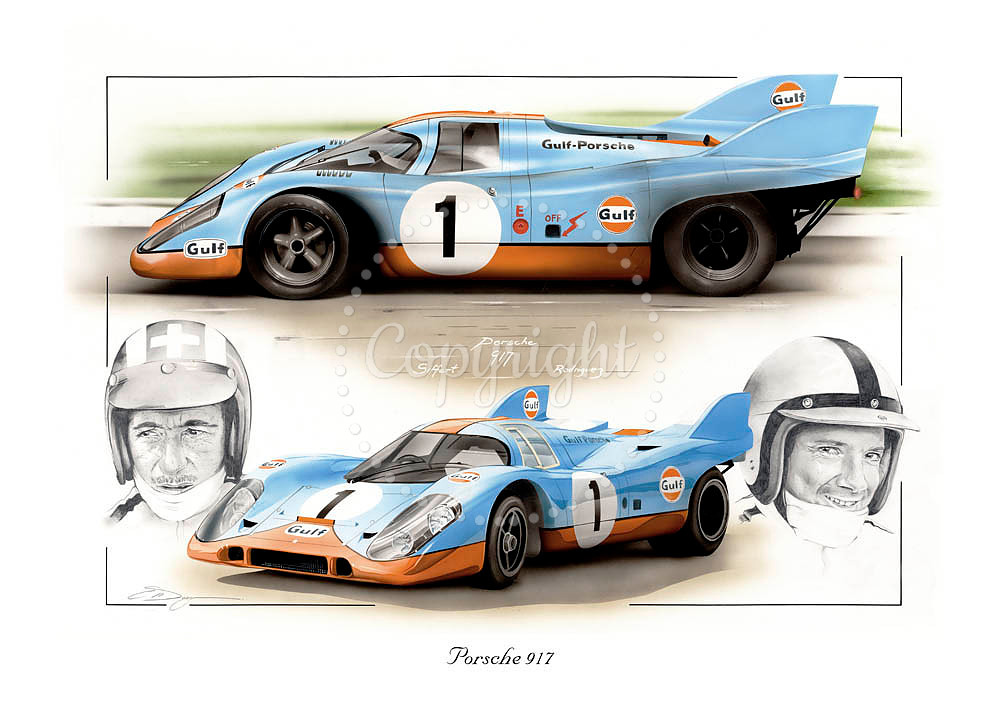
I must admit, it did seem a long old day by the time we arrived in Singapore—and slightly strange, as we seemed to have lost a day. It was Monday morning, 9 a.m., a full nine hours ahead of the UK. But just like anywhere new, the excitement fought off our tiredness—for now!
With very few checks at customs, we were out of the airport in no time. As usual, we were picked up in a very nice air-conditioned limo with a very nice driver. It was a really interesting thirty-minute drive through the city and, to both of our surprise, so very green. It seemed vegetation—and notably flowers—would grow literally anywhere, and the mixture of ferns, palms, and grass seemed so lush and healthy. Even the central reservation was divided by flowering bougainvilleas of all different colours. We picked out a few landmarks on the way, like the F1 pit lane, Marina Bay Sands Hotel, and the Singapore Flyer, before arriving at our hotel in an area called Orchard.
No time for jet lag—it was chuck the cases in the room, decide we probably don’t need a jumper, and let’s go explore! As we stepped out of the hotel lobby, it was like hitting a wall of heat.
“Oh my god, it’s like a sauna.”
“And you said, will I need a jumper?” I replied.
There’s no two ways about it—the heat was unreal. Although only 30°C, it was so humid you just immediately sweat. From the hotel, the backstreets were really lush and interesting, and within a few yards, we’d already spotted exotic birds and a couple of lizards. It was only a ten-minute walk to one of the main Singapore streets, and we soon realised that popping in and out of shops and malls was the best way to survive the heat.
We had no idea, but the Orchard area of Singapore turned out to be where a lot of people want to stay, as it’s full of high-end shopping malls—and it really is very high-end. Our very first introduction to the streets of Singapore, and very little was under the price of a good car! Wow!
Eventually, we found a more affordable area and discovered a food mall. It was amazing—probably fifty outlets indoors selling every imaginable food from the regions of Asia. It’s so hard to choose when everything looked so appetising and exciting. The colours were extraordinary, and it was this that tempted me into ordering from an Indonesian outlet: vivid yellow chicken curry with coconut rice for me, and from another outlet, Pad Thai for Wendy. It sure didn’t let us down either—delicious.
The eating area was obviously communal, and on the table was a small sticker declaring: “A FINE OF $100 FOR NOT CLEARING THE TABLE”
An introduction into some of the rules and regulations in Singapore, which over the next few days we began to really appreciate. I’ll digress now and explain.
Just like Japan, you cannot eat while walking or in any public space. If you litter, you’ll be fined heavily. Chewing gum and bubble gum are a big no-no. You’ll be fined for graffiti, bad drunkenness, and any brawling—you’ll be dealt with harshly! There were some brilliant public signs near bars that had a man on the floor with another about to punch him. Underneath was written: “One moment of anger, a lifetime of regret.”
From a distance, it all seems very draconian, but when you experience the things we took for granted at home when I was young, it’s beautiful and respectful. The UK is now littered—including where I live, the New Forest—where the animals are poisoned from eating rubbish. But quite simply, there’s no fine whatsoever for throwing your crap out the car window or on the pavement in town. We didn’t need fines years ago—we just didn’t do it out of respect!
After lunch, we failed badly. We had every intention of staying out, but with the food and heat, we just couldn’t keep our eyes open anymore. It was back for an afternoon snooze
First Night Out
Clarke Quay is a modern section of waterfront on the river, just near the financial district. It’s slightly overpriced, and as you walk past the endless bars and restaurants along the water, it’s rather like “running the gauntlet”—hawker after hawker pushing menus at you, declaring:
“Table for two, sir! Happy hour! How are you, sir? I’ve been waiting for you!”
To be honest, it’s not my cup of tea—even though I used to be a hawker myself! But it’s one of those places you really must go once in your life.
“Special offer, special offer, sir! Happy hour! Come on in—table for two!”
“Look, I’ll come in if you do half price on your bottles of Erdinger German beer,” I replied casually, walking on, as there was no way he’d do that.
“Don’t go, sir! Table for two and half-price Erdinger, sir!”
Oh shit—I hadn’t even looked at the menu, and there we were, sat by the Clarke Quay harbourside with two beers and a table set for two in an outdoor Indian restaurant!
As it turned out, it was one of the best Indian meals I’d had in years—and what a location: in the warm open air, right by the water, and surrounded by the bright lights of Singapore City. With the skyscraper lights reflected on the still water, it felt almost surreal that we could afford to be there. Each time a waiter came up to see if I wanted more drinks, I’d explain I wanted half-price Erdinger. He’d look puzzled and go ask the boss! It was an absolutely wonderful experience—and to cap it all, when it came to the bill, he’d kept his word and presented us with one last free bottle of beer. He basically said, with a smile, I had politely made him laugh.
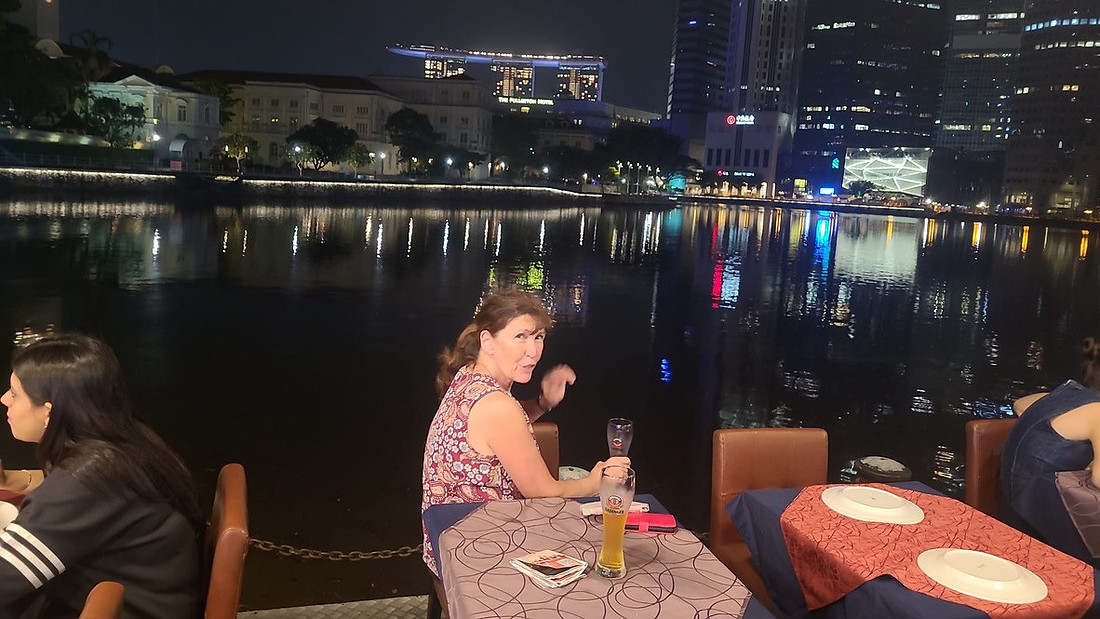
Sentosa Island
Waking up quite late from jet lag, we set off to visit Sentosa Island. From Orchard, we caught a $20, twenty-five-minute Grab car to Faber Peak to travel on the cable car to the island. It was pretty enlightening, as we struck up a conversation with our driver, Samad, who was a massive Valentino Rossi fan—like me—and agreed Rossi was robbed of his 10th title! On his dashboard, he had a model of #46 Yamaha glued in prime position—or should I say “pole position.” We chatted MotoGP and about the Singapore F1 Grand Prix. He then asked me the world’s most asked question:
“What football team do you support? I dream of visiting Manchester City and seeing Oasis. England sounds so wonderful!”
He then went on to tell me some of the injustices of living in Singapore and how the middle classes are stung by high living costs and property prices.
He was literally gobsmacked when we described the injustices of England, where in my hometown Bournemouth, it’s filthy dirty and there are literally thousands of people homeless or using food banks. Oh, how the grass is always greener on the other side!
At Faber Peak, we waited in line for our pod, and I smiled and pointed out that it looked like we might get the cabin with “Hello Kitty” on it.
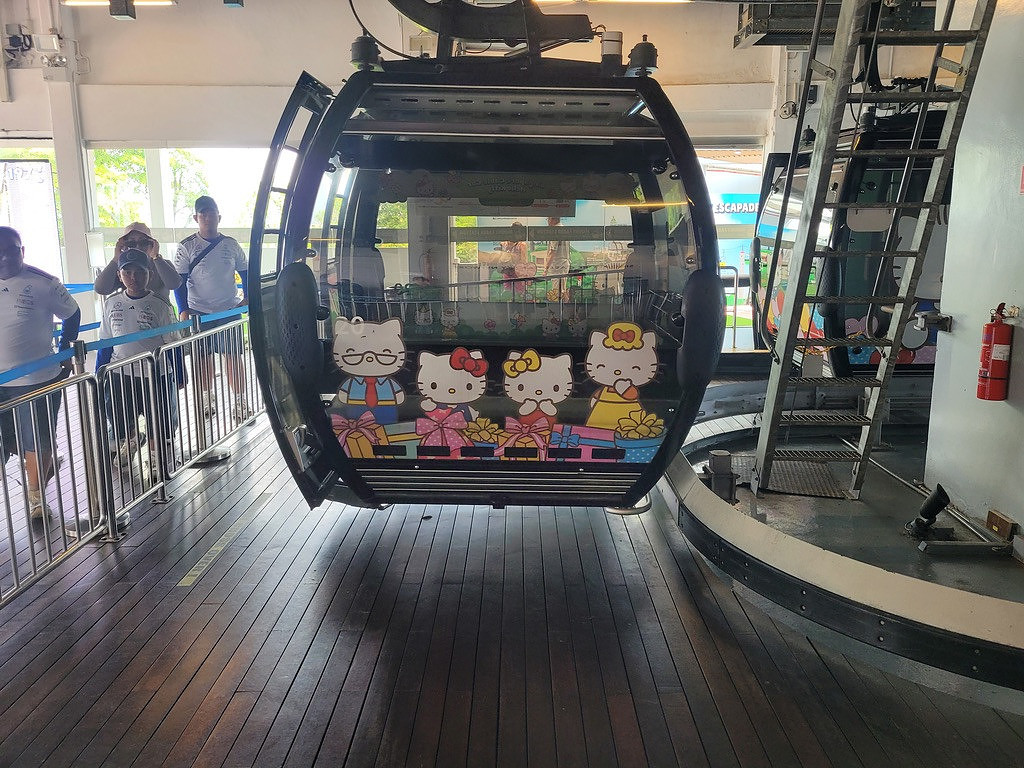 The cable car is really high between the mountaintop and Sentosa Island. It’s a high-quality Doppelmayr—just like in the Alps—and was an amazing experience as it went through the middle of an office block and high across the sea. Now here’s the “but”—it was a Hello Kitty cable car! Everything was Kitty: the outside of the pod, seats, floor, windows, and the station. It was mad—but so much fun.
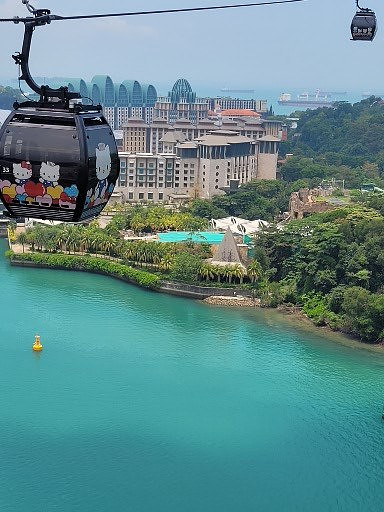
We immediately caught another cool cable car across the tree canopy that took us to the far end of the island to Siloso Beach—one of three man-made sandy coves. Man-made, yes, but very well done, with golden sand and little atolls just offshore, all lined with glorious mature palm trees. Me being the colour of a snowman, we decided it was probably best to walk the shaded promenade in the midday sun. All sorts of activities are available along the route past Palawan and Tanjong Beaches—from canoeing, snorkelling, swimming, bungee jumping, and tons of stuff for kids.
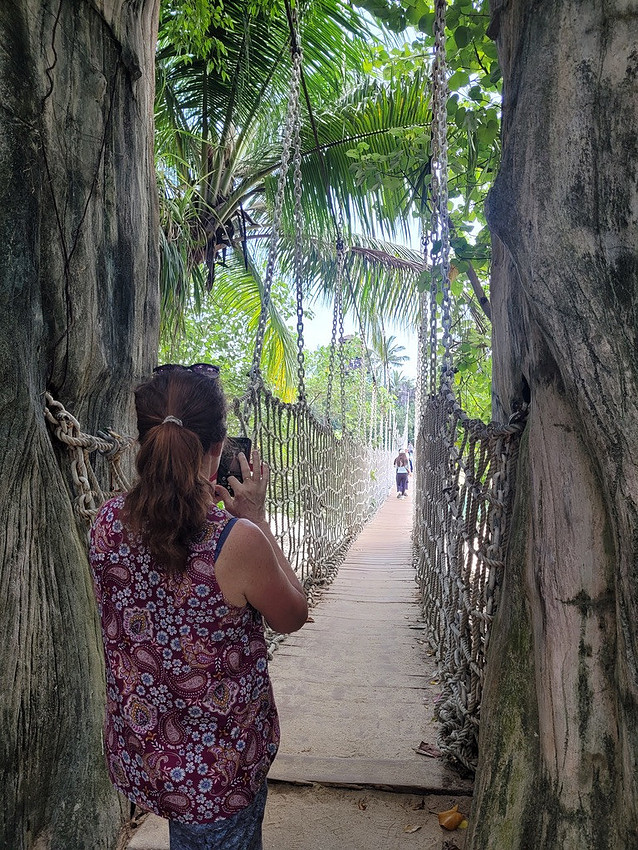
At Tanjong Beach, we went across a rickety rope bridge to a lookout tower at the southernmost point of continental Asia. It’s worth noting: if you go to the island, take a water bottle, as there are refilling stations at the many public toilets along the way—something we didn’t see much of in Singapore. The humid heat was relentless, and even the locals sweat buckets. I looked like I had a fever!
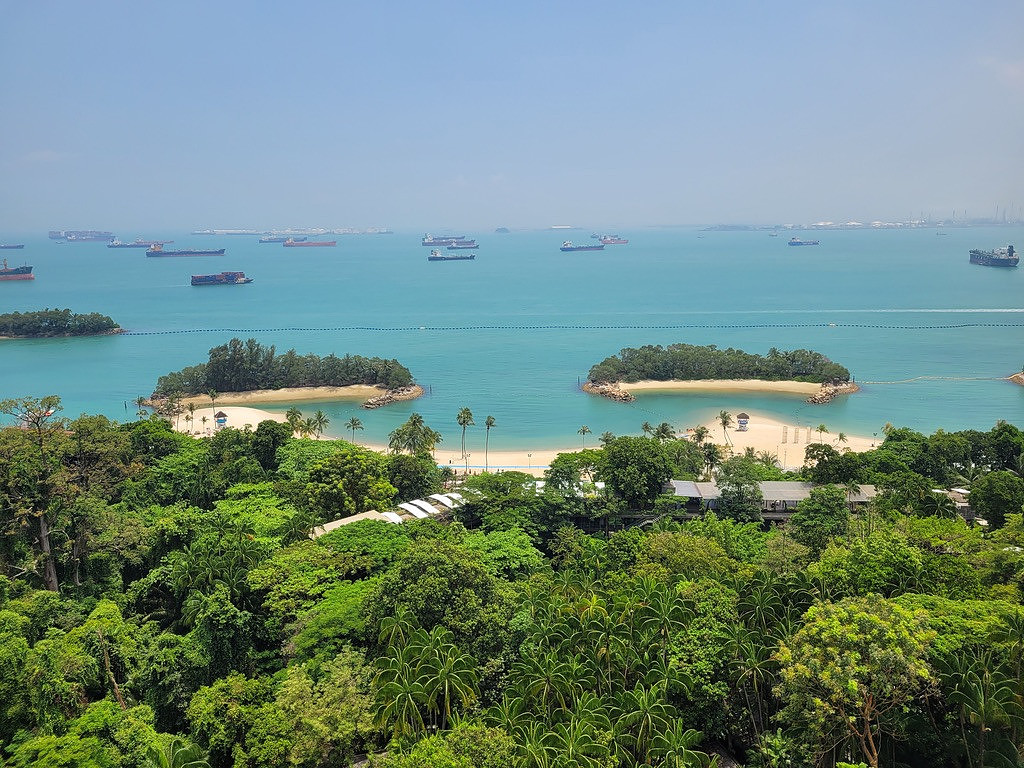 The time just flashed past as usual, and although there were so many more attractions to experience, we only had time to fit in a forest walk—the highlight of the day! We’d just had the most amazing cloudburst, and the dripping wet forest was alive with the sound of birds and bugs. It’s difficult to describe just how noisy a tropical forest is. I love botanical plants and forests, and this one was truly impressive—made all the more memorable by the high walkways through the canopy.
There were many other, much bigger attractions on the island, such as Universal Studios Theme Park, a water park, golf course, and aquarium. I was going to visit the aquarium, but sadly, from the cable car we’d seen below us the tiny tanks containing performing dolphins. Just something that makes me very sad—but that’s just me.
If you’re visiting the island with children of any age, there really is so much for them. I know my granddaughter would have loved it—especially all the free things around the waterfront. A kids’ paradise, and so safe!
Sadly, we had again reached Beer O’Clock, and our time had run out on a great day on Sentosa Island.
Notes:
-
Two subway trains have stations at HarbourFront
-
Free shuttle buses on the island
-
Free monorail to subway
-
Bike hire available
-
Lots of reasonably priced bars and food outlets
]]>

We arrived just as the Festival was finding its stride—only its second year, yet already a magnet for motorsport royalty. The theme was Racing Battles", and the lineup was staggering: everything from Edwardian racers to cutting-edge Formula 1 machines. We wandered freely among legends of road and track—no velvet ropes, just the occasional polite word from a volunteer marshal. The hillclimb roared into life with iconic cars like the Ferrari 312T3 and McLaren F1, while the paddocks buzzed with stories from drivers and engineers. It was intimate, thrilling, and beautifully British—an open invitation to experience history and hear it thunder past.
One highlight happened right beside us: the tiny figure of Denis Jenkinson reunited with Stirling Moss and the Mercedes 300SLR they famously drove to victory in the 1955 Mille Miglia. I’m showing my age here, but I read that brilliant transcript of their ten-hour, seven-minute drive, published in Motor Sport magazine, countless times. I still recommend reading it today—it stands head and shoulders above most motor racing accounts ever published. And yes, you can still see the car today.
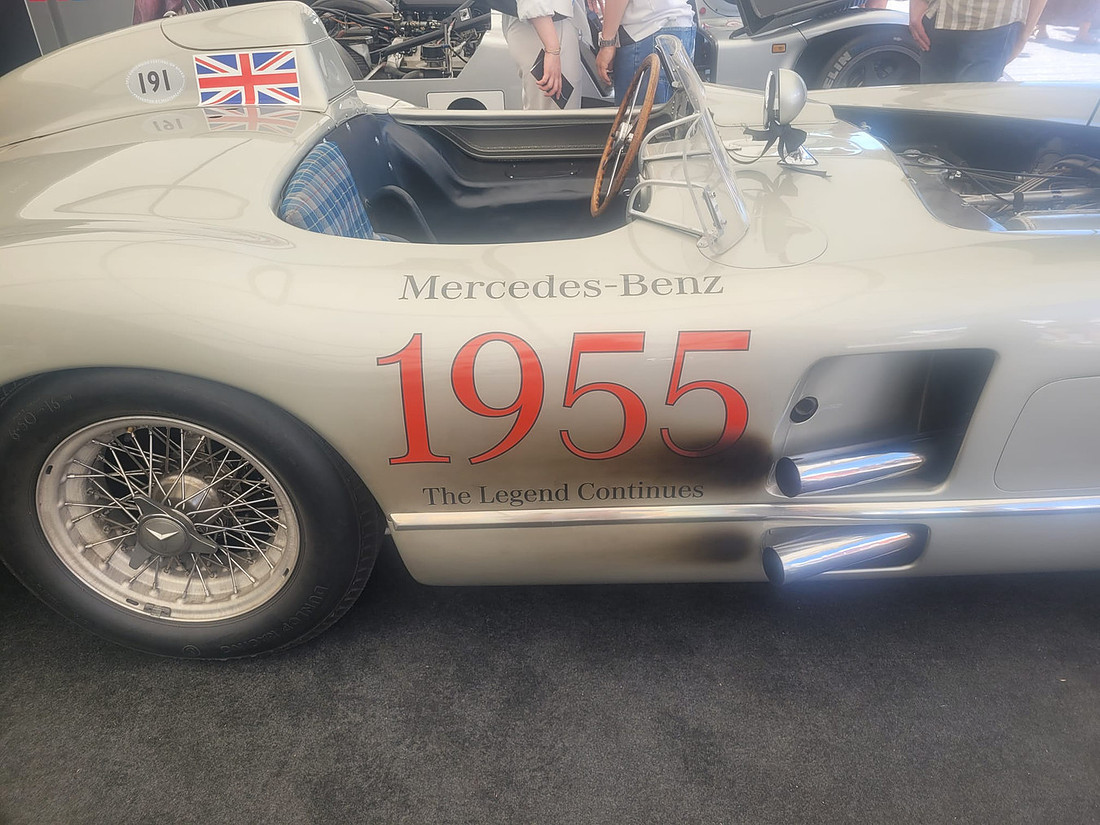
Seeing the Mercedes and Auto Union cars after devouring Chris Nixon's amazing book Silver Arrows was another hairs-on-the-back-of-your-neck moment. And of course, a row of GT40s just sitting on the grass—very cool. The casual placement of priceless cars in sprawling grassy grounds perfectly captured the spirit of the time.
The main paddock hasn’t changed much, but the event has morphed into quite a different beast.
Fast-forward to 2025—Thirty Years Later From wide-eyed wonder to backstage access
Amazingly, my daughter is now the TV producer for the event, my son runs one of the country’s best motoring memorabilia businesses, and my wife and I are still attending the Festival of Speed.
Goodwood has grown up, of course—no longer just a niche celebration, but a global festival. Yet somehow, it hasn't lost its soul. Sure, the central feature now launched holograms of Gordon Murray’s greatest hits into the sky, and the paddocks have turned into carbon fibre cathedrals. But the essence of it all—the thrill, the noise, the heart—is still there.
This time, I had a complimentary pass (in 1995 we’d blagged our way in—money was tight for a young family). I collected it from the Goodwood Hotel, then charmed my way into a prime car park at the Golf Club. Once inside, we settled at a bench near the food stalls, pulled out our picnic sandwiches—some habits never change—and embraced a slower pace. After many years, there’s no need to rush. Besides, it was scorching hot
We strolled on and arrived at the Supercar Paddock, a section I’ve grown to really enjoy. It still has space to surprise.
Brands like Ferrari, Aston Martin, McLaren, Bugatti, and Hyundai unveiled their latest creations—including the Ferrari F80, Aston Martin Valhalla, McLaren W1, and Hyundai Ioniq 6 N. Some were stunning—especially the Aston and Ferrari. Others, like the Bugatti, felt a bit muted. I wanted more noise!
But my two favourite cars of the entire show were the Gordon Murray T specials, displayed separately in a stunning tribute to 60 years of design brilliance. The GMA T.50 and T.33 Spider were standout stars, with their screaming V12s and featherweight engineering. One was the Niki Lauda track car, painted in deep burgundy—utterly stunning.
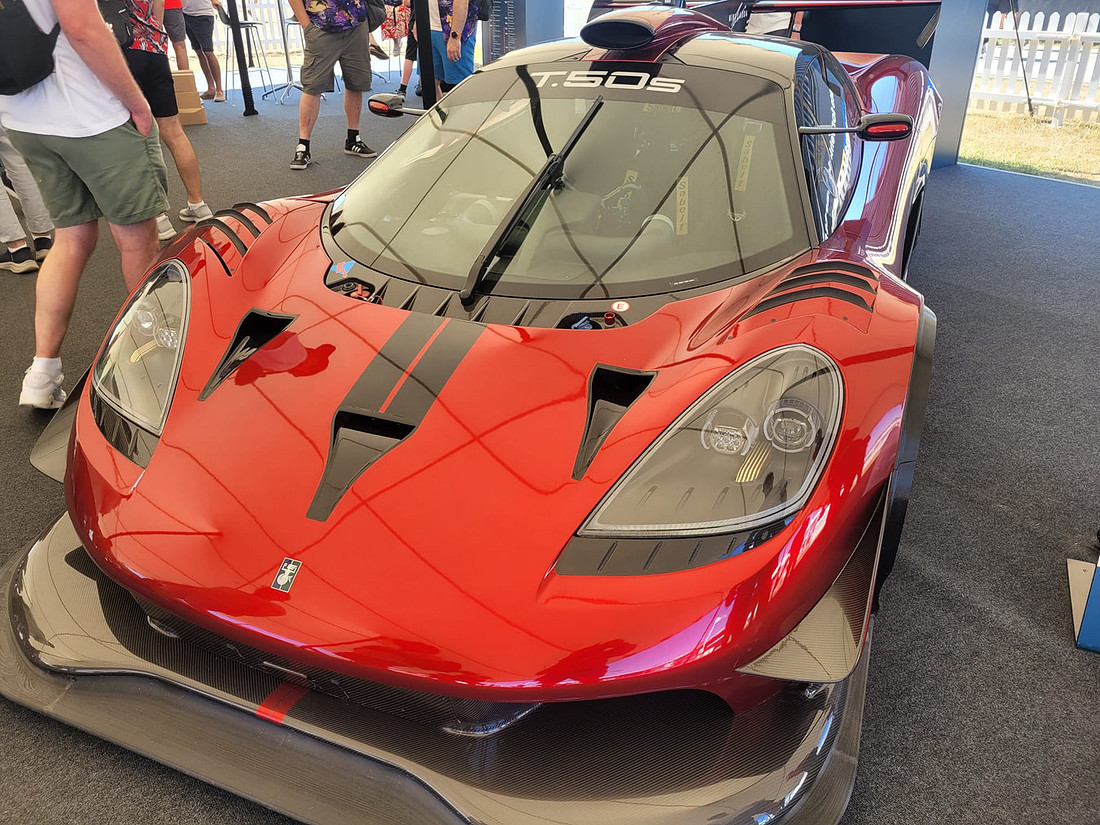
Electric Dreams and Old-School Thrills
A big part of Goodwood today are the massive manufacturer stands—always worth a look. I surprised myself by enjoying the new MG range, which seemed great value. They’d made a huge investment at the Festival with multiple stands.
Most of today’s offerings are, of course, electric. I know it’s important and should be part of the Festival’s future—but I’m not there yet. Rachel from complaints will need to tax the shit out of normal cars before I can see me driving one!
Something I am fully invested in is the race car paddock, much like it was thirty years ago. There, a certain Jacky Ickx parked a Brabham F1 car right in front of me. He took his time exiting the cockpit, clearly savouring the moment. Grinning, he immediately engaged with a small group of fans—taking time with each person, reminding us how lucky he felt to be there. I told him he’d inspired me to attend Le Mans in 1977—my mum had taken me. “Your mum—now that’s cool,” he said. We chatted, and he signed my tickets. In 1977 he inspired me, and in 2025—he did it again. He mentioned that, at 80, he has no plans to slow down and thinks “dying standing up” is a good idea. I think so too, Jacky.

From Memorabilia to Milestones
One of the very best things about my memorabilia business is meeting fellow enthusiasts—and today was no exception. I met Juan Luis from Spain, a regular customer I'd never met in person. He’s mad about cars and like me his hobby is his business as he produces model cars for a living. We spent a brilliant hour swapping stories and squeezing in as many shared memories as we could before heading our separate ways.

Those separate ways meant meeting my daughter at the top of the hillclimb at 3.00 p.m.. After a dusty tractor ride, we arrived just in time to see her conducting an interview with Romain Dumas, the French racing ace and Le Mans winner. He had just piloted the Ford F-150 Lightning SuperTruck to victory in the 2025 Shootout, clocking a blistering 43.22 seconds.
Right beside me, just three feet away, stood the Duke of Richmond. A few feet from him was Romain Dumas. And there I was, taking a photo of the true star of the Festival of Speed—my daughter, Lisa. Who would’ve thought it? Thirty years on, she’s the one that side of the fence, leading a team of talented professionals. What a wonderful moment for me that was, I am so proud of my kids!

All in all, the Goodwood Festival of Speed is a great day out. But more than that—it’s a story that belongs to my family now.
]]>
How do you describe Jakarta? I asked myself before I started writing. I will try, but it really is a sensory overload of sights, smells, and sounds—a metropolis built on a sea of poverty.
The ship entered the port of Jakarta and docked in the container port. This is one of the industrial hubs of Asia. Just offshore, hundreds of ships—as far as the eye can see—lay at anchor, waiting to maybe load or unload. The scale of the port is like nothing I have ever seen; with the concrete shoreline of this vast city stretching for miles.
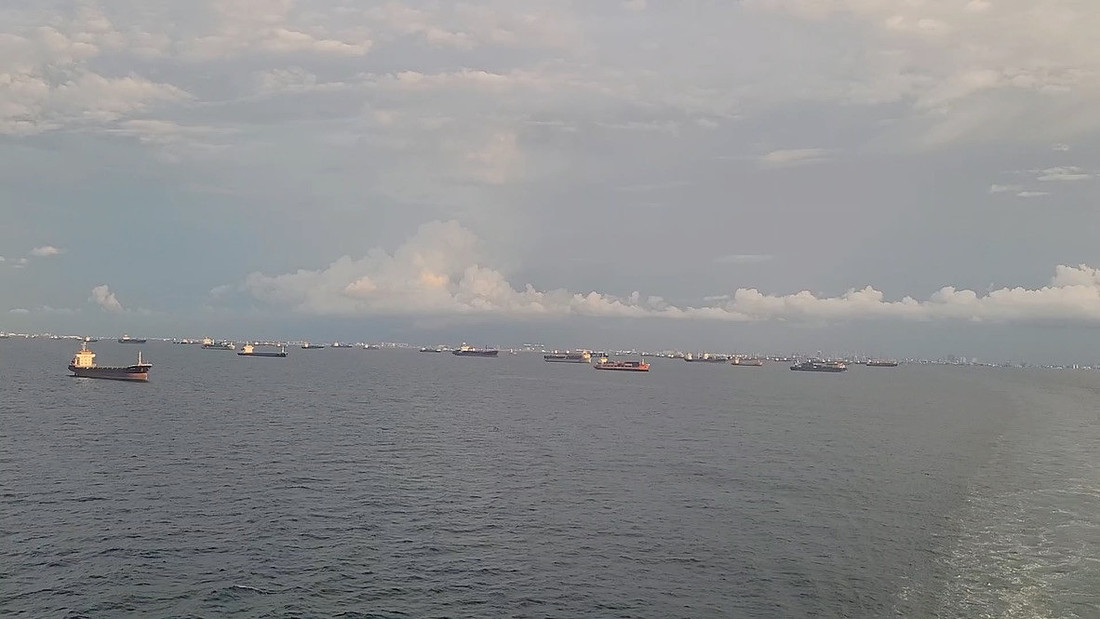
We took a shuttle bus to a local shopping centre, which seemed to be the only destination available and what might be considered safe! Time was also a problem, as the streets of Jakarta are filled with a mixture of heavy traffic and chaos. But you cannot come halfway across the world and not see the real Jakarta, so we took a risk and booked a Grab taxi on the phone. As long as we could get back to the mall by 4 p.m., we’d be OK.
Wow—our adventure begins! And what an adventure it was.
This must have been one hell of a rich city once. Five-lane boulevards stretched in all directions, punctuated by huge roundabouts and bridges over long-disused canals. It certainly doesn’t look rich now, with people living and eking out a meagre wage by the roadside. The canals are a floating sea of trash and filth, unfortunately. As we neared town, the roads narrowed as market stalls and road sellers encroached on the roadside. At times, we were driving literally through markets on the road, with sellers right next to the window. It was rather like being in a goldfish bowl.
We got out at the main Dutch colonial centre, which must have once been a true centre of power and wealth—with what looked like a magnificent white town hall on one side and three other majestic buildings on the other sides of the square. The buildings looked like they could do with a little more love, but this was clearly Jakarta’s epicentre. It was a pleasant enough place, with families sat out on mats and rugs sharing food and celebrating a holy day in the Muslim calendar. Clearly, people had travelled to be here, and their smiles were infectious.
As always with every celebration, there were the showmen and tat sellers—including a snake charmer, a snake seller, and someone with a massive snake you could have your picture taken with as it wrapped around you before probably eating you! There were quite a few dodgy-looking men selling Rolex watches by the dozen. It must be very safe here, I laughed—they don’t even have a security team for their millions of pounds' worth of stock. Human statues, horse rides, balloons, and rickshaws—it was all here around the square.
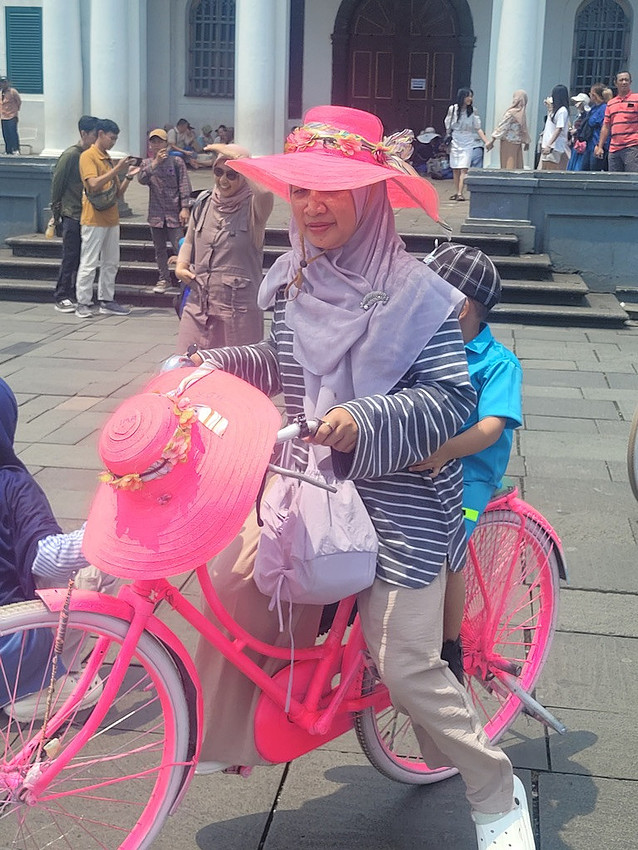
We moved from the square and started to explore the tightly packed streets away from the old town.
The colonial buildings were designed with walkways covered from the sun and rain by the upper floors, supported by ornate columns. Unfortunately, after a hundred years of neglect, they are a challenging minefield of obstacles that make cobbled streets seem like a walk in the park! The shops spill out onto the pavements, where there are broken steps, holes, and deep water culverts to navigate—but they hold a certain charm and excitement, as you explore, never knowing what you’ll see next. And boy, there were plenty of surprises! We passed a shop with cages stacked high, housing sadly exotic creatures—including a massive bat.
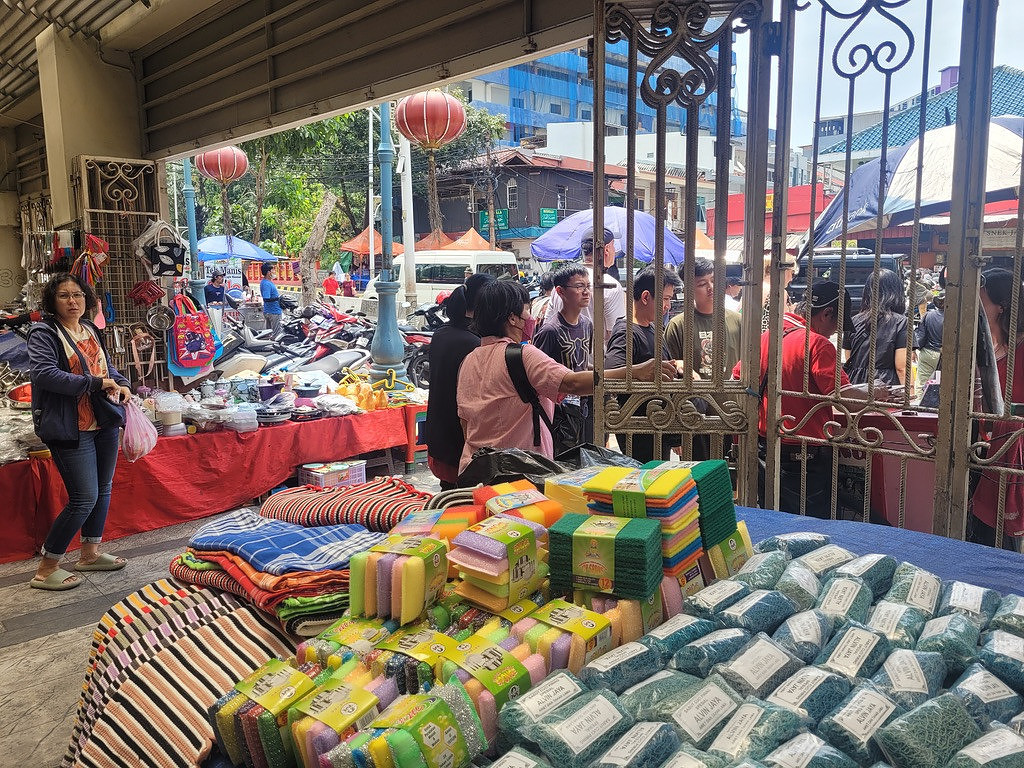
There were beautiful spice shops which not only masked the less pleasant smells but also injected a wonderful insight into life many years ago. They stretched back into dimly lit interiors, housing wood and glass cabinets and drawers, all made more atmospheric by shards of sunlight penetrating the dusty hidden stores toward the back.
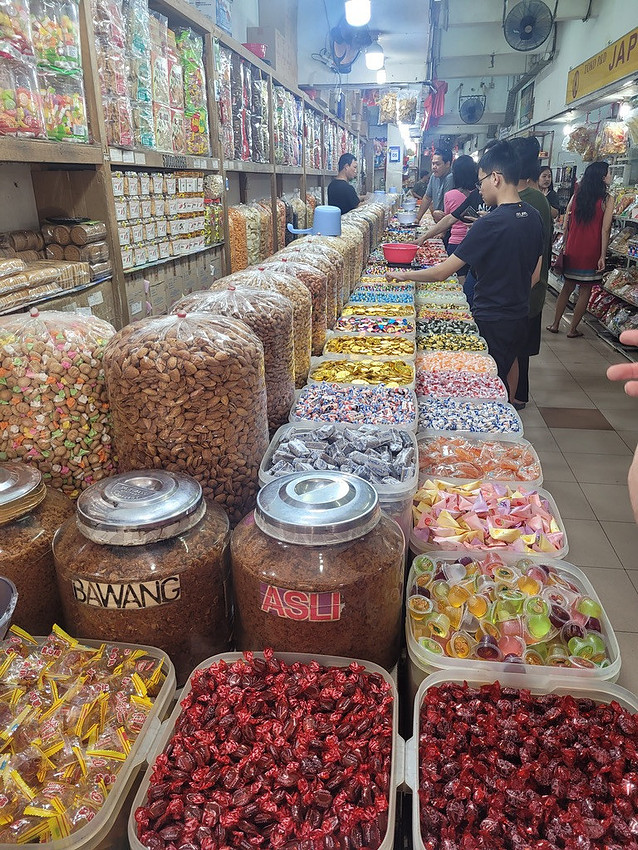
If only they knew they were sitting on a fortune of highly prized dark hardwood fittings that could star in an episode of Salvage Hunters! The walkways became very hard to navigate as independent sellers squeezed into every available space, offering anything from dishwashing pads to pots and pans. And, as always in Asia, every few yards someone was offering some form of cooked food. There was even takeaway soup in a plastic bag!
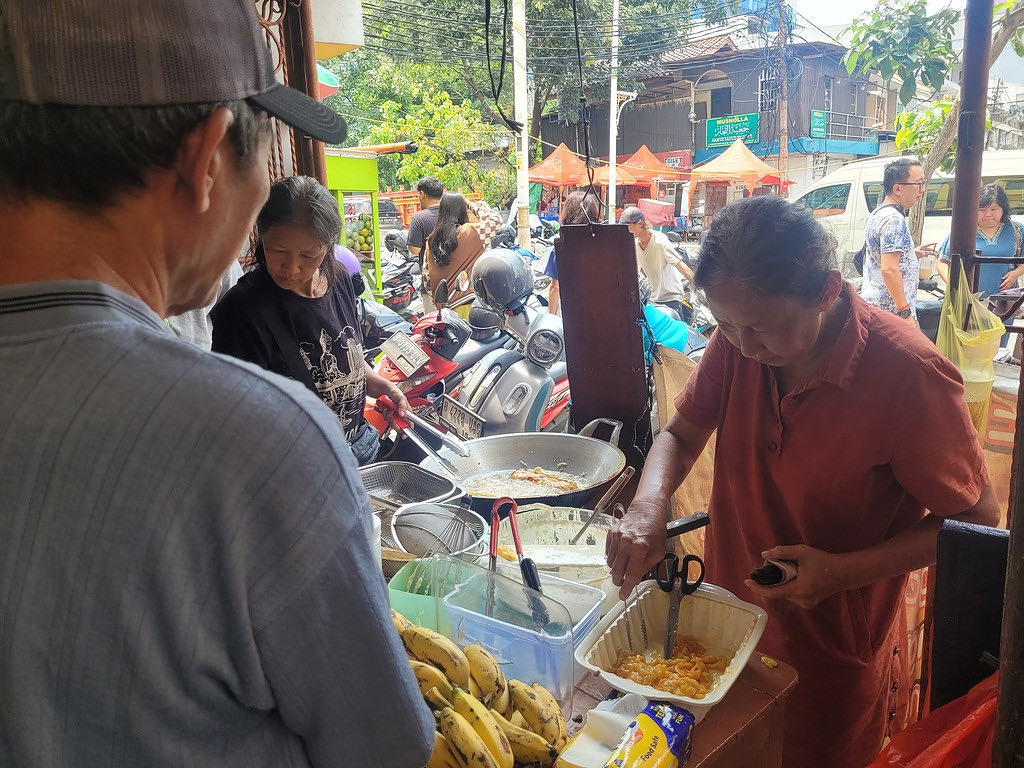
From the wider pavements, we headed off into lesser-explored, foreboding alleys and narrow lanes—not in any guidebook, that’s for sure, but an essential detour for even the smallest insight into how people live. Within just metres, it was plainly obvious that life here was so far removed from mine, it was hard to comprehend. On both sides of us were rickety stalls protruding from tiny living spaces, often right over open sewers. Any form of shelter—even just a piece of corrugated iron on a frame—was home.
The first stalls offered wonderful arrays of fresh vegetables, obviously straight from the fields a long way from the vast city. There was fish as well, which looked stunning, but with scales and entrails on the floors, the smell was quite intolerable. One old guy with a friendly, gnarly face smiled as he offered bright, vivid chillies on a wooden bench. I smiled back and asked if I could photograph him and his colourful stall. He was delighted.
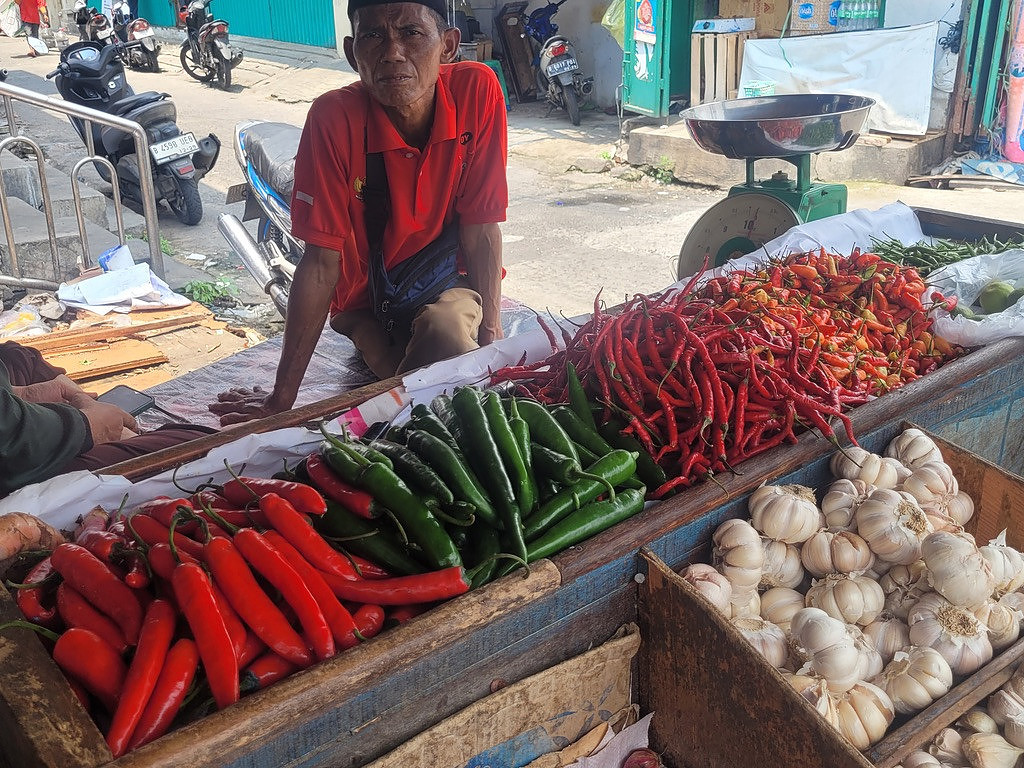
Deeper into the labyrinth, it was all too clear that life here would seem intolerable to us, but most people glanced with friendly, if surprised, smiles. We didn’t need to wander deeper for fear of getting lost, so we just kept turning right, hoping to end up with a route back to one of the main streets. As we turned one corner, the road slightly opened up—and there, right in the middle of the crammed shanty town, was a beautifully maintained Buddhist temple. Waved in by smiling locals, we took a serene break in the ornate, cool interior. As always, it was filled with colourful carvings, statues, dragons, and altars. It really did have such charm—maybe because of its place among the chaos surrounding it.
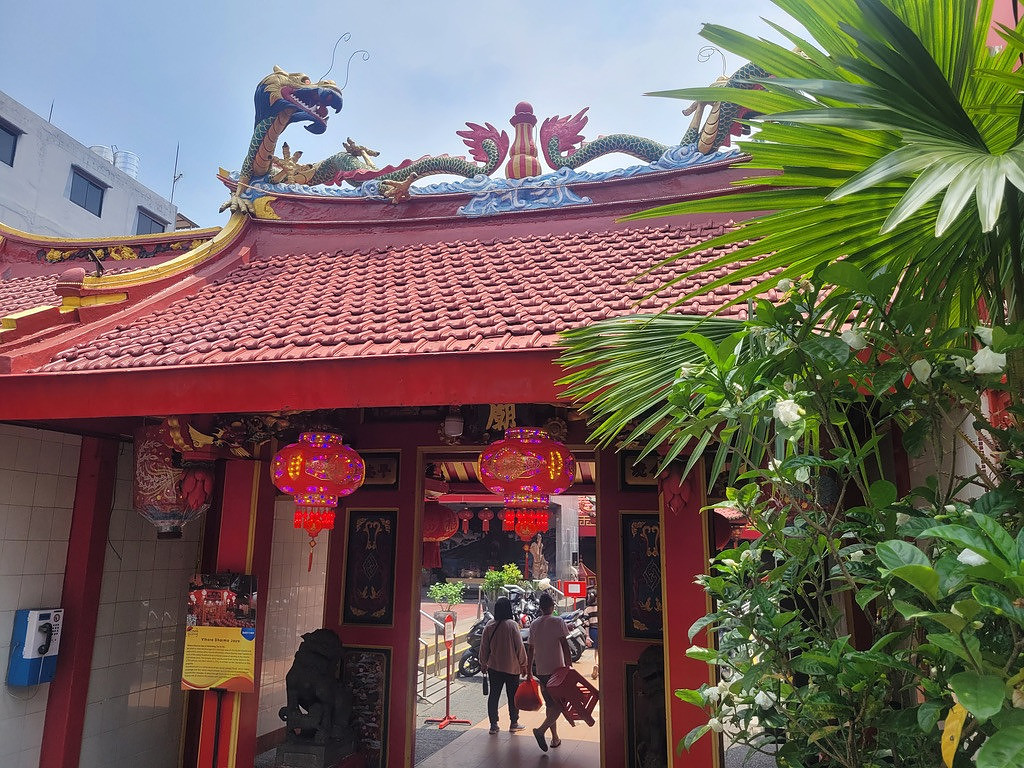
We left after only a few minutes, surprisingly refreshed. No sooner had we turned the first corner than we were confronted by a very long, narrow alley that led to the main streets, just visible at its end. It was quite simply chaotic: never-ending streams of people pushing in both directions, punctuated—amazingly—by motorcycles and bicycles, all crammed in by walls of hawkers on both sides. Nobody seemed too perturbed as we pushed our way through. There were puzzled looks but mostly friendly smiles and waves. It doesn’t usually matter where you are—in my experience, the vast majority of people on Earth are really friendly, and here was no exception.
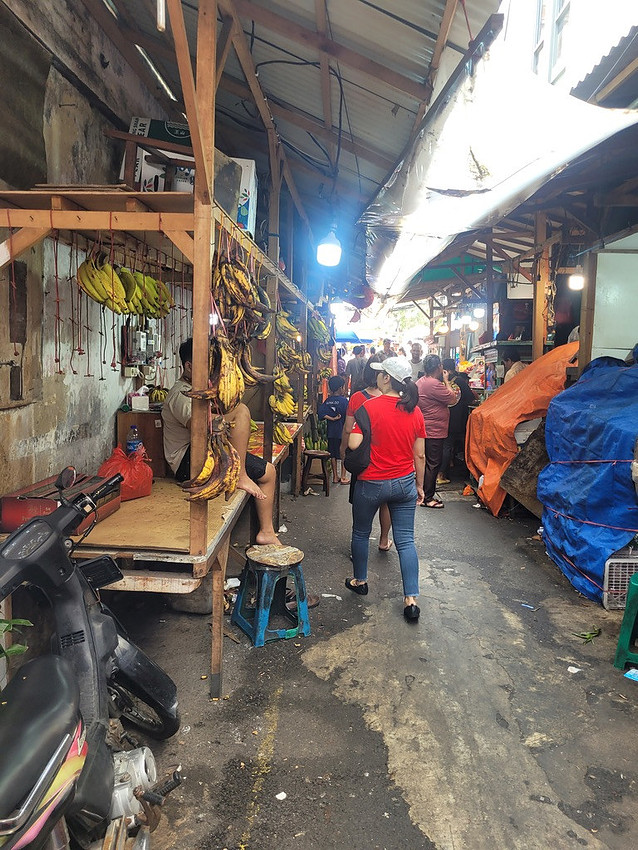
As we shuffled through the last few metres of the crowded alley, an elderly lady was passing me with her distressed son. She had one hand open in pity and one leading him by the arm. I looked into his face and was confronted by overwhelming emotion. His eyes looked like open wounds, as if they had been bathed in acid or boiling water. I felt almost sick from that small glance as we passed. Gripped by a sickened emotion, I called to Wendy, “Wait for me—I won't be a minute.”
I rifled through my wallet for a few notes and turned to catch them up. It had only been a moment, but it took me a few minutes to struggle past the throngs before I managed to stretch out and place some notes in her small, elderly palm. I have no idea how much it was but, I know it was not a lot—and in my heart, I know it did nothing to ease the pain and suffering of that poor boy. Easy to say, but it does make you feel lucky, even if just temporarily, as we all grumble our way through life.
Most of my memories of Jakarta’s alleys and backstreets seem to appear almost in black and white—maybe because of the oppressive nature of the place. But one particular alley had beautiful bougainvillaea hanging from a basket on a wall, and it was quite amazing how that touch of nature’s colour lifted the whole feeling of the building, even if just for a few yards. Maybe a few more colourful plants would be a good idea, hey?
In no time at all, it was time to start heading back. Because of our tight deadline, it was another Grab taxi ride through the even more crowded streets. At every intersection, the taxi became surrounded by cars, lorries, trucks, and motorbikes—all inching forward, all going in different directions. There were clearly traffic lights, but green meant go, amber meant go, and red meant still go. With five lanes on each road, the number of vehicles stuck at each junction was extraordinary.
It was a little worrying, but after 20 minutes the congestion eased, and we travelled at a good pace—all the time peering out the windows at mile after mile of tumble-down buildings and shanty-type areas. Every so often, sticking out like sore thumbs, were rows of what could only be described as millionaire-type properties. Incredible to see neighbours with such a gulf in living standards.
We made it back in good time, and our half-hour ride came to $5 US.
As we sailed out of Jakarta, it seemed only appropriate that a massive thunderstorm hung darkly over the city. Lightning bolts split the sky and it sounded like the belly of the city was grumbling. Out at sea, it was still bright and sunny as we passed the hundreds of ships anchored offshore.
Bye-bye Jakarta, I said, as I thought of its poor but happy people, now soaking in yet another trial of everyday life.
]]>

They cut through the beating heart of the circuit and chopped the Mulsanne
Straight into three.

So they demolished the beautiful old pits and built modern new stands.

The Dunlop curve was made into a chicane.
Carnage was reaped as the delightful atmospheric woods at the Esses sawn down!


At the Fair Ground the Freaks were forcibly evicted along with the Snake Lady and the Strippers.
 On the camping grounds marked pitches were measured up and sold like plots of land!
But somethings never change! This is 1963 behind the main ACO Grandstand and it is still there and the same today. Oh how I love Le Mans!
]]>
I am just coming up to my 38th Le Mans at least that is what I think it is! I have been with my Parents, my Friends, on my Own, with my Wife, with my Daughter and the last few years with my Son. I have written about Le Mans and sportscar racing but just the other day I was asked what made you first go. Well the strange thing was I had not thought about it for years! I just go! I really had to give this some thought as memories can be quite misleading. Here is the story how I remember it.
As a weekly subscriber to Motoring News when I was aged ten! I just loved the Sports Racing Cars. I am sure a lot of the fascination was due to the beauty of the Martini Livery on the all dominating Porches which seemed to be on the front of every other issue. When I was eleven years old in 1976 for Christmas I received the stunning automobile year book. I was completely loopy about F1 racing as well, especially Niki Lauda. Well as I poured over the wonderful Edita photographs in my book I eventually got to the Le Mans section. I am not sure if it was the incredible pictures of the pit straight with the enormous crowds or again a certain Martini Liveried Porsche beside the bright yellow Renault A442 that got me hooked on Le Mans racing. But that book changed everything. I just had to go to the great race! I was not from a rich family and the idea of going to the greatest of sports car races at Le Mans seemed a very unlikely prospect.
Living in Bournemouth I had a distinct advantage for securing my trip. Well at the very least I had something to play with. A local coach firm called Excelsior Travel used to mail shot my parents with the holiday brochure. We had been on some local trips with them before so over my cornflakes one morning I perused through the pages. I couldn't believe it there it was a trip to the 24 hours of Le Mans for £24 (I think). Oh my poor parents! I can't really remember too much but I knew I badgered them senseless until we had three seats booked for June.
It would be easy to say I remember loads but I don't. I have some very vivid memories that must have shaped my passion. I know that when we arrived the coach was parked at what is now the Tetre Rouge campsite beside what was the massive fair ground.It was parked up and left open for the duration of the race so we could come back and kip in our seats.Tartan seats and steamy windows with beads of rain at night. It must have been the first time i had heard different languages and been part of a huge crowd but it wasn't that that I remember first.It was I vividly recall that the Germans had drinking tables padlocked to the fence at the Esses corner. Fascinating stuff for a young boy!
The fair just the other side of the fence was truly amazing and so exotic compared to home. Let's face it in those days you did not have naked women on the front of strip shows in the UK. And I saw nowhere at home where you could pick up a rifle for a few Francs and shoot china plates out of the tall pine trees! Wow I loved it. Another sight that lived with me forever was the gargantuan big wheel that seemed to literally stretch to the clouds. It was so tall and although we did not have the money to go aboard it provided yet another extraordinary memory. When you are a child certain memories live with you for ever and some are very strange. I vividly remember peering quite a lot at the floor because I found more than one ten franc piece. With this marvelous free fund I was at last allowed to buy the most gorgeous looking apple buns come donuts. I can still recall standing in the rain with the lights of the fair all around, the sound of the cars and very importantly the smell of the new and exotic. All that and I cannot for the life of me remember if the pastries were even nice!
I have little memory of the racing but vaguely remember waiting lap after lap to see Jacky Ickx in the Martini Porsche 936. He went on to win with an amazing drive through the wet night. When we got home he became my all time hero but I think that was more down to reliving the events through every article ever printed on the race. I guess my feelings developed into a kind of pride, it was more about knowing I was there. The only other thing I remember clearly was that we were not able to walk around the full circuit. The trip provided a simple ticket to the Esses section which went from just inside the Dunlop Bridge to the corner at Tetre Rouge and the full entry tickets were much more expensive. Without this major set back I don't believe I would have returned so easily. Of course when I returned home and saw the pictures of the pits and straight again I realised I had missed out on something rather important! Back to badgering the parents. It then took two full years before my poor Mother gave in and took me on her own in 1979. We had a full ticket and boy it rained like you would never believe, but that's another story!
I guess I should also say thanks Mum & Thanks Dad
check out the store
]]>1 Heathrow to Hong Kong 12 Hours,
I usually enjoy the long flights but my head really hurt with the pressure, at least that what I think it was because as we dropped in altitude I had a lot of relief. Two hours in Hong Kong and then on to Taiwan and Taipei the capital. Much better flight and only two hours. Starting to feel very tired as the time difference is now nearly 9 hours ahead. Customs was a little scary as everywhere there were serious warnings about bringing Pork and Fruit into the country. We had a whole pig in the case! But Dino Pig kept quiet and made it into the country (whew).
Just as the travel company said there was our driver waiting for us outside the airport terminal.
“I take u to otel. No Englishhh”. This will be a quiet drive to the capital.
First impressions of Taiwan were of the most amazing road system I have ever seen, with bridges and flyovers that stretched for mile after mile. Out of the car window the outskirts of the city were a mixture of old and new building among massive tower blocks. Interestingly the green mountain sides which tried to penetrate the metropolis were incredibly vivid and lush. The trees and plants all blended into one as if competing for every inch of space. On the busy motorway I realised that I was in the safe hands of our skilled driver who was able to straddle just two lanes while texting and using Instagram. At no point did we show any fear even when we skidded and swerved around a stopped lorry! I am not saying Taiwanese are bad drivers: definitely not! Just that we picked the Fecking Lunatic!
We booked in to our hotel but the room was not ready so it was time to go for a beer! We were shattered and a nice cold beer would be just the job in an exciting new country. We walked out of the hotel lobby onto the street “Wow” it just hits you! The heat and humidity are like nothing else. We walked around a few blocks dripping in sweat searching for a bar. Not only could we not find a bar but there were no words recognisable to us. The outskirts of Taiwan city is not really a tourist place but wow it was exciting to be here! We gave up the search after an hour as long trousers and a thick t-shirt tend to slow you down once fully wet with sweat!
Now the hotel is quite something. From the outside it looks a little like a department store but once the Bell boys and Concierge open the doors to you it is a whole new world to a couple of commoners like us.
“Welcome home sir”
I noticed at breakfast this morning in the “Brasserie” ( an almost perfect copy of a 1920s Parisian restaurant ) I was slightly under dressed in my shorts, screwed up t-shirt and trainers with of course socks (I am English). I also noticed that many famous people had stayed here and their photos with messages were displayed on the wall. Pavarotti, President Gerald Ford, Vivienne Westward and many more elites of society. Shit! What would they think of us drying our underwear on the window ledge of our room, newly washed in the bathroom sink of course!
Now I am not going to bore you with our room but it does have one very wonderful feature I have never seen any where else in the World; an amazing bum washing, heated, massaging and drying electric Toilet! It’s amazing and if you get bored of Taipei city you just return back to the Hotel for an hour or so on the throne!

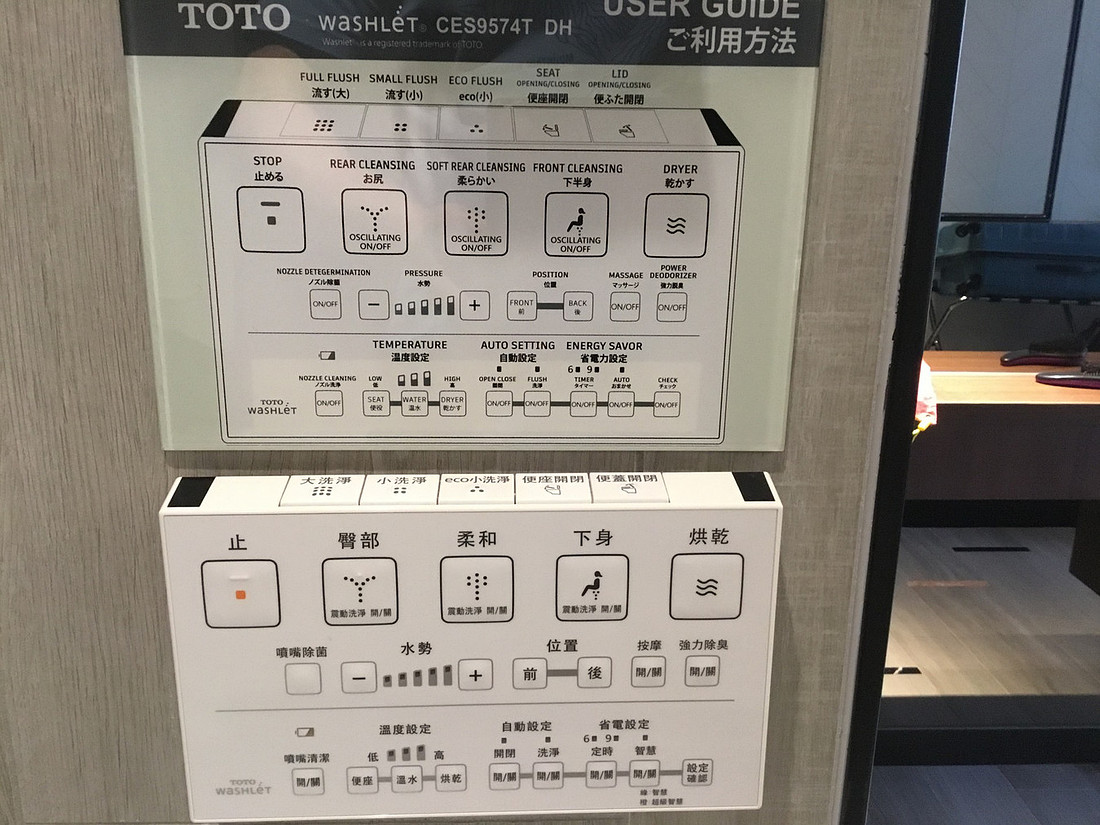
Desperately struggling to fight off jet lag we hit the streets again in search of beer and maybe some food. Road after road of little cafes, restaurants and street food sellers but no idea of how to order or communicate! And no one would serve us beer without food. One place had a plastic menu with pictures and a rough translation. Chicken Intestines, Eels, Frogs and toads all jumped out at me but, I just was not in the mood for an amphibian. After two hours we were close to giving up when we found Stanley. Wow what a guy! We loved Stanley! He sat us down on the pavement outside, got us two cold beers and cooked us two fantastic Pizzas! On his new UNI Pizza maker all the way from the UK. He was mad about Britain and thought it was fate we had walked by as he tested his new British toy. His not very genuine Taiwan food food was brilliant. His company was brilliant and he was brilliant! Indeed it must have been fate!
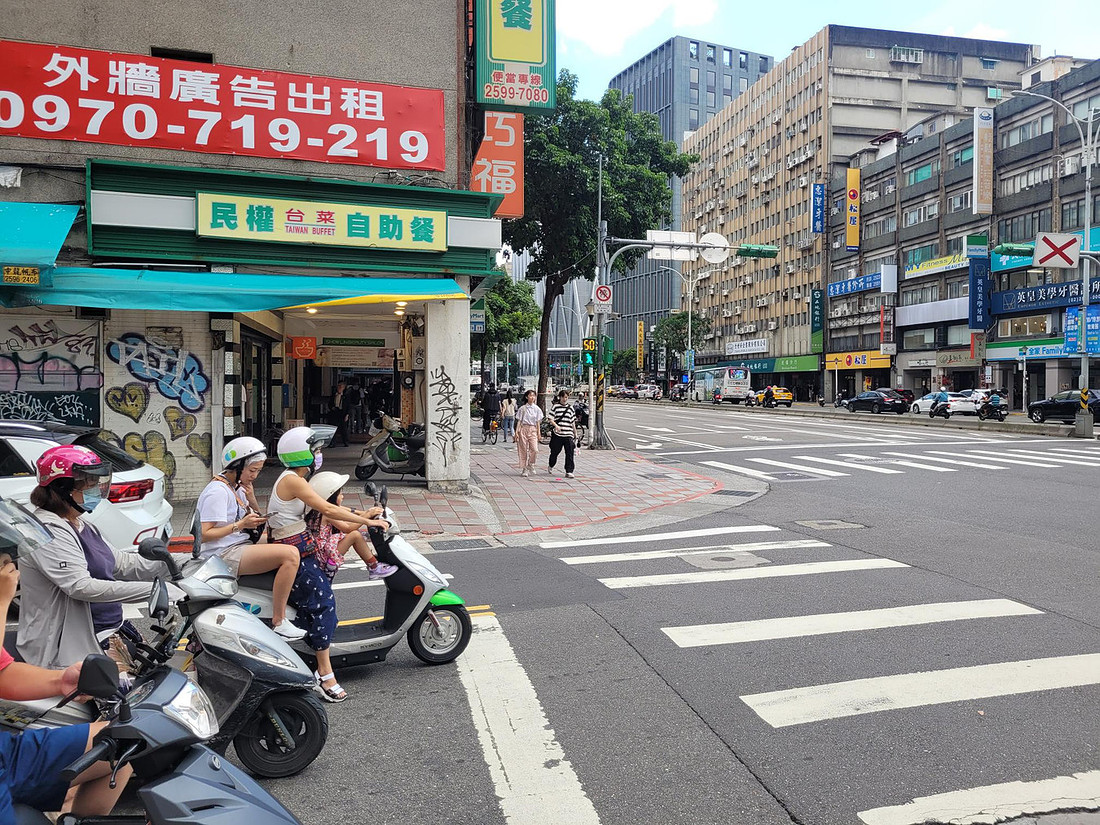
On our way down to breakfast our phone flashed an alert just as the lift arrived “Earthquake Warning”.
Better not get in the lift then!
We went down the stairs and asked about the message to find it was in the middle of the night and we had slept through anyway. Later that evening we spoke to Stanley a veteran of many quakes and he gave us lots of Earthquake advice. Find a strong point in the building, crouch down low in corners where there are strong triangles and don’t run in the street as bits of building will fall on you or even better sleep through the whole thing!
We loved our day in the city exploring every bit our feet would take us. We learnt how to use the brilliant underground system and the highlight of the day was a trip to Taipei 101 the former worlds’ tallest building. At 500m high and the only Asia designed sky scrapper it is the most amazing feet of architecture and building. The outside represents a growing bamboo with a new growth every ten floors. The 101 floors are to strive for more than just perfection. Other symbols include giant coins, dragons and sculptures. Inside the lift took us to the top in 35 seconds and claimed to be the fastest lift in the world. It certainly made my ears pop. At the top is a massive indoor viewing area that to our surprise was just so chilled. You could sit on bean bags, drink teas and coffee just gazing out off the massive glass walls. It was also a fun area with funny props like deckchairs and angel wings as a back drop for taking photographs of the amazing views.
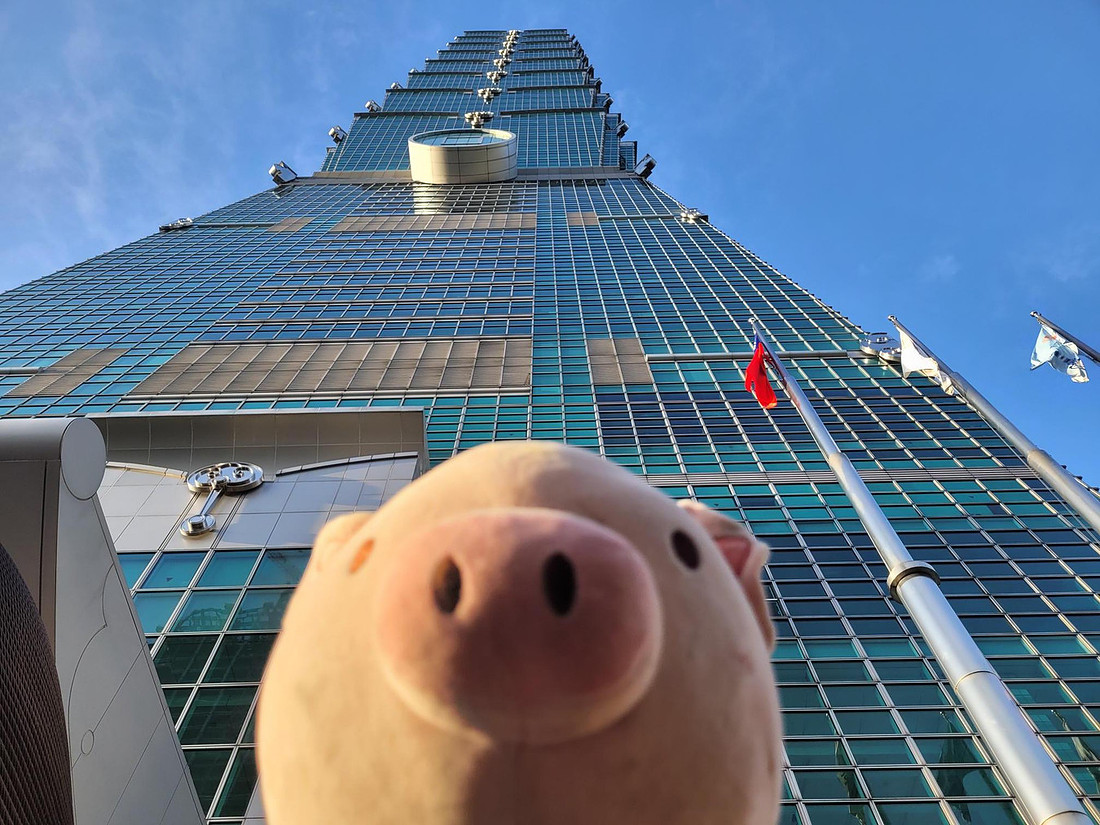


One other thing we did was to gate crash a trade show at the exhibition centre. Well it wouldn’t be us if we didn’t! As we walked passed the building there was a side door and inside I could see food vendors and lots of trade stands. We went to the main entrance with the hope of gaining some free food inside. We also liked the fact there was heavy security. We immediately thought let’s just walk straight in but, checks were quite strict. Ah they have hand stamps when you leave we could easily fake that? But instead I walked up to the VIP entry desk and told them I had come all the way from the UK to the show. “I sell clothes and toys”
She looked at me puzzled when I showed her Dino Pig! But after 5 minutes of bullshit I had in my hand two VIP Entry Tickets! Job done. Inside we tried chestnuts in batter, Money cakes and smoothies while all the time keeping a straight face when asked if I wanted to start a franchise!
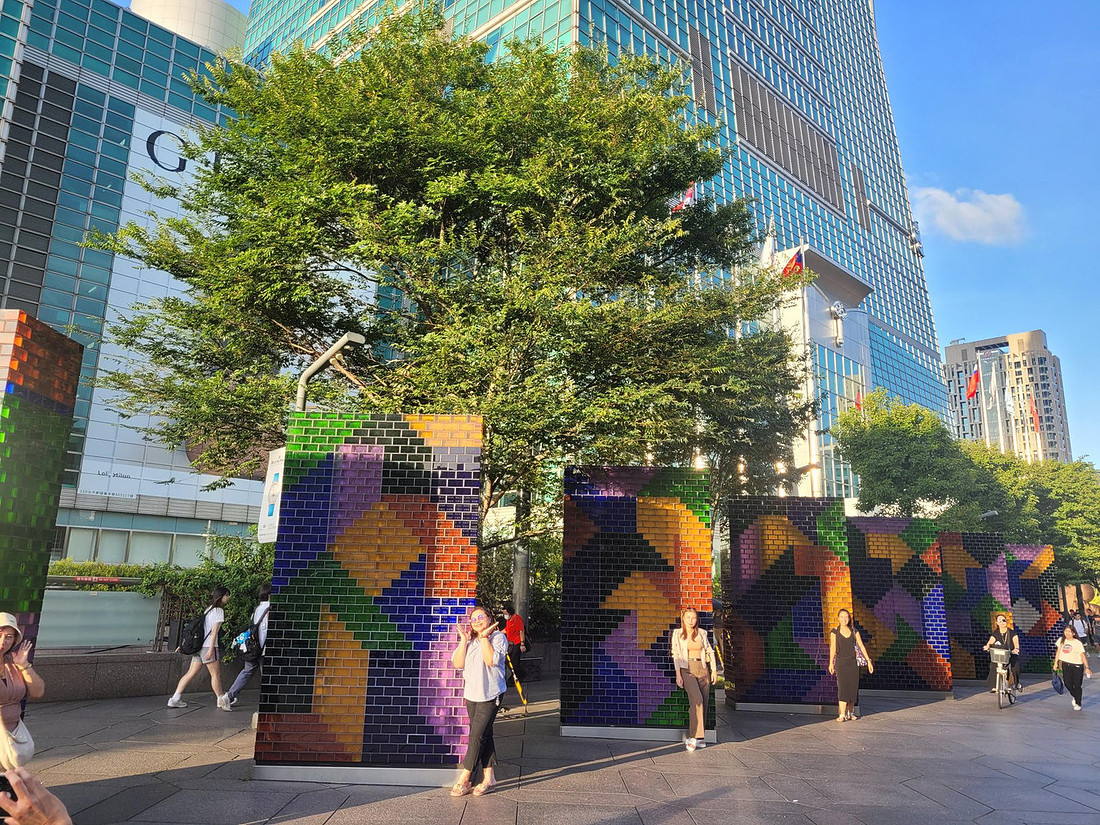


Two and a half days in Taipei city and we have fallen in love with not only the place but the people! Everyone is so warm, polite and welcoming. We both feel so safe here. There are a few things that will stick in my mind like how incredibly clean everything is. There is literally no litter! Something so different from home is the abundance of animated characters and soft toys. They relate to all aspects of life here. When you see a safety notice it will almost always be a cute cartoon animal demonstrating how to stay safe. On clothing it is a big feature in everyday fashion right down to the umbrella. At first it comes across as maybe childish or even crazy to us but, after a while we loved it because it is happy and cheerful. It brings a smile to your face which is never a bad thing. Another overall impression is the embracing of modern technology and the increasing wealth here to afford it. Taiwan is not a poor country in fact 14th in the world and rising. This is evident after a visit to the shopping mall near Taipei 101. It is said to be the largest in the world and packed to the rafters with shoppers of all ages. You can buy a Rolex, Tag, Patel or a designer label but our favourite was the fluffy toy and character shops. Now I never thought I would say that! So much fun but I really missed my Granddaughter who would have loved it.
Next morning the rain was torrential as we were ushered to our taxi by the Bell Girl, this turned into a slight confrontation as the tiny dot of a girl tried to wrestle my heavy suitcase off me to lift into the boot of the car. She won the battle of wills and heaved it into the back. I then broke with Taiwan protocol and gave her a tip for her efforts. She seemed very pleased as she had the most gorgeous smile on her face. (Evidently tipping in Taiwan is not good manners)
We left Taipei heading to the town of Keerlong to meet our ship Norwegian Spirit. As I gazed out the taxi window I couldn’t help but smile to myself that here I was, lucky enough to be halfway across the world on an amazing adventure!
We booked onto the Spirit and because it left the next day we decided to go out exploring the night markets and shops in some of the heaviest rain I have ever seen. Being novices to this sort of thing we put on our waterproof rain jackets or as they probably say in Taiwan sweat suits! We were soon carrying them as the temperature just doesn’t drop even though it is so wet.
Once again the lights and sounds of the streets were so exciting. Dashing in and out of alley ways and covered streets watching local life busying on with out a care in the world when they should have been building an “Ark”.
On most streets we saw amusement machines which we found a bit odd as the prizes looked strange. It seems the Taiwanese are mad about gambling and will regularly use amusement grab cranes to win the most mundane prizes like washing powder, masks and even shopping bags!
After a few hours we swam back to the ship (Rain like this can’t be normal!”.
That evening on board ship at a very quiet bar we were trying desperately to drink the value of our whole drinks package in one night when we heard sobbing behind us!
“It is no good I cannot bottle my emotions you know, I am Mexican”
Many more tears “I can never talk to them again, I will erase them from my memory”
Their distraught was a 23 year old Mexican girl who had fallen out with her friends on the very first night of a 9 day cruise! It was 12pm at night now and she was sharing a cabin with two other girls she wanted to erase from her memory.
There was only one thing for it Uncle Paul and Auntie Wendy to the rescue!
“Grab yourself a seat love next to us and tell us all about it” I insisted.
After one hour of counselling and a new set of life rules she marched off at 1am to confront her friend with a big smile and a straight back. Another job done! (And yes we have seen her since for some follow up session and she is doing fine. In fact we have a new friend in her.)
“Bloody hell, I need a cup of tea before bed, after that” I said
“Me too” come on.
We set out in the morning desperate for a few more hours in Taiwan before sailing. It was still raining hard but set off with minimal clothing this time. And we were lucky enough to collect yet another great memory! Down by the waters edge near the harbour a group of Taiwanese Women were jumping and dancing in front of a camera. As usual, a smile and a few jokes and we were dancing and leaping together for pictures as well as freeze dancing, which I love anyway. I even had a very quick lesson in ballroom dancing from one of the girls. I think she was quite disappointed in my abilities though.
We all exchanged profiles and will amazingly stay in touch after only 20 minutes. So much fun!
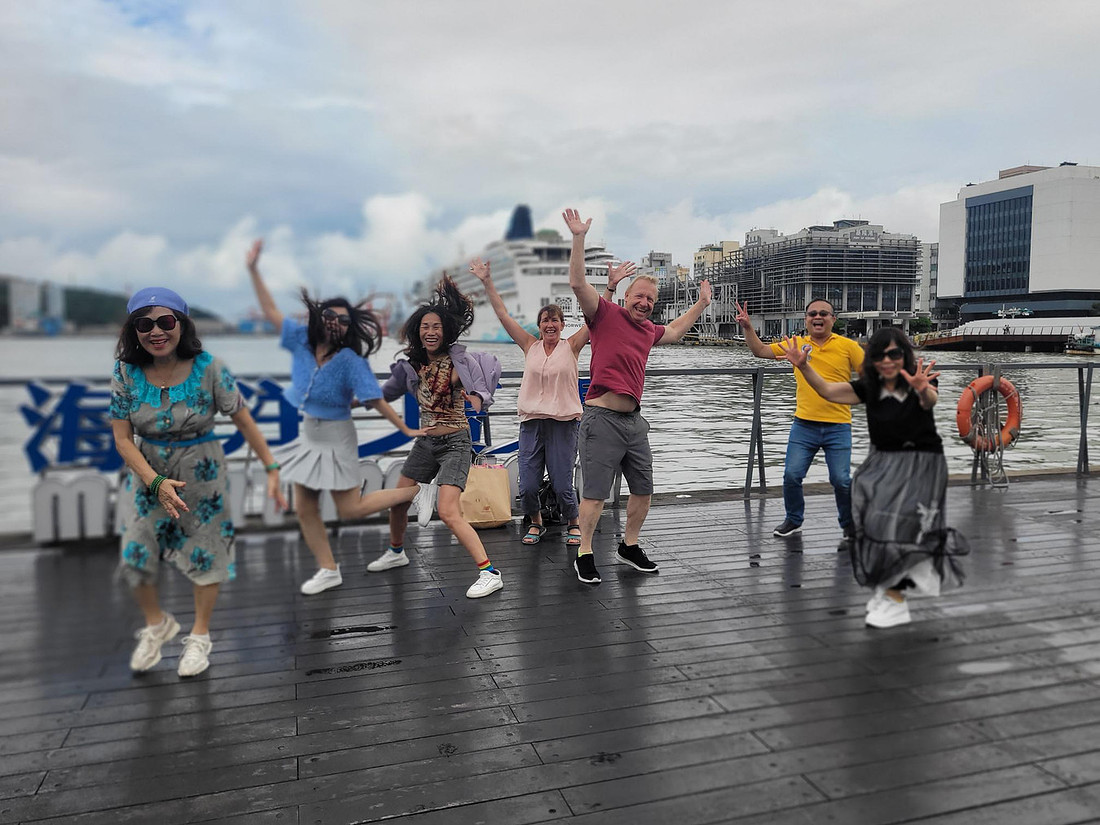


We left Taiwan at 5pm with a little sadness. We fell in love with the country we really did!
On to the Japanese Tropical Islands next. Back on the move again!
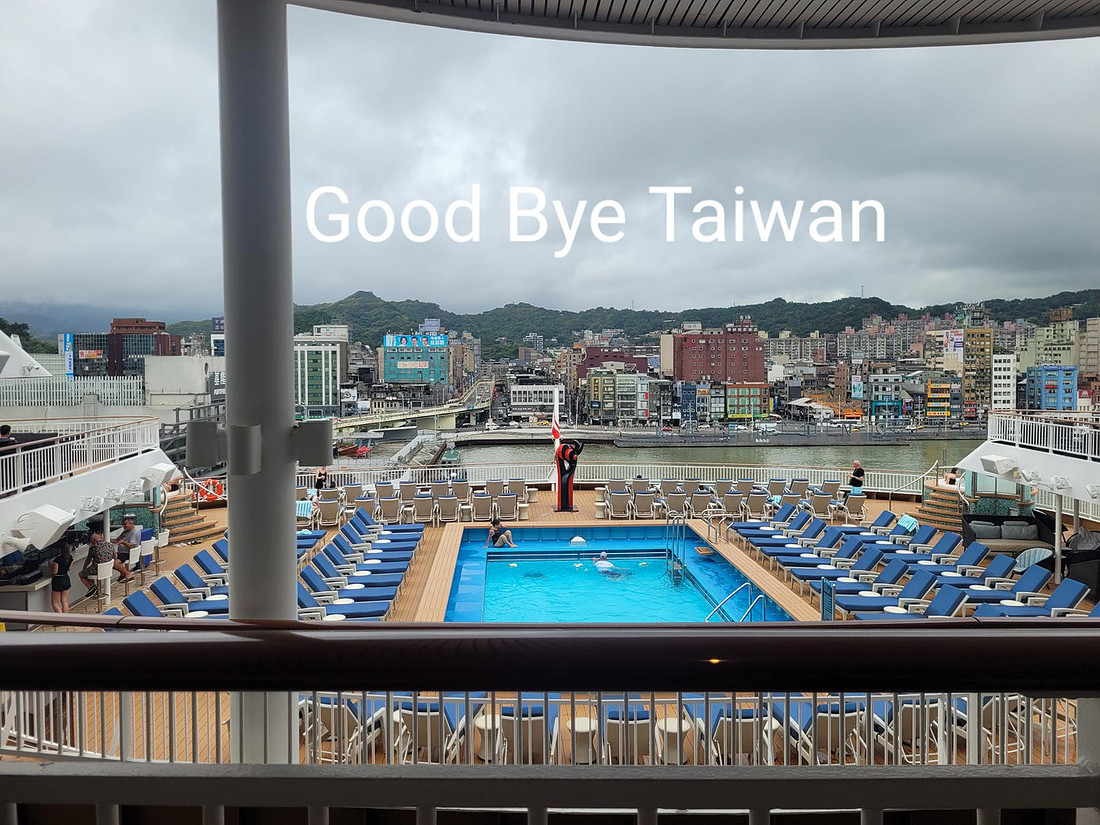
Our second day in Seoul was like visiting four or five different cities. We spent most of the day on foot with just a few short trips on the subway. We have never visited a place like Seoul where withing a few meters you quite obviously step from one type of district to another!
Our first port of call was a short walk from our hotel and was named Bukchon Hanok Village, A charming neighborhood with well-preserved traditional Korean houses (hanoks), obviously now a popular tourist destination as it was full of quirky shops with western names like the one below which was my favourite! It is a great place to visit but sadly quite small as it is clearly shrinking under the pressure of new modern development.
n Seoul you just kind of look at the map and head toward an area you might like to visit and on the way you kind of know that you will come across interesting new surprises and oh boy this was no exception. There is a massive main intersection near Bukchon Hanok and to head north we crossed over the busy road and into a grid pattern of main streets most of which were pedestrian areas called Myeongdon. I had heard South Koreans were into beauty and beauty products but this was quite a shock. It was quite literally an area the size of a small town that was geared up to sell you anything to make you young and pretty! I have never seen anything like it, with the stock spilling out onto the streets with women enticing you in with their products. And they were doing great business even though there was so much competition the lines at the till were constant.
The Korean obsession with the face is very noticeable and until you visit it is hard to comprehend how virtually every female wants to change their facial features and one in five have with surgery!. A lot of this is the perception that to get on in the work place or life you really need to look more western or K Pop so you need a different eye shape or a pointier nose, maybe more rounded lips and definitely whiter skin. K-Pop is the look in the video Gangnam Style one of the worlds most played music clips. Although Gangnam is a trendy district of Seoul it is more synonymous with the look of the pretty girls in it. And to look pretty, you have to have double eyelids, you have to have your v-line face, you have to be slim, but you have to have big breasts and sadly delete out you natural Korean features! What a strange world we live in! At one point in conversation on our trip I heard how it is very common for parents to provide plastic surgery as a reward for good collage grades!
Lotte World Tower

Lotte World Tower Seoul's Tallest Sky Scrapper and even taller than the Taipei 101 at 555m. The Metro station is right below the tower and leads into a massive shopping centre. It is certainly not as pretty as 101 was but still pretty memorable as the view from the top shows the staggering amount of tower blocks that stretch as far as the eye can see. Seoul really is a mega city and is still growing as countless cranes dot the skyline

Outside the Lotte Tower there was a small grassy park and at one end was a free concert by wannabee Korean music and dance bands. This was right up my street as I have always liked Bop and Freeze and Korean Body Popping. I sat myself down in the sun and had a whole hour of "Korea Has Talent". Wonderful.
Cheonggyecheon is a 10km stream that runs through the heart of the city. It was quite a surprise when we came across it as it is rather like a well maintained canal. I had to look it up because it really is a feat of engineering. Years ago it was a stream used as a sewer but it was covered over in concrete as the city expanded but in 2003 a project to excavate it and move the road to a flyover was started. In 2005 the new beautified pedestrian area was opened and over the years has become an important feature of the city. It has brought a new natural diversity threading it's way through the city and on the hot summer days the cool water even reduces the ambient temperature.
We fell upon it near it's start in the financial district where it winds it's way through the towering sky scrappers. It was just getting dark and were intrigued to see candle lit areas lined with cushions where people could just sit and chill. There were cycle ways, restauraunts and one of the few places we saw bars. It really is an oasis in the concrete jungle.
We headed just off the waterway into what can only be described as the out and out night life area. There is enough electricity burning here to burn off an icecap. It is an absolute joy to explore as it is unlike anywhere we have been before. The hundreds of restaurants modern and old mostly specialise in cooking at your table. In the more modern establishments which are often three or four floors high you sit at tables with what looks like a giant vacuum cleaner over a gas grill. The meat is brought to your table and cooked at your leisure. It is such a great social thing and makes a great night out for a group.
The older places have a large steel box in the street which is full of burning charcoal. If you sit down at a round table, the centre vessel is filled by shovelling the glowing coals directly from the street box. The smell and drama of it is intoxicating.
Obviously we had a go!


]]>
Now this is interesting because it Korean style is almost a misnomer. It is quite obvious as you walk the streets that the majority of the population are dressing quite conservatively in dark colours but if you look closer nearly every outfit is stylishly cut and well fitting and importantly layered. Hats and bags also give the wearer more dynamics. To visit the massive garment markets or superstores is to me was quite monotonous. With very little colour and seeming endless aisles of similar offerings you really do need to be in the right mindset!
The less conservative youngsters are influenced by both K-Pop and Street culture. As with all fashion only a few ingredients can add up to countless individual looks. A Baseball Cap and a stylish blouse, maybe a pair off work slacks and basketball shirt but the key to understanding a little more about the Korean fashion is how you combine with your cosmetic look or your plastic surgery. If you have a beached white face maybe or larger breasts the clothes are accessories to your look. The body is as important as the clothing in South Korea. I will just nip out on a Saturday and buy a new face!
Animations And Characters

Just like in Japan animated characters and cartoons do feature in daily life but they are just a little more low key. The warning signs and public information cartoons have just a little less humour in them. But in retail outlets there is some quite clever humour. The underlying jokes seem far more intelligent and often more western. The Koreans seem much more fond of giant soft characters than the small ones in Japan. There are the same wonderful fun plush shops but you get the impression they have eaten a lot more!
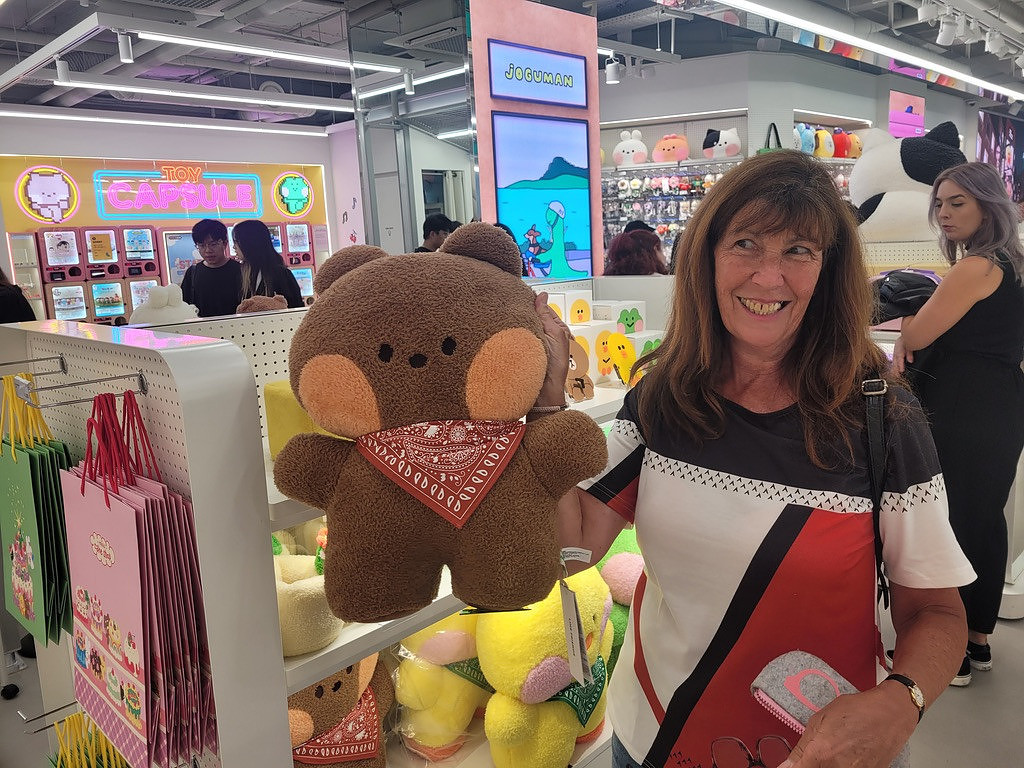
Korean Cars:
Wow this was a shock seeing 95% just home built cars from Kia and Hyundai. And their models were so much better than what is offered in the UK. The South Koreans certainly support their home grown industry. There is a new Marque from Hyundai called Genesis which is a fairly expensive option rather like a European Audi or BMW. Unless I had visited I would never have believed how big and successful these companies were. In Europe with have often joked about the quality of their cars but I think they will soon be a much more respected brands soon!
Korean Writing: Although a character language like all Asian languages the symbols all seem a lot less complicated. It is certainly quite distinctive compared to other places we have visited
If you have any questions on my observations or would like any more detail on any subject do not hesitate to ask
]]>
Himeji was our first real taste of Japan and almost felt like a new planet! We have travelled a lot but nothing really prepared us for the complete contrast between here and home. Travel is always enlightening but this was quite simply really exciting!
From the window of the bus into town we saw shrines and temples dotted among the distinctive Japanese homes. Even the trees and plants looked so very different. The clean streets and pavements were immediately obvious as there is simply no litter at all. As for the language; it was totally incomprehensible.
As soon as we left the bus the wall of neon advertising and almost cartoon culture was everywhere. It was hard to walk past a shop without gawping inside such was the overwhelming curiosity.
Himeji is famous for an amazing castle which stands high up looking down on the city. And in the scorching 30 plus heat we dragged our selves to the entry gate.
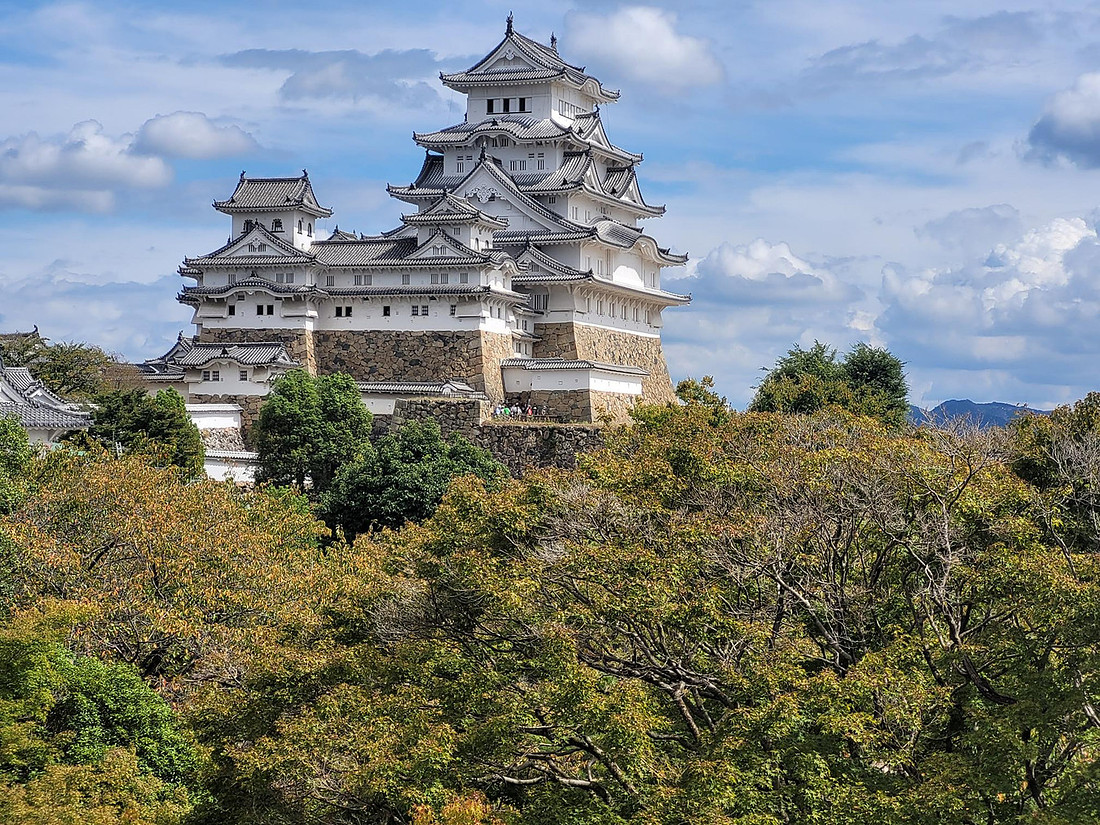
On the way, there were water misting stations to cool you down and massive cool air blowers. What a treat that was.

I don’t usually do castles but because it is nothing like I have ever seen it was so exciting.
The fortress seems to rise from a stone base high into the clear blue sky. Like all Japanese castles, or "shiro," it is an architectural marvel, blending beauty and strength. Himeji Castle, with its pristine white facade earned it the nickname "White Heron Castle." With its imposing main keep and strategic design to thwart invaders, it's both a sight to behold and a history lesson all in one. Moats, stone walls, and winding paths add to its charm. We walked through lush ornamental gardens, ancient wooden interiors, and secret passageways, each turn revealing centuries-old stories of Noble men, Ninjers and Warlords.
HIMEJI GARDENS:
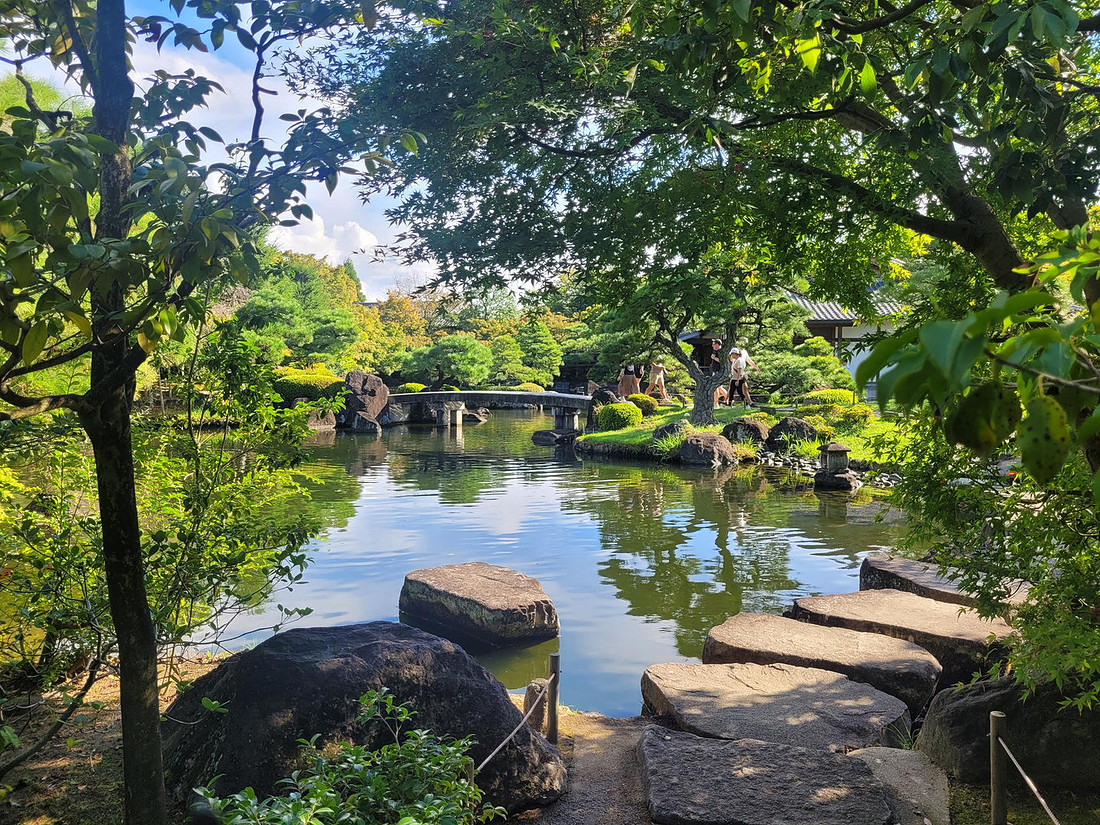
Walking around the seven gardens of Himeji Castle in the extreme heat we came across what we thought was a cafe. Wow I could do with a cup of tea! We rather bundled in the sliding door and was met by a rather cross old lady demanding we slide it shut. This was not a cafe but a traditional Tea Ceremony House! The Lady spoke no English but pointed at a price on the wall of 450 yen each. I reached for my credit card and was firmly told “Cash Only”. Well there was some English she knew!
Anyway the Lady was really rather wonderful after she realised we had no idea where we were. She fitted us out with a nice pair of slippers each and led us through to a wooden floored ceremony room that looked out on a rather wonderful ornamental garden. We were to kneel on the matted floor and wait quietly and respectfully for the tea to be served.

From the adjoining room came a beautiful dressed women in traditional robe. She almost floated in she was so graceful! In front of us she placed a wooden tray with a bowl of Green Tea and a small plate of green sweet paste. She bowed many times and I believe she blessed the tea. We were then handed paper instructions on how to proceed. How to turn the bowl away, which hand, which order, which to taste first and more.
Once we had finished she glided back in-front of us bowing and removed the tray. We were free to take pictures and the tea ladies smiled for the cameras.

From unexpectedly arriving at the Tea House we left feeling so blessed to have experienced something that felt so wonderful. We will forever be grateful to the Ladies and it will be forever a treasured memory!
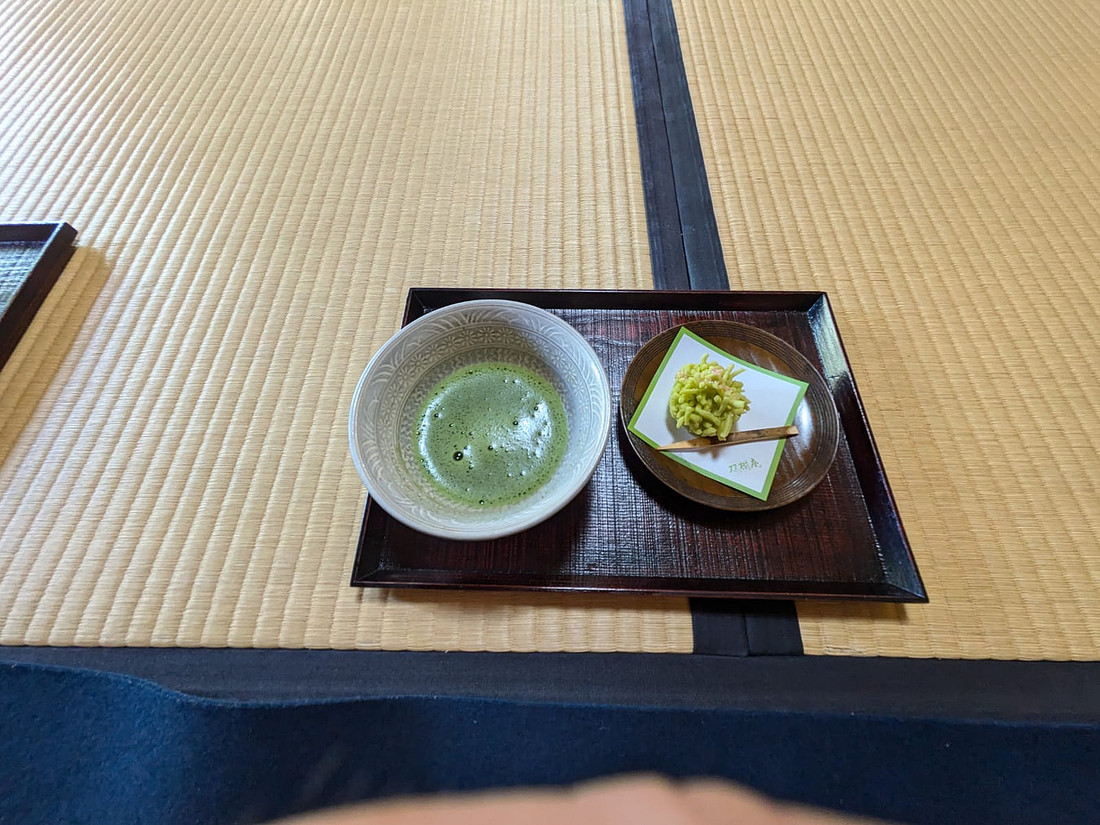

Still buzzing from the Tea House we headed toward the centre of town to find food and maybe a beer. We tried Kobe Beef on a skewer, we tried Tempura Prawn and wandered for hours around the streets and arcades of Himeji.

As evening fell we found ourselves outside a very busy, well lit bar near the coach station.
“Are we really going in?’ A reluctant Wendy asked as we peered into what looked like popular drinking and snack bar.
“Oh what the hell! Come on” I said as I led us through the door.
Goodness me it was loud and busy but a smiling waitress just pointed to the only spare table for two.
Left alone at the table we felt kind of vulnerable as there was no menu and certainly no English spoken. I tried my best to get a beer which even involved showing my arm muscles! There was a bicep picture on the fridge,
Having been given the impression that we really should order food I tried and tried to communicate with the young girl, but to no avail! In desperation she went to the kitchen and brought me back a greasy old picture book full of meals.
I really did not know what to do as nothing made any sense!
“Can we help you?” asked the Ladies on the next table.
“Yes please” I replied almost unable to believe that the only people we had met all day that spoke any English, were on the next table!
“We just wanted a snack to go with some big beers, but I really do not understand any of this menu” I said holding the greasy book.
“Oh, you won’t understand that, it’s the Chef’s cook book, she got it in desperation” she giggled politely.
“So where is the menu” I asked puzzled.
“On the walls, all that writing on sheets of paper is the menu”
We laughed as we explained we thought it was just decorations!
The two Ladies helped us out and we were thrilled that they did, and in their company we had the most amazing couple of hours. It turns out they were best friends who had just met up for the day and this was a drink or two before heading back. They spoke perfect English because they were by total coincedence tour guides for Japanese tourists in the UK. It was quite amazing for us to have met them and we really did have fun together before we had to leave to catch the late coach back to the port.
As we left literally the whole bar wished us goodbye. What an exciting and stunning first day in mainland Japan!
]]>
From the back of the ship over breakfast we saw the amazing Incheon Bridge. One of the most amazing structures I have ever seen. Stretching twenty one miles out across the port of Icheon toward the International Airport. And I thought the Humber bridge was big, this is a different world!
Excitedly we left the ship behind and were looking forward to beating the queues as we had a car booked to take us to Seoul but, he was nowhere to be seen. After a few messages on WhatsApp he was telling us to go up the elevator to floor two. I looked every where but could not find it so I enquired at the information desk. A puzzled but kindly man told us there was no floor two!
Back on WhatsApp. “Ok” he said “Go to car park 4 and wait by the entrance.”
Again I looked everywhere with no luck so it was back to information. The puzzled kindly man told me there is no car park 4!
Frustrated I got onto WhatsApp and gave my location outside parking two. After a minute or two he replied “So am but I can’t see you? Can you see me?”
Well no you are you mad I was thinking when along came the kindly man from information. He took my phone and said he will call him. What a legend he was. After a minute of of fast Korean chat he hung up handed the phone back and smiled as he told me “He is on his way 20 minutes he is at the wrong port!”
“The wrong Port?”
“Easily done” he smiled “We build things so fast in Korea, it is all brand new here”.
I remembered his words so often during the next few days in the Metropolis that is Seoul!
After a pleasant but exciting hours ride through the land of Skyscrapers we arrived at a Hotel. This time we were really convinced he had the wrong place again as he pulled up alongside Rolls Royces, Porsches, Mercs and Teslas. He seemed very convinced this was the place as the Concierge and Bell Boys surrounded the car! We begged him not to leave us until we were checked in. Meanwhile the confused Bell Boys searched high an low throughout the car for more luggage! Just two small cases and a rucksack which nobody touches but me so keep your hands off!
Sure enough we were booked into the poshest hotel I have ever been too. I thought the one in Taipei was good this was a whole new level. They are going to love us here I thought smiling to my self.
So where shall we start? The room was massive with lots of electronic gadgets like a switch to tint the bathroom glass, electric curtains and blinds and as you can imagine it was super dooper bedroom. As for the hotel facilities I have to start with a “Glass Swimming Pool” on the roof, then maybe the indoor pool with jacuzzies.
There was a virtual Golf Driving range which was quite simply amazing!
The gym was stale of the art along with the fitness rooms. After all that exercise maybe a visit to the Patisserie? Maybe one of the bars or restaurants? This place was amazing and feel very lucky to have stayed there. And I must mention that the staff were just lovely!
Once we had explored the Hotel we set off to walk the local area and grab some lunch. It was very warm maybe about 27 degrees and Wendy had her lovely bright flowered dress on. As we walked for about 20 minutes she suddenly asked “Do you think I should go back and change”.
I looked at her puzzled.
“I feel really conspicuous in this dress”
“But you been wearing out a lot”
“Not in South Korea” she replied adding “Have you not noticed everyone is dressed so conservatively”
I took a moment and looked around the busy streets and sure enough she stood out like she was in colour, in a black and white movie. It was quite obvious that there was different fashions and styles but, nearly everyone was in black, white, grey, brown and maybe the odd blue. It was quite shocking after being in Japan!
Wendy kept her dress on after I convinced her that she would not offend anyone but, would just shine like a rose (well I made the last bit up, but I was thinking that).
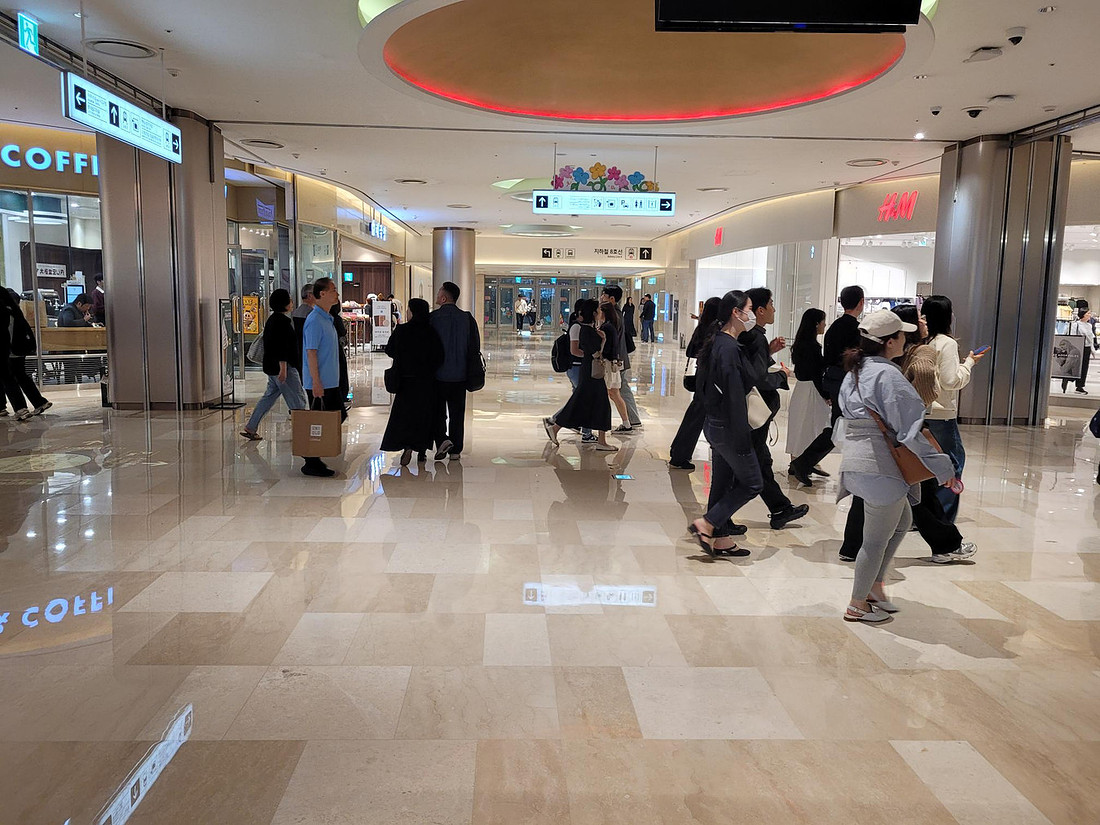
Spot the rebel wearing blue.
Within just a couple of hours of being in South Korea the contrast to what we had become used to in Japan was shockingly obvious. At the first road crossing people crossed before the lights had changed, they confidently walked across the flow of people, something unheard of in Japan. Gone were the cuddly toys and cartoon characters it was much more maybe functional. It is really difficult to describe, as it is maybe more of a feeling than anything. People seemed genuinely friendly but in a much more western way, almost rebellious. I could be wrong but so much was almost the opposite to Japan which was very much once the historical enemy. Maybe the opposite to North Korea is much more relevant, as it is a threat that hangs over everything in Seoul. On every subway station are reminders; the lockers full of gas masks in case of chemical attack, fire fighting instructions for the public and lockers with drinking water bottles. To a visitor it is quite a shocking reminder that technically you visiting a country still at war with a mad man just a few miles North of you! We were actually supposed to visit the DMZ (Demilitarised Zone) at the border but Kim must have caught word I was going and decided to blow up all the connecting roads in a major World Incident!

The city streets near the hotel were a constant mix of old and new, ancient and modern. The older streets were single story poorly built relics of former districts. They were crammed in between new buildings that reached for the sky. I really cannot imagine that in ten years time any of these areas will still be here.
In most of the main streets the older buildings nearly all sold cooked food and outside were pictures of their dishes. Another shock! The pictures showed plates with the meal but uncooked! The wonders of Google translate told us that on one plate was raw sinew, another was intestines. Maybe you fancy some tendons!
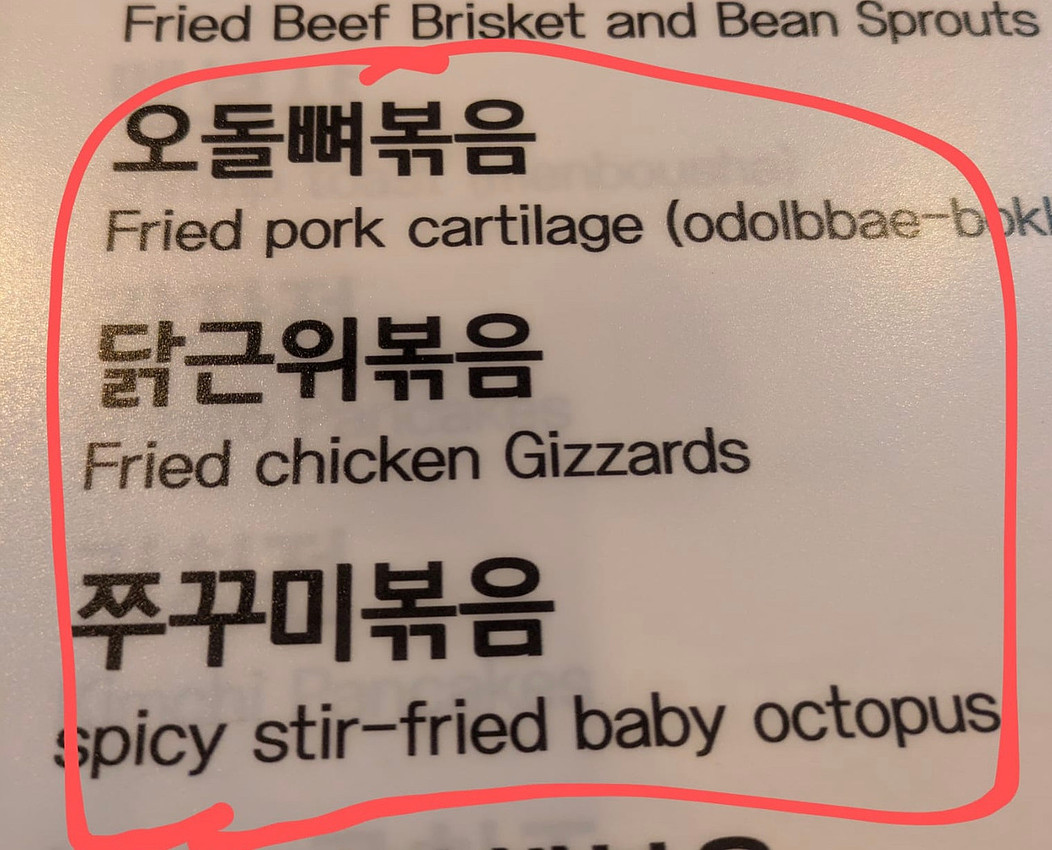
I am into trying things but I really did not want to see a picture of it uncooked on the plate!
We were not feeling very brave and eventually found a great looking cafe; a new building among rows of tired shops and restaurants. We found our own table and ordered food on a fixed iPad. I had one query and one of the staff confidently tried in his best English to help. Beautiful Tempura Shrimps, curry and rice was a great start to our eating adventure in Korea.
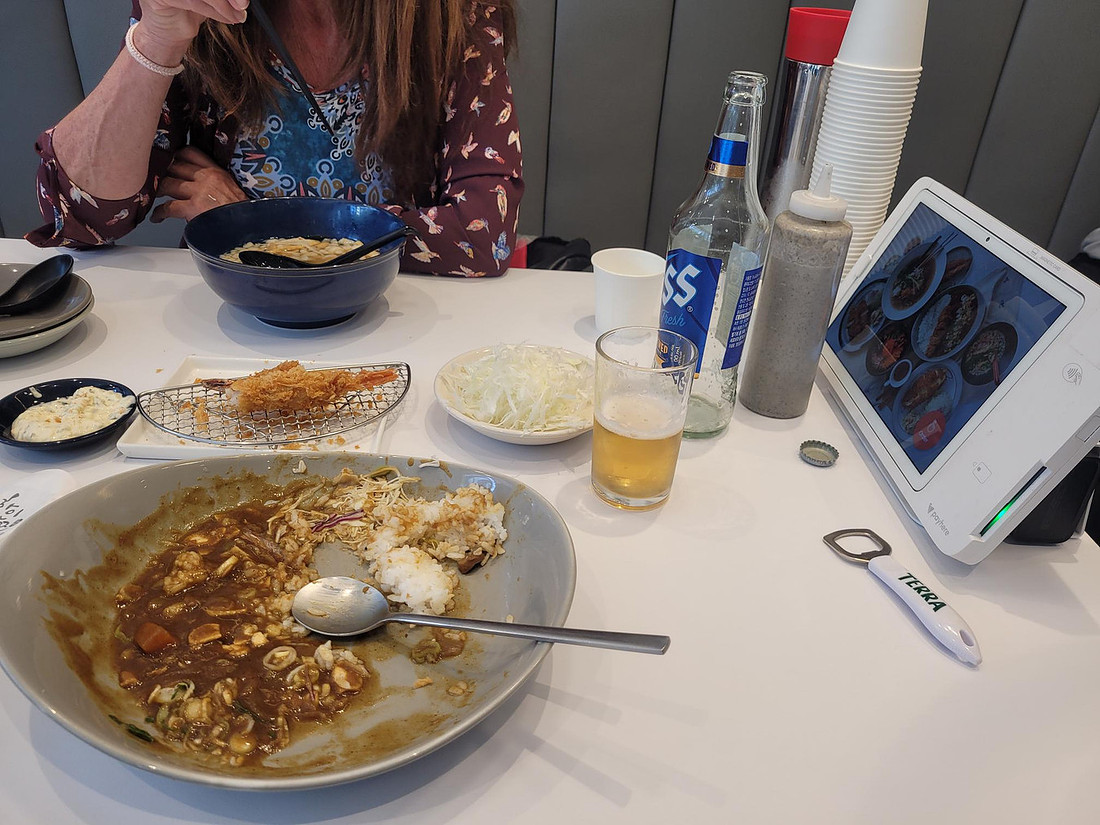
It was late afternoon and decided to ride the subway back to the hotel, we would have a swim, jacuzzi and use the gym before setting out to explore again in the evening. Very much a long way underground in the station we could not work out how to buy a ticket let alone know where we were going. We had complete brain fade and had for the first time failed at working out the system.
It was a long walk back to the hotel where the front desk explained that in future I needed to buy a special tourist card at the 7 Eleven and use different machines. Over the space of 3 days we had it off to a tee but it was not easy at first!
After a swim in the hotel pool we got changed and ventured out for our first evening in Seoul. As always I was excited by the thought of a beer in a new country and was not disappointed by our first stop! The streets near the hotel were quite residential and at the side of the busy main road was a locals bar. We grabbed a stool each on the pavement and somehow managed to order beer and popcorn! I have no idea how we ended up with spicy popcorn but it just seemed right.
It was just so cool and amazingly friendly as every person gave us a nod and a smile. In places and situations like this you just kind of get a feeling of contentment and warmth knowing you have ventured somewhere so different and interesting but are safe and among people who just like at home have gone to the pub for a pint!
Always on the move we walked the Streets again in the hope of finding a lively area but for a good twenty minutes we found nothing but dark eerily quite streets. On the verge of disappointment we spotted a few lit shops at the end of a narrow lane. Like moths drawn toward a lamp we found not just a few shops but a whole new vibrant city crammed with life! This was quite simply amazing as we wandered past food outlet after food outlet and discovered one of our favourite quirky things in Korea "Beer and Chicken". It is a national obsession like Fish and Chips to a Brit! We of course chose a more run of the mill local Chicken N Beer cafe and grabbed a low table and stools. Two large beers from the fridge and four Fried Chicken pieces delivered by an old man in a vest and I was hooked, it was amazing! The chicken coating looks a little like KFC but has a much thicker crispier texture and is certainly a lot more fiery, it has quite a unique taste. You even get a pair of plastic gloves to eat it with. Every night should be beer and chicken night from now on!
Something we did not realise in Korea was the difficulty finding just a place for a drink, you can get beer at thousands of places but it is usual to have food. So one good thing was that our little late night pub crawl did not get to out of hand as we had an awful lot of snacks! What a great evening we had though.

"The lure of the lights"
]]>
I usually like to write shortly after experiences when fresh but, being in Japan for three weeks has been pretty intense. Every day has been full and exciting and left no time for even notes. So instead of a detailed record I have written about some of the many highlights of this amazing adventure!
It is very difficult to get to the bottom of why the Japanese people are so very different to anywhere I have ever been. To describe being there “As like being on a different planet” is not in anyway an exaggeration.
Let’s take first of all POLITENESS:
Take for instance buying a small cake.
Firstly the glass cabinet will be spotlessly clean and the cakes will be immaculately presented with extreme precision. With no Japanese language I will smile pathetically and point to said cake.
The shop assistant will bow gracefully take the selected cake in the palms of both hands and hold it toward me to make sure she has chosen the correct one for me and that I am happy with it. I will then bow. She then takes the cake wraps it like a present, places it carefully in another bag and tapes it shut. She will then bow and request my card for payment. I do not hand the card directly to her but place it onto a small tray on the counter. She then again uses both her palms to take the card and process it, before placing it back in the tray for me to bow and pick it up. The cake is then delivered with great reverence to the counter, she bows and I take the cake. The whole process of choosing and purchasing a single $3 cake will take up to 5 minutes! But it is strangely calming and at the end I am striving to show my appreciation for her trouble with clumsily bowing and saying lots of “Arigatos” (Thank You).

Another familiar example was a cable car to the top of a mountain. The traditional cable car just like in the Alps arrives at the bottom station. As we stand in line two assistants check their watches and move forward as the seconds hit twelve. They stand directly in front of us and bow in unison. The door of the cable car opens and the line is invited to enter the car. Once inside one assistant bows to the other, one enters the cabin the other checks the door and bows to us inside. This is obviously so very alien compared to the hustle and bustle of Europe and America but to my astonishment the controller of the cable car then comes out from the control room stands outside the doors bows to us all and wishes us a good journey. He then calmly walks back to the controls and sets us off up the mountain! Needless to say it was a similar experience at the top when we arrived.

An extreme example of protocol was the trip to the top of Yokohama’s tallest building. There was a simple elevator and only Me and Wendy were there. We stood in front of the doors only to be directed back to stand in line. This turned into a bun fight between the two of us as I clearly believed I should be first. The Elevator man as I will call him, did not seem amused at our childish behaviour! He then pressed the elevator button and the doors opened. We did not dare move until he invited us to enter. Once inside he pressed the 71st floor button and told us to stand in the middle not the sides and added “DO NOT TOUCH ANYTHING” before he exited the lift. As the doors were closing he bowed to us and wished us a safe journey. Wendy then gave me that special look which said “Don’t you dare touch those buttons”
At first the extreme politeness comes across as maybe shyness. You gradually learn that it is almost certainly not! It is just the protocol that is embedded in each and every person. Situations, encounters and especially service have deeply engrained values.
ANIMATIONS AND CARTOON CHARACTERS:

Every where you go in Japan you are confronted with animations and cartoon characters whether they be on a warning sign, business or an advert. On any public information message or warning there will be something cute. One of my favourites was a hedgehog biting and electric cable with all his bristles standing on end! Another was in a metro train, where there was a cute cartoon little boy on one side of the closing doors and a cute little girl the other. Both had bright red hands where their fingers were stuck and a huge tear coming from their eyes.
Another favourite was on a Monorail in Naha that had a little teddy bear type character in a station masters suit saying “ Make everyone smile with your manners!
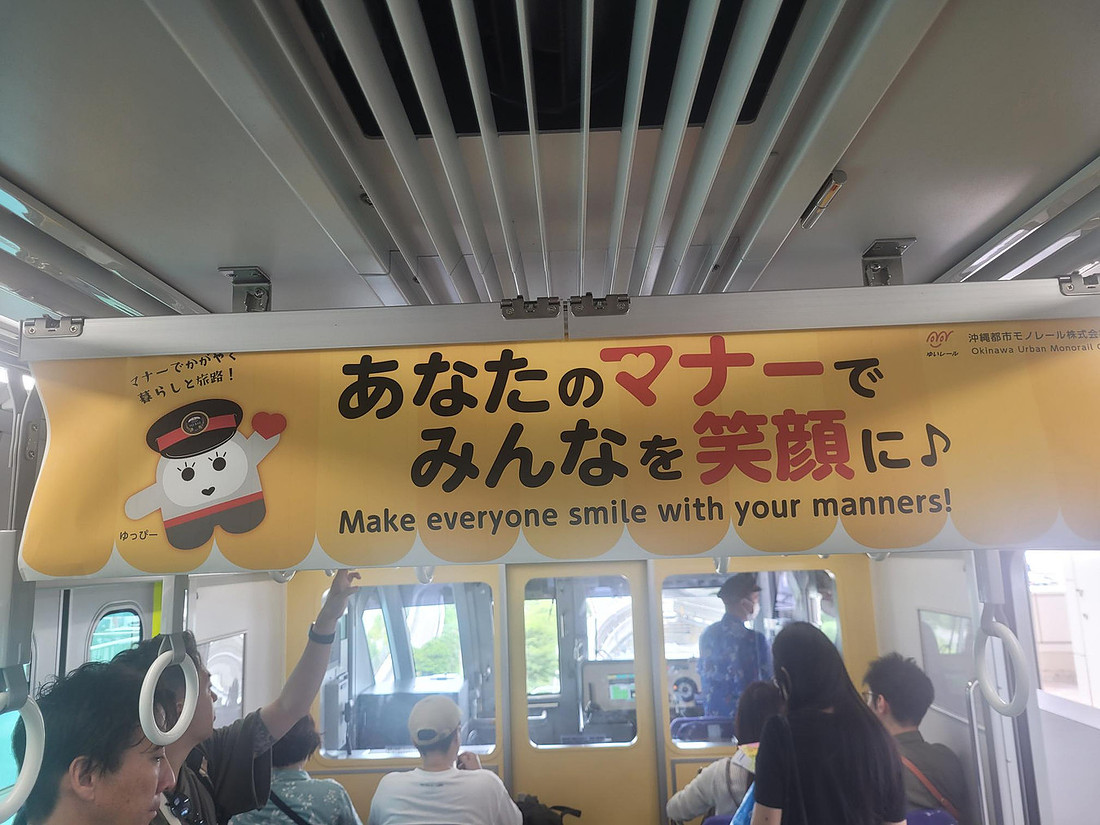
Nearly all shops have cartoon type characters displayed on their signs, in fact it is quite unusual for there to be anything remotely serious.
At first it comes across as maybe childish but the longer you experience it the more it makes maybe sense. With the extreme level of politeness and protocol it is a fun form expression and light heartedness. It really does make you smile and realise the Japanese people are great fun, it is just expressed in a different way.
FASHION
I am not sure wether fashion really exists in Japan? Yes of course it does but maybe not as a western eye sees it. People seem to dress almost certainly as an expression of their inner self. Even “Cosplay which is to dress as an animated super hero or a cartoon character does not seem to shock or upset anyone. It will not come across as unusual in Japan but, there will still be the Japanese preciseness to it. Even when holding a pig!

For Women I discovered that there are certainly diverse fashion styles evident. There was anything from traditional, European, futuristic, exotic (maybe even erotic) and simple elegance. The older women expressed a sense of elegance, poise and refinement in the way they dressed, whilst the younger women were not afraid to express themselves in much more daring and adventurous ways. Even punk fashion existed but without the rebellious traits of the west.
And shockingly age was inconsequential as I witnessed a maybe 5 or 6 year old in 10cm high pumps and a jean jacket. And a baseball jacket on a 90 year old no problem!
Importantly compared to other Asian countries there is also a broad spectrum of colours. Even when copying western fashion most of the clothes were made in Japan and the shops were individual local brands
SHOPPING
Quite simply it is like nothing else on earth! It seems to be the national pastime, a way of life and the engine room of the mega cities, wether it is underground or in huge arcades and malls. The scale is breathtaking and you will never be able to visit all the shops in a big town. There are chains but most shops look to be independent outlets.
"I love the animated dog!' Above
Above virtually every shop will be a cartoon or animated character if not it will have something outrageous like a giant colourful product to attract your attention. A crab shop with a giant red crab above, a massive dragon over an oriental restaurant, or maybe an octopus eating an ice cream. I saw giant rabbits, huge biscuits, a samurai warrior, a dolls house but the most in your face experience are giant HD Screens with short videos. The videos will usually be animated animals or futuristic Cosplay characters endorsing a product.

The sheer scale of humanity takes a bit of getting used too!

But they are there to buy not just window shop. Even though there are hundreds and hundreds of places to eat it is not unusual to queue for a restaurant. It is staggering that with the scale of competition that so many places are thriving. Again I believe this is down to the fact that like fashion, buying things is an expression of your self. For example nearly every female of every age has one or more fluffy toys as accessories on a handbags or maybe a belt. Although there are common themes like Pokémon, Hello Kitty and Snoopy there are still hundreds of various characters and themes that mean something to an individual.

Food shopping is my favourite! As you enter a giant food court made up of hundreds of different vendors it is hard not to to feel the excitement of maybe trying something delicious. And again the scale is hard to imagine. It is not unusual to see say 15 maybe even 20 Tempura snack bars in a row. Twenty cake vendors would not be unusual. With prices in Japan so low and presentation so wonderful it is hard not to be tempted.
Which brings me to "very real looking plastic food". Somewhere in Japan must me factories making thousands of these life like dishes of food for display. They are everywhere and sometimes look so real it is hard to tell it is not the actual dish of food1
Above: Plastic Food
JUST A FEW QUICKIES
TOILETS: Absolutely everywhere spotlessly clean, free and most of the time fully electric with built in washers and dryers. Not that is worth a visit!
LITTER: There isn’t any! None at all. In Tokyo Railway Station. Probably the busiest in the world I saw a street cleaner. He had a small carrier bag and a pair of tweezers and very little to do!
SAFETY: We both felt safe everywhere at all times.
PRICES: Coming from Europe Japan was so affordable. Much less expensive than all European countries I have visited.
LANGUAGE: Learnt a few words that were useful and polite but reading anything? Forget it! Fortunately we have Google translate nowadays.
GETTING AROUND: Although it seems daunting at first most transport routes are quite easy if you ignore the names. Most transport lines have numbers and colours

THE LITTLE CARS: When I arrived in Japan I expected to see lots of the new Japanese saloons and sports cars. I was shocked to find that most of the vehicles were little tiny box shaped cars! I later found out that with space as a premium they fit in small spaces like little building blocks and also they are only 600cc with a massive tak break. Once again with just a little twist they are individual and fun!


If you have any questions on my observations or would like any more detail on any subject do not hesitate to ask.
Onboard the ship we were in the very much a working port of Shizuoka, we could see just mist and cloud in the direction of Mt Fuji. It seemed pointless to head off to the mountain and time today was quite tight. So with no expectations we left the ship to see if there was any way to get a trip out of the port. Once again we were incredibly lucky when we bumped into an American who had lived in the city for 15 years. He told us the only way out of town in a short timespan was by taxi. He showed us the taxi rank and we stood in line with a numbered ticket. Taxis were arriving roughly every ten minutes and we were #6 in the line. At the front were a father and son from Liverpool so I asked them straight out “Do you want to share the taxi and go halves, we don’t really care where you are going we are happy to tag along”.
Next thing we know, we are on our way with our new friends to a Mountain top, there we could catch a Cablecar to another Buddhist Temple.
When we arrived, Mt Fuji was just nearby and was still shrouded in mist but unbelievably right in front of our eyes it started to appear. It really was quite magical once it was completely clear. I have spent quite a lot of my life around mountains but this seemed the biggest I have ever seen. Even though it is only I think 4000m it rises from the coast and you see its full majesty.
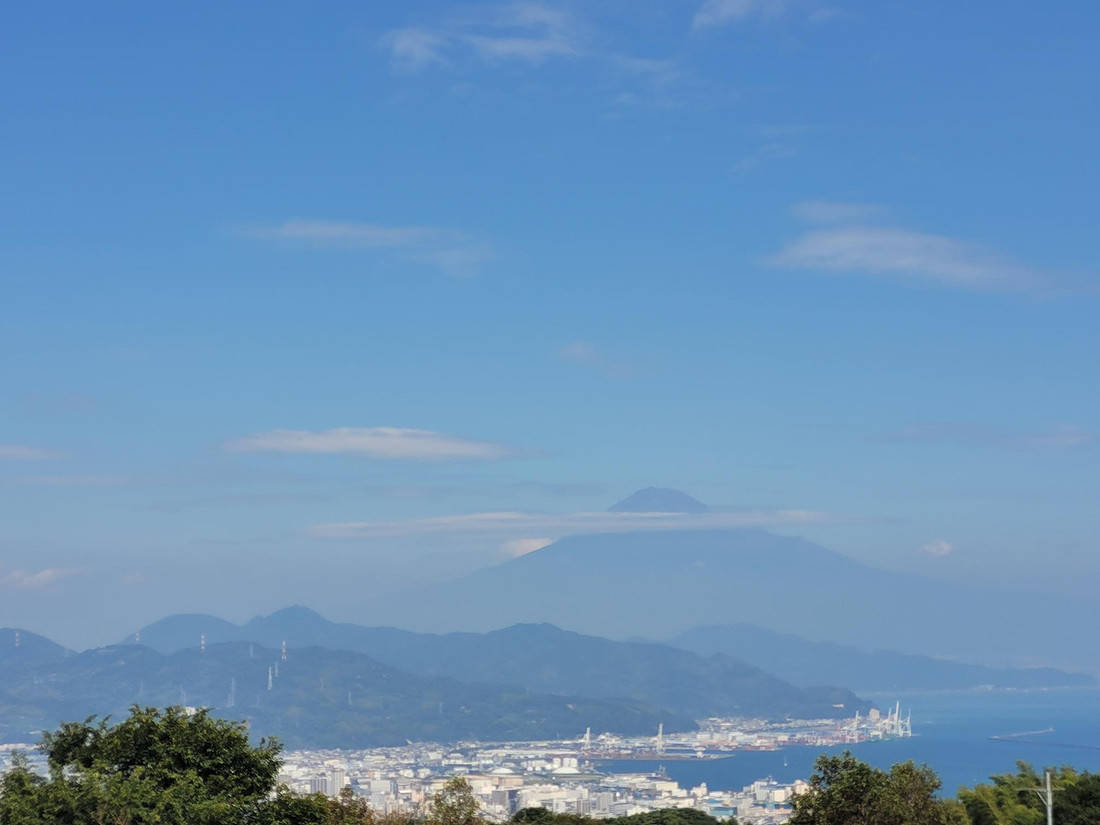
Our new buddies we’re called Matt and Keith and we all really hit it off. Matt the son who was in his 40s had always wanted to visit Japan, he had a keen interest in Ninjas, Temples, Karaoke, Fantasy writing and the bizarre! He had played in bands, written games, written books and was by no stretch of the imagination interesting.
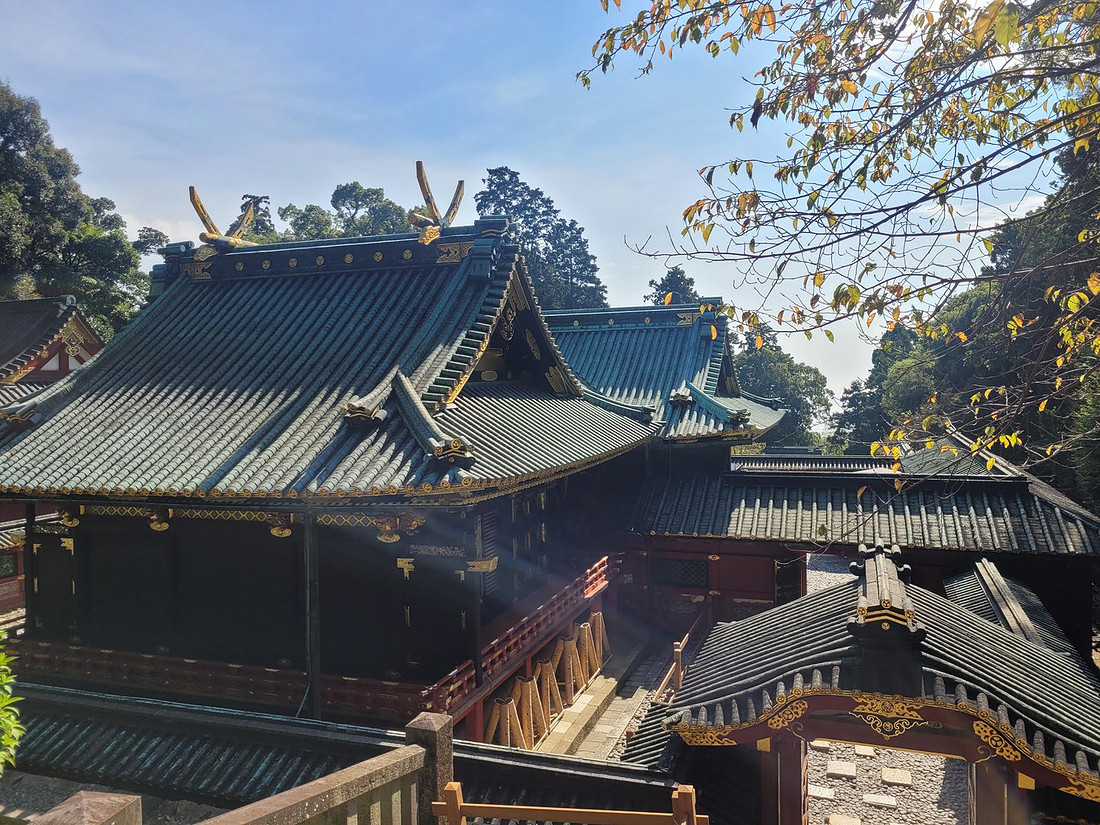
His Father Keith was very reserved and at 74 often struggling to keep up with his whirlwind of a son but their conscious efforts to take each other into consideration was admirable. Keith had for a long time been interested in South Korea bizarrely after falling in love with South Korean films and TV shows. He had no interest in Japan but was definitely surprised how much he was enjoying it so far.
It was a short day but so special to have collected two new friends!
Tokyo & Yokohama
Tokyo isn’t just a city – it’s an adventure. So you need to pack your sense of humour and your curiosity; Tokyo’s charm is ready to enchant you, one quirky corner at a time if you let it!
We had navigated the trains from Yokohama to the main station in central Tokyo and wondered if we could ever get out of it! It is like a city in itself, as we walked down aisle after aisle of shops and platforms until eventually we popped out right by the Shibuya Scramble Crossing (think of it as the world's most organised chaos). This is a place that has appeared on virtually all the travel shows I had ever seen and we were here. Out came the cameras and the excited smiles I just couldn’t believe we were here and it did not disappoint! Yes it is touristy but so are all the iconic squares in the world; think Times Square, Piccadilly Circus or St Marks. As well as the up to half a million pedestrians a day that cross here it has become a meeting place in Japan. The video screens and neon signs are simply sensory overload even in the day when we were there. After crossing a few times we decided to have a quick explore of the area when we saw two Go Karts drive by, one was driven by a cow the other by Super Mario and that sums up Japan. Once you have been there a while you are not surprised by anything but, it still makes you smile.
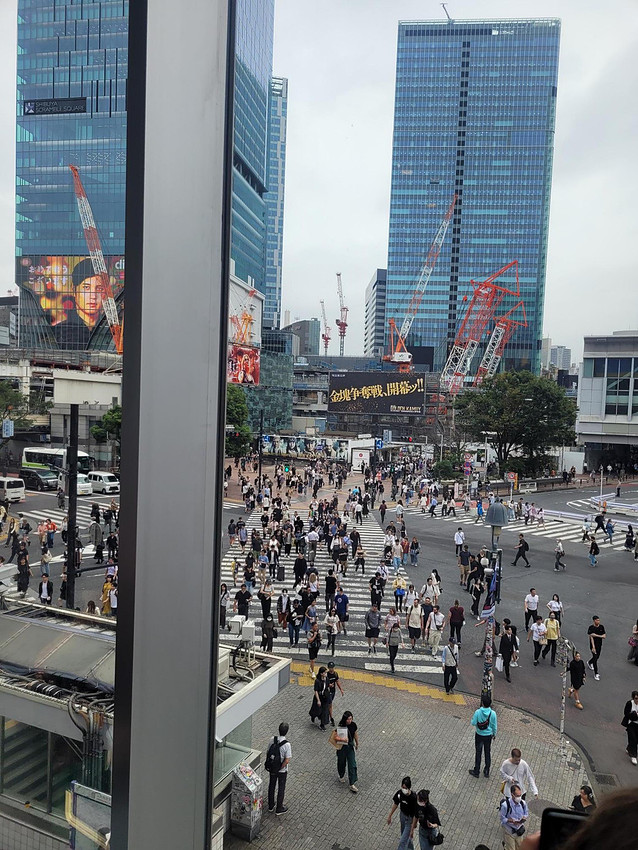
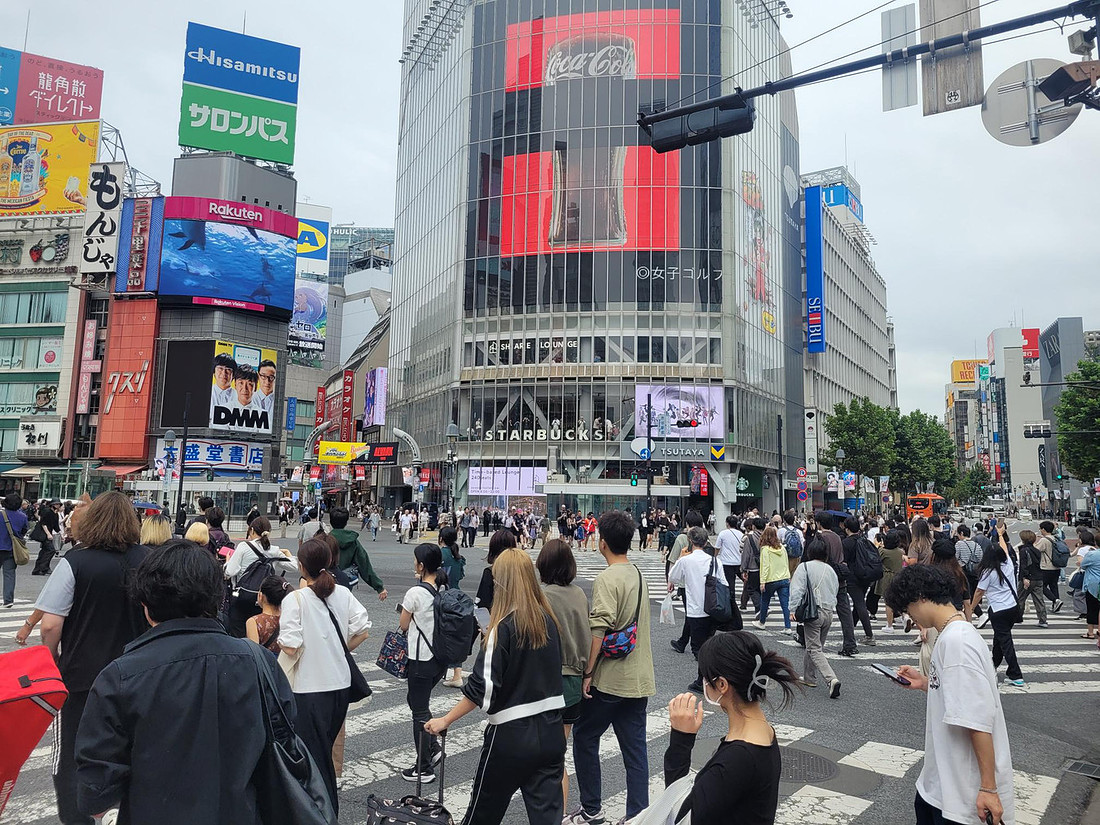
As with all whistlestop tours the time just seems to race by. We had a little explore of the area but most of out time was spent by accident inside a food mall just off the Scramble and we didn't even buy anything! It was just incredible with numerous separate outlets offering among other things chocolates, biscuits, cakes and teas but the difference was the standard of fair! It was as if the best chefs from each country had produced the food. The presentation and precision was just beautiful and believe it or not it was affordable.
JUST A SELF INDULGENT NOTE:
I phoned my Daughter and explained I had been to the Shibuya Scramble. Casually "Oh" she said "I took a Formula 1 car through there in the opposite direction to the traffic and brought it to a standstill for a TV piece".
Well why wouldn't you have Sweetheart, I did not even know you had been there!
]]>
We had one more day in Himeji so we got a bit adventurous and caught a bus to the bottom of Mount Shosha to get a cable car to the top.
Immediately you notice how different Japanese culture is to what I am used to. On the busy bus the driver welcomes on board every single passenger and the same when they leave. Even if 10 people got off he would wish them all a safe journey and a good day!
I liked it (it made me smile).
Featured in The Last Samurai film! Shoshazan Engyoji Temple. A thousand years of history on top of Mt Shosha
I was in the most stunning Buddhist Temple I have ever seen and from a high Veranda I was admiring the intricate woodwork in the roof that went together like a wooden puzzle. Just inside a group of Monks were chanting around a blazing fire surrounded by a large number of other worshipers. There was the distinct aroma of in-scents in the air and looking out from high on the mountain it made for an incredibly beautiful scene.

For Isabella my Grand Daughter I decided to take a couple of photographs of Dino Pig looking down the valley from the temple. A young man caught sight of me and I thought I was in trouble but, the next thing I knew a crowd of Japanese men and women were wanting to hold the Pig. Being a slight celebrity he was not adverse to the lime light and was soon posing with his new friends.
The young man who spoke the best English started to explain that today was really very special as one of the most learned Monks in Japan was touring the country and was here for this important ceremony. It was also being filmed so local Monks could learn the rituals which involved believers writing a wish on a small piece of wood. The Monk would read every single piece of wood individually and then he would carefully place it on to the burning fire. His chants and the other worshipers chants would then take the wish in the burning flames skyward to a higher place to hopefully be granted. I listened on intrigued because it did come across a quite beautiful and peaceful ceremony.
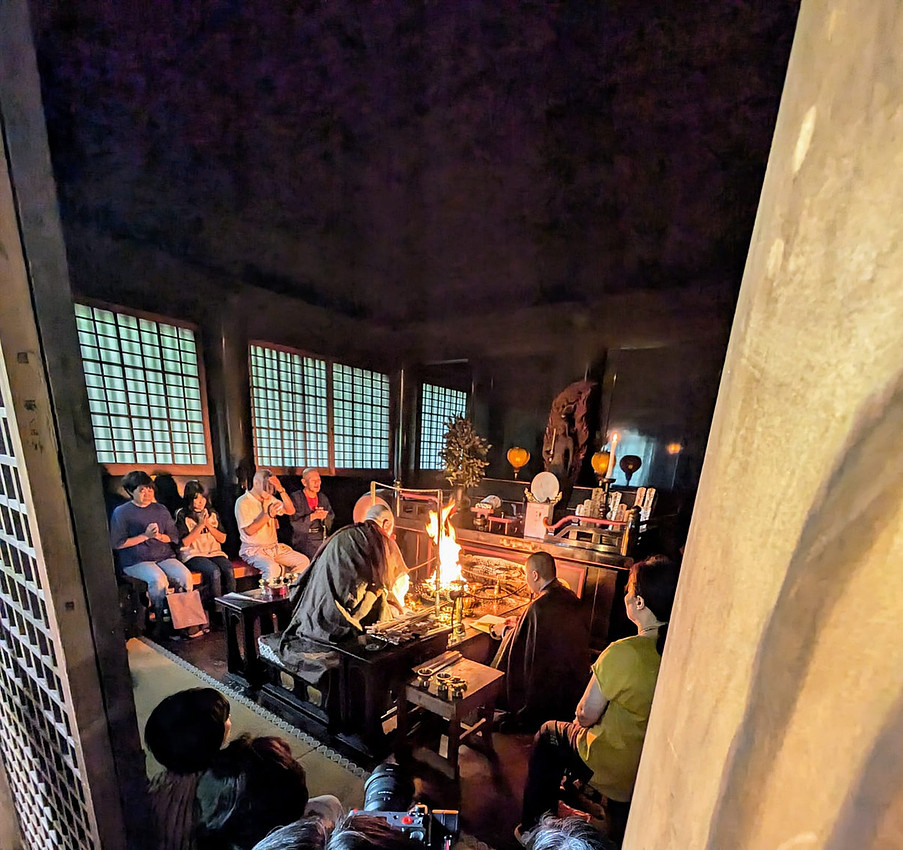
Then it got a bit surreal as he then suggested he could ask the Monks to see if Dino Pig could maybe meet the Monks for pictures and they could maybe give him a blessing. The young girls who were holding the legend of a pig, thought this was a great idea and were well up for it. Horrified I jumped in and expressed my concerns that maybe having a very badly behaved Dino Pig would be quite disrespectful to the ceremony.
Disappointed he looked to me and said “I was truly a good man for considering others”
“I know” I smiled before making a quick exit with a slightly disappointed Pig!
Crikey he could have ended up as pork crackling
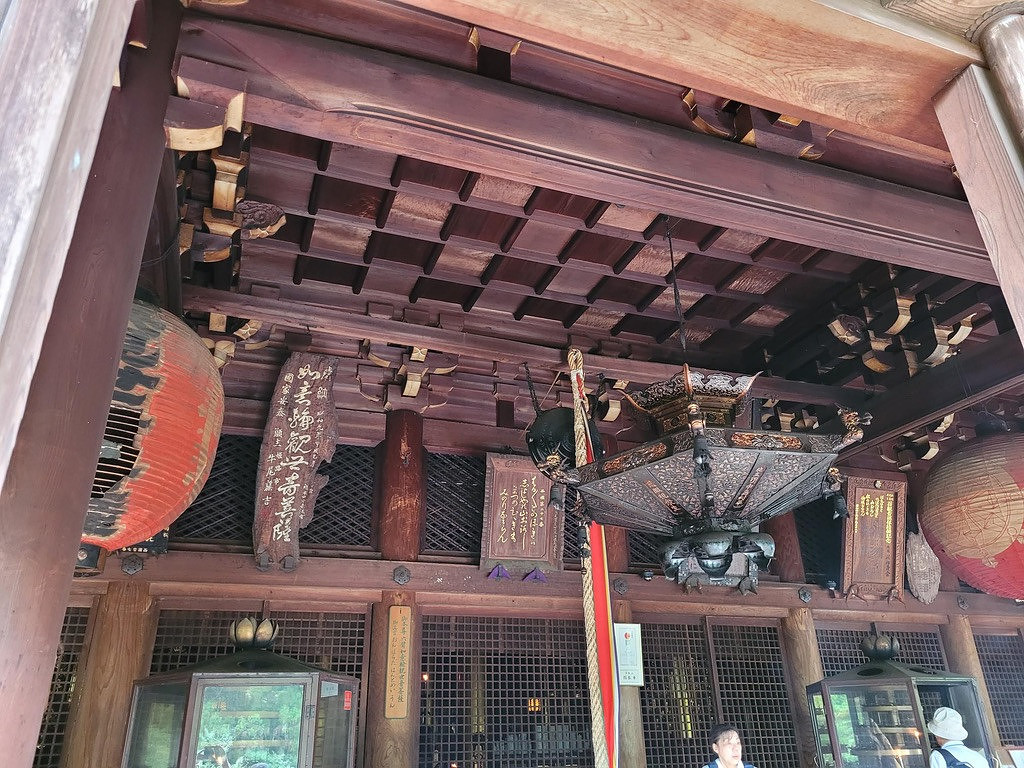


FOOD AND DRINK
In the afternoon we stopped for a drink in a very small pub, It seated only 10 people and there were two seats left. We were kind of coxed in as we were only walking by. But I guess a western bloke with bright white hair is fair game to wave into your local drinking hole!
The beer was nice and thanks to Google Translate so was the company. Meeting real people is so rewarding!
We moved on to find somewhere to eat. This wasn’t simple! As there are so few English words and not all the pictures on boards outside looked edible! But we were lucky as we discovered a restaurant that had a hot coal fire in the middle of the table. You order the food from a computer and everything is delivered to your table including raw meat for you to cook yourself.
It was a wonderful way to slowly while away a meal time chatting and cooking in our own time. The meat and side dishes were extraordinary and the staff as were were beginning to expect were quite simply lovely!
Before we knew it yet another day had flashed past and it was time to get back to the port again
DAY THREE KYOTO
From the port at Osaka we took the above ground Metro train which travels above the roads and houses to central station Osaka. It gives a perfect view of life in Japan as you look down on the densely packed streets. At Shin Osaka we walked the labyrinth of malls and subways to the Shinbasha Bullet Train terminal. Ten minutes of frustration trying to book a return on the automated ticket machine we gave up and went to the desk. My goodness the lady was just so nice and for just $10 each way we had the tickets and a big smile on our faces. Upstairs platform 14 in 3 minutes!
Our preconceptions of the Bullet train were very much turned on their head.
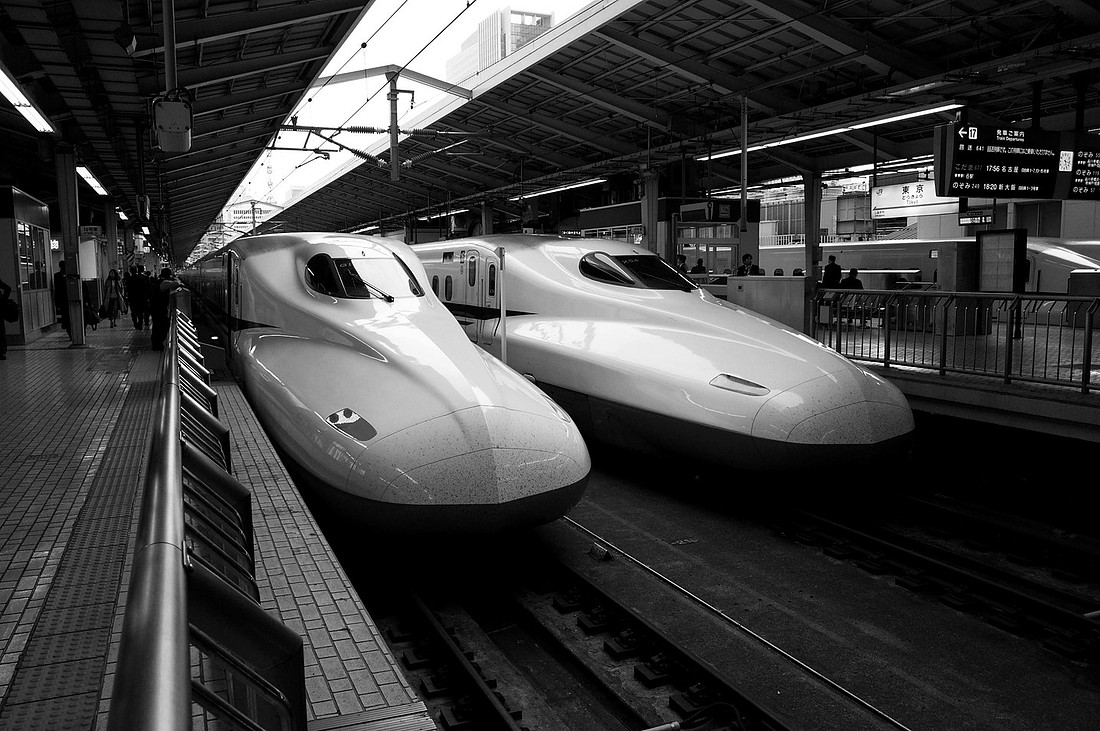
It looks stunning when it glides into the station with a front designed around the shape of a King Fisher and the feathers of an Owl. It has fins on the roof and body is a very shiny white. The whole experience inside is rather like an aeroplane with forward facing reclining seats, luggage racks and small windows which have blinds. There are booked seats, extra and oversize luggage sections and of course a business class.
As it serenely pulled out of the station I could not help but laugh and show my excitement, I have always wanted to be on one. And “wow” was it fast! At one point we were alongside a motorway and the cars looked like they were almost stood still. In well under twenty minutes were were in another city Kyoto and had reached a maximum speed of I believe of 200mph.
Across Kyoto this time by underground and we found our selves at the Imperial Palace Grounds. It was a massive enclosed city with noble men’s temples and houses. A nice place to have a quick look around we thought and then move on but, we saw quite a crowd at the main Palace gate and decided to go in. The entrance had security but was free which was almost a disappointment as we hadn’t snuck in anywhere for quite a while (only kidding).
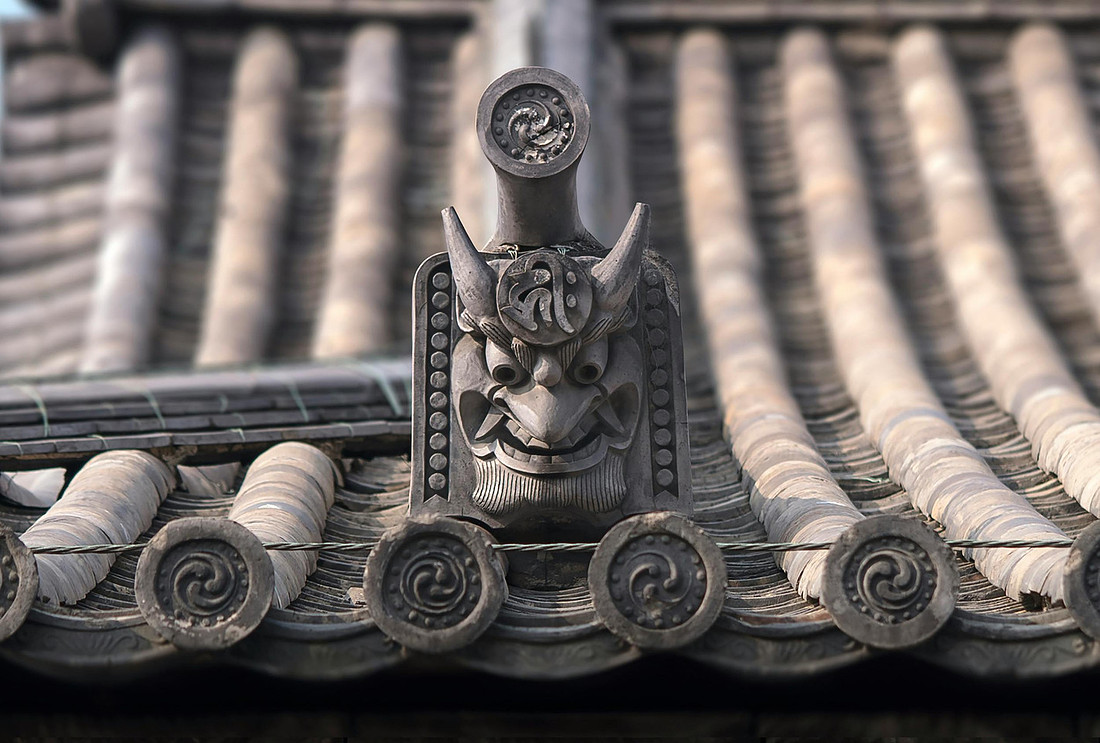
We were so glad we did go in as it was quite impressive but the acres of gardens were breathtakingly stunning! It was a lesson in patience and precision. Every single plant and tree were shaped, pruned and manicured to look and grow a certain way.
Little Japanese bridges crossed streams and pools full of Koy Carp. Around rocks were small trees like bonsai followed by trees of ever increasing size but even the very tallest had been clipped and shaped. There were no gardeners there so I can only presume at night they must have a team of “Umpa Loompers” doing the hard work.
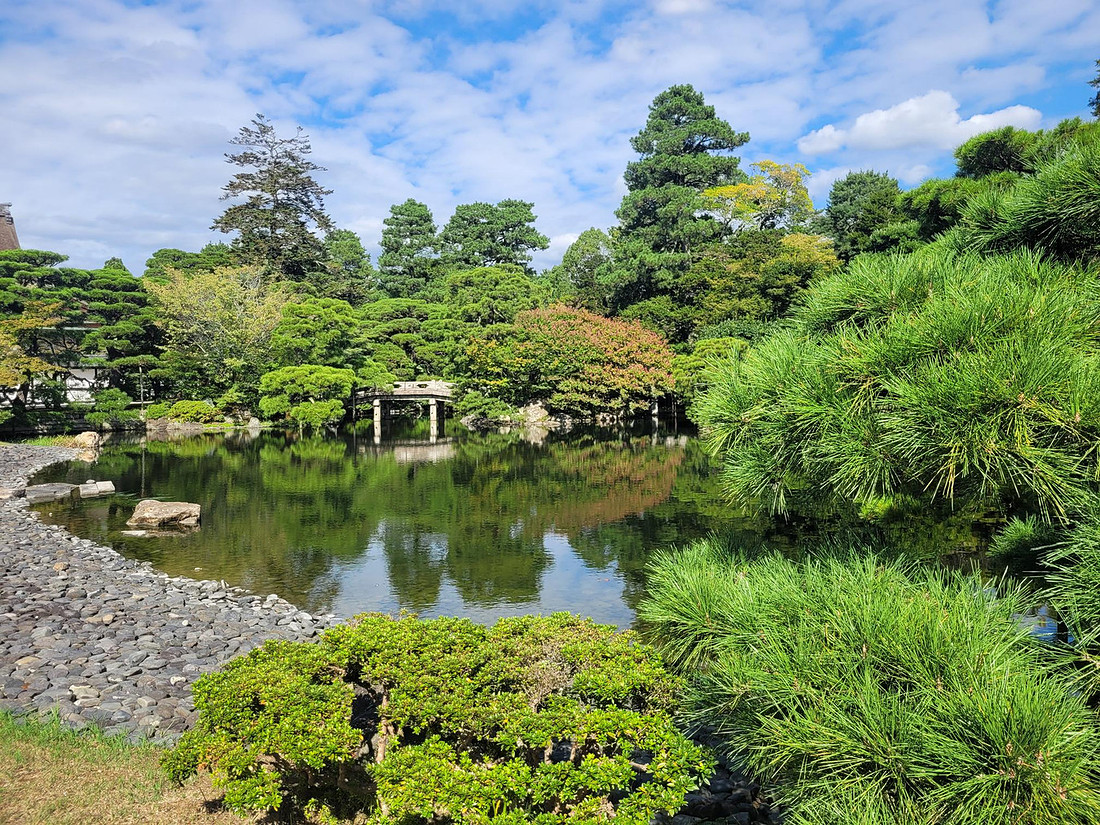

Lunch was cool; I just popped my head inside a backstreet restaurant and was literally dragged in by the collar and sat down. Before I new what hit me I was looking through the menu! And this was all done very politely of course. No English a bit of pointing and we had a wonderful meal. No idea what it was though.
By late afternoon early evening we reached the district of Gion the main reason for our trip here. It is the Gaisha area we had both read about in books. The Gaisha are not as some people think prostitutes but highly sophisticated companions. Anyone can buy a women but who wouldn’t want the good company of an intelligent society revered individual. The district is incredibly well preserved and much like it has always looked with wooden houses like out of an oriental movie. Intricate wood roofs with exposed carvings on timbered frames. The uneven narrow streets are cobbled and alley after alley snakes through lines of little tiny shops, bars and restaurants lit with traditional lanterns of mostly red or white. It is simply enchanting.


There is only one thing though, it is absolutely rammed with tourists. I am one of the offenders but after encountering next to no other tourists on our trip it was quite a shock. There were walking tours on every corner, girls walking around in rented Gaisha Kemonos and one main Street purely selling tat.
It was still the most amazing experience and we did find a little locals bar down an alley that only held eight to ten people. We had a drink with the locals and toasted Wendy’s birthday before going back to Osaka and home by midnight. Wow what a great day and a birthday to never forget!
]]>
A few years ago I wrote an article on safety in top class racing. Not something I recommend for the faint hearted as with all of todays social media it turned into a right bun fight. It really is something that splits opinion. It would be fair to say that a certain section of society would bring back the Roman amphitheater’s and Gladiators while others are at the complete opposite end of the spectrum and would make everything as safe as possible. Obviously there is middle ground but it is hard to find! And controversially the comments and views to my article were much more fervent and aggressive on the side of safety. A small but interesting contradiction.
So while researching the participation of Ladies racing at Le Mans I discovered a similar and fascinating contradiction woven into the history of top level Motor Sport.
From the very first motor races the fairer sex have always excelled. In 1903 Camille De Gast competed in the Paris to Madrid. While on this side of the channel countless ladies competed in speed trials and sprints. During the 1920s & 1930s women in racing cars was certainly not unusual. At Brooklands there numerous females, and the likes of Key Petre and Glenda Stewart made their mark as great drivers. At the 1930 Le Mans 24 Hours the first all women’s team of Odette Siko and Marguerite Mareuse not only entered, but came home 7th overall and two years later Siko paired up with Jean Sabipa and finished 4th overall.

In 1935 ten ladies entered and there were 4 all women crews! Right up until the 1950s women were a contstent fixture at the great race. And then in 1956 all women were banned! As far a I know “no women had caused a crash or died” but it was not until 1971 they were allowed back. Even Rosemary Smith the famous Rootes Rally driver was refused entry in 1969!
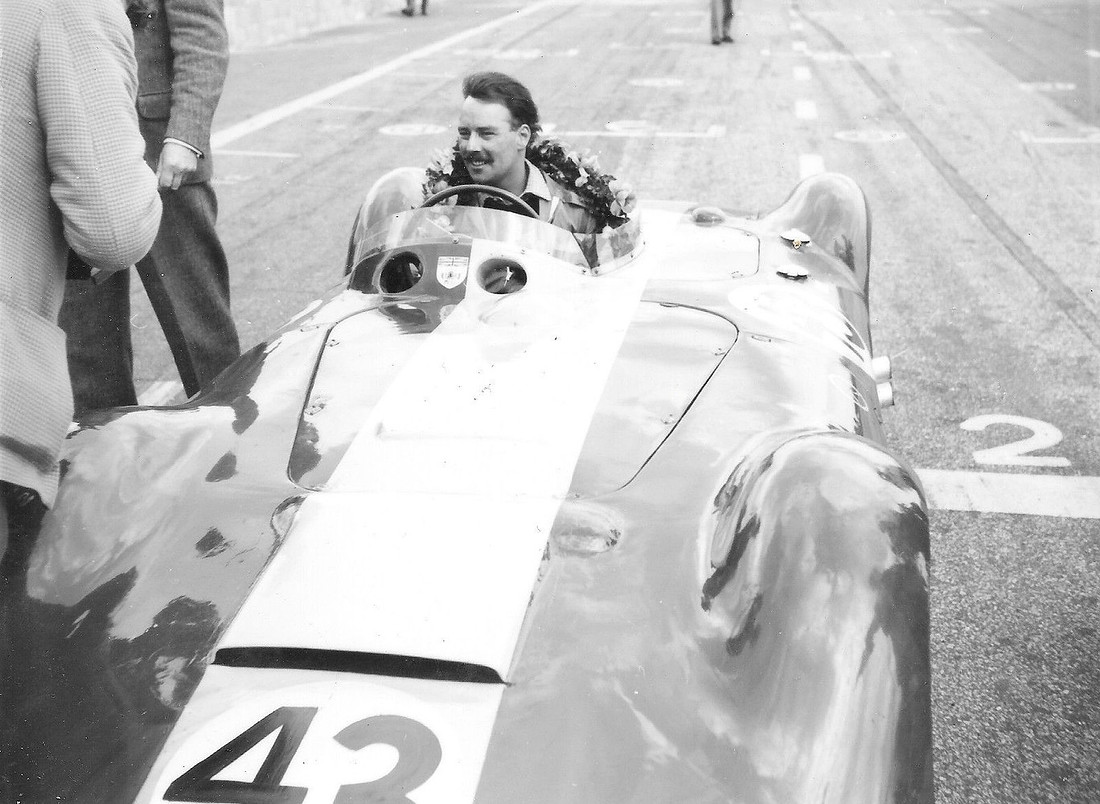
In 1954 a certain Archie Scott Brown had just won two top class races at Snetterton when another competitor complained to the officials that Archie was disabled and should be disqualified! Yes disqualified for being disabled! Unbelievably Archie lost his British racing licence for a full two months and the future looked bleak but for a certain enlightened group of drivers and journalists who campaigned Archie’s cause. He regained his licence and went on to become one of the best Sports car drivers of his era. He became famous for his big drift and bullying style in the famous Lister Jaguars and Maseratis. But despite this, incredibly the ACO at Le Mans would not let Archie drive in the great race! He was one of the all time great sports car racers and was not able to drive at the sports car Mecca! In single seaters the story was much the same: Archie had won the Formula 1 Silverstone International Trophy in a Connaught and seven weeks later at Monza Archie had provisional fastest time for the Italian Grand Prix! But it was once again not a happy ending as you might have expected, Archie was sent packing after his disability was highlighted and he could not appeal without an International licence, and guess what “Archie couldn’t apply for one of those as he was disabled!”
In the early years of Top Class racing across the planet, the roads were littered with carnage! Death by decapitation, burning or any other ugly end was common. It was accepted right up until the late 1960s. There were small improvements here and there but essentially motor racing was dangerous end of! But gradually things changed little by little. Through the persistent campaigning of drivers like Jackie Stewart and the professionalism of Bernie Ecclestone Formula One became unrecognisable from it’s gruesome past. In the USA, Indycars and Ovals cleaned up their acts with stronger cars and better medical back up. And so today we have maybe reached a point where it could be seen as too safe by some. A sport struggling to maintain excitement and appearing totally safe.
In 2016 Frederic Sausset raced at Le Mans and finished 36th and it brought a tear to my eye when he crossed the line. Frederic has no limbs! A quadruple amputate who was lifted into the car. showed the world there were no boundaries to what a disabled person can achieve.
In the next year 2017 Billy Monger an up and coming teen racing star had a Formula Four racing accident which left him with one leg fully amputated and another gone from below the knee. Billy is still on the way up! He is in single seater F3 with two pole positions and an amazing sixth place in the final championship placing. He has tested a formula one car and looks set for a bright future! Alex Zanardi is a legend too! Overcoming such terrible injuries in his Indy car crash but going on to race again and not only that but in his spare time he is winning Olympic Paralympic medals.
So it is so ironic that in times when safety was just a minor irritant to the Motor Racing fraternity, a person could be biased against on grounds of gender or disability, and today in an ever cautious world the Ladies and the Disabled are encouraged to race. Yes motor racing is still dangerous; ask Billy! But it’s changed attitude to gender and disability is something that today motor racing fans should be so proud of.
Billy and Frederic are looking to pair up for a crack at Le Mans in what would be the first ever all disabled team. Go Billy Go! Go Frederic Go! You have my support!
]]>
BMW Are back at Le Mans 2024
When I was a youngster going to Le Mans in the late 1970s and early 1980s there were certain sights and sounds that had a lasting impression on me. For sure the fair was a massive assault on the senses! And for those who never saw the fair at this time I think it would shock you even today. There was the Rifle Range where plates were shot out of the tall trees, Strippers showing their wears, Boxers in the ring, Dwarfs in freak shows, 3 D Cinema and a whole host of other politically incorrect attractions!
The Esses at night was much more than a visual memory. Sat in the trees in the evening there was always more than the lights arcing through the trees. There was the smell of cooking frites wafting through the still night air and a mixture of sounds from the cars and rides from the fairground. All instilled in my mind for ever.
So something I had never dwelled on was just how little knowledge I had of what was happening out on the track. There was scarcely any English commentary on the PA system, and I had little idea of the what all the classes and marques were. I have since realised I was entertained by the sheer thrill of the cars at
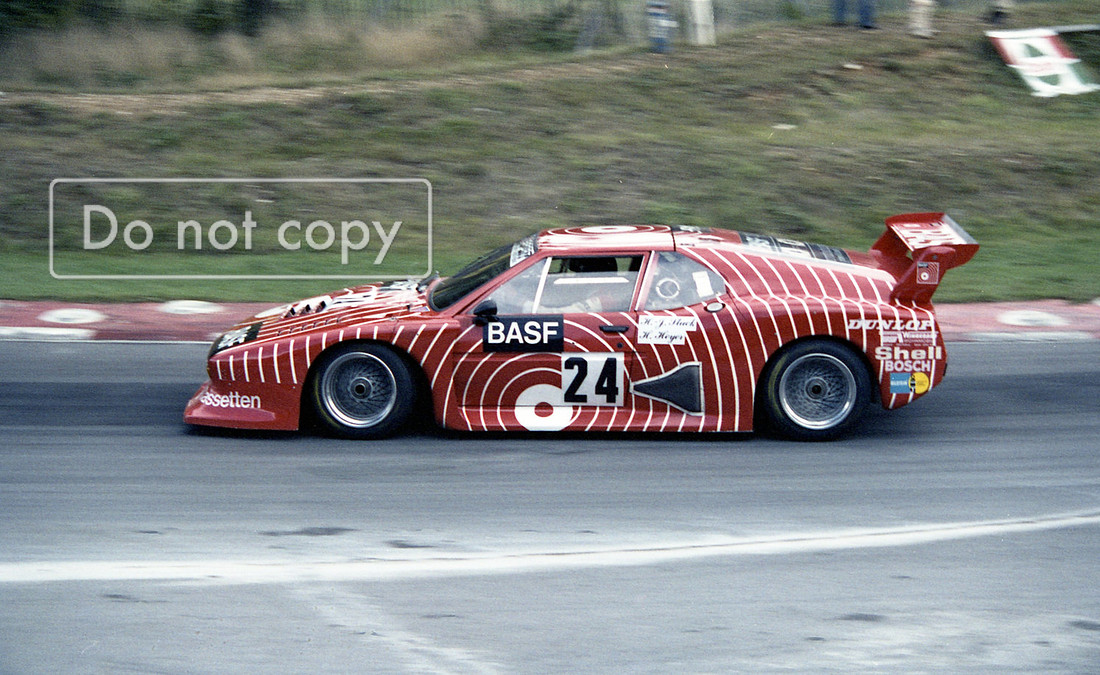 speed! And this is why I got thinking about the BMW M1.
If I ever pause to remember my early 24 hour races two or three vivid images hit my mind. One is a memory of looking across the Dunlop Curve, at this time it was an incredibly fast corner, and a car that is always dead centre of my thoughts is one of the numerous Porsche 911 935 derivates. With their rear ends hunched down under power and their classic road car shape it was a car I could picture myself in one day. I loved it!
The other vivid image etched on my hard drive of a brain, is a picture of me leaning on the railings between the Esses and the entry to Tetre Rouge corner At the time this narrow spectator area was one of the highlights of the circuit. The cars used to drop down the gears before accelerating into the corner and out onto the long Mulsanne Straight. And the car that is catching the sunlight as it screams into my sight is the BMW M1..... Gosh it sounded and looked so good. It was on the bedroom wall of so many young lads at the time, but I was lucky enough to see it in its glory and at full chat. But much more than that I was privileged enough to have my ears burnt by it! Wow what a memory!
]]>

Today I watched the qualifying for the Canadian Grand Prix and it was a reminder of how things have changed and how similar things are to the very beginnings in France more than 110 years ago!
It was only yesterday I was reading about the very first Grand Prix the French GP of 1906 in Le Mans. It was an amazing event held over a road course of 64 miles about 100km through the small towns and villages on the roads outside Le Mans city. The race of 769 miles over 1000km was contested over two days with cars setting of 90 seconds apart. There was a full grid of 34 cars from many countries. The big manufacturers of the time like Renault and Mercedes had professional crews of mechanics and workers, sparking controversy as this was considered the first seeds of professionalism penetrating the sport. The race was won by a well known French brand called Renault and the driver was Ferenc Szisz of Hungary.
Now you may ask how do this huge engined beasts in the French countryside relate to the technological marvels we see today? The first thing that caught my eye was that three of the top manufacturers in that first race are still on the grid today. Renault, Mercedes and Fiat (Ferrari).
.The first Grand Prix featured what could loosely be described as a tyre war. Three very familiar names supplied the black bits; Michelin, Dunlop and Continental. The race was lost by not fitting the new Michelin detachable rims! The new detachable rims took only four minutes to change compared to 15 minutes on the standard wheel! The winner Szisz made 19 tyre changes and the third placed car finished only 30 minutes adrift of the winner. Remarkably he shunned the fangled tyres (oh dear). Winning the race gave Renault a remarkable boost in sales almost doubling the next years turn over. I wonder if the old Ford quote “Win on Sunday, sell on Monday” still applies at today's Grand Prix?
Frustratingly somehow I have a naive jealousy of how the French got things done in 1906. Just a few years ago ago Silverstone had the embarrassment of a cancelled Moto GP because the tarmac track surface was not up to scratch. With talk of contractors being sued and a massive over budget to Silverstone if they have to pay for the 3.5 miles 5 kms of track to be relaid, it seems remarkable that a few days before the 1906 Grand Prix they re-laid all 60+ miles of track! Where the circuit had to detour around villages deemed to small to drive through they quickly built wooden roads around them! At the bottom of my local road they are building a new 900 meter slip road that will take a year to complete and will cost 62 million pounds! Most people are pissed off with the two hour queues already and loss of income to businesses! Oh if only it was 1906!
http://www.ebaystores.co.uk/motoring-man
Dan first came to my attention when I collected Autosport Magazines, as his beautiful blue Eagle F1 was so often on the front cover. I personally think that car was one of the prettiest and best presented cars of it’s era. I mean just look at that neat riveting and wonderful stainless spaghetti exhaust!
Being a Porsche fan I of course read everything on the factory entries in the 1960s and that man again Dan Gurney cropped up. How sad was it that the other big win at Solitude was not an official Grand Prix?
Only recently after receiving some photographs, I found out more about the Gurney Eagle Indy racers of the 1970s with Roy Winkelmann. It of course fired my interest in the man even more, and since have read articles and listened to pod casts involving the great man.
So even though I never saw Mr Gurney race it was a sad day for me too when I learnt of his passing. But there is one other thing for certain, whether you saw him race or not; Dan Gurney has left an indelible mark on Motorsport that cannot and will not be forgotten. Some things are more obvious than you may think!
Spraying Champagne: A spontaneous action after his Le Mans win that now is part of all Motor Sport.
The Gurney Wing: A end plate described as such even today.
The Gurney Bubble: Dan was over six feet tall and the famous GT40 Bubble in the roof was for him.
The Porsche factory’s only F1 win: Dan Gurney French GP 1962
Brabham: The teams first Grand Prix win
Eagles first Win Belgium: Becomes the only driver to score the first win in F1 for three different manufacturers; Porsche, Brabham and Eagle
Introduction of the full face helmet in F1: Dan at the Nürburgring 1968 was the first driver to wear a full face helmet.
So there we are a racing driver never to be forgotten.
