Driving the Targa Florio in Sicily: History, Hairpins and a Remarkable Meeting
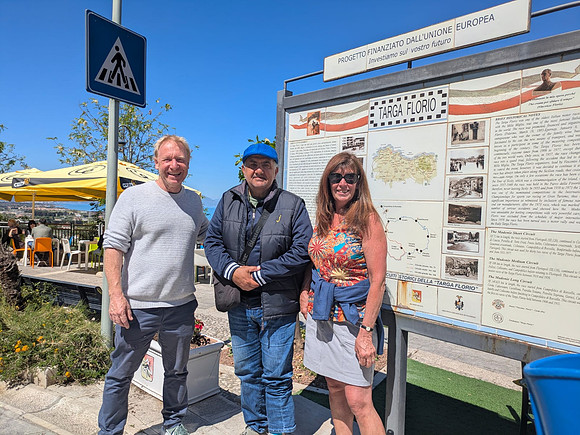
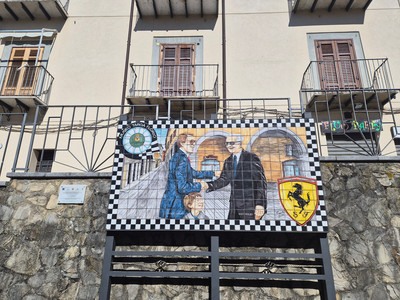
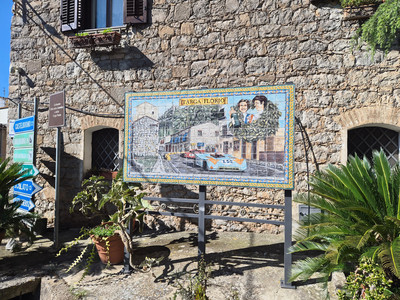
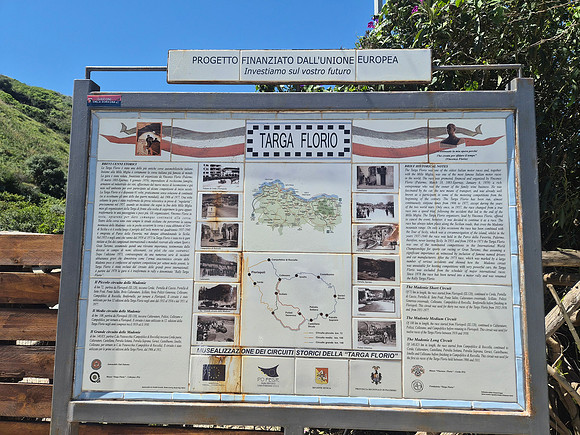
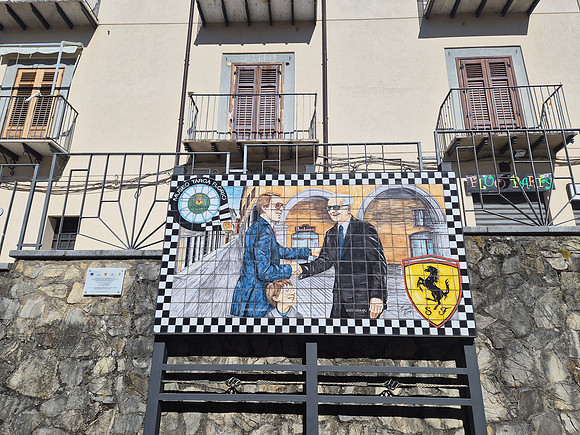
TARGA FLORIO, SICILYCampofelice “Look—there’s an information board on the Targa Florio! How did we miss that?” “We were right here last night—I didn’t see it,” said Wendy, genuinely puzzled, as if it had appeared overnight. From behind us, a man rolled up in a wheelchair. “Right here?” I asked, stunned. Slowly, he stood, steadying himself with a walking stick, and made his way over to the board. He pointed to a photograph—a prototype Ferrari, a building behind it—then turned and pointed to that same building, still standing today. His words came slowly, but the meaning was clear. The race had thundered through this very street, and as a boy, he had watched it happen. I explained, as best I could, that I knew a little about the race—that I had driven the entire course the day before. Communication wasn’t easy, so I ran back to the car and returned with my Motoring Man leaflet. His reaction was priceless. He recognised it. Not only that—he purchased items from me. He had read my writing. What followed felt wonderfully improbable. By the next day, we were picking up our new friend and heading to a private museum in Cerda. He told us, briefly, about a brain injury—perhaps a stroke—that had affected his speech and movement. But it didn’t matter. Antonio was sharp, warm, and full of stories. He just needed time—and that, we had plenty of.
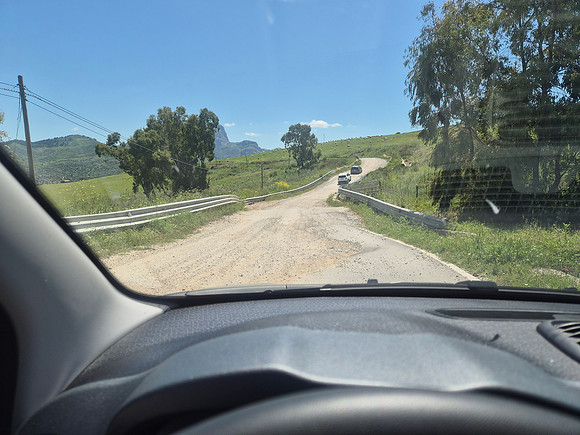
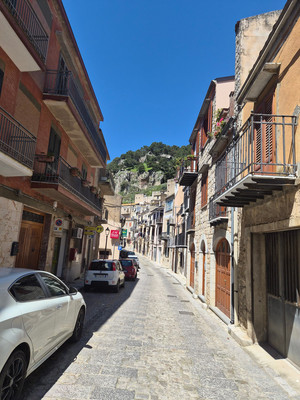
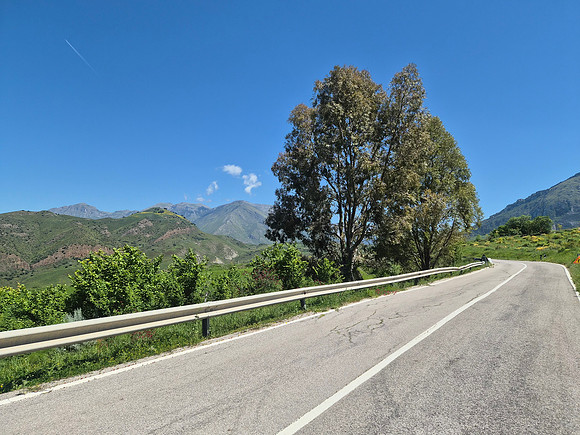
Driving the CourseThrough lines of parked cars and coaches, and stuck in a massive traffic jam trying to get into Cerda—where the race famously started—I leaned out of the window and asked a traffic controller, “Why so busy?” “Artichoke!” he shouted. “Sorry… artichoke?” “Forty years!” he smiled. Bad translation, I guessed. One hour in, on the outskirts of town, I arrived at a roadblock and explained I needed to carry on up the mountain on the Targa Florio course. Surprised that I wasn’t staying—but granting access—I asked again, “Why is the town so busy?” “Artichoke Festival—40 years! Very important day!” she replied. We set off up the road, wondering if we had missed out on some prime vegetable action! We left the crowds behind and climbed into the mountains, following the Targa Florio route. The roads were astonishing—tight, broken, and unforgiving. It’s almost impossible to imagine sports prototype cars racing along them at speed. And yet, they did. Beautifully ludicrous.
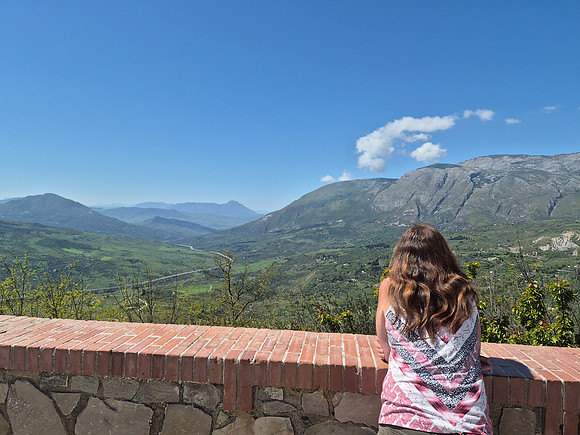
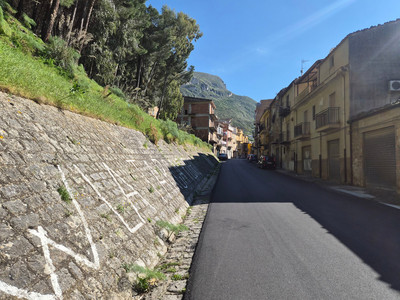
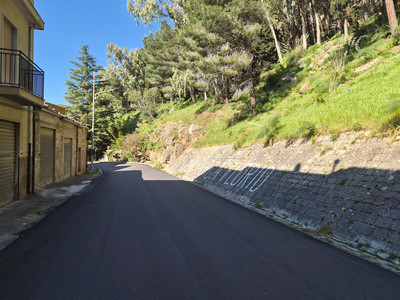
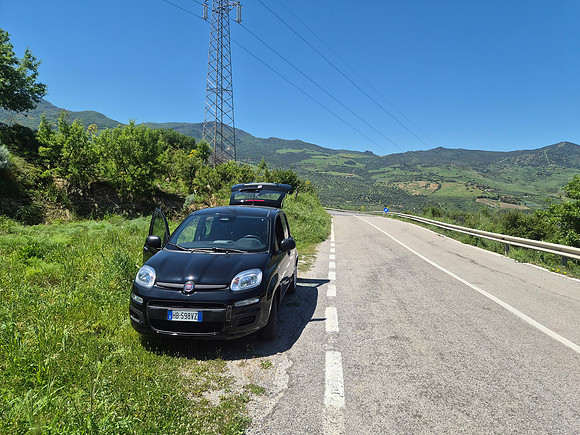
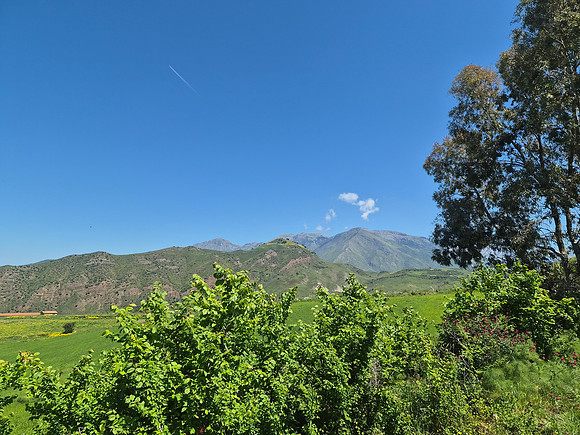
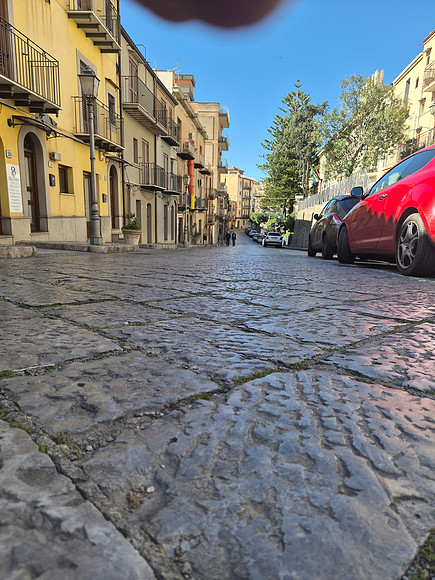
In places, the tarmac simply gave up, crumbling away at the edges into the valley below. Driving demanded a lot of concentration, but the reward was extraordinary—rolling green landscapes, rugged peaks, and scenery that, unexpectedly, echoed the Lake District.
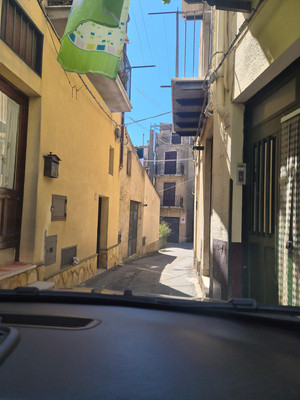
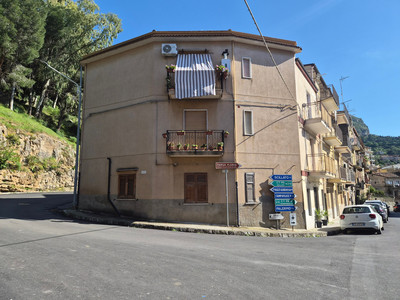
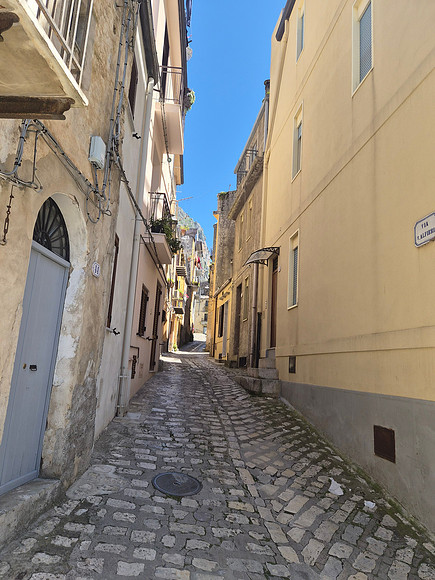
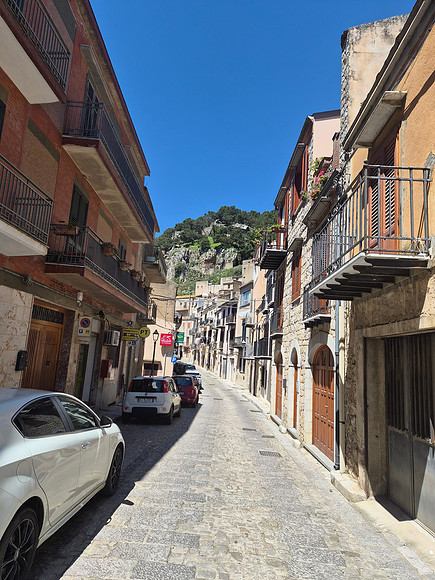
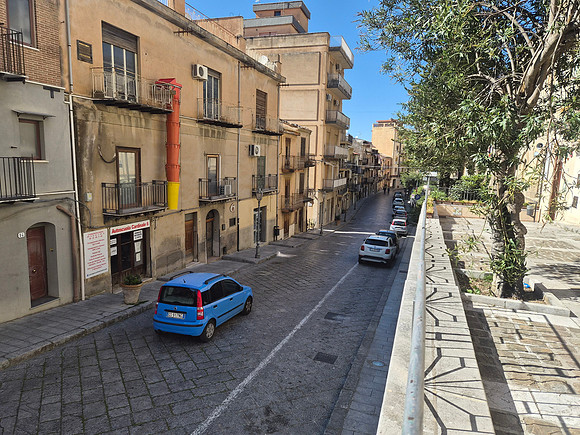
The villages near the summit were postcard-perfect but eerily quiet. Some streets were so narrow that our Fiat Panda barely squeezed through, mirrors millimetres from the walls.
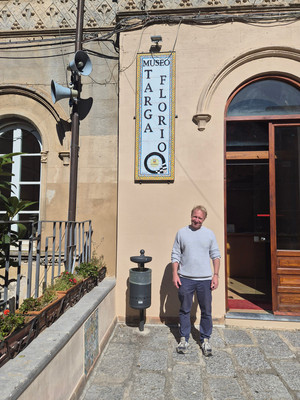
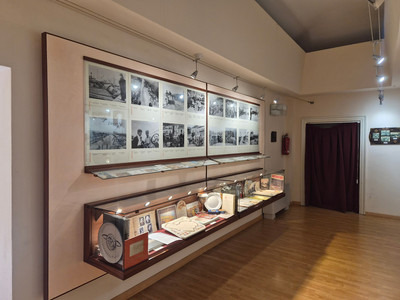
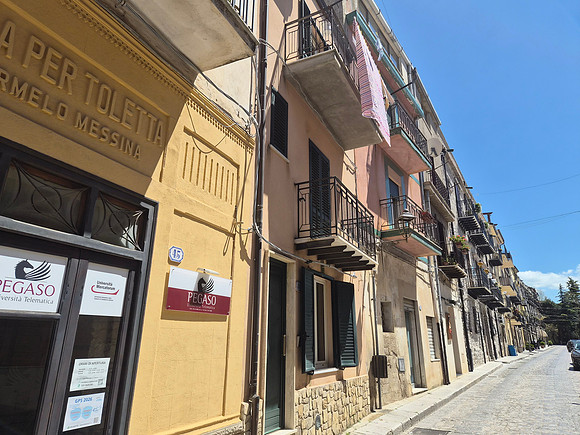
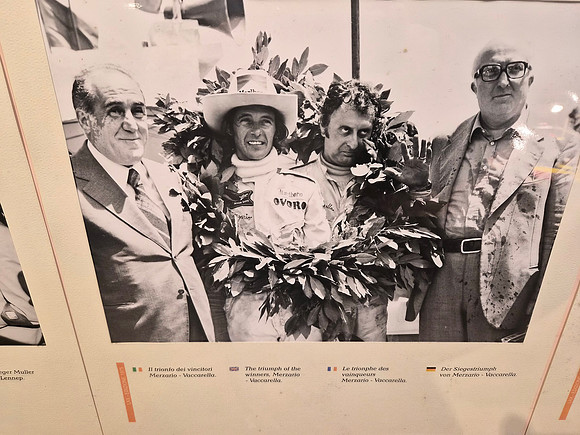
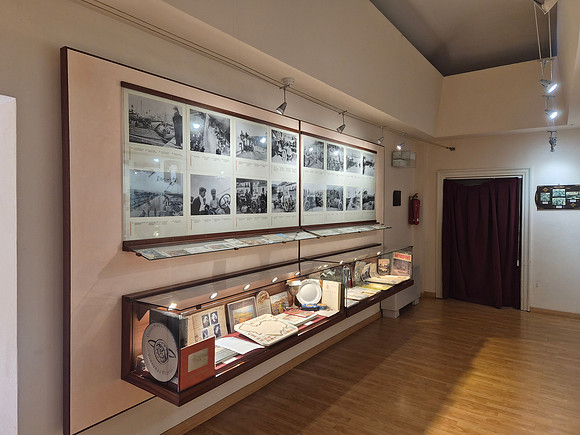
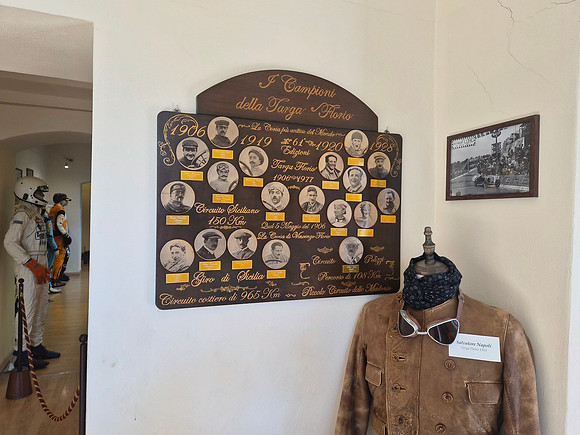
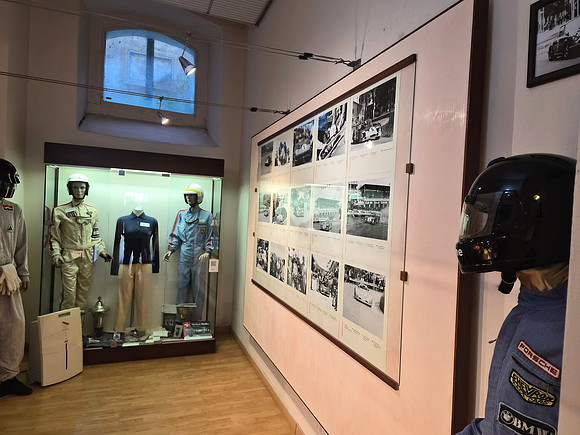
At the town of Collesano, we parked up and found the small Targa Florio museum tucked into an almost deserted high street. Not expecting it to be open, we were pleasantly surprised to find a young girl at the desk. Entry: €2.50. Forty minutes later, we left richer in knowledge. The exhibits were modest but meaningful, with plenty of English translation and a wonderfully nostalgic short film of the 1973 race to round things off. We loved the little place.
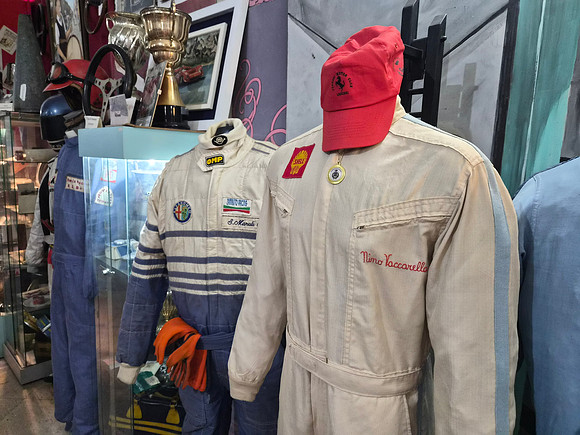
Collesano features in many magazine and book reports and somewhere I recognised easily. At the end of town is a hairpin around a stone walled building still graffitied with the name "Nino". The memory of Nini Vacarella the three time winner of the race and local hero from Sicily! This place oozed history and legend! I was just like a big kid!
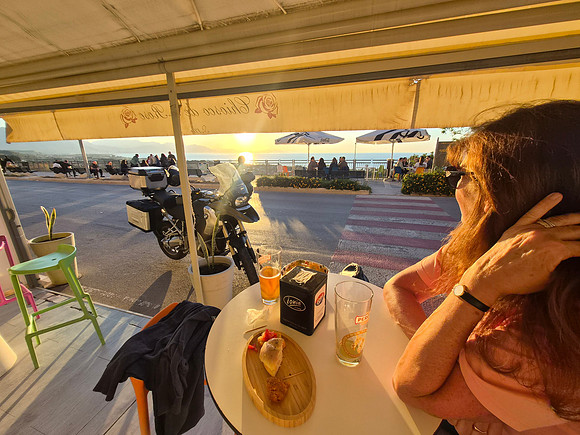
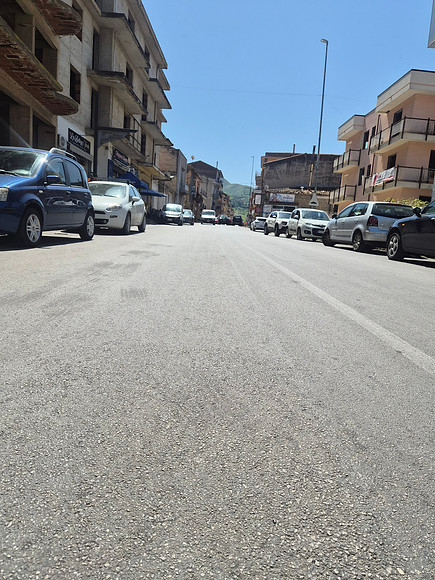
CampofeliceBy the time we reached Campofelice, we realised we had come to the end of the mountain section. From here, the course drops down and stretches into a long coastal straight. We found a bar perched at a perfect viewpoint above the sea and stopped. Cold beer, warm air, endless horizon. “I’m knackered,” I admitted. “Can we stay here?” Wendy didn’t hesitate. “No problem—plenty of places around.” Within minutes, we had booked a room at a charming B&B—Rainbow—just a short walk away. Soon enough, we were back at the bar, watching the sun drop into the Mediterranean.
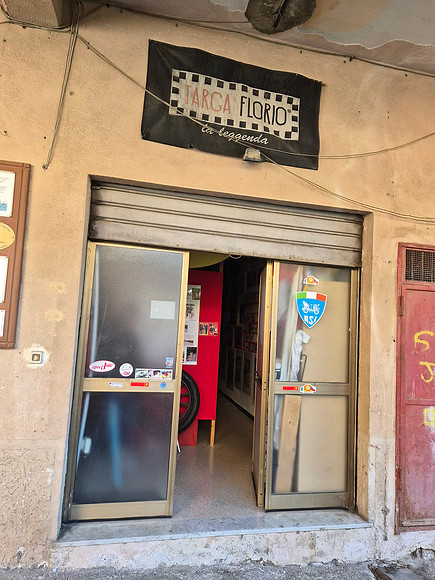
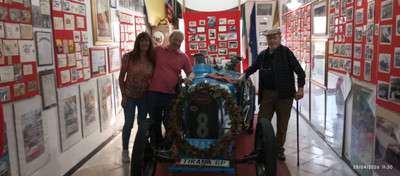
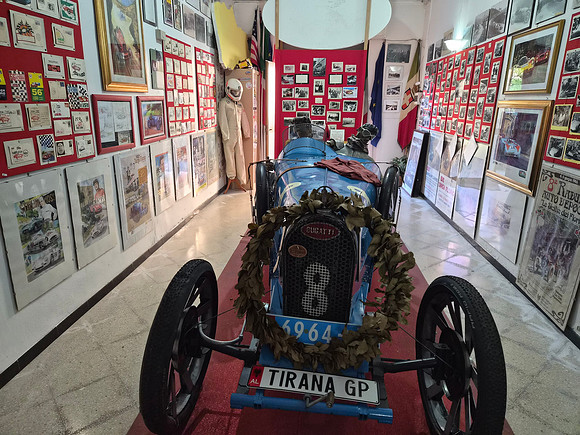
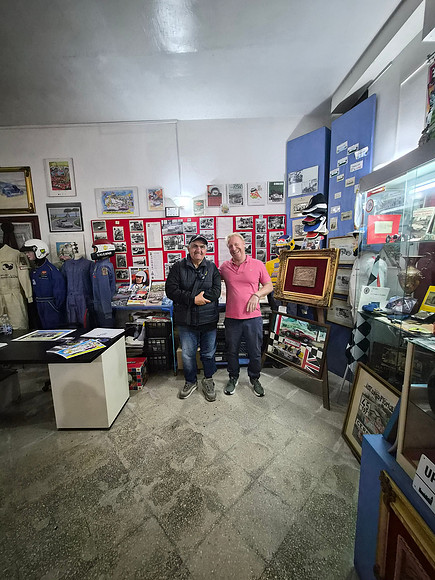
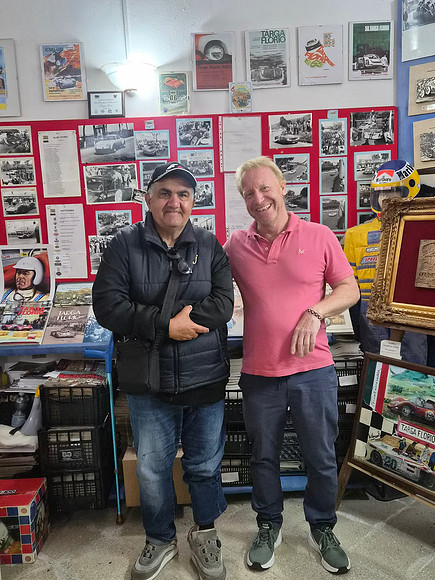
Dinner was simple, perfect pizza. Then bed. Only later did we realise we were staying right on the old race route—the very straight where the cars once roared through town. And so, the next morning, having tea and coffee while looking out over the sea again, before leaving town, we met Antonino Pusateri. Cerda — Antonio’s MuseumTwo days later, in Cerda, Antonio Contazaro greeted us with a firm handshake and a wide smile. He unlocked an unassuming metal door and ushered us inside.
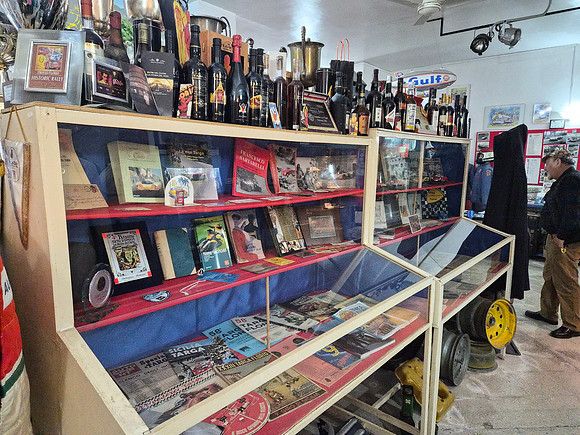
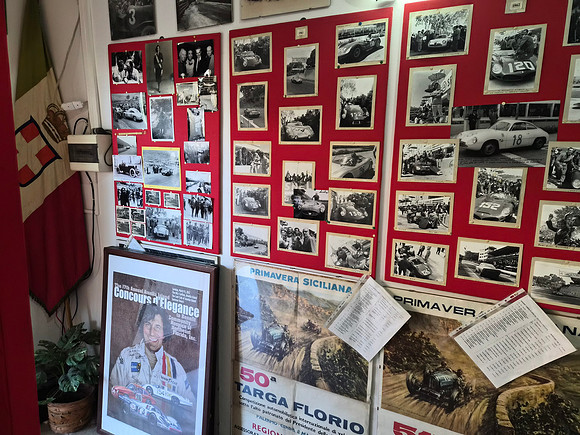
What lay beyond was extraordinary. An Aladdin’s cave of Targa Florio history—rare artefacts, photographs, memorabilia, each piece with a story. Antonio moved through it all with infectious enthusiasm: “Bugatti—winner… starting flag… signed poster—Vic Elford, Brian Redman…”
This wasn’t just a collection—it was a lifetime of passion. To be welcomed into such a private space, in the very heart of Targa Florio country, felt incredibly special. And that’s the thing about this journey. It wasn’t just the roads, or the history, or even the cars. It was the feeling. I feel privileged to have met Antonio. EXPLORE THE MOTORING-MAN PHOTOGRAPHIC ARCHIVE Interested in historic motor racing? Explore our photographic archive covering more than 70 years of Le Mans, Formula 1, Group C, Sports Cars, Touring Cars and Ralling. VIEW THE PHOTOGRAPHIC ARCHIVE → Photographs From The Trip:
Keywords:
Campofelice,
Cerda,
Collesano,
Ferrari,
historic motor racing,
motor racing photography,
motoring travel,
motorsport,
Sicily,
Targa Florio,
Targa Florio circuit,
Targa Florio history,
Targa Florio route,
Targa Florio Sicily
|