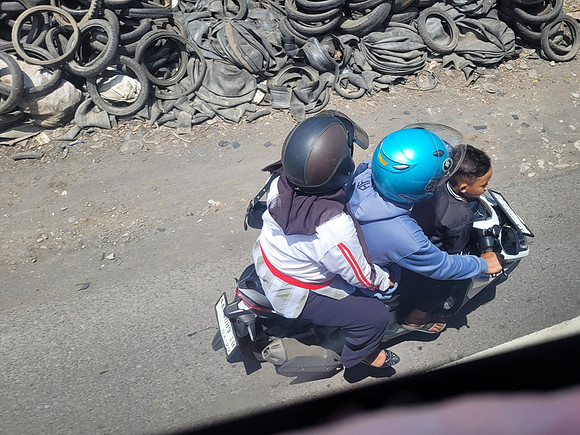
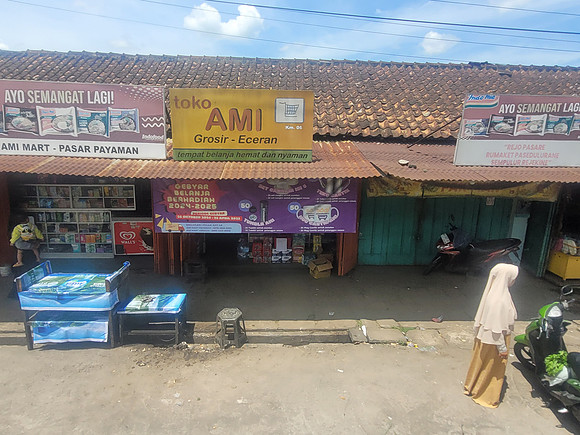
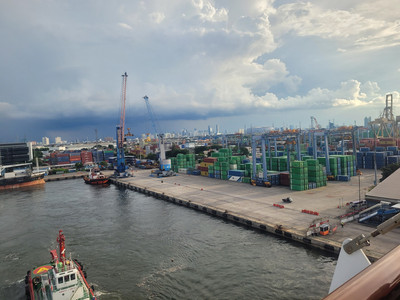
Borobudur Temple Java: A Day of Chaos, Charm, and WonderBorobudur: A Day of Chaos, Charm, and Wonder Borobudur, also transcribed as Barabudur, is a 9th-century Mahayana Buddhist temple in Magelang Regency, near the town of Muntilan, northwest of Yogyakarta in Central Java, Indonesia. We spent the day getting there—what an adventure! We arrived at the rather nondescript port of Semarang on the island of Java first thing in the morning and hopped on our tour bus. It was quite an expensive trip we’d opted for, but after meeting a very persuasive photographer who insisted—almost lethally—that we must take the tour, here we were. As we exited the port, it was clear the roads were totally jammed, yet we seemed to be moving with ease. Over the coach PA, our guide explained we had a police escort to get us through the traffic. During a Q&A session, he added that the escort would accompany us all the way to the temple and back—a full five hours on the road. “This is why your trip is expensive! Without them, we could never get there and back in a day!” “Do the police normally provide a service like this?” someone asked. “Oh yes,” he replied nonchalantly. “If the bribes are big enough, the Indonesian police will accommodate you.” It turned out every traffic light was held for us, roadblocks were put in place as we tore down the wrong side of the road, and we even drove on a motorway that hadn’t been completed yet. That was truly surreal. Without the escort, it simply wouldn’t have been possible to make the round trip in a day. The coach journey was long, but I was excited to see the changing landscape. Semarang was immediately striking—clearly a very poor town. The early colonial buildings were crumbling shelters, and many families seemed to live half in, half out on the street. Everywhere were tarpaulins, old tyres, and junk. Every inch of road buzzed with motorbikes—some carrying entire families, all seemingly hurtling somewhere fast.
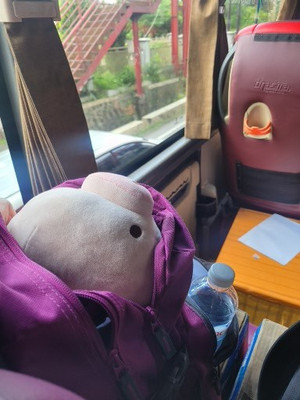
Just feet from my window, I waved to young children who looked up at me. Dino Pig peeked out and got the most wonderful laughs from the kids. Our guide, who seemed to speak for all of Indonesia, laughed constantly and told stories as we drove. He mentioned the motorbikes and claimed it was very safe to ride here because everyone respects each other. Helmets are compulsory for the driver—but not for wives and children. He even said Indonesia was one of the safest countries to ride a motorcycle. I couldn’t help myself and did a quick Google search: In 2021, the WHO estimated around 31,000 fatalities in Indonesia due to road crashes, accounting for 2% of all deaths in the country. Most fatalities were motorcycle passengers. On the journey, Wendy and I had a little competition to spot the largest load on a bike. She spotted a farmer with what looked like half a ton of rice piled up, but I got the record with something scarcely believable: at a set of lights, a scooter pulled up next to our window. A father had his six- or seven-year-old standing in front of him, holding the handlebars. Behind him sat another small girl, squeezed between the father and mother. In her right arm she held a baby, and cupped in her left arm—another breastfeeding baby!
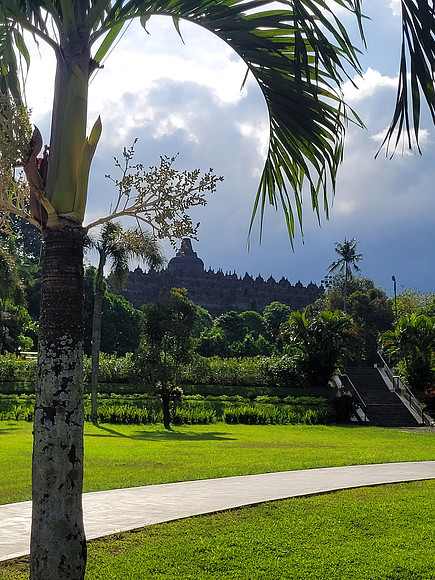
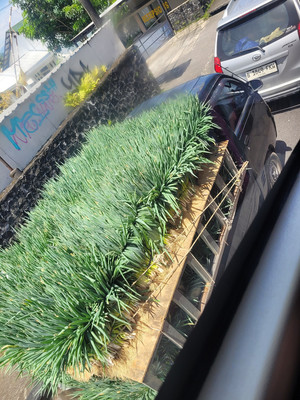
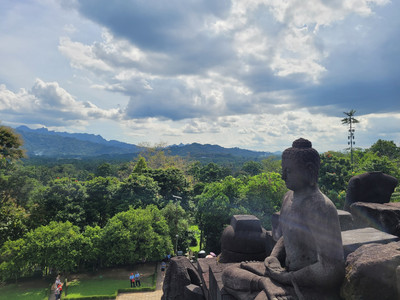
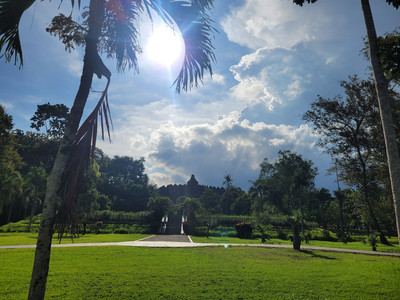
Looking out the window was immensely interesting. It was a full hour of ramshackle city before any breaks in the buildings appeared. These revealed small holdings and city trash tips, where I saw young people clambering through filth, trying to eke out some form of income. A sad sight, but perhaps one that will fade as prosperity grows. Eventually, the landscape opened up—and it was truly stunning. A magical, velvety green carpeted everything. Whether flat, mountainous, or jungle, no matter where you looked, it was the most beautiful green. Before arriving at the temple, we stopped for tea, sandwiches, and a toilet break at a coffee plantation. This could have been planned better—three coaches of 40+ people and only ten toilets meant only the luckiest got to sip tea and explore the impressive grounds. I had a problem. I’d drunk a lot of bottled water (well, it was free) and was near the back of the toilet queue. I just couldn’t wait. Rushing around like an idiot, I searched for somewhere private, worried I might be arrested for public urination. I ran out toward the main highway and spotted some houses a few hundred metres away. There was only one option. I rushed through a front door and mimed pissing myself. A friendly smile greeted me, and I was shown to a hole in the ground. It must have been the longest wee in the world. Relieved, I began to own up to my embarrassment. No problem, it turned out. Through another door, the young family revealed a little shop full of things I didn’t need—or did I? After chatting about football teams and why on earth an Englishman was in their house, I purchased some much-needed “Posh” underarm deodorant. Yes, it was genuinely called “Posh”—and it worked very well on my socks! It had taken a while to get to the temple, but it was certainly no disappointment. There it stood, nestled in an idyllic, lush green carving in the jungle.
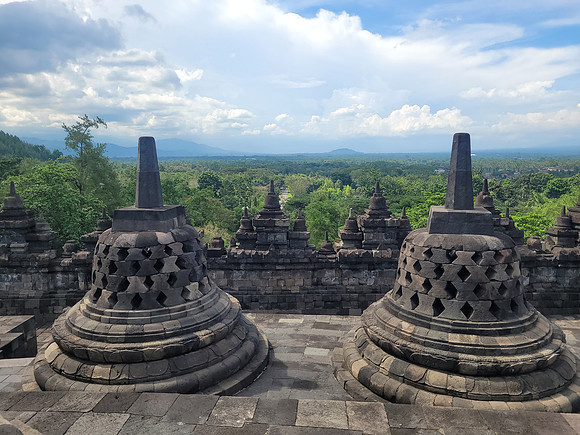
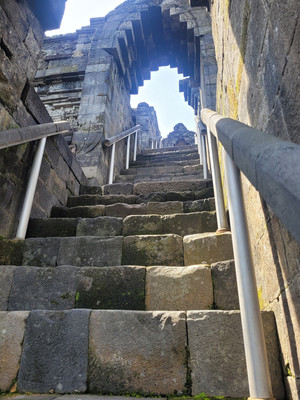
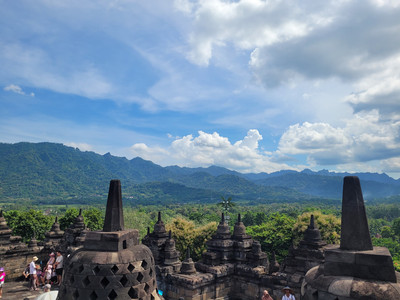
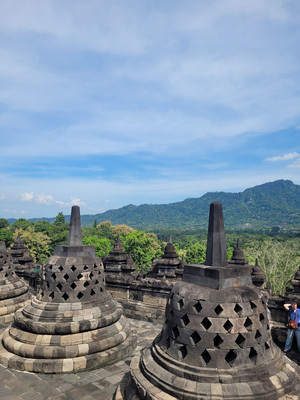
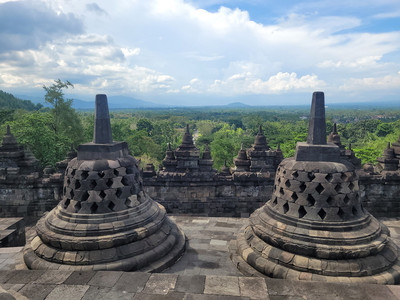
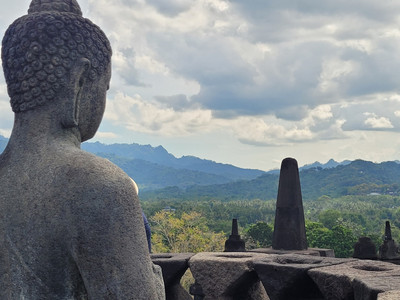
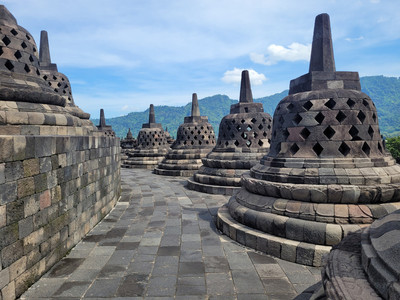
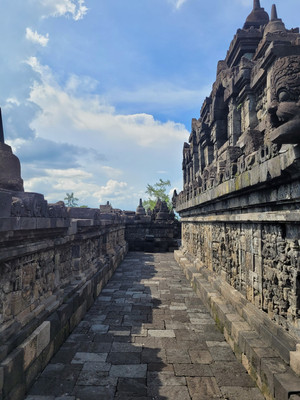
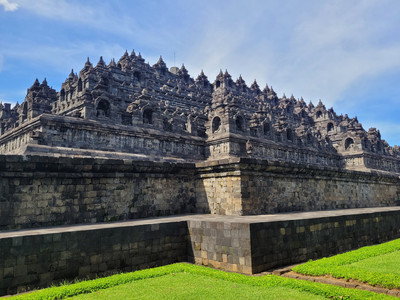
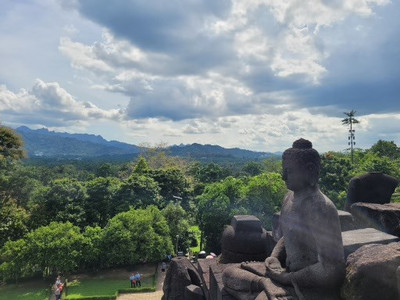
Borobudur Temple is rather like a pyramid built on three levels. You’re free to roam, although the tour guides don’t hang around—they filter as many people through the grounds as possible. Despite the crowds, it’s still easy to find a quiet spot to contemplate or simply take in the surrounding vista, which includes the nearby volcano that once covered the temple in ash for centuries.
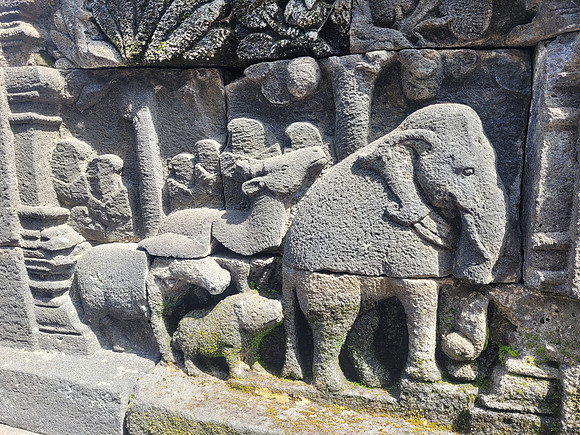
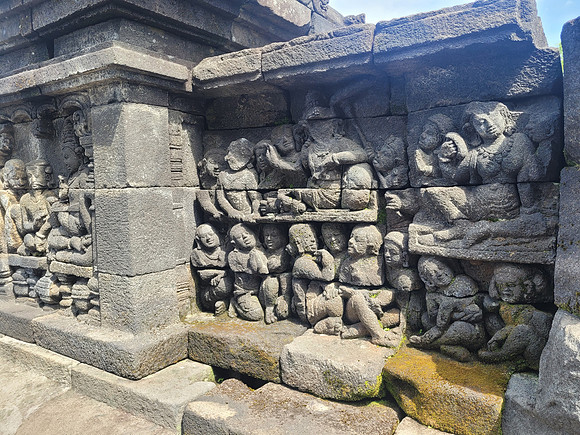
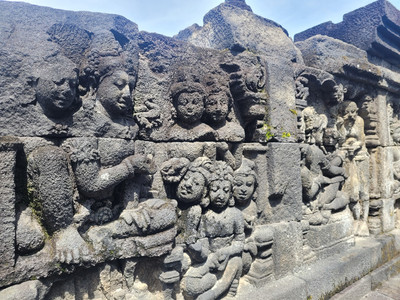
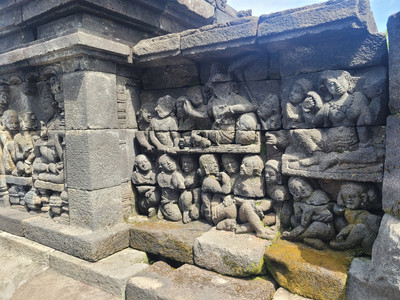
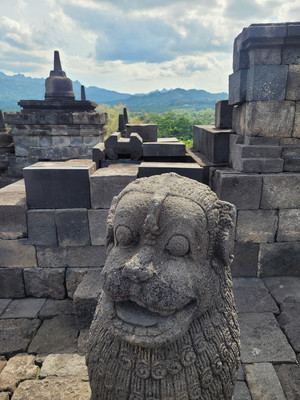
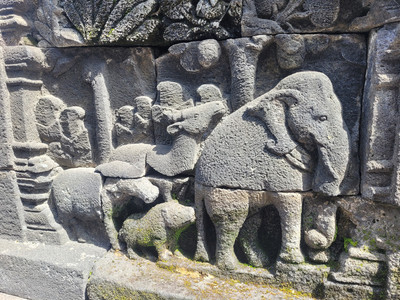
I found the place magical—a real testament to human engineering and willpower on three levels. First, the fact that a massive stone temple was built in the middle of the Indonesian jungle nearly a thousand years ago. Second, the intricate carved reliefs must have taken decades to complete. And third, the determination to uncover it from beneath the soil—not once, but twice in the last hundred years.
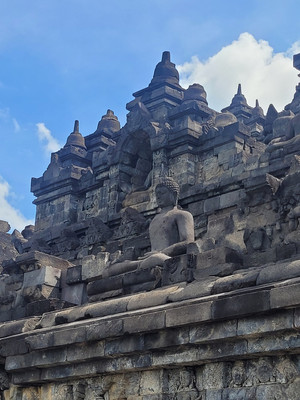
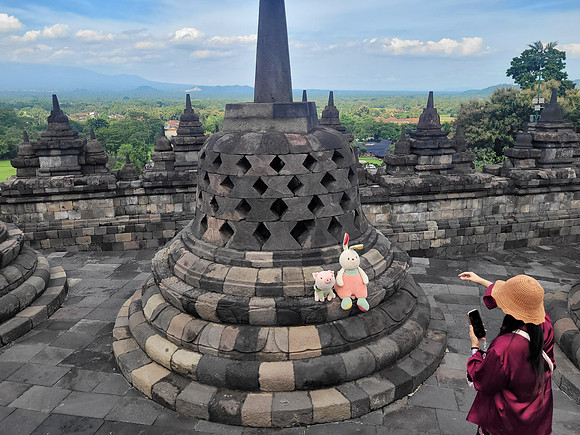
We learnt from our tour that: The entire structure forms a mandala, representing the Buddhist path to enlightenment. It features 2,672 relief panels and 504 Buddha statues, with the central stupa surrounded by 72 perforated stupas, each containing a Buddha statue.The temple is aligned with cardinal points and designed for ritual circumambulation, guiding pilgrims through symbolic stages of spiritual awakening. So there you are, some facts and figures to go with my ramblings.
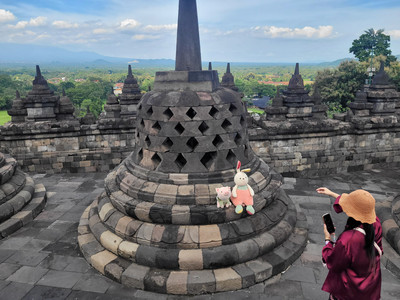
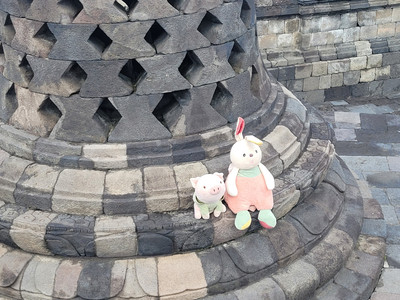
Finding a quite spot I decided it was time to send home some pictures for my Gandaughter Isabella of her best friend Dino Pig. As I was looking down from a plynth I saw a Korean girl with a Fluffy Bunny Rabbit. She had no idea anyone could see her taking pictures of her little friend and was shocked and thrilled when she met Dino Pig for pictures. The things we do for a smile hey!
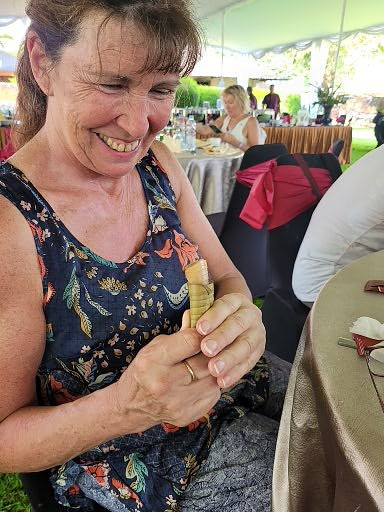
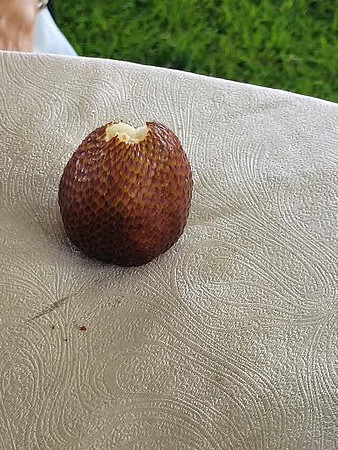
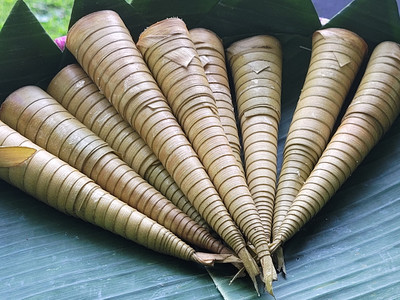
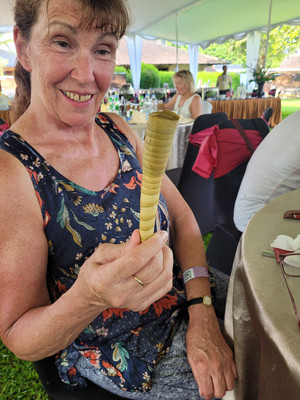
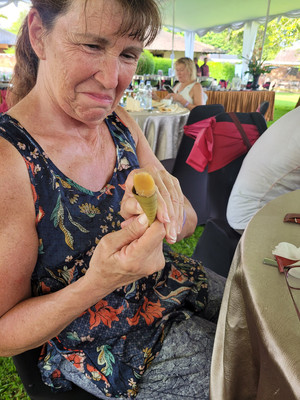
In the magnificent temple grounds, we were treated to an open-air meal and drinks. It was such a treat. Cool beer, spring rolls, meats, rice, and fruits fit for kings! We even discovered two new delights: snakeskin fruit and little cones with a soft inside—just like mini cornet ice creams.
Sadly, our stay at the temple was short due to the three-hour journey back to port. At first, it seemed like a rushed, expensive tour—but it turned out to be neither. The day flew by, which is always the sign of a good time. It’s a place I’ll never forget, that’s for sure.
Keywords:
Borobudur adventure,
Borobudur architecture,
Borobudur Buddha statues,
Borobudur carvings,
Borobudur coach tour,
Borobudur cultural heritage,
Borobudur historical,
Borobudur jungle temple,
Borobudur landscape,
Borobudur panorama,
Borobudur photography,
Borobudur police escort,
Borobudur pyramid,
Borobudur reliefs,
Borobudur spiritual site,
Borobudur stupa,
Borobudur sunrise,
Borobudur Temple,
Borobudur tour,
Borobudur travel blog,
Buddhist architecture,
Indonesian jungle,
Java Indonesia,
Mahayana Buddhism,
temple pilgrimage,
UNESCO World Heritage,
volcanic ash temple

Comments
No comments posted.
Loading...
|