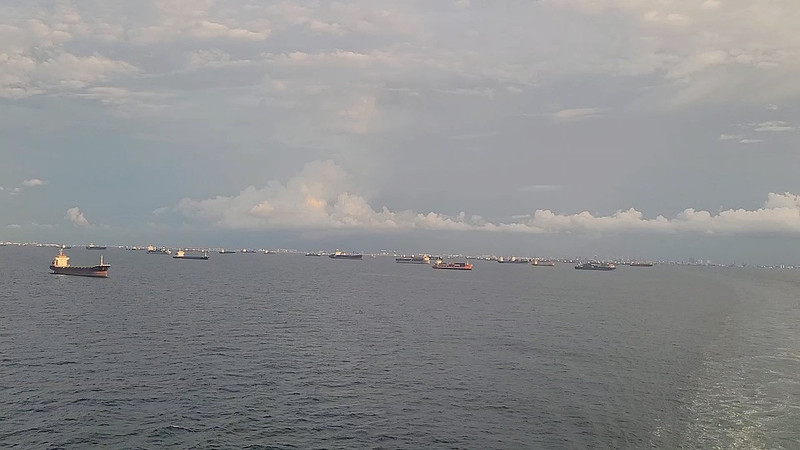
OUR DAY IN JAKARTA CAPITAL OF INDONESIAJAKARTA: How do you describe Jakarta? I asked myself before I started writing. I will try, but it really is a sensory overload of sights, smells, and sounds—a metropolis built on a sea of poverty. The ship entered the port of Jakarta and docked in the container port. This is one of the industrial hubs of Asia. Just offshore, hundreds of ships—as far as the eye can see—lay at anchor, waiting to maybe load or unload. The scale of the port is like nothing I have ever seen; with the concrete shoreline of this vast city stretching for miles.
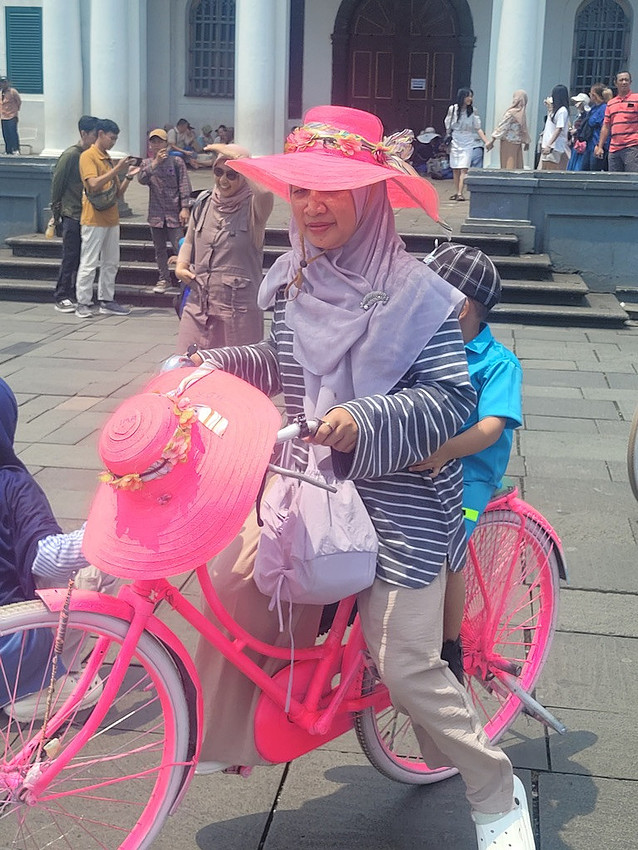
We took a shuttle bus to a local shopping centre, which seemed to be the only destination available and what might be considered safe! Time was also a problem, as the streets of Jakarta are filled with a mixture of heavy traffic and chaos. But you cannot come halfway across the world and not see the real Jakarta, so we took a risk and booked a Grab taxi on the phone. As long as we could get back to the mall by 4 p.m., we’d be OK. Wow—our adventure begins! And what an adventure it was. This must have been one hell of a rich city once. Five-lane boulevards stretched in all directions, punctuated by huge roundabouts and bridges over long-disused canals. It certainly doesn’t look rich now, with people living and eking out a meagre wage by the roadside. The canals are a floating sea of trash and filth, unfortunately. As we neared town, the roads narrowed as market stalls and road sellers encroached on the roadside. At times, we were driving literally through markets on the road, with sellers right next to the window. It was rather like being in a goldfish bowl. We got out at the main Dutch colonial centre, which must have once been a true centre of power and wealth—with what looked like a magnificent white town hall on one side and three other majestic buildings on the other sides of the square. The buildings looked like they could do with a little more love, but this was clearly Jakarta’s epicentre. It was a pleasant enough place, with families sat out on mats and rugs sharing food and celebrating a holy day in the Muslim calendar. Clearly, people had travelled to be here, and their smiles were infectious. As always with every celebration, there were the showmen and tat sellers—including a snake charmer, a snake seller, and someone with a massive snake you could have your picture taken with as it wrapped around you before probably eating you! There were quite a few dodgy-looking men selling Rolex watches by the dozen. It must be very safe here, I laughed—they don’t even have a security team for their millions of pounds' worth of stock. Human statues, horse rides, balloons, and rickshaws—it was all here around the square.
We moved from the square and started to explore the tightly packed streets away from the old town. The colonial buildings were designed with walkways covered from the sun and rain by the upper floors, supported by ornate columns. Unfortunately, after a hundred years of neglect, they are a challenging minefield of obstacles that make cobbled streets seem like a walk in the park! The shops spill out onto the pavements, where there are broken steps, holes, and deep water culverts to navigate—but they hold a certain charm and excitement, as you explore, never knowing what you’ll see next. And boy, there were plenty of surprises! We passed a shop with cages stacked high, housing sadly exotic creatures—including a massive bat.
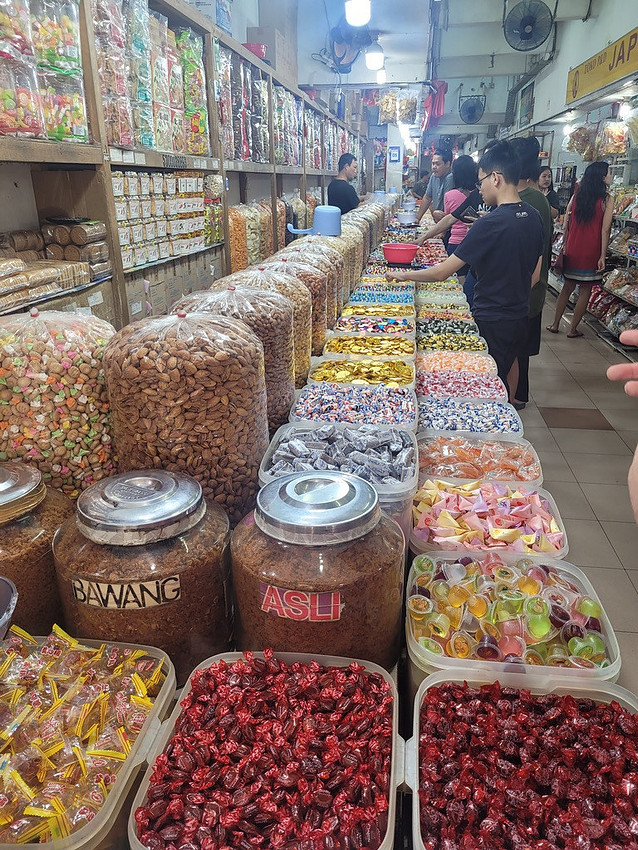
There were beautiful spice shops which not only masked the less pleasant smells but also injected a wonderful insight into life many years ago. They stretched back into dimly lit interiors, housing wood and glass cabinets and drawers, all made more atmospheric by shards of sunlight penetrating the dusty hidden stores toward the back.
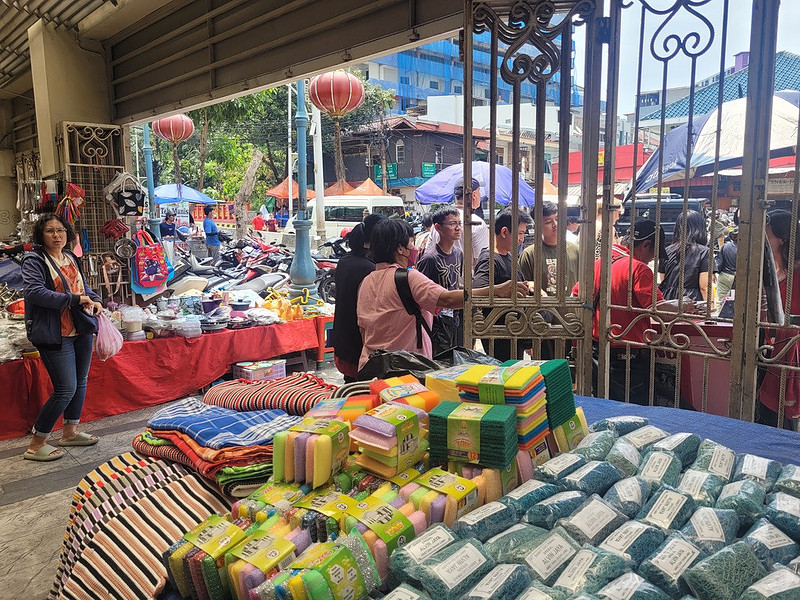
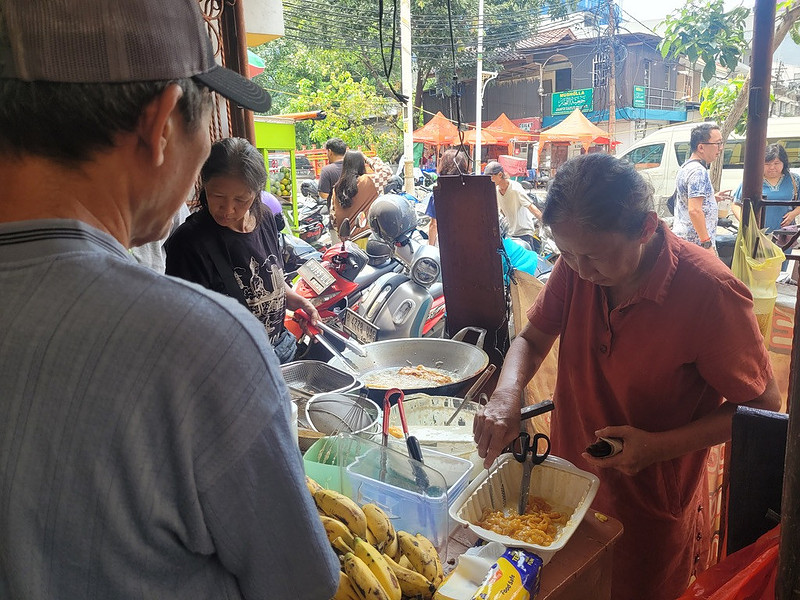
If only they knew they were sitting on a fortune of highly prized dark hardwood fittings that could star in an episode of Salvage Hunters! The walkways became very hard to navigate as independent sellers squeezed into every available space, offering anything from dishwashing pads to pots and pans. And, as always in Asia, every few yards someone was offering some form of cooked food. There was even takeaway soup in a plastic bag!
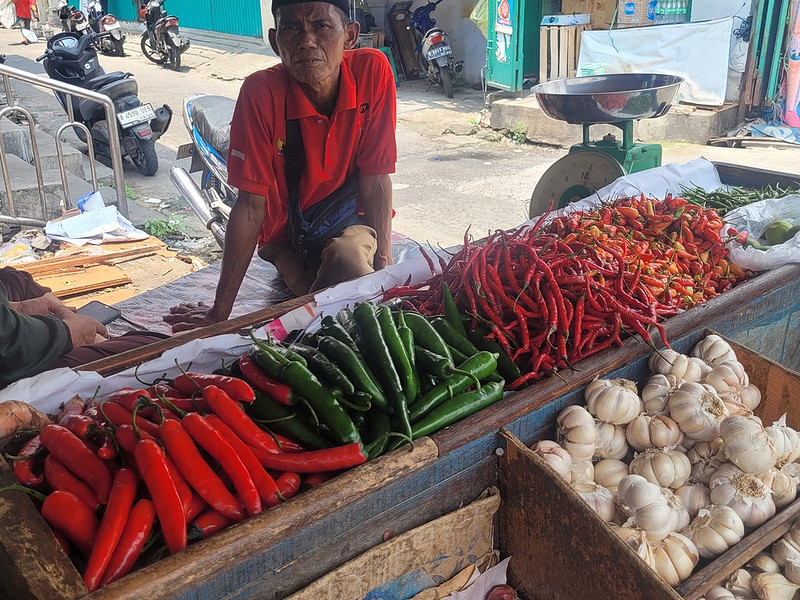
From the wider pavements, we headed off into lesser-explored, foreboding alleys and narrow lanes—not in any guidebook, that’s for sure, but an essential detour for even the smallest insight into how people live. Within just metres, it was plainly obvious that life here was so far removed from mine, it was hard to comprehend. On both sides of us were rickety stalls protruding from tiny living spaces, often right over open sewers. Any form of shelter—even just a piece of corrugated iron on a frame—was home. The first stalls offered wonderful arrays of fresh vegetables, obviously straight from the fields a long way from the vast city. There was fish as well, which looked stunning, but with scales and entrails on the floors, the smell was quite intolerable. One old guy with a friendly, gnarly face smiled as he offered bright, vivid chillies on a wooden bench. I smiled back and asked if I could photograph him and his colourful stall. He was delighted.
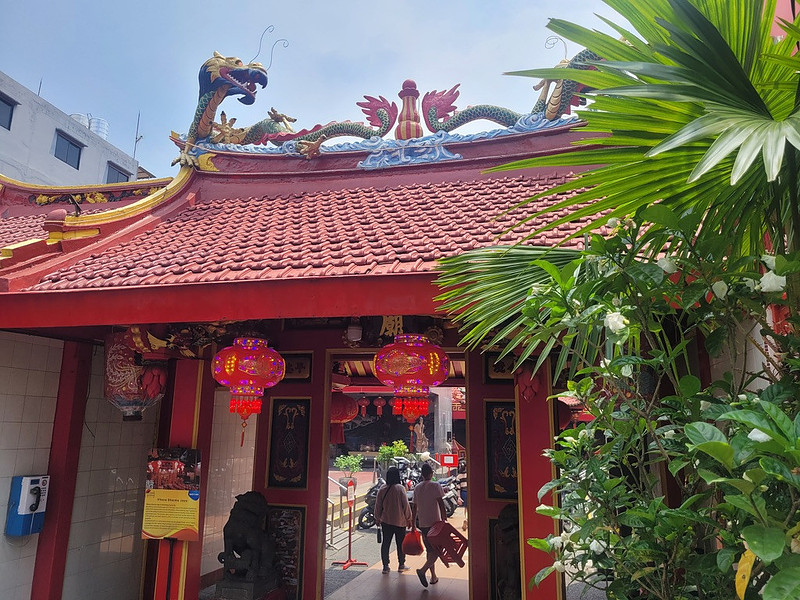
Deeper into the labyrinth, it was all too clear that life here would seem intolerable to us, but most people glanced with friendly, if surprised, smiles. We didn’t need to wander deeper for fear of getting lost, so we just kept turning right, hoping to end up with a route back to one of the main streets. As we turned one corner, the road slightly opened up—and there, right in the middle of the crammed shanty town, was a beautifully maintained Buddhist temple. Waved in by smiling locals, we took a serene break in the ornate, cool interior. As always, it was filled with colourful carvings, statues, dragons, and altars. It really did have such charm—maybe because of its place among the chaos surrounding it.
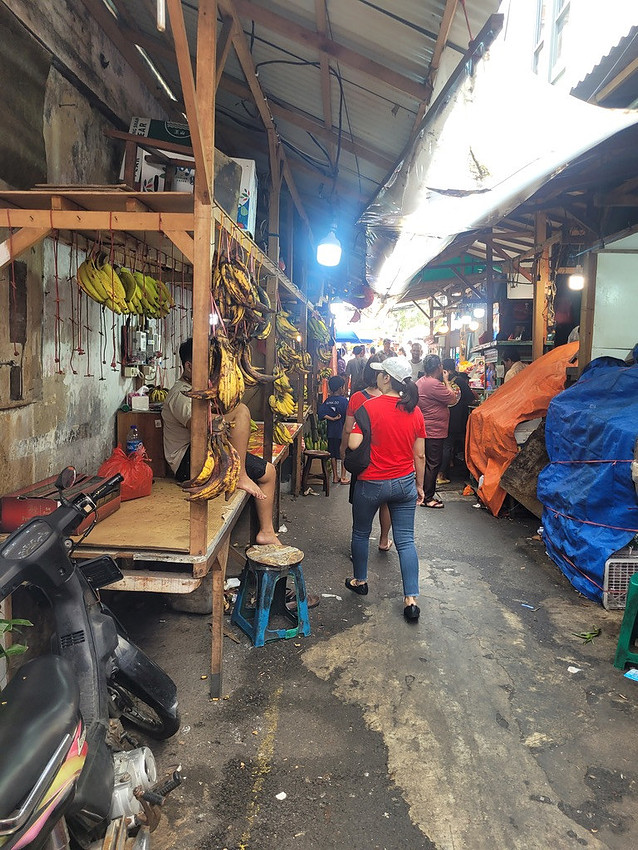
We left after only a few minutes, surprisingly refreshed. No sooner had we turned the first corner than we were confronted by a very long, narrow alley that led to the main streets, just visible at its end. It was quite simply chaotic: never-ending streams of people pushing in both directions, punctuated—amazingly—by motorcycles and bicycles, all crammed in by walls of hawkers on both sides. Nobody seemed too perturbed as we pushed our way through. There were puzzled looks but mostly friendly smiles and waves. It doesn’t usually matter where you are—in my experience, the vast majority of people on Earth are really friendly, and here was no exception.
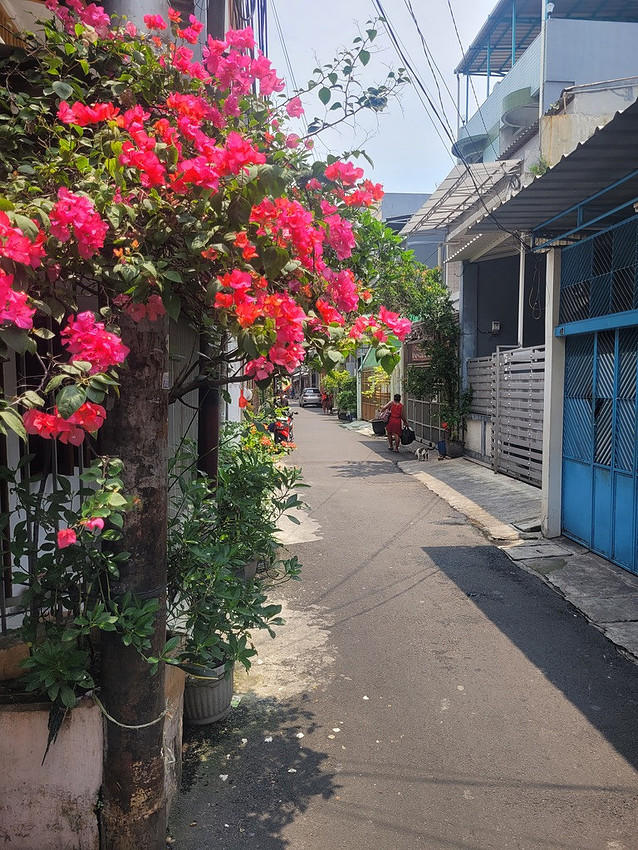
As we shuffled through the last few metres of the crowded alley, an elderly lady was passing me with her distressed son. She had one hand open in pity and one leading him by the arm. I looked into his face and was confronted by overwhelming emotion. His eyes looked like open wounds, as if they had been bathed in acid or boiling water. I felt almost sick from that small glance as we passed. Gripped by a sickened emotion, I called to Wendy, “Wait for me—I won't be a minute.” I rifled through my wallet for a few notes and turned to catch them up. It had only been a moment, but it took me a few minutes to struggle past the throngs before I managed to stretch out and place some notes in her small, elderly palm. I have no idea how much it was but, I know it was not a lot—and in my heart, I know it did nothing to ease the pain and suffering of that poor boy. Easy to say, but it does make you feel lucky, even if just temporarily, as we all grumble our way through life. Most of my memories of Jakarta’s alleys and backstreets seem to appear almost in black and white—maybe because of the oppressive nature of the place. But one particular alley had beautiful bougainvillaea hanging from a basket on a wall, and it was quite amazing how that touch of nature’s colour lifted the whole feeling of the building, even if just for a few yards. Maybe a few more colourful plants would be a good idea, hey?
In no time at all, it was time to start heading back. Because of our tight deadline, it was another Grab taxi ride through the even more crowded streets. At every intersection, the taxi became surrounded by cars, lorries, trucks, and motorbikes—all inching forward, all going in different directions. There were clearly traffic lights, but green meant go, amber meant go, and red meant still go. With five lanes on each road, the number of vehicles stuck at each junction was extraordinary. It was a little worrying, but after 20 minutes the congestion eased, and we travelled at a good pace—all the time peering out the windows at mile after mile of tumble-down buildings and shanty-type areas. Every so often, sticking out like sore thumbs, were rows of what could only be described as millionaire-type properties. Incredible to see neighbours with such a gulf in living standards. We made it back in good time, and our half-hour ride came to $5 US. As we sailed out of Jakarta, it seemed only appropriate that a massive thunderstorm hung darkly over the city. Lightning bolts split the sky and it sounded like the belly of the city was grumbling. Out at sea, it was still bright and sunny as we passed the hundreds of ships anchored offshore. Bye-bye Jakarta, I said, as I thought of its poor but happy people, now soaking in yet another trial of everyday life.
Keywords:
Buddhist temple,
colonial architecture,
colonial heritage,
Dutch colonial architecture,
Dutch colonial square,
floating trash canals,
Grab taxi adventure,
hidden Buddhist temple,
Jakarta Grab taxi,
Jakarta shanty towns,
Jakarta stormy farewell,
Jakarta traffic chaos,
Jakarta travel,
Jakarta travel guide,
local encounters,
local life Jakarta,
millionaire homes,
polluted canals,
sensory overload,
sensory travel experience,
shanty towns,
spice shops,
street market culture,
street markets,
thunder storm farewell,
traditional spice markets,
traffic chaos,
urban poverty,
urban poverty in Jakarta,
wealth divide Indonesia

Comments
No comments posted.
Loading...
|